


close
Choose Your Site
Global
Social Media
Views: 263 Author: Gill Transmission Parts Publish Time: 2026-10-04 Origin: Site


Content Menu
● What Does Mercury Outboard Parts Interchangeability Actually Mean?
● Are Mercury Outboard Parts Interchangeable Between Models and Years?
>> Why Matching Horsepower Is Not Enough
>> Why Serial Numbers Matter More Than a Broad Year Description
● Mercury Outboard Parts Compatibility: A Practical Comparison
● Are Mercury and Quicksilver Parts Interchangeable?
>> Check the Cross-Reference, Not Just the Brand
>> Keep Branding Separate from Fitment
● Are Mercury and Mariner Outboard Parts Interchangeable?
● Are Mercury and Yamaha Outboard Parts Interchangeable?
● Why Mercury Outboard Gears and Lower Units Need Extra Verification
>> Separate Assembly Compatibility from Internal-Part Compatibility
>> Do Not Ignore Rotation or Gear Ratio
● A Documented Case: Similar Verado Gearcases, Different Ratios
● How to Verify Mercury Outboard Parts Compatibility Before Ordering
>> Step 1: Identify the Engine
>> Step 2: Identify the Exact Component
>> Step 3: Check the Listed Replacement
>> Step 4: Confirm the Configuration
>> Step 5: Keep the Approval Record
>> Step 6: Arrange Installation Using Applicable Instructions
● What Technical Buyers Should Request from an Outboard Gear Supplier
● Discuss Your Outboard Gear Requirements with Gill
>> Can Mercury Outboard Parts Be Swapped Between Different Years?
>> Can I Choose a Mercury Lower Unit by Horsepower Alone?
>> Are Mercury and Quicksilver Parts Always the Same?
>> Do Mercury and Mariner Share Replacement Parts?
>> Can Two Similar-Looking Lower Units Have Different Ratios?
>> What Should I Send When Requesting Replacement Outboard Gears?
Are Mercury outboard parts interchangeable? Sometimes, but only when the replacement is verified for the specific engine and assembly. Matching horsepower, appearance, or brand name is not enough. Mercury's parts catalog allows searches by engine model or serial number, helping buyers identify the correct diagrams and part numbers before ordering.
For boat owners, the question is about avoiding an expensive mistake. For repair shops and marine-parts distributors, it is also about reducing returns, downtime, and repeat work.
At Ningbo Gill Transmission Parts Co., LTD., our focus is the research, development, production, and sale of outboard gears and other marine components. Drawing on our 29-year manufacturing background, we approach interchangeability as a technical verification task—not a visual comparison.
This guide explains what to check, why lower-unit compatibility requires extra care, and how to prepare a clearer replacement-parts inquiry.
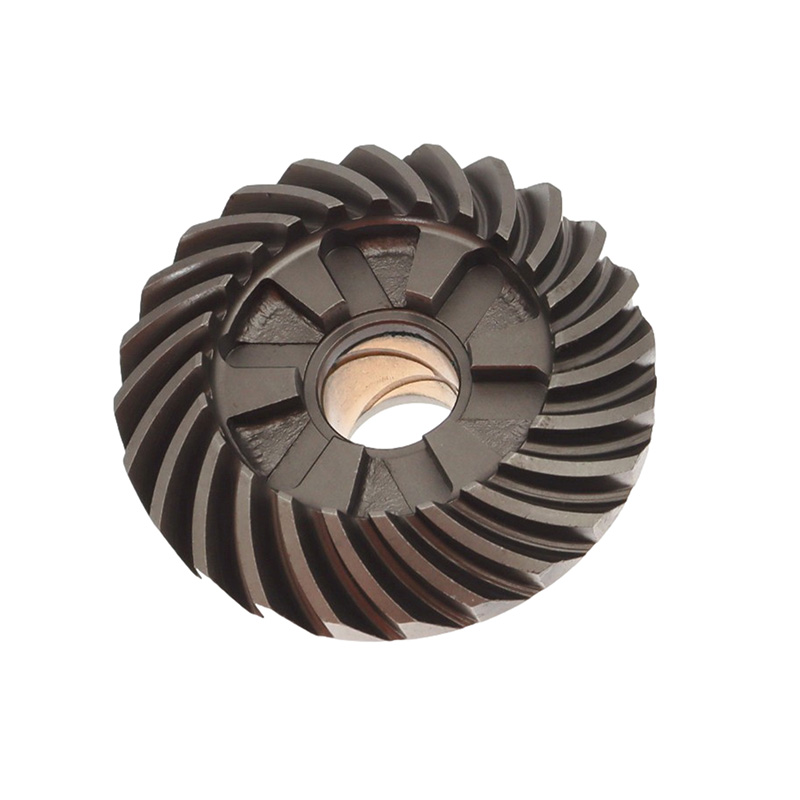
Interchangeability means that a replacement component is suitable for the intended application, not simply that it can be installed.
A useful assessment separates three questions:
- Physical fit: Does the component match the mounting points, shafts, splines, and surrounding parts?
- Functional fit: Does it provide the required operation, ratio, rotation, and connection?
- Documented application: Does the catalog or supplier identify it for the specific engine configuration?
A part that passes only the first test remains an unverified replacement.
For complete gearcases, suppliers identify shaft length, gear ratio, rotation, engine family, and serial number as application-specific purchasing checks. Two assemblies can therefore look similar while serving different configurations.
Our manufacturing perspective is straightforward: begin with the documented application, then check the technical details. Do not reverse that process by finding a similar-looking component and trying to justify its use.
Some replacement parts cover multiple applications, but compatibility must be established component by component.
The Mercury–Mariner application guides, for example, organize replacement categories such as water-pump parts, ignition components, gearcase seals, and thermostat kits. This supports application-based selection rather than a blanket claim that all components within either brand interchange.
Horsepower is a useful starting description, but it does not fully identify a lower unit.
A gearcase listing may distinguish engine family, shaft length, rotation, and ratio alongside horsepower. Buyers should therefore treat a description such as "fits Mercury 200 HP" as incomplete until those additional details are confirmed.
For a purchasing inquiry, provide:
- Engine model and full serial number.
- Advertised horsepower.
- Original component or assembly number.
- Existing lower-unit identification, if available.
- Photographs of labels and relevant interfaces.
This gives the supplier a defined application to evaluate.
Mercury's official catalog supports searches by model or serial number and provides engine diagrams and part numbers. That makes serial-number lookup a more precise starting point than relying only on a seller's broad year range.
Use the year as supporting information. Use the catalog application as the basis for selection.
If the engine has previously received a replacement lower unit, record that assembly separately. Ask the supplier to assess the installed configuration rather than assuming every component remains original.
The following table is a screening guide, not an interchangeability chart. It highlights the information buyers should obtain before requesting approval.
| Component category | Information to verify | Evidence needed before purchase |
|---|---|---|
| Service parts | Engine application and exact component number | Catalog listing or verified cross-reference |
| Water-pump components | Relevant assembly and specified kit | Application-guide confirmation |
| Gearcase seals | Correct gearcase application | Seal-kit or component listing |
| Ignition components | Engine application and specified replacement | Catalog confirmation |
| Complete lower units | Shaft length, ratio, rotation, engine family, serial number | Assembly-specific fitment confirmation |
| Internal outboard gears | Original reference and intended gearcase application | Supplier technical review |
Mercury and Quicksilver catalogs provide application information across numerous service categories, while complete-gearcase suppliers explicitly require additional configuration checks.
The practical lesson is to match the level of verification to the component. A complete transmission assembly deserves more scrutiny than a product description containing only a horsepower range.
Selected Mercury and Quicksilver products have documented equivalents. However, the presence of either brand on the package does not establish universal compatibility.
Mercury describes Quicksilver as a source of engine-service parts, including a broad selection of OEM-quality replacement products. A factory-authorized dealer also publishes a Mercury-to-Quicksilver cross-reference chart for specified products.
Before buying an equivalent product:
1. Identify the required Mercury component or product number.
2. Locate the documented Quicksilver equivalent.
3. Confirm that the listing covers the intended application.
4. Check what is included in the package.
Use a published equivalence for the particular item. Do not extend one verified cross-reference to an entire product category.
Brand choice and application suitability are different decisions.
A recognized brand may provide confidence in sourcing, but buyers still need the correct item. Conversely, an aftermarket product should be evaluated using its application documentation and technical evidence, not dismissed or accepted solely because of its label.
Some Mercury and Mariner applications share replacement-parts coverage. The combined application guide includes categories ranging from fuel-pump repair kits to lower-unit seals and water-pump parts.
That shared catalog coverage is useful, but it is not permission to exchange any component between the two brands.
For each proposed replacement, ask:
- Is the exact engine application listed?
- Is the replacement number documented?
- Does the listing include an applicable serial-number range?
- Is the supplied item a complete kit or an individual component?
A combined catalog helps locate the right application. It does not eliminate the need to identify that application correctly.
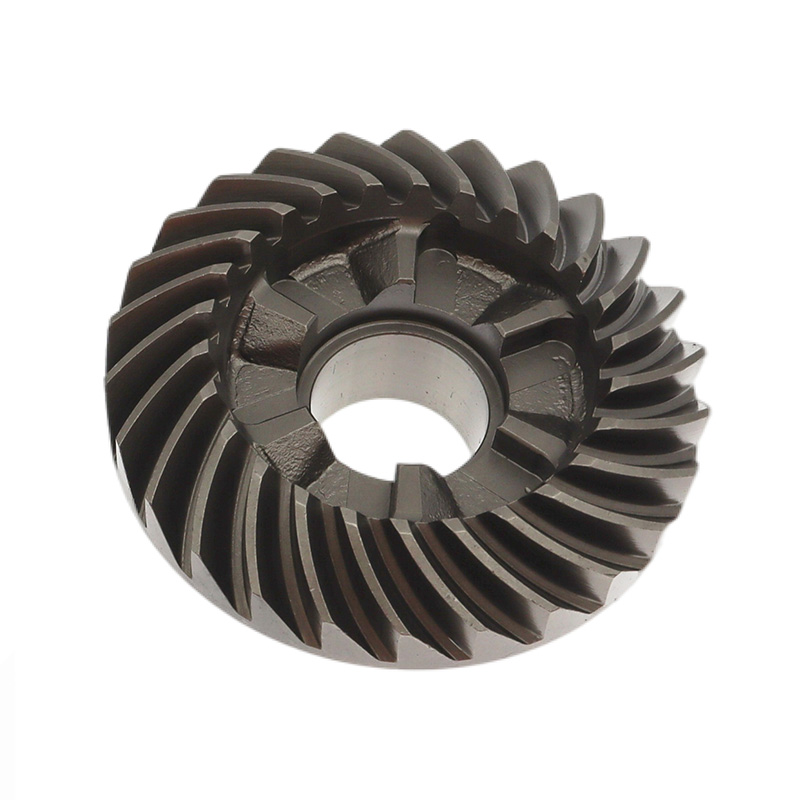
Treat Mercury–Yamaha interchangeability as unverified unless you have a component-specific application reference.
The correct purchasing question is not, "Do these brands share parts?" It is, "What documentation confirms this particular replacement for this particular Mercury engine?"
Mercury's official parts-identification process directs buyers to model or serial-number searches and engine-specific diagrams. That is the appropriate starting point, regardless of the brand named in an alternative-part advertisement.
For a cross-brand claim, request:
- The original Mercury reference number.
- The proposed replacement number.
- A written application statement.
- Relevant drawings or dimensional information.
- Any installation limitations.
Do not interpret similar photographs, horsepower ratings, or supplier descriptions as documented equivalence.
Complete lower units are highly configuration-specific. Published supplier guidance identifies shaft length, ratio, rotation, engine family, and serial number as essential checks before ordering.
For internal gears, our recommended purchasing approach is equally disciplined: identify the assembly first, then evaluate the proposed gear against its intended mating components.
Approval of a complete lower-unit replacement does not, by itself, establish that every internal component can be exchanged individually.
When buying internal gears, ask the supplier to clarify:
- Whether the item is supplied individually or as part of a set.
- Which gearcase application it is intended for.
- Which mating components must be retained or replaced.
- What installation documentation applies.
These questions help define the scope of the supplier's compatibility claim.
Standard-rotation and counter-rotation gearcases have distinct application requirements. Gearcase listings also identify specific ratios and shaft configurations, warning buyers against selecting assemblies by horsepower alone.
Record these details before comparing price. A lower-cost assembly is not a useful alternative if it does not match the required configuration.
Mercury's December 2007 Service Bulletin 2007-28 provides a valuable historical example.
For the covered L6SC 200–300 Verado engines, Mercury described a new 1.75:1 gear ratio for the 300 HP application. The bulletin stated that the gearcase exterior looked the same as the standard 1.85:1 version, making visual identification difficult.
The bulletin also explained that an incorrect ratio could appear as mismatched wide-open-throttle engine speeds on multi-engine vessels or failure to reach the expected operating speed with an established propeller setup.
This example demonstrates two important limits:
- External appearance does not reliably identify internal configuration.
- A physically similar replacement can alter the intended operating relationship.
These figures belong to the bulletin's specified historical applications. They should not be treated as a universal ratio guide for current Verado engines.
The document also warns that incorrect rotation during its identification procedure can cause a timing-chain jump. Ratio verification should therefore follow the applicable instructions rather than an improvised test.
A repeatable workflow makes replacement decisions easier to review.
Record the complete model and serial number. Photograph the identification label to reduce transcription errors.
Use that information to locate the appropriate Mercury catalog diagrams.
Locate the component within the correct diagram.
Distinguish an individual part from a kit or complete assembly. Ask what the supplied package contains before comparing quotations.
If a supplier proposes a different number, request the catalog reference or written cross-reference supporting that substitution.
For Mercury–Quicksilver equivalents, use the published item-specific mapping rather than assuming that similar numbering establishes equivalence.
For lower units, verify:
- Shaft length.
- Gear ratio.
- Standard or counter rotation.
- Engine family.
- Serial-number application.
- Existing assembly reference.
These are explicitly identified as relevant checks in complete-gearcase purchasing guidance.
Retain the quotation, photographs, application statement, and replacement reference.
A written record makes it easier to resolve questions before installation and distinguish an ordering error from an unclear product listing.
Mercury provides model-specific owner resources and operation, maintenance, and installation manuals. Obtain the relevant documentation, and ask a qualified technician which additional service information is required for the repair.
Parts identification and installation planning should be completed together, not treated as unrelated tasks.
For distributors, repair businesses, and purchasing teams, a useful quotation should answer more than "Can you supply this gear?"
We recommend requesting a technical information package covering:
- Application: the intended engine and gearcase references.
- Scope: individual gear, set, kit, or assembly.
- Drawing: dimensions and interfaces available for review.
- Material: declared specification and relevant treatment information.
- Inspection: characteristics checked before shipment.
- Traceability: how the supplied batch is identified.
- Limitations: exclusions or unresolved application details.
This is a proposed procurement checklist, not a claim that every supplier provides these documents.
At Ningbo Gill Transmission Parts Co., LTD., we encourage buyers to submit the original reference and available technical information at the inquiry stage. A clearly defined request supports a more meaningful discussion than a photograph accompanied only by horsepower.
Need help evaluating a replacement outboard gear or preparing a marine-parts sourcing inquiry?
Contact Ningbo Gill Transmission Parts Co., LTD. with your engine details, original reference numbers, photographs, and available drawings. Tell us whether you need an individual replacement, a gear set, or a production quotation.
Our team will review the information supplied and discuss the relevant technical requirements. Compatibility should be established before an order is finalized—not inferred from appearance.
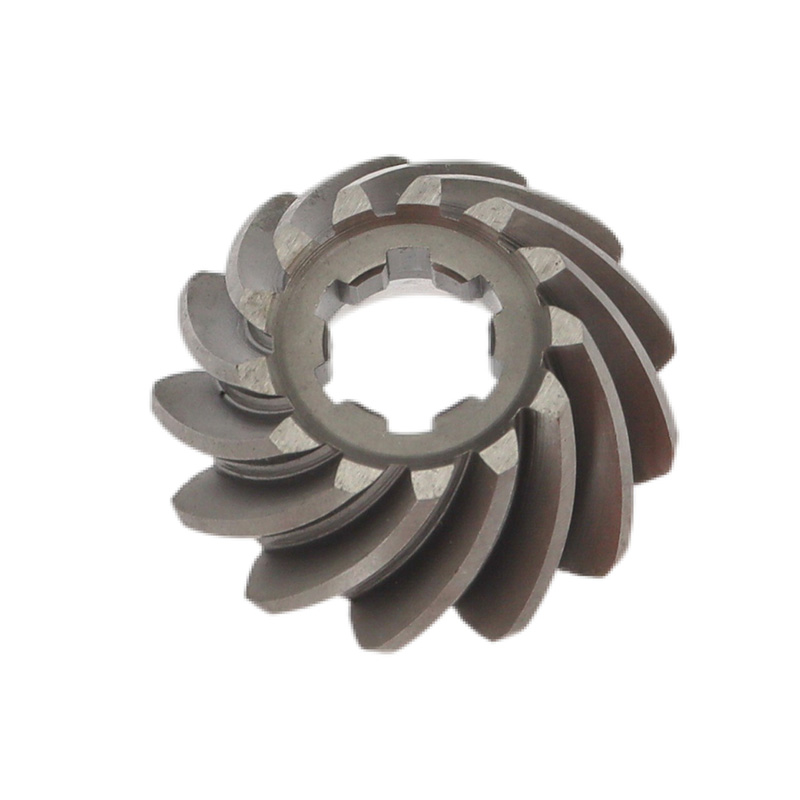
Sometimes, but a year range alone is insufficient. Verify the particular replacement using the model or serial-number catalog and the relevant component listing.
No. Complete-gearcase guidance also requires shaft length, gear ratio, rotation, engine family, and serial-number checks.
No blanket assumption is appropriate. Use a documented cross-reference for the specific item; published charts identify selected equivalents.
Some applications share catalog coverage. Confirm the exact component and engine application within the combined application guide.
Yes. Mercury's historical Verado bulletin documents externally similar 1.75:1 and 1.85:1 gearcases for its specified applications.
Send the engine serial number, original part reference, gearcase identification, photographs, and any available drawings. Ask the supplier to state what it can verify and what information remains missing.
- Mercury Marine — Parts Catalog
[https://www.mercurymarine.com/sp/en/parts-and-service/parts-catalog] [mercurymarine]
- Mercury Marine — Quicksilver
[https://www.mercurymarine.com/us/en/quicksilver] [mercurymarine]
- MerCruiserParts.com — Mercury to Quicksilver Cross-Reference Chart
[https://www.mercruiserparts.com/mercury-to-quicksilver-cross-reference-chart] [mercruiserparts]
- MarineEngine.com — Mercury–Mariner Outboard Application Guides
[https://www.marineengine.com/parts/mercury-quicksilver/application-guides/mercury-mariner-outboard.html] [marineengine]
- Pro Marine USA — Mercury Outboard Gearcase Assemblies
[https://parts.promarineusa.com/cat/842/Gearcase-Assemblies-Mercury-Outboard/] [parts.promarineusa]
- Mercury Marine — Service Bulletin 2007-28: Verado Gear Ratios
[https://yanmarshop.com/catalog/media/F53DEL3GOJSW4Y3INVQXE2LOMUXW2ZLENFQS6YTNMUXUOQKZIRBVQQSRI5HE6RCFJVBFCRZVJ5CUWVCTG5DUSNCBFZYGIZQ] [yanmarshop]
- Mercury Marine — Owner's Manuals
[https://www.mercurymarine.com/us/en/service-and-support/owners-resources/owners-manual] [mercurymarine]
- Mercury Marine — Owners Resources
[https://www.mercurymarine.com/us/en/service-and-support/owners-resources] [mercurymarine]
- MarineEngine.com — Mercury Quicksilver Parts Catalog
[https://www.marineengine.com/parts/mercury-quicksilver/] [marineengine]


