


close
Choose Your Site
Global
Social Media
Views: 264 Author: Gill Transmission Parts Publish Time: 2026-10-10 Origin: Site


Content Menu
● China Marine Parts Suppliers vs Local Distributors: A Practical Comparison
● Compare Landed Cost Before Comparing Unit Prices
>> What a Marine Parts Quotation Should Include
>> Clarify Delivery Terms and Responsibilities
● Marine Drive Shaft Quality: Compare Evidence, Not Geography
>> Specify the Application Before Selecting the Material
>> Separate Component Quality From Installation Quality
>> Request a Verifiable Inspection Package
● Customization: When Direct Manufacturing Adds Value
>> Direct Communication Can Improve Drawing-Based Orders
>> Distributors Can Add Application Knowledge
● Delivery Speed: Evaluate Time to Installation
>> Local Availability Must Be Verified
>> International Orders Need a Realistic Buffer
● An Illustrative Cost Scenario: When the Cheaper Shaft Costs More
● A Five-Step Supplier Qualification Process
>> 1. Issue the Same Technical Request
>> 2. Verify the Supplier's Role
>> 3. Approve a Sample or First Article
>> 4. Define Acceptance and Warranty Procedures
>> 5. Track Actual Performance
● A Hybrid Sourcing Strategy Can Balance Cost and Resilience
● Which Channel Offers Better Value for Your Business?
● Discuss Your Marine Drive Shaft Requirements With Ningbo Gill
>> Are China marine parts suppliers always cheaper than local distributors?
>> How can I evaluate a marine drive shaft manufacturer?
>> Is a local distributor better for emergency repairs?
>> Do imported marine shafts require classification certificates?
>> Can I purchase one custom shaft directly from a Chinese supplier?
>> What is the strongest sourcing strategy for repeat orders?
China marine parts suppliers often offer better value for planned orders, repeat purchasing, and drawing-based customization. Local distributors can offer better value when verified stock, immediate technical support, and rapid replacement matter more than the purchase price. The right choice depends on total ownership cost, not simply where the supplier operates.
At Ningbo Gill Transmission Parts Co., LTD., our focus is the research, development, production, and sale of drive shafts and other marine components. With 29 years of professional experience, we approach this comparison from a manufacturing perspective: buyers need parts that meet their specifications, arrive when required, and remain economical after installation.
This guide compares both sourcing channels without assuming that every Chinese supplier is a factory or every local distributor holds inventory.
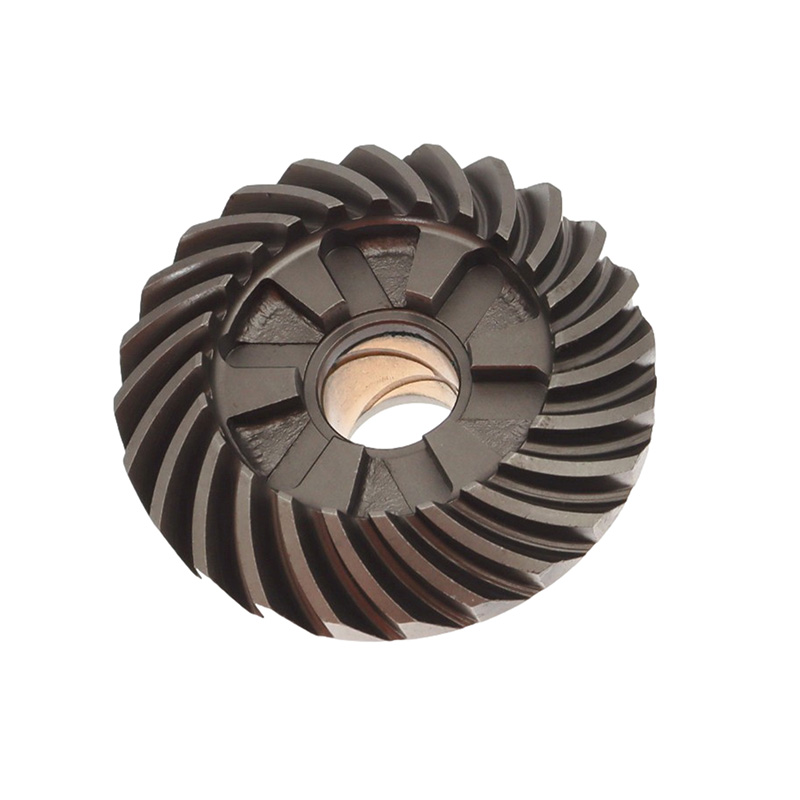
The distinction is primarily about the purchasing channel, not necessarily the manufacturing location. A local distributor may sell Chinese-made components, while a Chinese supplier may be a manufacturer, trading company, or specialist exporter.
Before comparing quotations, establish who manufactures the part, who verifies its quality, and who handles problems after delivery.
| Purchasing factor | China marine parts suppliers | Local distributors |
|---|---|---|
| Purchase price | Direct manufacturing may reduce intermediary costs | Price may include inventory, service, and distribution costs |
| Customization | Direct drawing review can simplify production changes | Depends on engineering capability and manufacturer access |
| Delivery | Includes production, international transport, and clearance | Potentially faster when suitable stock is physically available |
| Minimum order | Varies with production economics and customization | May support single-unit purchases from stock |
| Documentation | Must be specified and verified before shipment | May be available, but should never be assumed |
| Technical support | Can provide direct manufacturing feedback | May provide local application or installation assistance |
| Warranty handling | Cross-border logistics may complicate claims | Local returns may be easier under suitable contract terms |
| Best-fit application | Planned replenishment and repeat production | Urgent repairs and locally supported replacement |
These are purchasing tendencies, not guarantees. Evaluate the actual supplier, product, and service agreement.
A factory quotation and a distributor quotation may cover different responsibilities.
For a meaningful comparison, request a cost breakdown covering:
- Component price and any tooling charges.
- Inspection and documentation.
- Protective packaging.
- Freight and cargo insurance.
- Import duties, taxes, and clearance fees.
- Delivery to the receiving facility.
The International Trade Administration defines landed cost as the product price plus the expenses required to deliver it to the buyer, including freight, insurance, tariffs, taxes, and other fees.
For internal budgeting, distinguish recoverable taxes from permanent costs. Confirm the treatment with a qualified local adviser rather than applying another buyer's assumptions.
Incoterms® rules allocate delivery-related tasks, costs, and risks between buyers and sellers. They do not establish the product's technical quality or replace a warranty agreement.
Ask each supplier to state the selected rule, named location, and applicable edition. Also confirm what remains outside the quotation.
A useful procurement question is:
"What will this approved component cost when it reaches our workshop, and which expenses remain our responsibility?"
For marine drive shafts, a generic description such as "stainless steel shaft" leaves important questions unanswered.
Depending on the design, buyers should establish:
- Material grade and applicable specification.
- Shaft dimensions, straightness, and runout requirements.
- Bearing-seat and sealing-surface requirements.
- Coupling interfaces, keyways, threads, or splines.
- Operating speed, torque, and loading conditions.
- Corrosion exposure and installation environment.
Not every application requires the same material, inspection method, or documentation. Specifications should follow the vessel design and responsible engineer's requirements.
From a manufacturing perspective, an approved drawing is usually a stronger purchasing foundation than a photograph or an approximate description.
A correctly manufactured shaft does not automatically create a correctly aligned propulsion system.
DNV identifies robust shaft alignment as important to propulsion reliability. It also notes that inadequate alignment can contribute to stern-tube bearing damage and costly off-hire.
This distinction matters when comparing suppliers. Factory inspection addresses the component. Installation verification addresses its relationship with bearings, couplings, and the wider shaft line.
Ask who owns each responsibility. Neither purchasing channel eliminates the need for competent installation.
For a critical component, agree on documentation before production begins. Depending on the application, this may include material records, dimensional reports, traceability information, or specified examination results.
Certification requirements must be checked against the applicable vessel, contract, and classification rules. Do not assume that a general management-system certificate proves a particular shaft's suitability.
A local distributor should face the same evidence requirements as an overseas supplier.
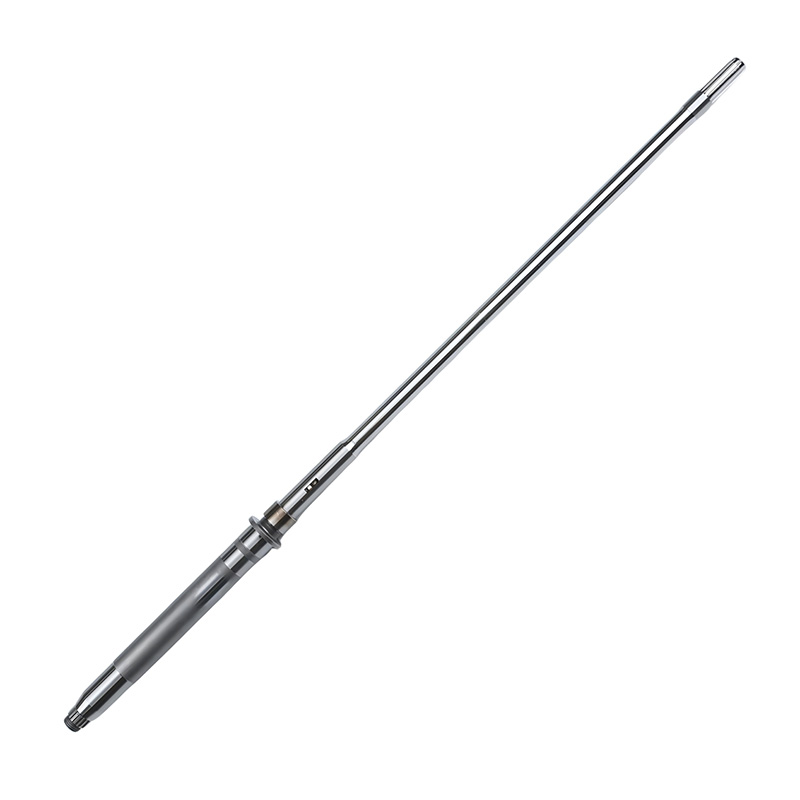
A China marine parts manufacturer can be attractive when the buyer needs a nonstandard shaft, repeat batch, or drawing revision.
Direct communication may shorten the path between the buyer's engineer and the production team. However, this advantage exists only when the supplier actually controls manufacturing and manages revisions properly.
Before placing a custom order, confirm:
1. Which drawing revision governs production.
2. Who approves deviations.
3. Whether samples or first-article approval are required.
4. Who owns and maintains tooling.
5. How subsequent orders preserve the approved specification.
A capable local distributor may help identify replacement parts, interpret compatibility information, or coordinate specialist support.
That service can be valuable when documentation is incomplete. Still, confirm whether advice comes from a qualified technical team or simply a catalog match.
For safety-relevant modifications, obtain approval from the responsible engineer. Commercial availability alone does not establish compatibility.
"Available locally" should mean that the correct part is physically present, identifiable, and ready for dispatch.
Ask the distributor to confirm the part number, dimensions, quantity, documentation, and dispatch date. A local seller that must import the item may offer little timing advantage.
Also consider inspection and installation scheduling. Fast delivery is less useful if the part arrives without required records or needs unexpected modification.
UNCTAD's Review of Maritime Transport 2025 describes high and volatile freight rates, longer routes, and disruption affecting shipping reliability.
For marine parts buyers, the practical lesson is to separate production lead time from transport and clearance time. A promised factory completion date is not a workshop arrival date.
Plan replenishment around actual route performance, customs requirements, and inspection needs. Avoid relying on a single fixed transit estimate for every shipment.
Consider a hypothetical repair purchase. These figures are invented to demonstrate the decision method; they are not market prices or Ningbo Gill customer results.
| Cost item | Overseas purchase | Local purchase |
|---|---|---|
| Shaft price | $1,200 | $1,750 |
| Freight and insurance | $180 | Included |
| Duties and clearance | $140 | Included |
| Additional inspection | $80 | $50 |
| Total acquisition cost | $1,600 | $1,800 |
The overseas option saves $200 before considering downtime.
Suppose it causes three additional idle days and the buyer assigns an illustrative operating impact of $300 per day. Its combined acquisition and downtime cost becomes $2,500, compared with $1,800 locally.
For a scheduled replacement with adequate lead time, that additional downtime may disappear. The overseas option could then retain its acquisition advantage.
The lesson is not that imports are expensive. It is that urgency changes the economics.
Calculate the difference using your own freight quotation, verified tax treatment, delivery dates, and operating costs.
Send both channels identical drawings, quantities, acceptance criteria, documentation requirements, and delivery expectations.
Otherwise, apparently competing quotations may describe different products.
Establish whether the seller manufactures, subcontracts, or distributes the component. Ask who controls inspection and who can authorize corrective action.
Experience is useful context, but product-specific evidence remains essential.
Where appropriate, inspect an initial component before authorizing repeat production. Record the approved measurements and documentation.
For critical equipment, follow the project's engineering and classification requirements.
Agree on inspection timing, rejection criteria, claim evidence, return authorization, replacement arrangements, and responsibility for transport costs.
Clarify whether any installation or consequential expenses are covered. Do not infer coverage from the word "warranty."
After delivery, measure acceptance rate, on-time arrival, response speed, documentation completeness, and claim resolution.
A slightly higher quotation can represent better value if the supplier consistently prevents disruption. Conversely, a reliable factory can become more economical as repeat orders reduce administrative effort.
Buyers do not always need to choose one channel exclusively.
A practical approach is to purchase planned quantities from an approved manufacturer while retaining local access for urgent replacements or specialist support.
This works best when both sources can supply technically interchangeable, approved parts. Do not assume interchangeability merely because dimensions appear similar.
Divide inventory into three groups:
- Critical items with a serious operational impact if unavailable.
- Predictable replacement items suitable for planned replenishment.
- Custom or low-volume items requiring separate procurement decisions.
Then assign a sourcing route and reorder policy to each group. This connects purchasing decisions to operational consequences rather than applying one rule to every component.
Choose a qualified China marine parts supplier when you have clear specifications, sufficient planning time, and an order profile that benefits from direct manufacturing.
Choose a qualified local distributor when verified immediate availability, local assistance, or straightforward replacement handling outweighs the acquisition saving.
For marine drive shaft procurement, our manufacturing perspective is straightforward: compare technical suitability first, delivered cost second, and operational risk throughout.
Ningbo Gill Transmission Parts Co., LTD.'s 29 years of experience provides background for that perspective—not a substitute for verifying your specific requirements.
Send Ningbo Gill Transmission Parts Co., LTD. your current drawing, material requirements, quantity, operating conditions, destination, and required delivery date.
Request a quotation that identifies the proposed scope, inspection documentation, packaging, delivery terms, and estimated schedule. Use that information to compare direct sourcing with your local distributor on an equivalent basis.
For replacement projects, include available part identification and interface measurements. Have the responsible engineer confirm compatibility before ordering.
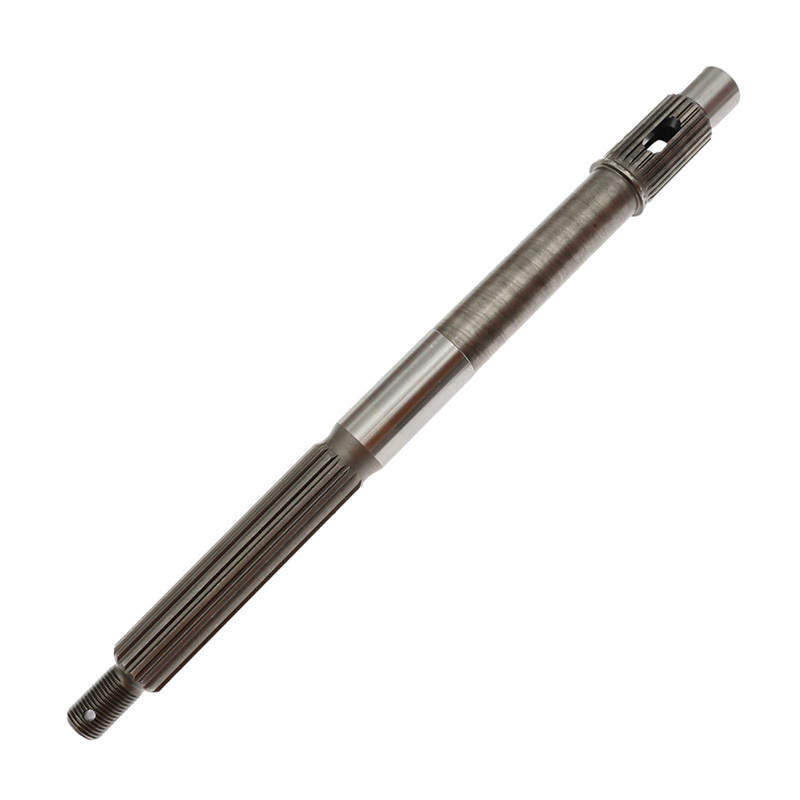
No. Direct manufacturing may reduce intermediary costs, but freight, clearance, inspection, order size, and downtime can change the result. Compare complete delivered quotations.
Check manufacturing responsibility, drawing control, material traceability, inspection capability, and communication. Where appropriate, approve a first article before repeat purchasing.
Often, but only when the correct approved part is physically available. Verify compatibility, documentation, dispatch timing, and support rather than assuming a local address guarantees speed.
Requirements depend on the vessel, component, contract, and applicable rules. Confirm them with the responsible engineer or classification society before ordering.
Possibly. Acceptance depends on the supplier's capabilities and production economics. Ask about minimum quantities, setup charges, drawings, and inspection requirements.
Use an approved specification, track supplier performance, and replenish before stock becomes critical. Where practical, maintain a qualified backup route for urgent requirements.
1. [International Trade Administration — Determine Total Export Price]. Basis for the definition and components of landed cost. [trade]
2. [International Chamber of Commerce — Incoterms® Rules]. Basis for the explanation of delivery-related tasks, costs, and risk allocation. [iccwbo]
3. [International Chamber of Commerce — Using the Incoterms® 2020 Rules to Manage Tariff Risk in International Trade]. Clarifies that Incoterms rules allocate responsibilities rather than determine tariff rates or customs procedures. [iccwbo]
4. [DNV — Shaft Alignment and Propulsion Shaft Bearings]. Supports the discussion of alignment and propulsion reliability. [dnv]
5. [DNV — Propulsion Shaft Alignment Services]. Supports the discussion of bearing damage, off-hire, and installation verification. [dnv]
6. [UNCTAD — Review of Maritime Transport 2025: Staying the Course in Turbulent Waters]. Published September 24, 2025; supports the discussion of freight volatility and transport disruption. [unctad]


