


close
Choose Your Site
Global
Social Media
Views: 298 Author: Gill Transmission Parts Publish Time: 2026-09-28 Origin: Site


Content Menu
● Introduction: Why Source from China?
● How We Selected the Suppliers
>> 1. Ningbo Gill Transmission Parts Co., LTD.
>> 2. Zhenjiang Supersoar Marine Propulsion Co., Ltd.
>> 3. Dongtai Haizhou Machinery Factory
>> 4. Taizhou Sanyang Heavy Machinery Co., Ltd.
>> 5. Wartsila CME Zhenjiang Propeller Co Ltd
>> 6. Shanghai Zhiyou Marine & Offshore Equipment Co., Ltd.
>> 7. Dongtai Grand Morning Trading Co., Ltd.
>> 8. Chongqing Jeri Marine Equipment Co., Ltd.
>> 9. Zhenjiang Normanship Co., Ltd.
>> 10. Zhuhai Weitong Import & Export Co., Ltd.
● Buyer's Guide: From RFQ to Shipment
● FAQs
>> 1. How do I check whether an ISO 9001 certificate is expired or unrelated to this factory?
>> 2. Can a supplier's class-approved propeller certificate cover the shaft as well?
>> 3. How can I detect a downgraded shaft material without testing every piece?
>> 4. Should I approve an OEM shaft from a sample if no original drawing exists?
>> 5. What must change when moving from a small outboard shaft to a commercial-vessel stern shaft?
A reliable boat shaft is not simply a machined length of metal. Its material, geometry, surface condition and fit with adjoining parts all affect how consistently a propulsion system transmits power. For a purchasing manager, the real question is therefore not "Who offers the lowest unit price?" but "Who can reproduce the approved part, document what was made and deliver it on schedule?"
China offers a broad supplier base, but it is not one uniform boat shaft market. Ningbo and the wider Zhejiang manufacturing network are relevant to precision-machined outboard transmission parts. Jiangsu suppliers around Zhenjiang, Dongtai and Taizhou appear more often in searches for larger marine shafting systems, propellers and associated equipment. Shanghai-based marine businesses can offer engineered sourcing and export coordination. The right shortlist depends first on whether the requirement is an outboard propeller shaft, an inboard shaft, or a class-related shaft line for a commercial vessel.
The scale of China's shipbuilding industry helps explain that supplier depth. According to figures released by China's Ministry of Industry and Information Technology, the country completed 53.69 million deadweight tonnes of ships in 2025, representing 56.1% of global shipbuilding output. That is a shipbuilding figure—not a claim about China's share of boat shaft exports.
A May 2026 industry report estimated the global marine propeller market at USD 4.85 billion in 2025 and USD 5.26 billion in 2026. It provides useful context for propulsion procurement, but its figures should not be presented as the size of the boat shaft market.
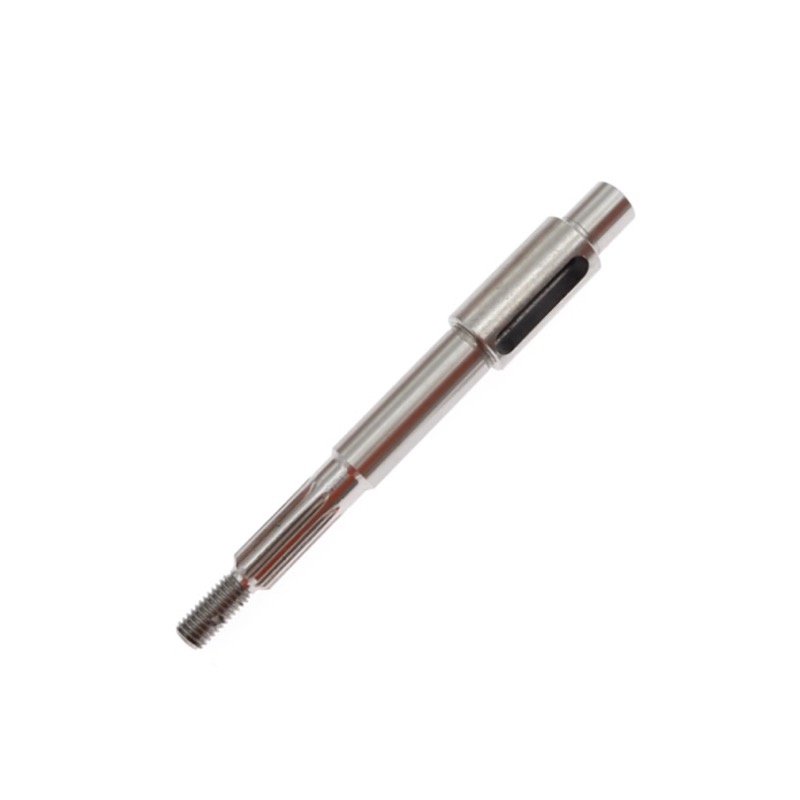
A strong shortlist starts with four checks: a relevant product scope, an identifiable manufacturing or supply model, evidence of engineering and inspection capability, and a workable route to repeat orders. Buyers should also test how a supplier handles drawing revisions, material traceability, production scheduling and nonconforming parts—not just how quickly it sends a quotation.
This article uses "Top 10" as a sourcing shortlist, not a verified league table. The companies below serve different vessel sizes and procurement models. Some describe their own factories; others openly operate as marine equipment suppliers, trading companies or coordinators of partner factories. Published capacity and certification statements are identified as supplier claims unless independently validated. Missing founding years, shaft-specific capacities and MOQs are left undisclosed rather than estimated.
| Selection question | Evidence to request | Why it matters |
|---|---|---|
| Does the company make the required shaft type? | Product drawing, comparable completed parts and application references | An outboard spline shaft and a large stern shaft are different purchasing programs |
| Who performs critical operations? | Factory visit or live process audit; machining and heat-treatment route | "Manufacturer" may describe a business that subcontracts some operations |
| Can material be traced? | Material specification, heat number and inspection documents | A plausible appearance does not prove the specified alloy or treatment |
| Can approved dimensions be repeated? | First-article report, calibrated measurement records and batch control plan | A successful prototype does not guarantee stable production |
| Are delivery and approvals project-ready? | Written lead time, MOQ, certificate scope and inspection hold points | Approval for one product or facility does not automatically cover another |
For technical screening, distinguish the shaft from the propeller: nickel-aluminum bronze may be specified for a propeller, while the mating shaft must be selected against its own strength, corrosion, bearing and coupling requirements. Do not assume a material grade is suitable merely because a supplier calls it "marine grade." Ask the designer to specify the governing drawing, material standard, heat treatment, surface finish and any applicable classification requirements.
For a classed vessel, agree on the classification society's requirements before manufacture. The International Association of Classification Societies explains that its Unified Requirements provide a common minimum framework for member societies; the project's applicable society rules and approved drawings still determine what the buyer must obtain.
Be equally precise about environmental and market-access claims. A bare mechanical shaft should not be assumed to require CE marking simply because the finished boat does: the EU Recreational Craft Directive defines which separately marketed components fall within its scope. RoHS principally concerns electrical and electronic equipment, so a generic "RoHS-certified shaft" claim needs an application-specific explanation. Neither label substitutes for material, dimensional or marine-class evidence.
The order begins with a specialist in outboard transmission parts and then broadens to ship shafting manufacturers, propulsion-package providers and marine sourcing businesses. Published capacity is not necessarily boat-shaft capacity, and "MOQ not disclosed" means the buyer must request a written, part-specific quotation.
| Company | Best-fit inquiry | Public capacity signal | Published MOQ | Public approval signal |
|---|---|---|---|---|
| 1. Ningbo Gill Transmission Parts Co., LTD. | Outboard propeller shafts, drive shafts, gears and custom aftermarket parts | Over 3.6 million units annually across multiple transmission components; shaft-only capacity not stated | Not disclosed; request prototype and production MOQs separately | Company states ISO 9001 certification |
| 2. Zhenjiang Supersoar Marine Propulsion Co., Ltd. | Larger stern shafts and integrated propulsion sourcing | Advertises stern shafts up to 16,000 mm long, 500 mm in diameter and 16 tonnes per piece; annual shaft output not stated | Not disclosed | States ISO 9001 and various class-approval capabilities; verify per item |
| 3. Dongtai Haizhou Machinery Factory | Ship shafting and rudder-system components | Not disclosed | Not disclosed | Supplier profile states ISO 9001 and ship inspection certificates from several societies |
| 4. Taizhou Sanyang Heavy Machinery Co., Ltd. | Custom heavy marine and dredging shaft-and-rudder projects | Not disclosed | Not disclosed | Website refers to ISO 9001; verify scope and validity |
| 5. Wartsila CME Zhenjiang Propeller Co Ltd | Large fixed-pitch propeller and shaft-line package inquiries | Wärtsilä reported 6,500 tonnes/year of propeller output at its expanded operation in 2007; not a current shaft-capacity figure | Project-specific; request quotation | Historical release describes shared ISO 9000 quality management; request current entity and approval documents |
| 6. Shanghai Zhiyou Marine & Offshore Equipment Co., Ltd. | Custom marine shaft systems through an engineering and supply network | Shaft-specific capacity not disclosed | Not disclosed | Advertises society-approved options; confirm factory and project documents |
| 7. Dongtai Grand Morning Trading Co., Ltd. | Larger shafting-and-rudder assemblies through an affiliated production network | Profile claims more than 200 complete shafting/rudder sets yearly; independently reconfirm | Not disclosed | Profile lists model approvals; verify the legal manufacturer and exact scope |
| 8. Chongqing Jeri Marine Equipment Co., Ltd. | Custom propeller-and-shaft inquiries across smaller and larger boats | Not disclosed | Not disclosed | Says major class certificates can be supplied on request; check applicability |
| 9. Zhenjiang Normanship Co., Ltd. | Drawing-based ship propeller shafts and shafting packages | Not reliably established from the reviewed public material | Not disclosed | Product listing advertises a CCS-certificate option; obtain the actual documents |
| 10. Zhuhai Weitong Import & Export Co., Ltd. | Multi-product marine sourcing, including shaft procurement coordination | Own shaft capacity not established | Not disclosed | Says marine class documents are available for many products; confirm shaft-specific coverage |
*Comparison basis: company pages and product listings available for review. Capacity figures describe different products and periods and must not be compared as equivalent output. Supplier certifications, founding dates, markets and OEM terms should be checked directly before publication as firm procurement assurances.*
Ningbo Gill Transmission Parts Co., LTD. is the most directly relevant option on this list for buyers sourcing outboard motor transmission components rather than a complete shaft line for a large ship. Its company profile traces the business's predecessor to 1997 and says the current company acquired a standardized facility of more than 25,000 square metres in 2016. It lists outboard gears, crankshafts, drive shafts and propeller shafts among its research, production and sales activities.
Gill states annual capacity above 3.6 million units across gears, drive shafts, transmission shafts and other components. That figure is not an annual output figure for boat shafts alone. Its published equipment list includes automated spiral bevel gear machines, machining centres, grinding machines and inspection equipment; the company also describes sample-based measurement and product development. These are relevant signals for a distributor trying to qualify a replacement part against an existing sample or drawing.
Its website states ISO 9001 certification obtained in 2024 and identifies North America, Europe, Asia and South America as markets. For small and mid-sized brands, the attraction is a supplier with an outboard-parts focus and a stated willingness to develop custom parts—not an independently proven promise of the lowest MOQ or fastest response. Buyers should ask Gill to quote prototype quantity, production MOQ, response milestones and first-article documentation for the specific part number.
OEM/ODM fit: Sample mapping, drawing-based development, outboard shaft and gear variants, and repeat aftermarket programs. For a shaft intended for a larger classed ship, request relevant references rather than assuming its outboard experience transfers directly.
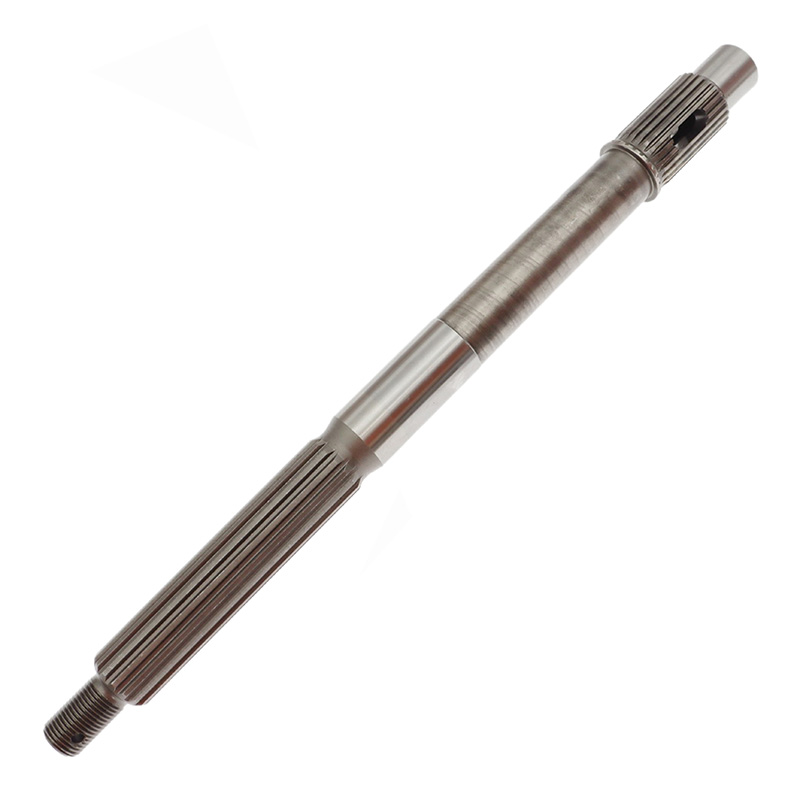
Founded in 2014 according to its company profile, Supersoar describes a shareholding interest in a propeller manufacturing facility and cooperation with other propulsion and shafting factories. It lists marine shafting systems, stern shafts, bearings, stern tubes and related components. This makes it useful where the buyer needs several matched elements rather than one small outboard spare.
Its shafting page advertises stern shafts up to 16,000 mm long, 500 mm in diameter and 16 tonnes per piece. Treat these as a published capability envelope, not proof that every grade, geometry or inspection route can be delivered at those limits. The company says its products have ISO 9001 and several classification-society approvals; ask whether the named shaft will be made at its shareholding factory or a partner facility.
Markets and OEM/ODM fit: Its English-language pages position it for international marine inquiries and drawing-based shafting packages. Specific destination markets, shaft MOQ and the manufacturing entity for a given order should be confirmed in the RFQ.
Dongtai Haizhou Machinery Factory presents itself as a manufacturer of complete ship shafting and rudder-system equipment in Jiangsu. Its public supplier profile describes production, processing and testing equipment and a quality-management system aligned with ISO 9001:2015. It also states that ship inspection certificates have been obtained from several classification societies.
This is a useful candidate when a yard needs a stern shaft alongside seals, bearings or rudder-related hardware. The published profile does not establish a founding year, annual shaft capacity, destination-market breakdown or standard MOQ. Request those details rather than treating the platform registration date as the factory's establishment date.
OEM/ODM fit: Customer-requirement-based shafting and rudder components. Ask for comparable vessel references, an operation-by-operation manufacturing plan and certificates tied to the proposed production site.
Sanyang's primary emphasis is custom heavy machinery for dredging. Its site also identifies ship and marine equipment, including shaft-and-rudder systems. That places it on a shortlist for engineered, heavy-duty inquiries—not automatically on a shortlist for high-volume outboard replacement shafts.
The company describes design, manufacturing and testing capabilities and refers to ISO 9001 on its site. The reviewed pages do not establish its founding year, shaft-specific throughput or export markets. A buyer should therefore move quickly from marketing descriptions to drawings, machine capacity, material sourcing and examples of completed shaft work.
OEM/ODM fit: Non-standard, drawing-led projects associated with dredging or other marine equipment. Ask whether the critical shaft itself is machined in-house and which operations require approved subcontractors.
Wärtsilä reported that this Zhenjiang joint venture was established in 2004 and expanded its propeller factory in 2007. Its historical announcement states that the expanded operation could begin machining propeller shafts and deliver fixed-pitch propeller packages with complete shaft lines and accessories. At the time, Wärtsilä described sales to Chinese shipyards and exports representing approximately 15–20% of production.
This is a different procurement proposition from an aftermarket outboard-parts factory: the potential value lies in a coordinated propulsion package for a shipbuilding project. However, the public figures in the cited announcement are historical. The 6,500-tonne annual output was propeller output, not boat-shaft capacity, and the announcement does not establish current ownership, production scope, MOQ or certification status.
OEM/ODM fit: Engineered, project-specific shaft-line and propeller packages. Before including the company in a live tender, confirm the present contracting entity, available manufacturing scope and class-approval route.
Zhiyou's company profile gives 2006 as its establishment year and describes manufacturing, export and trading activities. Its marine shaft-system page covers thrust, intermediate and stern shafts, along with bearings and shaft accessories, and advertises customized design and production.
The company identifies worldwide markets in its profile and describes OEM/ODM work and an associated manufacturing-base network. That breadth may help a buyer combining shafting with other marine outfitting. It also makes factory attribution essential: request the name and address of the plant performing each critical operation, not simply the exporter's company profile. Published claims about classification options should be matched to the ordered item and vessel.
OEM/ODM fit: Drawing-based marine shaft systems and coordinated multi-product orders. Shaft-specific capacity and MOQ remain to be quoted.
Dongtai Grand Morning's supplier profile describes a business covering shafting, rudder assemblies, castings, seals and bearings. It claims an affiliated manufacturing network, more than 200 complete marine shafting-and-rudder sets per year, and markets spanning Southeast Asia and Chinese coastal and Yangtze River locations.
The same profile uses language about more than 30 years of activity, but the reviewed information does not establish a precise founding year for the named trading company. Nor should an asserted relationship with a larger industrial group be accepted without corporate documentation. Its strength as a *candidate* is system breadth; its main due-diligence issue is identifying the legal seller, actual manufacturer and holder of each relevant approval.
OEM/ODM fit: Custom stern shafts, countershafts and shafting/rudder assemblies. Confirm whether quoted capacity belongs to the proposed production site and whether the named certification covers that site.
Jeri markets marine propellers and shafts to buyers with different boat requirements and says it can supply to customer specifications. Its product page describes applications ranging from smaller boats to fishing vessels and yachts, and states that major class certificates can be supplied on request. It also identifies its own factory and an international sales team.
This breadth makes Jeri worth an inquiry when the project includes a propeller and mating shaft. It does not, by itself, prove that every listed shaft type is produced in-house or covered by the same approval. The reviewed page does not give a reliable establishment year, shaft-specific annual capacity or a defined list of principal export markets.
OEM/ODM fit: Customer-specified propeller-and-shaft combinations. Request an interface drawing covering taper or spline, hub engagement, rotation direction and assembly responsibility before placing a combined order.
A public product listing identifies Zhenjiang Normanship Co., Ltd. with a marine propeller shaft advertised as available with a CCS certificate. Other listings show shafting-system products for ship applications. That is enough to justify an initial technical inquiry, but not enough to present the company as a verified factory with a particular output, founding date or certification scope.
OEM/ODM fit: Potentially drawing-based propeller shafts and ship shafting. Ask for the legal manufacturer's business details, shop-floor evidence, material and inspection route, and a sample of a shaft-specific certificate before advancing it to a qualified-supplier list.
Weitong describes itself as a global marine and offshore equipment supplier with customization support and access to inspection and classification documentation for many products. Its public company page is explicit about the import/export business model; it does not establish Weitong as the owner of a boat-shaft production line.
For a buyer assembling several marine equipment categories in one purchase, a sourcing coordinator may reduce communication and shipment complexity. For a safety-critical shaft, that convenience should not obscure who approves the drawing, buys the raw material, machines the part and issues the final inspection record. The reviewed material does not establish a founding year, shaft-specific markets, shaft capacity or MOQ.
OEM/ODM fit: Coordinated sourcing and customized marine equipment procurement. Include the producing factory and its permitted subcontractors in the purchase agreement.
The most expensive boat shaft is often the one that fits on paper but creates rework at installation. A disciplined qualification process makes technical expectations visible before price negotiations hide them.
1. Define the application. State the vessel or outboard model, operating environment, power and speed data, whether the shaft is a spare or a new design, and whether marine classification applies. Identify who owns the mating propeller, coupling, bearing and seal specifications.
2. Issue a controlled drawing package. Specify material standard and grade, heat treatment, critical diameters, taper or spline geometry, threads, keyways, runout, surface finish, inspection datums and drawing revision. Mark characteristics that require 100% inspection.
3. Verify the producing site. Obtain the legal company name, factory address, key machine list and process map. Confirm which facility conducts forging, heat treatment, spline cutting, grinding and final inspection.
4. Agree on approval evidence. Request the material certificate, inspection plan, any required nondestructive-testing procedure, and the applicable classification-society documents. A general company certificate is not automatically a product certificate.
5. Qualify samples before volume. Approve a first article against the controlled drawing, then test fit with actual mating parts. Where appropriate, evaluate hardness, material composition, concentricity, bearing-journal finish and functional performance.
6. Write repeatability into the order. Define batch identification, change-control rules, acceptance sampling, corrective-action timing and the treatment of rejected parts. Ask for production and delivery milestones in writing.
7. Protect the part in transit. Agree on corrosion protection, caps for finished ends, supports that prevent long-shaft bending, crate handling points and identification that survives export shipping.
One issue easily missed in a shaft-only RFQ is datum mismatch: the supplier measures runout relative to one set of centres, while the assembler judges fit from the bearing journals or mating hub. Both sides can hold apparently acceptable reports and still disagree when the shaft is installed. To avoid that dispute, identify the inspection datums and assembly references on the drawing, then require the first-article report to show *where and how* each critical feature was measured. For repeat orders, retain a signed master sample or approved measurement record alongside the drawing revision.
Material substitution is another avoidable risk. A certificate bearing the right alloy name is not sufficient if it cannot be linked to the delivered batch. Require heat-number traceability and define when independent composition or mechanical testing is needed. For classed work, align those checks with the survey and documentation requirements agreed for the vessel before machining starts.
China offers credible sourcing options across distinct boat shaft categories, but a useful shortlist is not a substitute for part-specific qualification. Start with the intended vessel and drawing; then compare factories on traceability, measurable tolerances, actual producing-site capability and documented delivery terms. For small and mid-sized brands seeking custom outboard transmission parts, Ningbo Gill Transmission Parts Co., LTD. is a relevant first inquiry because its published business scope centres on outboard gears and shafts, sample-based development and repeat production. Request a drawing review, first-article plan and written MOQ and lead-time proposal before making a supplier decision.
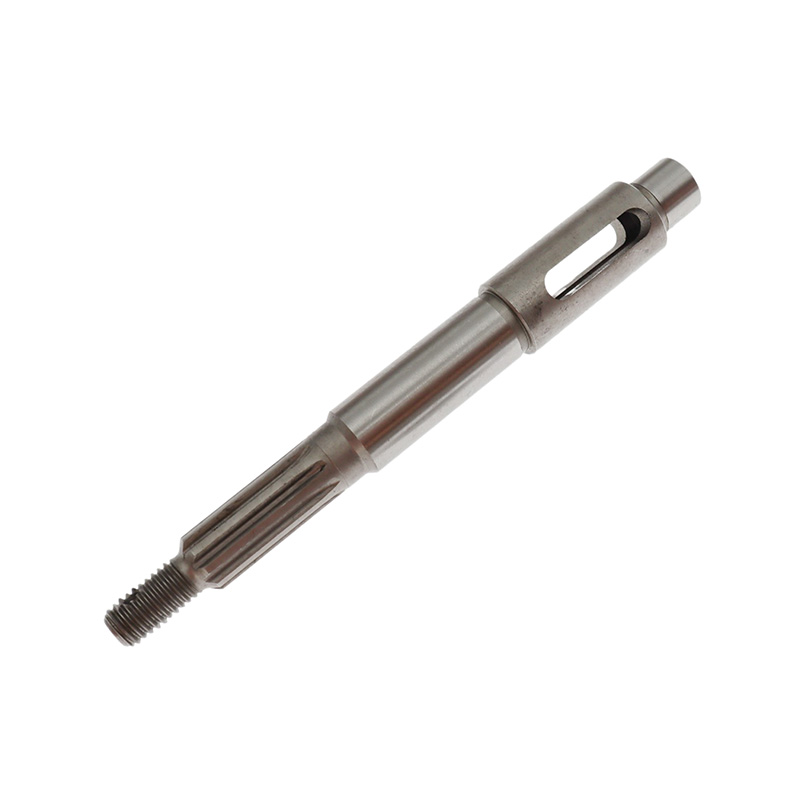
Request the complete certificate, including certificate number, legal entity, address, scope, issue and expiry dates, and certification body. Check its status through the issuing body or an appropriate accreditation-backed verification service; IAF CertSearch provides a route for checking accredited certifications. A valid certificate for a sales office or unrelated product scope does not establish control at the proposed machining site.
Do not assume so. Ask the supplier and the project's classification society which manufacturer approvals, material documents, inspection stages and product certificates apply to the *shaft ordered*. A document for a propeller, bearing or another production site may not answer that requirement.
Specify an unambiguous grade and standard, require a material document tied to heat numbers, and maintain traceability through machining and packing. Use a risk-based independent test plan for the first order and after material-source changes; select tests that can actually distinguish the specified and suspected substitute grades.
A physical sample can start reverse engineering, but wear, prior repair and unknown heat treatment can make it a poor sole reference. Document the sample's condition, measure several examples where possible, define mating-part interfaces and have the responsible engineer approve a new controlled drawing before production.
The supplier qualification must expand from part fit and batch repeatability to the complete shaft-line interface, material and inspection route, handling of a long or heavy part, and any vessel-specific class requirements. A factory's success with thousands of small shafts does not prove capability for a multi-tonne stern shaft—and the reverse is also true.
- [China's 2025 shipbuilding statistics — State Council of China]. [english.www.gov]
- [Marine propeller market report, updated May 2026 — Fortune Business Insights]. The reported market covers propellers and related propulsion categories, not shafts alone. [fortunebusinessinsights]
- [Unified Requirements — International Association of Classification Societies]. [iacs.org]
- [Certificate verification — IAF CertSearch]. [iafcertsearch]
- [Recreational Craft Directive 2013/53/EU — EUR-Lex]. [eur-lex.europa]
- [RoHS Directive scope — European Commission]. [environment.ec.europa]
- [Ningbo Gill company and manufacturing profile]. [gilltransmission]


