


close
Choose Your Site
Global
Social Media
Views: 215 Author: Gill Transmission Parts Publish Time: 2026-10-27 Origin: Site


Content Menu
● Yamaha Outboard Parts vs Mercury Outboard Parts: Quick Comparison
● How Yamaha and Mercury Parts Identification Differs
>> Finding the Right Yamaha Outboard Parts
>> Finding the Right Mercury Outboard Parts
● Comparing Yamaha and Mercury Lower Unit Parts
>> Outboard Gears: Tooth Count Is Only the Beginning
>> Drive Shafts: Verify Every Functional Interface
>> Propeller Shafts: Appearance Does Not Establish Fitment
● Yamaha vs Mercury Crankshafts: A Separate Purchasing Decision
● Genuine vs Aftermarket Outboard Parts
>> When Genuine Parts Provide a Clear Purchasing Route
>> How to Evaluate Aftermarket Yamaha and Mercury Parts
● Which Brand's Parts Cost More?
● Saltwater Durability: Ask Better Questions Than "Which Brand Lasts Longer?"
● A Seven-Step Buying Process for Yamaha and Mercury Parts
● Expert Insight: Build a Better B2B Request for Quotation
● Practical Scenario: Comparing Two Replacement Gear Offers
● Request a Specification-Based Review from Ningbo Gill
>> Are Yamaha Outboard Parts Better Than Mercury Outboard Parts?
>> Are Yamaha and Mercury Outboard Parts Interchangeable?
>> How Do I Find the Correct Yamaha Outboard Part Number?
>> Why Is the Serial Number Important for Mercury Parts?
>> Can I Buy Aftermarket Gears or Shafts for Either Brand?
>> Should I Replace a Gear or the Complete Lower Unit?
Choosing between Yamaha outboard parts and Mercury outboard parts starts with one essential rule: buy for the engine's exact specification, not the brand's reputation alone. Neither brand offers a universally better replacement part. For buyers, the meaningful differences involve identification systems, engine applications, component design, sourcing channels, and repair requirements.
At Ningbo Gill Transmission Parts Co., LTD., our perspective centers on marine transmission components. With 29 years of experience in developing, manufacturing, and supplying outboard gears, crankshafts, drive shafts, and propeller shafts, we approach this comparison through one priority: compatibility.
This guide explains how to compare both brands, evaluate replacement options, and prepare a purchasing specification that reduces avoidable mistakes.
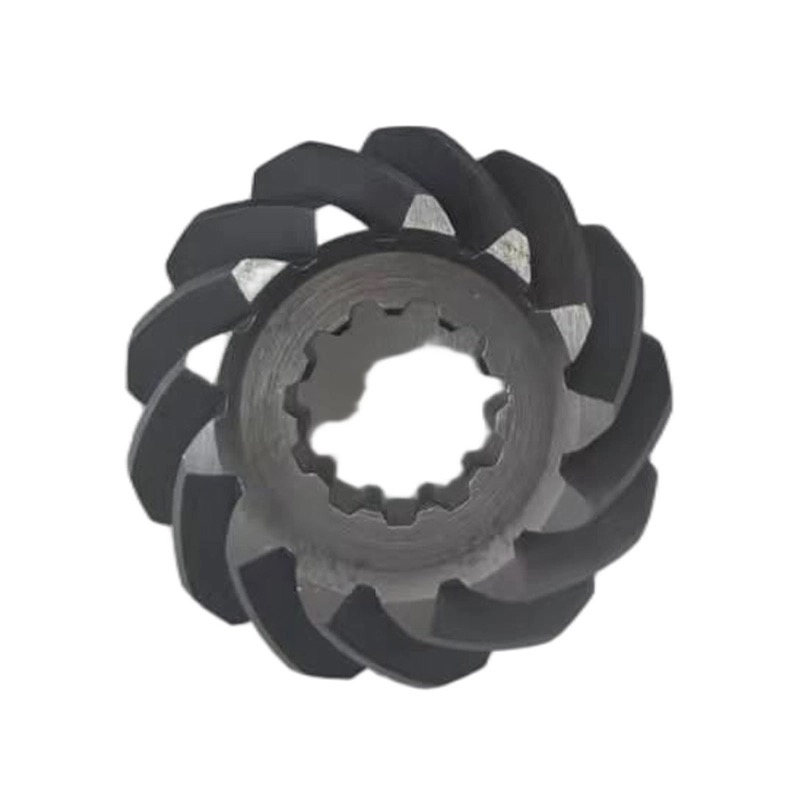
Yamaha and Mercury both provide official parts catalogs. However, buyers must follow each manufacturer's identification process rather than assume horsepower or appearance establishes fitment.
| Buying consideration | Yamaha outboard parts | Mercury outboard parts |
|---|---|---|
| Official identification | Model or serial-number lookup; Yamaha advises confirming model, model year, and part number | Model or serial-number lookup; serial-range verification is particularly important |
| Catalog information | Application-specific diagrams and part numbers | Application-specific diagrams and part numbers |
| Transmission components | Selected for the exact Yamaha engine and gearcase configuration | Selected for the exact Mercury engine and gearcase configuration |
| Older-engine sourcing | Some catalog-listed older parts may no longer be available | Availability requires checking the specific part and supplier |
| Replacement alternatives | Genuine and independent aftermarket options require application verification | Genuine and independent aftermarket options require application verification |
| Meaningful price comparison | Compare equivalent repair scope and delivered cost | Compare equivalent repair scope and delivered cost |
| Cross-brand interchangeability | Never assume compatibility with Mercury | Never assume compatibility with Yamaha |
The practical conclusion is straightforward: compare complete, verified purchasing options—not two brand names in isolation.
Yamaha's official U.S. outboard parts finder supports searches by model or serial number. It also advises buyers to reconfirm the model, model year, and part numbers with an authorized dealer before ordering.
For a Yamaha replacement-parts inquiry, prepare:
- A clear photograph of the engine identification plate.
- The complete model designation and serial number.
- The existing part number, if available.
- The relevant catalog diagram.
- Information about any previous engine or lower-unit replacement.
Yamaha also states that its U.S. catalog covers models sold in the United States. International buyers should therefore verify regional application rather than assume every catalog entry applies worldwide.
Mercury's official parts catalog allows searches by engine model or serial number and provides engine diagrams and part numbers.
Serial-number ranges deserve particular attention when buying Mercury outboard replacement parts. A description such as "Mercury 150 hp" does not provide enough detail to identify every internal component.
Record the complete serial number. Then confirm that the proposed part applies to the relevant engine configuration and serial range.
For either brand, a previously replaced gearcase deserves separate verification. The engine identification plate alone may not fully describe the assembly currently installed.
For buyers of transmission components, lower-unit specification is more useful than broad claims about brand quality.
A lower-unit purchase may involve gears, shafts, bearings, seals, clutch components, or an assembled gearcase. Each option creates a different verification burden.
When comparing Yamaha outboard gears with Mercury outboard gears, matching the number of teeth is not enough.
A technical review should address:
- Exact application and reference part number.
- Gear geometry and mating-component compatibility.
- Bearing interfaces and mounting dimensions.
- Material and heat-treatment requirements.
- Required assembly settings.
- Whether the manufacturer specifies replacement of associated components.
Do not assume a replacement gear is suitable because it fits inside the housing. Installation must follow the applicable service procedure, including any required measurements and adjustments.
For Yamaha and Mercury drive shaft replacement, overall length is only one checkpoint.
Buyers should also confirm spline geometry, bearing locations, seal-contact surfaces, and any relevant water-pump interfaces. A dimensional drawing is more useful than a photograph for assessing these features.
Our purchasing recommendation is to request inspection results against an agreed specification—not simply a statement that a shaft "fits Yamaha" or "fits Mercury."
Propeller shafts require the same discipline. Check the application, spline details, bearing seats, seal areas, and interfaces with shifting components.
A visibly damaged original can help explain a failure, but it should not automatically become the sole manufacturing reference. Wear, corrosion, or deformation may obscure the intended dimensions.
For either brand, combine the original reference number with controlled dimensional information wherever possible.
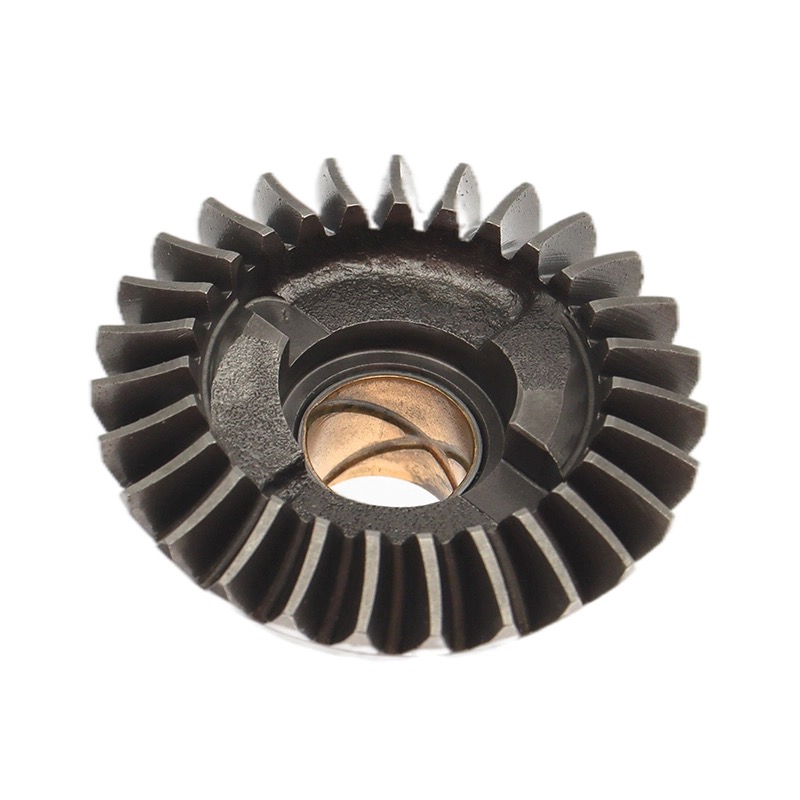
Crankshafts belong to the engine's internal rotating assembly rather than the lower unit. They require a separate compatibility review.
Relevant purchasing details include:
- Engine family and configuration.
- Exact crankshaft reference number.
- Journal dimensions and condition requirements.
- Associated bearing specifications.
- Applicable inspection and assembly procedures.
A crankshaft should never be selected from horsepower alone.
For a distributor handling both brands, maintain separate application records for Yamaha crankshafts and Mercury crankshafts. Cross-references should identify verified applications rather than imply that visually similar components are interchangeable.
Genuine Yamaha outboard parts and genuine Mercury outboard parts provide a manufacturer-catalog route for identifying replacement components.
That route can be especially valuable when the buyer needs an exact catalog replacement, dealer assistance, or clarification of a revised part number.
However, genuine status does not eliminate the need to verify fitment, availability, package contents, or return conditions.
Independent aftermarket parts can offer another sourcing route, particularly for distributors and repair businesses evaluating multiple suppliers.
The right question is not simply whether a component is genuine or aftermarket. It is whether the supplier can substantiate its suitability.
Request:
1. A precise application list and reference-number cross-reference.
2. Defined material and manufacturing requirements.
3. Inspection criteria for critical dimensions.
4. Batch identification and traceability.
5. Written warranty and return terms.
Do not treat an aftermarket supplier as an authorized manufacturer supplier unless that relationship is independently documented.
There is no reliable universal answer.
A meaningful Yamaha outboard parts vs Mercury outboard parts price comparison requires equivalent components, comparable engine applications, the same destination market, and a consistent quotation date.
Avoid comparing a bare shaft from one supplier with an assembly containing bearings and seals from another.
Build the comparison around:
> Total repair cost = parts + associated components + freight + duties + installation + required testing + downtime
For example, a cheaper gear quotation may exclude components included in another offer. A locally stocked assembly may cost more initially but avoid a commercially significant delay.
These are purchasing scenarios, not evidence that either brand is consistently cheaper.
For B2B buyers, request line-item quotations with identical scope before calculating savings.
Brand names alone cannot establish how long a replacement gear or shaft will last.
A useful comparison considers the specific component, operating environment, maintenance requirements, installation quality, and documented manufacturing specification.
For exposed interfaces, ask about corrosion protection and compatibility with adjoining components. For internal transmission parts, ask how the supplier verifies material, heat treatment, surface condition, and dimensional conformity.
Avoid accepting unsupported statements such as:
- "All Yamaha shafts resist corrosion better."
- "Mercury gears are always stronger."
- "Stainless steel guarantees unlimited saltwater durability."
Without application-specific evidence, these claims provide little purchasing value.
Follow the relevant engine manual for maintenance products and procedures rather than transferring recommendations automatically between brands.
This workflow is useful for boat owners, repair workshops, importers, and wholesale distributors.
1. Identify the engine. Record the full model and serial number, not just horsepower.
2. Confirm the installed assembly. Check whether the powerhead or gearcase has previously been replaced.
3. Locate the catalog reference. Identify the correct diagram and component number.
4. Verify current applicability. Ask about superseded numbers and required accompanying parts.
5. Define the supply scope. Specify individual component, matched components, repair kit, or complete assembly.
6. Review the evidence. Check drawings, application details, inspection requirements, and written commercial terms.
7. Approve the order in writing. Record quantity, packaging, delivery expectations, and acceptance criteria.
For internal transmission work, purchasing approval does not replace the applicable service manual or qualified installation.
A detailed request for quotation improves both technical clarity and commercial comparability.
For Yamaha or Mercury transmission components, include:
| Information to provide | Why it matters |
|---|---|
| Engine model and complete serial number | Establishes the starting application |
| Original reference number | Reduces ambiguity |
| Gearcase identification, where relevant | Helps verify the installed assembly |
| Drawing or controlled dimensions | Defines measurable requirements |
| Order quantity and repeat demand | Supports production and stocking discussions |
| Inspection and traceability requirements | Establishes acceptance expectations |
| Delivery destination and required date | Enables realistic logistics planning |
Where available, attach photographs for orientation. Use drawings and specifications—not photographs alone—to define critical features.
For repeat purchases, retain the approved specification and revision history. This prevents a successful sample from becoming an unclear reference during later production orders.
Consider a repair business sourcing a gear for an identified outboard. This is an illustrative scenario, not a customer case study.
Supplier A offers a lower price but provides only a broad horsepower-based application description.
Supplier B requests the serial number, confirms the reference number, defines package contents, and supplies agreed inspection documentation.
The second offer is easier to evaluate because it reduces uncertainty. However, documentation alone does not prove performance. The buyer must still review whether the evidence adequately addresses the actual application.
Apply the same standard to Yamaha and Mercury orders. Neither brand label should substitute for a complete specification.
Ningbo Gill Transmission Parts Co., LTD. specializes in the development, production, and sale of marine transmission components, including outboard gears, crankshafts, drive shafts, and propeller shafts.
For your next sourcing inquiry, send the engine model, complete serial number, reference part number, required quantity, and available drawings or photographs.
Ask our team to review the application and discuss the appropriate component specification, inspection requirements, and quotation scope. Product compatibility and supply availability should be confirmed individually before purchase.
Yamaha and Mercury names are used here to identify comparison subjects and potential applications, not to imply authorization, endorsement, or universal interchangeability.
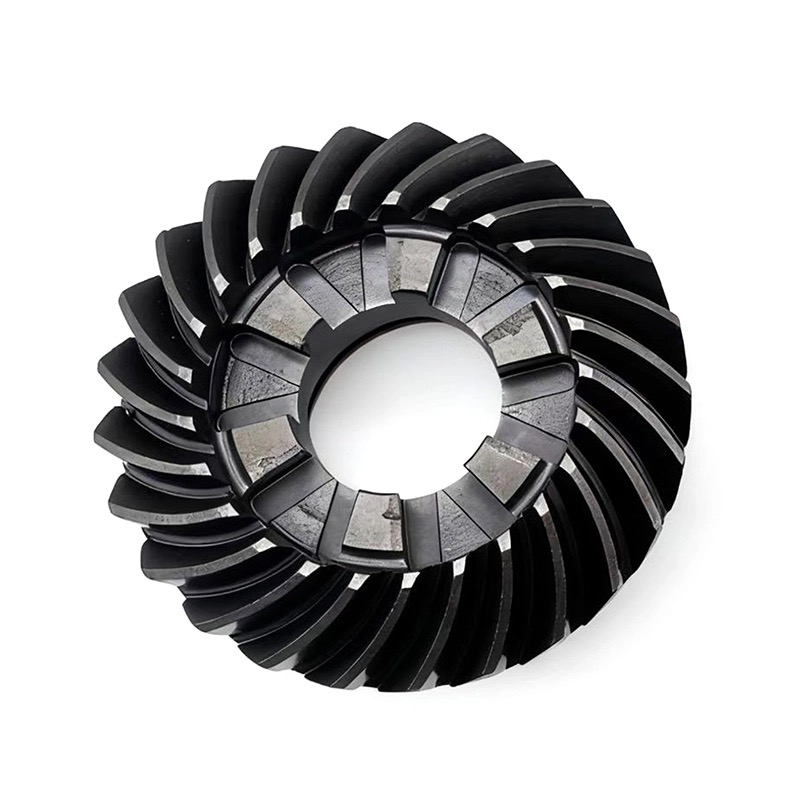
Neither is universally better. Buyers should evaluate the exact component, verified application, documentation, availability, and total repair cost. A brand-wide ranking does not resolve a specific replacement-parts decision.
Do not assume interchangeability. Use the relevant catalog and documented application information. Similar dimensions, horsepower ratings, or external appearance do not establish compatibility.
Use Yamaha's official parts finder with the model or serial number. Confirm the applicable diagram and part number, and follow Yamaha's advice to reconfirm details with an authorized dealer before ordering.
Mercury provides model- and serial-number-based catalog lookup. Serial information helps identify the applicable engine configuration and relevant parts listing, reducing the ambiguity of horsepower-only searches.
Aftermarket options exist, but suitability requires verification. Request precise application information, reference-number cross-references, technical specifications, inspection criteria, and written warranty terms before approving a purchase.
That depends on the diagnosed damage, condition of related components, repair requirements, parts availability, and total cost. Have the assembly assessed before choosing the repair scope.
1. Yamaha Motor Corporation, U.S.A. — Outboard Parts Finder. Official model- and serial-number lookup, U.S.-market coverage limitations, ordering verification guidance, and older-parts availability notice. [yamaha-motor]
2. Yamaha Outboards — Owner Center: Catalogs. Official access point for product information and the Rigging & Parts Catalog. [yamahaoutboards]
3. Mercury Marine — Mercury Marine Parts Digital Catalog. Official model- and serial-number search with engine diagrams and part numbers. [mercurymarine]
4. Mercury Marine — Parts and Maintenance: Parts. Official overview of Mercury replacement parts. [mercurymarine]
5. MerCruiserParts.com — OEM Mercury Outboard Parts & Diagrams. Dealer guidance on serial-number ranges, catalog selection, and parts identification. [mercruiserparts]
6. MarineEngine.com — Mercury Outboard Motor Parts. Genuine and aftermarket purchasing categories, serial-number lookup, and parts-diagram navigation. [marineengine]


