


close
Choose Your Site
Global
Social Media
Views: 222 Author: Gill Transmission Publish Time: 2026-06-11 Origin: Site


Content Menu
● Why Face Width Matters in Marine Outboard Gears
● Basic Gear Nomenclature Around Face Width
● How Face Width Influences Load Capacity
● Practical Guidelines for Choosing Face Width in Marine Gears
● Face Width and Contact Pattern in Outboard Gearboxes
● Manufacturing Considerations: Face Width Tolerances and Finishing
● Case Study: Optimizing Face Width in a Marine Outboard Gear
● Face Width vs. Weight and Cost in Marine Design
● Field Feedback: What Marine Users Notice About Gear Face Width
● Expert Tips for Engineers and Buyers of Marine Outboard Gears
● How Ningbo Gill Transmission Parts Supports Optimal Face Width Design
● Table: Face Width Design Considerations for Marine Outboard Gears
● Action Steps: How to Evaluate Face Width in Your Next Marine Gear Project
● Frequently Asked Questions (FAQ)
Understanding face width is critical when you design, select, or purchase gears for outboard gearboxes and other marine driveline components. It directly affects load capacity, durability, and noise, and is one of the most important dimensions when comparing gear suppliers for marine applications. [radcomservices]
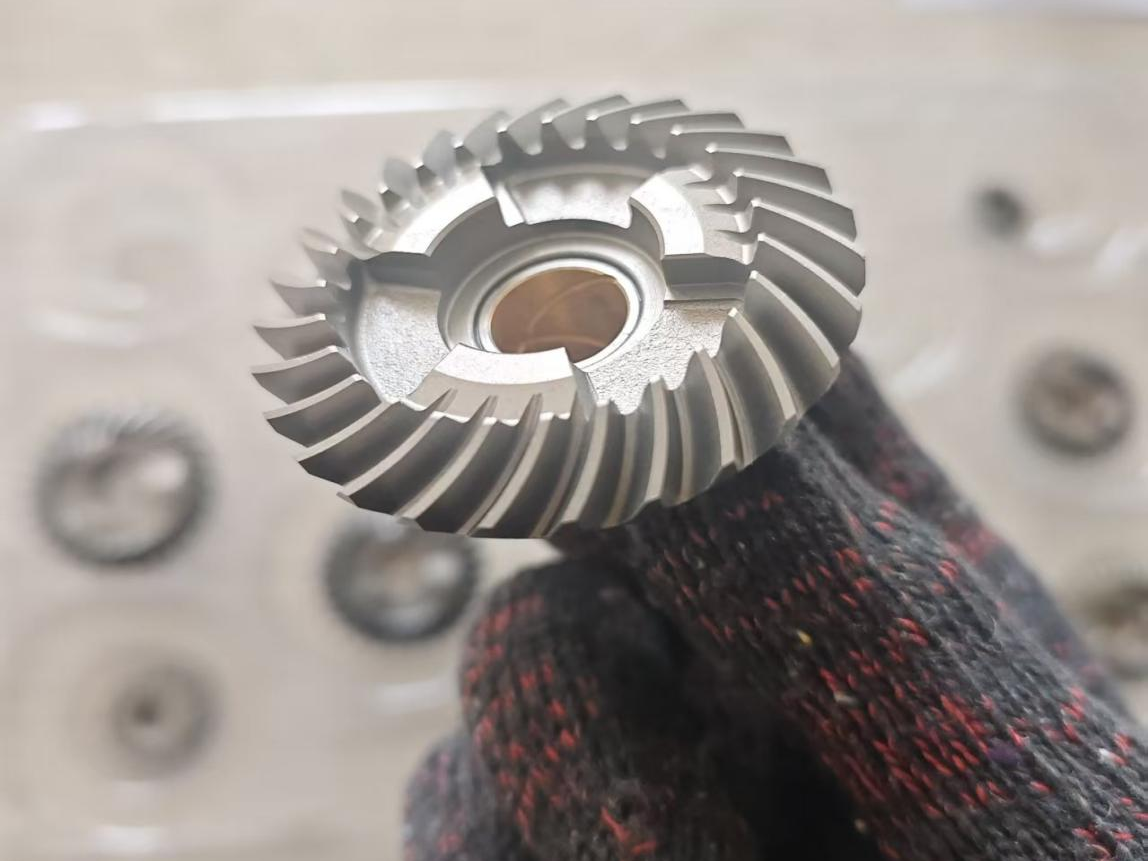
In gear nomenclature, face width is the width of the gear tooth measured parallel to the gear axis, across the working tooth surface. It is usually denoted by the symbol b or Fw in technical drawings and catalogs. [energy]
For marine outboard gears, face width is measured on:
- The tooth flank that actually meshes with the mating gear
- The usable working surface, excluding chamfers or reliefs
- The full effective width that transmits torque under load
A clear understanding of face width helps engineers communicate precisely with suppliers and ensures that the final gear matches the design intent. [scilife]
Marine operating conditions are harsh: high torque, frequent shock loads, corrosion, and continuous operation at varying speeds. Under these conditions, face width becomes a key design parameter for several reasons: [alibaba]
- Load capacity: A wider face distributes torque across a larger surface, increasing allowable load.
- Durability: Adequate face width reduces surface pressure, which helps prevent pitting and scuffing.
- Noise and vibration: Well-chosen face width improves contact ratio and reduces vibration, which is critical for comfort and NVH performance in boats.
- Heat and lubrication: A proper face width works together with lubrication design to dissipate heat and maintain film thickness.
For marine outboard gearboxes, insufficient face width often shows up as premature tooth wear, chipped teeth, or noisy operation under high load. [radcomservices]
To design or evaluate marine gears, you need to understand how face width relates to other basic gear parameters. [perfectit]
Key terms:
- Module (m): Tooth size parameter in millimeters, defined as pitch diameter divided by number of teeth.
- Addendum: Radial distance from pitch circle to tooth tip.
- Dedendum: Radial distance from pitch circle to tooth root.
- Face width (b): Tooth width in the face direction, along the gear axis.
- Rim width: Total gear blank width, which may be wider than the face.
Typical technical drawings for marine gears show face width with a dimension callout such as b = 20 mm, often combined with tolerances and surface finish requirements. [scilife]
In simplified terms, face width scales the load-bearing area of the gear. Assuming material, module, and tooth profile are the same, increasing face width: [radcomservices]
- Increases the contact area between mating teeth
- Reduces surface pressure and bending stress
- Improves safety factors for bending and pitting
However, face width cannot grow indefinitely. A face that is too wide may cause:
- Uneven contact due to shaft deflection or housing misalignment
- Edge loading if the alignment and machining are not precise
- Higher axial loads in helical gears, which must be balanced by bearings
For marine outboard gears, designers typically balance face width against weight, cost, and gearbox packaging constraints. [alibaba]
While exact values must come from standards and calculations, marine gear designers often follow these practical guidelines. [energy]
1. Use standard ratios as a starting point
- For many industrial gears, face width is often 8–12 times the module as an initial design guideline. [energy]
- For high-torque marine outboard gears, engineers may select toward the higher end of that range, then refine with stress calculations and testing. [alibaba]
2. Consider shaft stiffness and gearbox housing
- If shafts and housings are relatively flexible, extremely wide faces may not be fully engaged.
- In such cases, it may be better to use a moderate face width with higher material strength and better surface treatment instead of simply increasing width. [radcomservices]
3. Account for manufacturing and alignment tolerances
- Wider faces require tighter control of runout, face run, and alignment to avoid edge contact.
- In small marine gearboxes, limited space sometimes forces a compromise between face width and allowable tolerances.
By combining these rules of thumb with actual load calculations (for example, based on ISO or AGMA gear standards), marine engineers can arrive at a face width that is both safe and cost-effective. [scilife]
In practical marine gearbox testing, technicians evaluate the tooth contact pattern under load. The goal is to use face width efficiently without overloading edges. [radcomservices]
Typical best practices:
- Aim for contact centered in both face and profile directions, with some margin at the edges.
- In bevel or hypoid gears commonly used in outboard lower units, ensure that the contact patch stays away from the tooth edges across the full operating torque range. [alibaba]
- Use blueing or marking compound during assembly to verify contact across the full face width.
If the contact pattern shows heavy marking only on a narrow strip of the face, the effective face width is smaller than the nominal width, which wastes material and may cause localized failure. [radcomservices]
From a manufacturing perspective, face width is not just a nominal value. It has tolerances and finishing requirements that directly influence performance. [perfectit]
Important points:
- Dimensional tolerance: The allowable variation in face width must align with the overall tolerance stack-up of the gearbox.
- Parallelism and squareness: The gear face must be square to the bore and parallel to the reference surfaces to avoid misalignment.
- Deburring and chamfers: Edge conditions at the face influence contact pattern and lubrication flow.
For marine outboard gears, suppliers often combine precision grinding, shot peening, and surface hardening to ensure that face width and tooth surfaces can withstand repeated shock loading and corrosion. [alibaba]
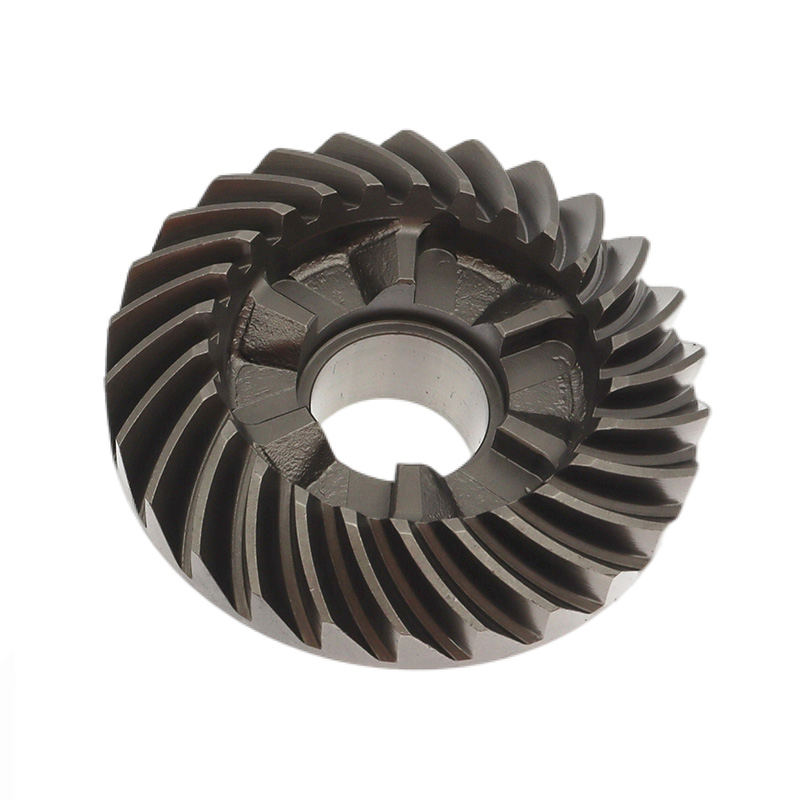
A typical scenario in marine OEM projects involves re-optimizing face width when horsepower or torque ratings increase. [alibaba]
Example scenario:
- A customer upgrades from a 50 hp to a 70 hp outboard while retaining similar gearbox packaging.
- Initial field tests reveal excessive wear and pitting on the drive pinion teeth around mid-face.
- Engineers analyze the stress distribution and find that the existing face width operates near or beyond the allowable contact stress under peak load.
To address this, they implement a multi-step optimization:
1. Slightly increase face width within the available housing space.
2. Improve material grade and heat treatment to raise allowable contact stress.
3. Optimize tooth micro-geometry to distribute load more evenly across the face.
With these changes, the updated gears show improved service life and lower noise, even under higher torque conditions. [radcomservices]
Marine equipment designers constantly balance performance, weight, and cost. Face width influences all three: [seoclarity]
- Performance: Wider faces increase capacity and robustness.
- Weight: Wider teeth add mass to rotating components, which can affect acceleration and fuel efficiency.
- Cost: Additional material and machining time raise part costs.
For outboard manufacturers and aftermarket suppliers, a practical strategy is to:
- Define target torque and life requirements for the gearbox.
- Select the minimum face width that achieves those targets with appropriate safety factors.
- Use advanced materials and surface treatments to fine‑tune performance where packaging limits face width growth. [alibaba]
From a user and service perspective, face width is not directly visible, but its effects are very noticeable. [mraa]
Common user feedback related to face width and gear design includes:
- Noise and vibration: Boat owners and technicians report quieter, smoother operation when gears are properly sized and aligned.
- Durability under heavy load: Fleets that run at high load (e.g., commercial fishing, patrol boats) pay close attention to early signs of tooth wear or chipping.
- Service intervals: Longer inspection intervals and fewer rebuilds are often linked to robust gear design, where face width and tooth geometry are optimized for real-world duty cycles. [mraa]
Collecting and integrating this real-world feedback into design iterations helps marine gear manufacturers refine face width selection beyond pure calculation. [sagepath-reply]
If you are specifying or sourcing outboard gears, you can use face width as one of the key comparison and evaluation parameters. [blog.marketmuse]
For design engineers
- Always evaluate face width as part of system stiffness and alignment, not in isolation.
- Combine analytical calculations with finite element or contact analysis when upgrading power or changing housing geometry.
- Work closely with manufacturing teams to ensure face width tolerances are realistic and economically achievable.
For procurement and sourcing specialists
- Request detailed drawings and inspection reports that include face width and associated tolerances.
- Compare suppliers not only on nominal face width but also on material, heat treatment, and surface finishing, which collectively determine the effective capacity.
- Verify that suppliers have experience in marine environments, including corrosion resistance and sealing strategies for gearboxes. [energy]
By approaching face width as a strategic parameter, rather than a simple catalog figure, you can significantly improve the reliability and lifecycle cost of marine outboard gearboxes.
As a specialist in marine transmission components and outboard gears, Ningbo Gill Transmission Parts Co., LTD focuses on matching face width design to real operating conditions in marine applications. [alibaba]
Key practices include:
- Application-specific design: Face width and tooth geometry are tailored to engine power, duty cycle, and installation constraints.
- Controlled manufacturing: Tight control of face width, runout, and surface finish ensures consistent contact patterns and noise performance.
- Collaborative engineering: Our team works with OEM and aftermarket partners to interpret field feedback and refine face width design for the next iteration of marine gearboxes. [radcomservices]
If you are developing or upgrading an outboard gearbox, working with a gear specialist that understands both face width calculations and marine field conditions can make a measurable difference in product performance and customer satisfaction.
| Design aspect | Role of face width |
|---|---|
| Load capacity | Wider face spreads torque, lowering contact and bending stress. (radcomservices) |
| Noise and vibration | Correct face width supports stable contact and low NVH. (radcomservices) |
| Misalignment sensitivity | Very wide faces can be sensitive to shaft deflection and housing errors. (radcomservices) |
| Weight and inertia | Increased face width adds rotating mass, impacting response. (seoclarity) |
| Cost and manufacturability | Wider faces require more material and machining time. (energy) |
| Service life | Optimized width improves fatigue life and reduces early failures. (alibaba) |
To turn this knowledge into practical action, you can follow a simple checklist when you assess or design marine outboard gears. [blog.marketmuse]
1. Define operating conditions
- Engine power and torque
- Duty cycle (recreational, commercial, continuous)
- Environmental factors (saltwater exposure, temperature range)
2. Review existing gear design
- Current face width and module
- Observed failure modes or user complaints (noise, wear, breakage)
3. Align with standards and calculations
- Use applicable gear design standards and software to estimate required face width.
4. Validate with prototypes and testing
- Check tooth contact patterns across the full face width.
- Monitor temperature, noise, and wear over endurance tests.
5. Iterate based on field data
- Adjust face width or tooth geometry based on real-world results and feedback from service technicians and end users. [sagepath-reply]
By following these steps, both engineers and buyers can make informed decisions about face width that directly impact the reliability and performance of marine outboard systems.
1. Is a wider face width always better for marine gears?
Not always. While a wider face generally increases load capacity, it can also increase misalignment sensitivity, weight, and cost. The optimal face width depends on shaft stiffness, housing design, and application load. Designers must balance these factors to achieve the best overall performance. [energy]
2. How does face width affect noise in outboard gearboxes?
Proper face width, combined with accurate alignment and tooth geometry, helps maintain stable tooth contact across the face, which reduces vibration and noise. If face width is mismatched with shaft stiffness or alignment quality, edge loading and irregular contact can increase noise levels. [radcomservices]
3. What measurement tolerances are typical for face width in precision marine gears?
Precision marine gears often require tight dimensional tolerances and strict control of squareness between face and bore. The exact tolerance depends on gear size and design standard, but in high-precision applications it is typically on the order of a few hundredths of a millimeter, coordinated with other gearbox tolerances. [perfectit]
4. How should buyers compare face width between different gear suppliers?
Buyers should not look at face width alone. They should compare face width together with module, material, heat treatment, and surface finish, and ask for test data or service histories. A slightly narrower gear with better material and treatment can outperform a wider gear made to lower standards. [seoclarity]
5. Does face width selection differ for bevel and spur gears in marine applications?
Yes. Bevel and hypoid gears in outboard lower units have complex contact patterns and are more sensitive to alignment and housing stiffness. Designers may optimize face width and tooth geometry differently than for spur gears, using specialized standards and test procedures specific to bevel and hypoid configurations. [alibaba]
1. U.S. Department of Energy – Communication Standards, "Search Engine Optimization Best Practices".
<https://www.energy.gov/cmei/communicationstandards/search-engine-optimization-best-practices> [energy]
2. SciLife, "Best practices and tips for technical writing" (2026).
<https://www.scilife.io/blog/best-practices-tips-technical-writing> [scilife]
3. Radcom, "Technical Writing Best Practices: The Key to Clear and Effective Communication" (2025).
<https://radcomservices.com/technical-writing-best-practices-the-key-to-clear-and-effective-communication/> [radcomservices]
4. MarketMuse, "Enhancing Your Content Strategy with SEO Best Practices" (2025).
<https://blog.marketmuse.com/enhancing-your-content-strategy-with-seo-best-practices/> [blog.marketmuse]
5. seoClarity, "How to Create a Winning SEO Content Strategy in 9 Steps" (2024).
<https://www.seoclarity.net/blog/seo-content-strategy> [seoclarity]
6. MRAA, "A Boat Dealer's Guide to Winning with SEO" (2025).
<https://mraa.com/a-boat-dealers-guide-to-winning-with-seo/> [mraa]
7. Alibaba Product Insights, "An Overview of Ningbo Marine Gear Box: Standards, Grades, and Mechanical Performance" (2026).
<https://www.alibaba.com/product-insights/ningbo-marine-gear-box.html> [alibaba]
8. Sagepath Reply, "How to Optimize Content for Generative AI Search Engines" (2025).
<https://sagepath-reply.com/blog/digital-marketing/optimize-content-generative-ai-search-engines/> [sagepath-reply]
9. PerfectIt, "Ten Best Practices for Technical Writing and Editing" (2021).
<https://www.perfectit.com/blog/ten-best-practices-for-technical-writing-and-editing> [perfectit]
10. Energy-related SEO guidance (general), "Search Engine Optimization Best Practices".
<https://www.energy.gov/cmei/communicationstandards/search-engine-optimization-best-practices> [energy]


