


close
Choose Your Site
Global
Social Media
Views: 222 Author: Gill Transmission Publish Time: 2026-06-12 Origin: Site


Content Menu
● What Is Gear Efficiency in Marine Outboards?
● Core Formula for Gear Efficiency
● Why Gear Efficiency Matters for Outboard Gears
● Main Sources of Power Loss in Gear Trains
● Design Parameters That Influence Gear Efficiency
● The Role of Lubrication and Alignment
● Specifics of Outboard Gear Ratios and Efficiency
● How a Specialist Manufacturer Approaches Outboard Gear Efficiency
● Practical Steps to Improve Gear Efficiency in Service
● Example: Evaluating Gearbox Efficiency in a Test Bench
● Expert Insights: Balancing Efficiency, Durability and Noise
● Future Trends in Marine Gear Efficiency
● FAQs on Gear Efficiency in Marine Outboards
In marine drivetrains, gear efficiency describes how effectively an outboard or marine gearbox converts input power from the engine into usable power at the propeller shaft. In simple terms, it is the percentage of power that gets through the gear set without being lost as heat, noise or vibration. [industrialgearboxsolutions]
For marine outboard gears and lower units, this efficiency directly impacts fuel burn, acceleration, top speed and reliability over long operating hours. For boat builders, fleet operators and OEM engineers, understanding gear efficiency is not just an academic exercise; it drives total cost of ownership and customer satisfaction on the water. [stober]
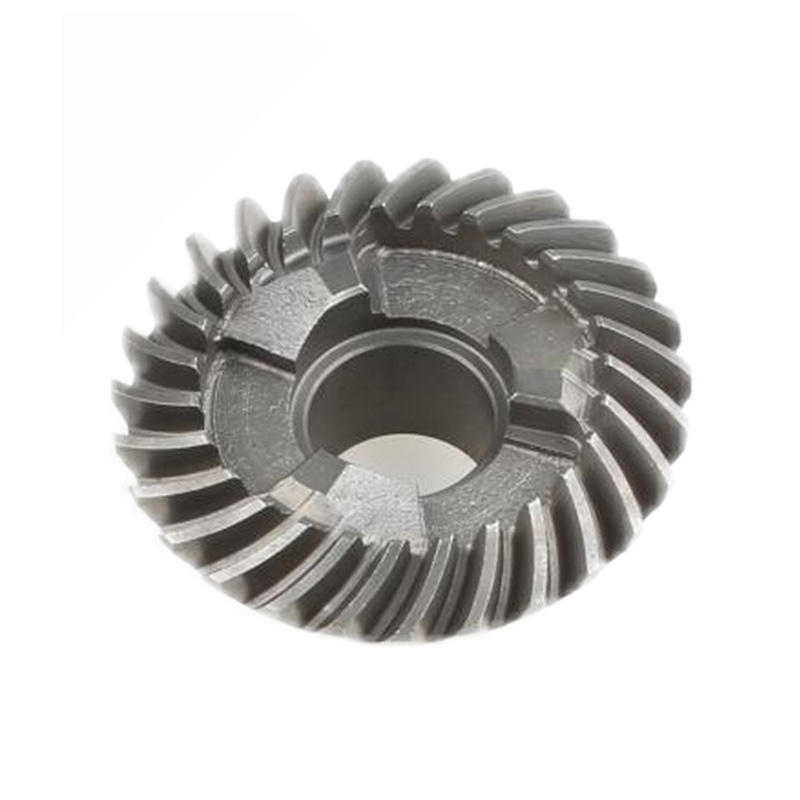
From a mechanical engineering perspective, the standard definition of gear or gearbox efficiency is:
η=(Output Power/Input Power)×100
Here, power is torque multiplied by rotational speed. Relying on torque alone is misleading because gear ratio changes speed as well as torque; using power accounts for both effects. [roymech]
In practical testing, engineers typically:
1. Measure input torque and speed at the engine side. [industrialgearboxsolutions]
2. Measure output torque and speed at the propeller shaft or load side. [industrialgearboxsolutions]
3. Convert both to power using P=T×n/9550 (for kW with torque in Nm and speed in RPM). [industrialgearboxsolutions]
4. Compute efficiency as output power divided by input power. [roymech]
For a healthy, well‑designed gear train, efficiency often lies above 90%, but can fall sharply when lubrication, alignment or gear geometry are not optimized. [stober]
Marine outboard gears operate in a harsh environment that includes constant load changes, saltwater corrosion, and long running periods at partial throttle. Even small percentage losses in efficiency can translate into measurable fuel consumption and temperature rise in the lower unit over hundreds of hours. [gearsolutions]
Some direct impacts of poor gear efficiency in outboards include:
- Higher fuel consumption at the same cruising speed. [boatcalculators.com]
- Increased oil temperature and risk of lubricant breakdown. [gearsolutions]
- Greater noise and vibration, especially during gear shifts and rapid throttle changes. [industrialgearboxsupply]
- Shortened component life for bearings, seals and gear teeth. [industrialgearboxsupply]
For OEMs supplying lower units and gear sets, improving efficiency is also a branding issue: boats that accelerate quickly, cruise quietly and run cool tend to generate stronger word‑of‑mouth and better user reviews. [lform]
Even the best‑designed gear set will never be 100% efficient. In both industrial and marine applications, a few mechanisms dominate power loss: [stober]
- Gear tooth friction as tooth flanks slide under load. [gearsolutions]
- Bearing friction, especially under high radial and thrust loads. [stober]
- Seal drag from shaft seals and labyrinth seals in the lower unit. [gearsolutions]
- Lubricant churning, where oil is whipped around instead of forming a thin film. [stober]
- Misalignment and poor contact pattern, which concentrate load and increase local heating. [infraredtraining]
In marine outboard gears, axial loads from the propeller, variations in trim angle and hull attitude, and frequent transitions between forward, neutral and reverse further amplify these losses if the gear set is not carefully engineered. [facebook]
From a gear designer's standpoint, efficiency is tightly linked to geometry, material and the number of stages. The following factors are particularly important: [gearsolutions]
- Pressure angle and tooth profile: Efficiency is a function of pressure angle and tooth count; carefully choosing the basic pressure angle reduces sliding and contact stress. [gearsolutions]
- Gear type and configuration: Helical and planetary gears often deliver higher efficiency and smoother running than poorly cut spur gears at equivalent loads. [stober]
- Number of stages: Each additional stage adds another set of tooth and bearing losses; minimizing stages improves overall efficiency. [stober]
- Surface finish and hardness: Proper finishing and heat treatment reduce micro‑pitting and wear, helping maintain efficiency over time. [gearsolutions]
- Backlash: Controlled backlash is necessary for lubrication and thermal expansion, but excessive backlash leads to impact, noise and additional losses. [industrialgearboxsupply]
In practice, a gear manufacturer serving outboard OEMs will iterate gear geometry using analytical calculations and real‑world testing to find a balance between torque capacity, efficiency, noise and manufacturability. [gearsolutions]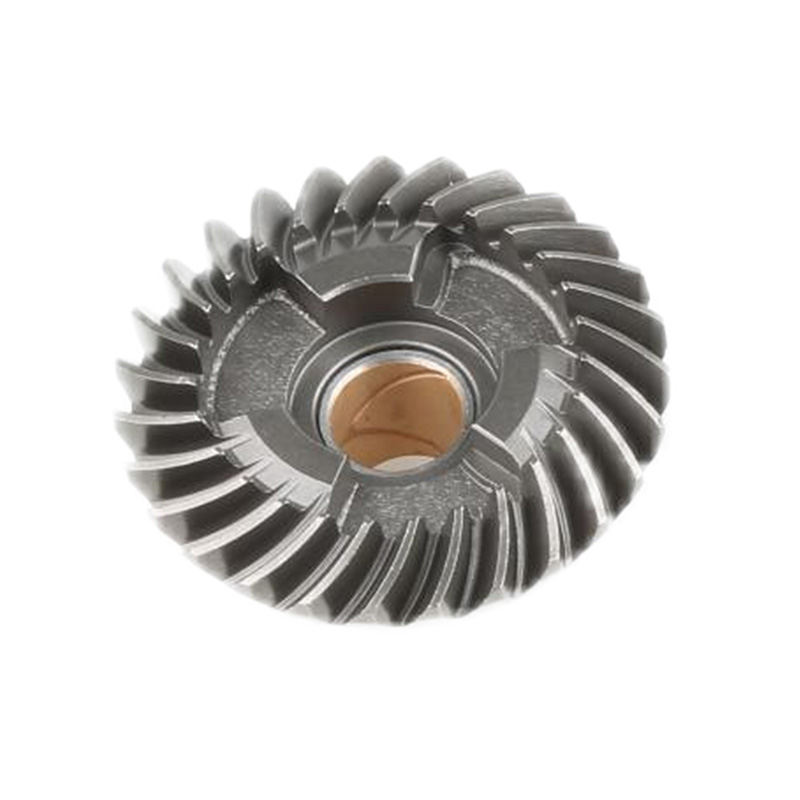
From the perspective of failure analysis, many efficiency problems in gearboxes can be traced back to lubrication and alignment issues rather than fundamental design flaws. [infraredtraining]
- Without a stable lubricant film, gears overheat, become noisy and suffer accelerated tooth wear. [gearsolutions]
- Under‑lubrication or degraded oil can lead to adhesion, micro‑welding on the tooth face and hot spots visible in thermal inspections. [infraredtraining]
- Misalignment creates uneven temperature gradients along the face width and irregular wear patterns, both of which reduce efficiency and shorten service life. [infraredtraining]
Routine checks of oil condition, temperature trends and vibration signatures allow operators to catch small efficiency losses before they become expensive failures. In marine applications where lower units are often sealed and compact, proactive diagnostics and scheduled oil changes are especially important. [boatcalculators.com]
In an outboard engine, the lower unit houses a reduction gear set that slows engine RPM to a suitable speed for the propeller while multiplying torque. Typical gear ratios for petrol outboards range from about 1.6:1 to 2.3:1, with higher numerical ratios providing more torque and lift at the expense of top‑end speed. [buckshotracing77]
Key points from field practice include:
- A higher gear ratio reduces propeller RPM at a given engine speed, which can improve hole‑shot and heavy‑load performance. [facebook]
- Changing gear ratio without adjusting propeller pitch can push the engine outside its recommended wide‑open throttle RPM range, hurting efficiency. [buckshotracing77]
- Matching gear ratio, propeller pitch and boat size ensures that the engine operates in its optimal power band while keeping lower‑unit loads within design limits. [facebook]
For gear manufacturers, this means designing gear sets that not only meet torque and strength requirements but also integrate smoothly with propeller selection and hull characteristics. [buckshotracing77]
A dedicated marine transmission parts company typically takes a system‑level view when engineering outboard gears and related components. Drawing on industry best practices, an effective approach usually includes: [lform]
- Designing gear geometry specifically for marine duty cycles, including long‑term partial loads, frequent shifts and reversing. [gearsolutions]
- Selecting materials and surface treatments tuned for corrosion resistance and wear resistance in saltwater environments. [gearsolutions]
- Optimizing bearing and seal arrangements to balance low friction with reliable sealing against water ingress. [stober]
- Validating gear sets with power‑loss testing across temperature, load and speed ranges representative of real boat usage. [industrialgearboxsolutions]
From an engineer's personal experience, collaborating early with boat builders and engine OEMs is essential; it ensures that the gear set is not treated as an isolated part but as a core component of the propulsion system. [lform]
For fleet owners, boatyards and technically inclined boaters, there are several practical actions that consistently improve gear efficiency and reliability in outboards:
1. Use the correct marine gear oil recommended by the engine or gearbox manufacturer, and change it at or before the specified interval. [gearsolutions]
2. Monitor for metal particles, discoloration or burnt smell in drained oil as early indicators of abnormal friction and wear. [industrialgearboxsupply]
3. Check backlash and noise during shifts and direction changes; increasing clunking is often a sign of excessive backlash or bearing wear. [industrialgearboxsupply]
4. Verify alignment and mounting if the boat has suffered impact or if abnormal vibration appears after maintenance. [infraredtraining]
5. Confirm gear ratio and propeller pitch after any lower‑unit replacement to avoid running the engine outside its optimal RPM range. [boatcalculators.com]
Implementing these steps does not require a full test lab, but it can significantly extend the life of outboard gears and preserve the efficiency designed into the system. [boatcalculators.com]
To illustrate how engineers quantify efficiency, consider a simple bench test for an outboard gear set:
- Input torque at the drive shaft: 200 Nm at 5,000 RPM
- Output torque at the prop shaft: 360 Nm at 2,600 RPM
Using the standard power equation, the input power and output power can be calculated, and efficiency determined as the ratio of these two values. In a well‑designed marine gearbox, this type of test typically shows efficiency in the mid‑90% range under nominal load. [roymech]
By repeating the test across different temperatures, oil viscosities and load levels, engineers can map how efficiency changes over the operating envelope, informing design updates and maintenance recommendations. [industrialgearboxsolutions]
From an industry expert's viewpoint, maximum efficiency is not the only goal for outboard gears. A small sacrifice in theoretical efficiency may be justified if it delivers better durability, quieter operation or more forgiving behavior in real‑world conditions. [gearsolutions]
For example:
- Slightly increased backlash can reduce noise but must be managed to avoid shock loads. [industrialgearboxsupply]
- Helical gears may run smoother and quieter than simple spur gears, but they introduce axial loads that must be absorbed by bearings. [stober]
- High surface hardness improves wear resistance but must be balanced with core toughness to resist impact and shock. [gearsolutions]
Experienced manufacturers therefore treat gear efficiency as one dimension of an integrated design space that also includes NVH (noise, vibration and harshness), manufacturability and long‑term serviceability. [gearsolutions]
Looking ahead, several trends are shaping how marine gear manufacturers approach efficiency:
- Improved simulation tools allow more accurate prediction of tooth contact, lubrication regimes and thermal behavior before prototypes are built. [gearsolutions]
- Advanced lubrication formulations and surface coatings reduce friction and slow wear even under boundary lubrication conditions. [gearsolutions]
- Condition monitoring, including thermal imaging and vibration analysis, is becoming more common even in mid‑size commercial fleets. [infraredtraining]
- Data‑driven optimization using field telemetry helps refine gear geometry and maintenance intervals based on real usage patterns rather than assumptions. [stober]
For marine outboard gear specialists, investing in these capabilities enhances not only efficiency but also the ability to prove performance and reliability to OEM partners and end users. [lform]
1. How efficient is a typical marine outboard gearset?
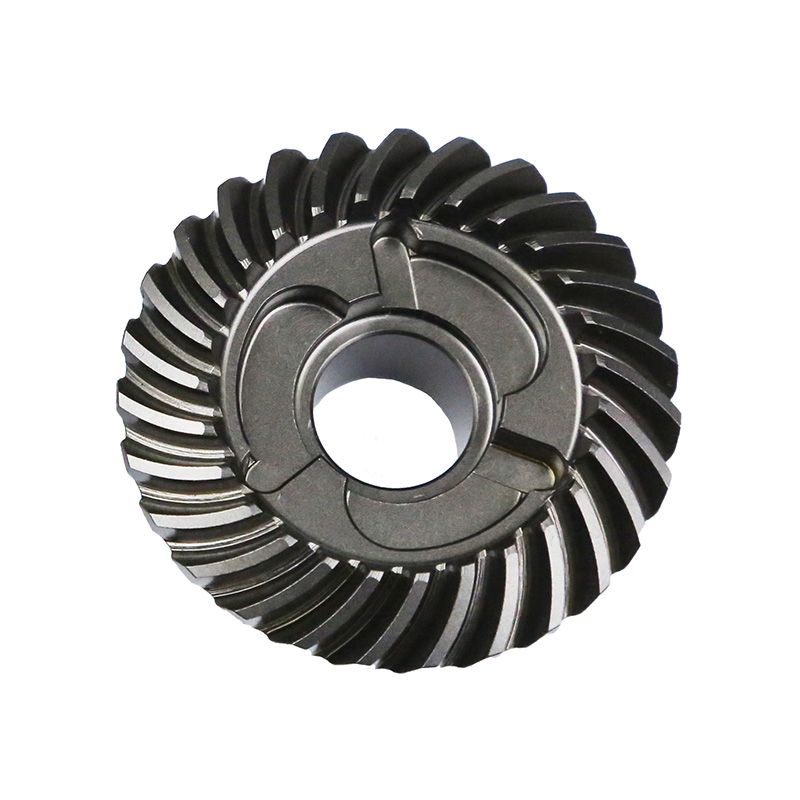
Most modern marine gearboxes and outboard lower units achieve efficiencies above 90% under nominal load, with losses mainly from tooth friction, bearings and seals. [roymech]
2. Does changing gear ratio affect efficiency?
Changing gear ratio primarily shifts torque and speed, but it can indirectly affect efficiency if it alters load distribution, lubrication conditions or engine operating RPM relative to the optimal range. [facebook]
3. What is the fastest way to lose gear efficiency in an outboard?
Running with degraded or incorrect lubricant, ignoring alignment issues and allowing backlash to increase due to wear are among the fastest ways to reduce efficiency and accelerate failure. [industrialgearboxsupply]
4. Can I calculate my boat's gear efficiency in the field?
In principle, yes: if you can measure torque and RPM at both input and output, you can compute power and thus efficiency, although most boat owners rely on lab or manufacturer data for precise values. [roymech]
5. How often should I change lower‑unit oil to protect efficiency?
Following or slightly exceeding the engine maker's recommended interval and checking for contamination or discoloration at each change provides a good balance between protection and operating cost. [boatcalculators.com]
- Industrial Gearbox Solutions – "Gearbox Efficiency Calculator." [Link] [industrialgearboxsolutions]
- STÖBER – "Gearbox efficiency: Calculation & energy loss." [Link] [stober]
- RoyMech – "Gear Efficiency." [Link] [roymech]
- Industrial Gearbox Supply – "Gearbox Backlash Problems: Causes and Solutions." [Link] [industrialgearboxsupply]
- Infrared Training Center – "Identifying Gear Alignment and Lubrication Concerns." [Link] [infraredtraining]
- Gear Solutions – "Determining Gear Efficiency." [Link] [gearsolutions]
- Gear Solutions – "Lubrication and its role in gear-failure analysis." [Link] [gearsolutions]
- Buckshot Racing – "Propeller Pitch & Lower Unit Gear Ratios." [Link] [buckshotracing77]
- Boat Calculators – "Marine Gear Ratio Calculator." [Link] [boatcalculators.com]
- Facebook boating technical post – "Understanding Gear Ratios in your Outboards." [facebook]


