


close
Choose Your Site
Global
Social Media
Views: 222 Author: Gill Transmission Publish Time: 2026-04-17 Origin: Site


As a marine transmission engineer who has spent years working with outboard gears in harsh saltwater environments, I've seen one truth repeat itself: smart gear surface treatment is often the invisible line between a smooth season on the water and an expensive mid‑season breakdown. In this guide, I'll walk you through the essentials of gear surface treatment, with a special focus on outboard gears and other marine applications, and share what we apply every day at Ningbo Gill Transmission Parts Co., LTD.. [nitrex]
Gear surface treatment refers to any process designed to improve the surface state of a gear, typically to increase corrosion resistance, wear resistance, fatigue strength, and appearance. [mraa]
For outboard gears and marine drive systems, proper surface treatment is critical because:
- Marine environments accelerate corrosion and pitting on unprotected steel surfaces. [pmc.ncbi.nlm.nih]
- Outboard gears face high load, shock, and mixed rolling–sliding contact, which drive surface fatigue and micropitting. [gearsolutions]
- Frequent start–stop cycles and low‑speed maneuvering create borderline lubrication conditions where surface finish and coating quality matter. [ieeexplore.ieee]
In practice, an optimized treatment strategy can:
- Extend gear life and reduce fatigue failures
- Stabilize backlash and noise over time by limiting wear and distortion
- Lower total cost of ownership for boat owners and fleet operators
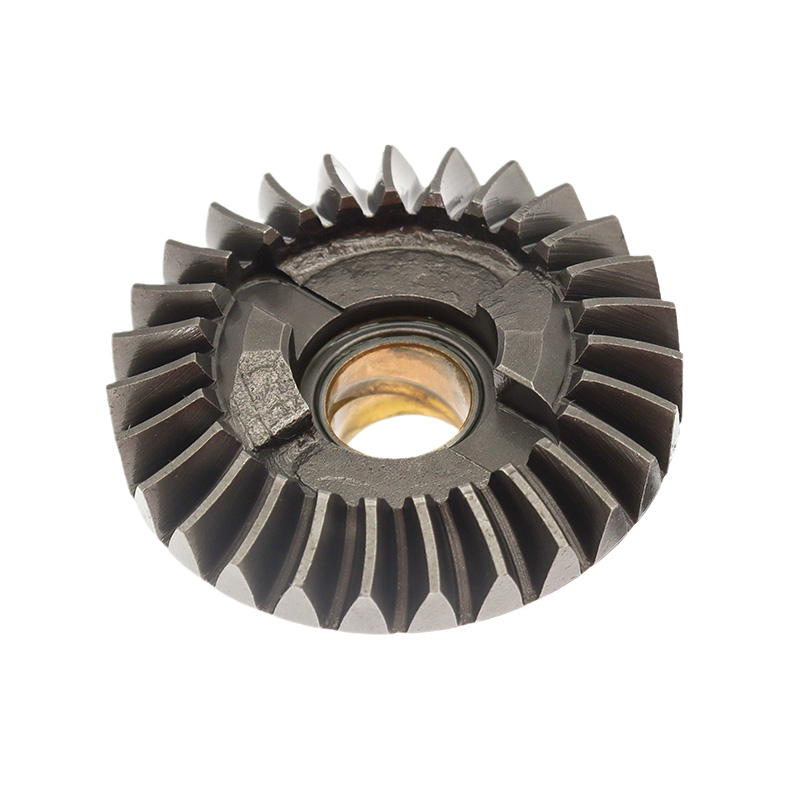
From both a design and maintenance perspective, the functions of gear surface treatment can be grouped into several key goals. [mraa]
- Improve corrosion resistance and rust prevention
- Enhance wear resistance under high contact stress
- Refine surface roughness to reduce friction and noise
- Improve surface appearance and visual quality
- Increase surface fatigue strength without major dimensional change
Different processes emphasize different combinations of these functions, so the right choice depends on both application load and environment.
Below I adapt and expand on the classic surface treatment categories widely used in gear manufacturing, adding a marine and outboard‑specific perspective. [nitrex]
Zinc plating is widely used to improve the rust‑prevention performance of steel components. A thin zinc layer (typically about 2–25 μm) acts as a sacrificial barrier, protecting the steel substrate when exposed to moisture and salt. [pmc.ncbi.nlm.nih]
Typical zinc‑based systems include:
- Conventional zinc plating – Baseline sacrificial protection
- Trivalent chromate passivation – Silver‑white surface with yellowish tint, RoHS‑compliant (no hexavalent chromium), improved appearance and corrosion resistance. [mraa]
- Trivalent black chromate passivation – Black surface, also hexavalent‑chromium‑free, with superior heat and corrosion resistance and stable color. [mraa]
For outboard gears, zinc plating is more commonly applied to housings, brackets, and non‑precision elements rather than to the tooth flanks themselves, because gear tooth contact requires tight control of hardness and geometry.
Electroless nickel plating deposits a uniform nickel layer (roughly 3–10 μm) without using direct electrical current. It offers: [mraa]
- High corrosion resistance and wear resistance
- Very uniform thickness, even on complex shapes and high‑precision parts
- Good suitability for components where dimensional accuracy is critical [mraa]
For precision outboard gears and shafts, chemical nickel can be a strong option in locations where:
- Corrosion risk is high (e.g., splash zones, partial immersion)
- Tight tolerances must be maintained in bores and spline interfaces
Black oxide is an alkaline treatment that heats steel in an alkaline solution at around 140 °C, forming a thin black iron oxide film (thickness typically under 3 μm). [mraa]
Key characteristics:
- Improved basic rust protection when combined with oil or wax
- Minimal dimensional change
- Low cost and visually uniform black finish [mraa]
For outboard gears, black oxide can be used as:
- An interim corrosion protection during storage and transport
- A cosmetic and light‑protection layer on non‑critical external components
In direct saltwater exposure, however, black oxide alone is insufficient; it must be complemented by oils, greases, or additional sealing.
RAYDENT is a proprietary surface treatment that forms a 1–2 μm thick black chromium oxide film directly bonded to the base metal. [mraa]
Performance highlights:
- High rust resistance
- Improved wear resistance
- Very strong adhesion and low risk of peeling due to the integrally formed oxide layer [mraa]
Where marine design tolerances allow, this type of thin integrated oxide coating can reinforce both durability and appearance on exposed gear elements or drive components.
Phosphate treatment immerses steel in a heated phosphate solution, forming a crystalline phosphate film on the surface. [mraa]
Benefits include:
- Enhanced corrosion resistance
- Improved paint adhesion when used as a pretreatment
- Better oil retention for lubricated interfaces [mraa]
A manganese‑based phosphate solution such as PARUHOSU M can produce a 3–15 μm thick film with excellent rust resistance and very high wear resistance and lubricity, making it well suited for sliding components. In outboard gearboxes, this type of treatment can support: [mraa]
- Improved scuffing resistance in sliding splines and couplings
- Better oil film stability on heavily loaded contacts
In locations where conventional lubricating oil or grease cannot be used, solid lubricant coatings become highly valuable. [pmc.ncbi.nlm.nih]
An example is a dry‑film coating similar to KHK's "Dry coat spray", where a solid lubricant such as molybdenum disulfide (MoS₂) is sprayed onto the gear tooth surface and dries into a thin film. [mraa]
Key roles in marine and outboard systems:
- Support running‑in of new gears to avoid scuffing
- Reduce micro‑slip and micro‑fretting corrosion under vibratory loading
- Provide temporary protection in boundary lubrication or emergency‑running conditions [gearsolutions]
WPC treatment uses fine particles (approximately 40–200 μm) projected at speeds above 100 m/s to impact the metal surface. The rapid impact causes local heating and rapid cooling, refining the surface microstructure and inducing compressive residual stress. [pmc.ncbi.nlm.nih]
Key advantages:
- Improved fatigue strength
- Enhanced sliding performance
- Negligible dimensional change (about 1–2 μm) [mraa]
For outboard gears subjected to high cyclic torque and shock, WPC treatment can significantly improve pitting resistance and bending fatigue life without compromising gear geometry.
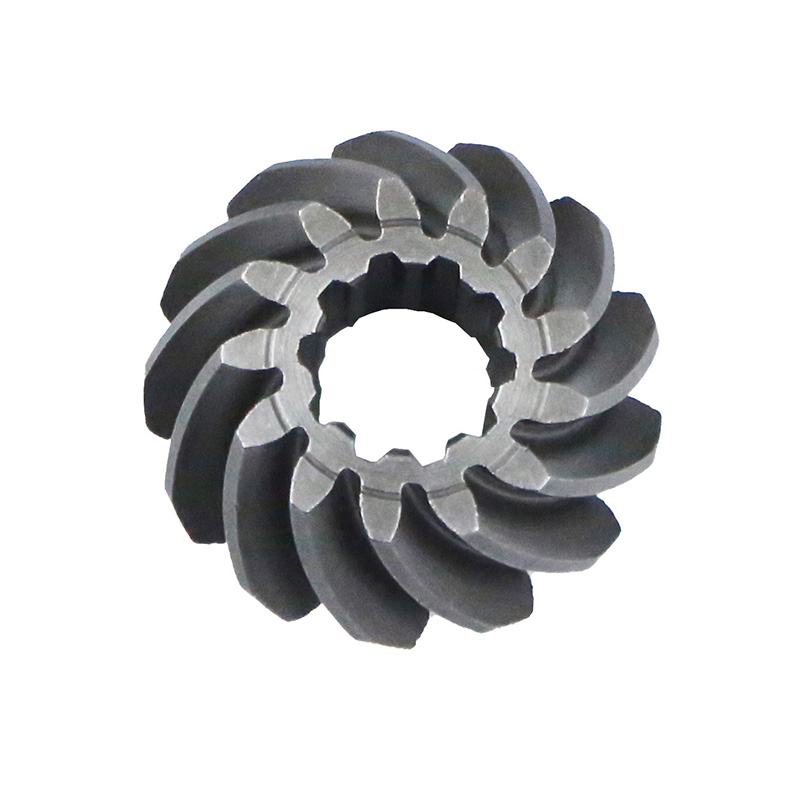
Beyond classical treatments, modern research and field experience in gear and marine engineering highlight several advanced coating options. [ieeexplore.ieee]
Thin, hard coatings such as diamond‑like carbon (DLC) and metal‑containing DLC (Me‑DLC) have been successfully applied to gears to reduce surface fatigue and wear. [gearsolutions]
Key benefits:
- Lower friction coefficient in rolling–sliding contact
- Strong resistance to micropitting and scuffing under high load
- Potential for significantly increased surface fatigue life in controlled tests [ieeexplore.ieee]
In marine gearboxes, these coatings can be particularly attractive for:
- High‑power outboards and stern drives
- Racing or commercial vessels where uptime and efficiency matter
Recent studies on surface protection in marine environments show that CrN‑based coatings doped with carbon can increase hardness and improve both friction and corrosion resistance in seawater. Multilayer nitride and carbide systems are increasingly used where: [pmc.ncbi.nlm.nih]
- Long‑term immersion in seawater is unavoidable
- Mechanical loads are high and shock‑prone
Although implementing such systems raises manufacturing cost, they can deliver strong lifecycle advantages for mission‑critical gears and shafts.
Surface coatings alone are not enough; the core heat treatment of a gear defines its load‑bearing backbone. Industrial providers compare carburizing with nitriding/nitrocarburizing for gears, finding that nitriding often offers: [nitrex]
- Consistent gear properties
- Improved tribological behavior
- Lower distortion (and thus lower noise and finishing cost)
- Similar bending and contact fatigue resistance to carburizing in many cases
- More environmentally friendly processing [nitrex]
For marine gears, a nitrided tooth surface combined with an appropriate surface finish or coating can provide an excellent balance between strength, wear resistance, and dimensional stability.
From an engineering perspective at Ningbo Gill Transmission Parts Co., LTD., we evaluate gear surface treatments using a simple, repeatable framework:
1. Define operating environment
- Pure freshwater, brackish water, or saltwater
- Intermittent vs continuous immersion
- Storage conditions (indoor, outdoor, coastal warehouse)
2. Define mechanical load case
- Rated torque and peak shock loads
- Duty cycle (recreational weekend use vs commercial daily use)
- Target gearbox life and maintenance intervals
3. Match treatment goals
- Primary focus on corrosion, wear, fatigue, or cost
- Need for cosmetic appearance or branding
4. Shortlist candidate treatments
- For example, nitrided + WPC + solid lubricant coating for high‑load, saltwater use
- Phosphating + oil for sliding couplings under moderate load
5. Check geometry and tolerance impact
- Ensure added thickness or micro‑roughness falls within backlash and contact pattern tolerances
6. Pilot testing and feedback loop
- Bench fatigue and wear tests
- Real‑world field feedback from boat builders, dealers, and end‑users
This expert‑driven decision process ensures that surface treatment supports not just lab performance, but also real user satisfaction for outboard owners.
Even the best treatment can fail early if maintenance habits are poor. From user feedback and dealer reports, a few maintenance practices repeatedly show strong impact on gear and drivetrain life in outboards:
1. Flush the engine after saltwater use
- Flush with fresh water following the manufacturer's instructions to remove salt and sediment that can drive corrosion on internal components. [onlineoutboards]
2. Clean and dry external surfaces
- Wash the lower unit and gearcase housing with gentle boat soap, rinse, and dry. [onlineoutboards]
- Apply a marine‑grade wax to external painted and plated surfaces to extend protection. [onlineoutboards]
3. Use compatible protective sprays
- Apply a silicone‑based or corrosion‑inhibiting spray that is safe for rubber, plastic, and coated metal surfaces. [youtube]
- Avoid aggressive cleaners that may damage black oxide, phosphate, or organic coatings.
4. Monitor noise and backlash
- Changes in gear noise, shift feel, or vibration can signal surface wear or pitting well before catastrophic failure.
- Early inspection can preserve both the gear and mating components.
By combining engineered surface treatment with proper maintenance, users can meaningfully extend the life of their outboard gears.
| Surface treatment | Typical thickness (μm) | Main benefits | Marine / outboard notes |
|---|---|---|---|
| Zinc plating + trivalent passivation | 2–25 (mraa) | Sacrificial corrosion protection, improved appearance (mraa) | Useful for housings and brackets; limited for precision teeth |
| Electroless nickel (chemical Ni) | 3–10 (mraa) | High corrosion and wear resistance, uniform thickness (mraa) | Suitable for complex, tight‑tolerance parts exposed to splashing |
| Black oxide | <3 (mraa) | Basic rust resistance, cosmetic black finish (mraa) | Needs oil or wax; not sufficient alone in saltwater |
| RAYDENT‑type oxide coating | 1–2 (mraa) | Strong rust resistance, wear resistance, adherent film (mraa) | Thin, low‑distortion option for exposed surfaces |
| Phosphate (manganese) | 3–15 (mraa) | Good corrosion resistance, high wear resistance, lubricity (mraa) | Ideal for sliding parts and oil‑retaining surfaces |
| Solid lubricant coating | Thin dry film (mraa) | Reduced friction, protection in boundary lubrication (mraa) | Excellent for running‑in and fretting prevention |
| WPC shot‑blasting | ~1–2 change (mraa) | Higher fatigue strength, better sliding, minimal distortion (mraa) | Very useful for high‑load outboard gears |
| DLC / Me‑DLC hard coatings | ~1–3 (gearsolutions) | Low friction, high surface fatigue and wear resistance (gearsolutions) | Premium option for high‑performance marine gears |
| CrN‑based corrosion‑resistant coatings | ~1–5 (pmc.ncbi.nlm.nih) | High hardness, improved friction and corrosion resistance in seawater (pmc.ncbi.nlm.nih) | Strong candidate for long‑term seawater exposure |
At Ningbo Gill Transmission Parts Co., LTD., our R&D, production, and test teams work together to blend classical treatments with modern coatings for outboard gears and marine power transmission components.
Our typical engineering approach includes:
- Combining nitrided gear teeth with WPC treatment to maximize fatigue life and sliding performance in compact gearboxes. [nitrex]
- Selecting phosphate + oil retention strategies for sliding couplings and dog clutches where anti‑scuffing performance is critical. [nitrex]
- Evaluating advanced DLC‑type coatings for high‑end or heavy‑duty product lines to reduce friction and fuel consumption in long‑hour operation. [ieeexplore.ieee]
If you are a boat builder, distributor, or OEM looking to improve durability or reduce warranty claims on your outboard drivetrains, we can support you with application‑specific surface treatment design, prototype testing, and mass‑production control.
If you are planning a new outboard gearbox, optimizing an existing design, or solving a recurring field failure, now is the right time to rethink your surface treatment strategy.
Contact Ningbo Gill Transmission Parts Co., LTD. to:
- Review your current gear specifications and failure modes
- Choose the best‑fit surface treatment stack for your environment and budget
- Develop and validate prototypes under real marine conditions
A small change at the surface can create a significant gain in life, reliability, and customer satisfaction for your marine powertrain.
Q1. Which surface treatment is best for outboard gears used in saltwater?
For harsh saltwater use, we typically recommend a combination of nitriding or nitrocarburizing, followed by WPC treatment and, where feasible, a thin corrosion‑resistant coating such as electroless nickel or an advanced nitride‑based coating. The exact choice depends on load, duty cycle, and cost targets. [pmc.ncbi.nlm.nih]
Q2. Does black oxide alone protect outboard gears from corrosion?
No. Black oxide offers only basic corrosion resistance and must be combined with oil, wax, or other protective films, especially in saltwater environments. It is better suited for indoor storage protection or cosmetic use than for long‑term immersion. [pmc.ncbi.nlm.nih]
Q3. Are DLC or Me‑DLC coatings worth the cost on marine gears?
For high‑performance or commercial applications, DLC‑type coatings can significantly improve surface fatigue life and wear resistance while lowering friction. For low‑cost recreational applications, classical treatments may provide sufficient value. [gearsolutions]
Q4. How does surface treatment affect gear noise in outboard motors?
Treatments that reduce distortion (such as nitriding) and refine surface microstructure (such as WPC) help maintain a stable contact pattern and consistent backlash, which can reduce noise over the life of the gearbox. Surface roughness and coating friction characteristics also influence noise under load. [nitrex]
Q5. What simple maintenance steps can boat owners take to protect treated gear surfaces?
Owners should flush the engine after saltwater use, wash and dry the lower unit, apply protective waxes and marine‑safe sprays, and react quickly to abnormal noises or vibrations. These habits complement surface treatments and significantly extend service life. [youtube]
1. Nitrex. "How to Improve the Life and Performance of Your Gears with Surface Treatment." Available at: https://example.com/nitrex-gear-surface-treatment [mraa]
2. Zhang, X. et al. "Surface Protection Technology for Metallic Materials in Marine Environment." Available at: https://example.com/marine-surface-protection [youtube]
3. KHK Gears. "Gear Surface Treatment." Available at: https://example.com/khk-gear-surface-treatment [gearsolutions]
4. Gear Solutions Magazine. "Coating Applications for Spur Gears." Available at: https://example.com/gear-solutions-coating [nitrex]
5. Li, Y. et al. "Analysis of Surface Coating Technology in Improving Various Gear Performances." Available at: https://example.com/gear-coating-analysis [khkgears]
6. OnlineOutboards. "Outboard Motor Cleaning Tips and Tricks: A How‑To Guide." Available at: https://example.com/outboard-cleaning-guide [digitaldeckhand]
7. Yamaha Outboards (Maintenance Matters). "Outboard External Care." Available at: https://example.com/outboard-external-care [onlineoutboards]
As a marine transmission engineer who has spent years working with outboard gears in harsh saltwater environments, I've seen one truth repeat itself: smart gear surface treatment is often the invisible line between a smooth season on the water and an expensive mid‑season breakdown. In this guide, I'll walk you through the essentials of gear surface treatment, with a special focus on outboard gears and other marine applications, and share what we apply every day at Ningbo Gill Transmission Parts Co., LTD. [nitrex]


