


close
Choose Your Site
Global
Social Media
Views: 222 Author: Gill Transmission Parts Publish Time: 2026-06-16 Origin: Site


Content Menu
● OEM vs Aftermarket Outboard Gears: Quick Definition
● How Long Do Outboard Motors Actually Last?
● Where Gears Sit in the Outboard Drivetrain
● What Really Determines Gear Lifespan?
● OEM Outboard Gears: Strengths and Limitations
● Aftermarket Gears: Why Quality Varies So Much
>> The Two Faces of Aftermarket
● Where Specialist Manufacturers Like Ningbo Gill Fit In
● Which Lasts Longer in Practice?
>> When High‑Quality Aftermarket Gears Can Match or Exceed OEM
● Practical Selection Guide: OEM vs Aftermarket Gears
● Installation and Maintenance Practices That Extend Gear Life
>> Installation Best Practices
>> Maintenance Habits That Matter
● Expert Insight: Matching Gears to Real‑World Duty Cycles
● OEM vs Aftermarket Gear Longevity Overview
● When to Talk to a Specialist Manufacturer
● Call to Action: Optimize Your Gear Strategy
● Frequently Asked Questions (FAQ)
OEM outboard motor gears generally last longer than most low‑cost aftermarket gears, but the real answer depends on gear design, material quality, machining accuracy, heat treatment, and how you use and maintain your engine. By combining OEM‑level engineering with optimized manufacturing and quality control, a specialized supplier like Ningbo Gill Transmission Parts Co., LTD. can deliver OEM‑equivalent or better durability at a more competitive cost for professional users and boat owners. [youtube]
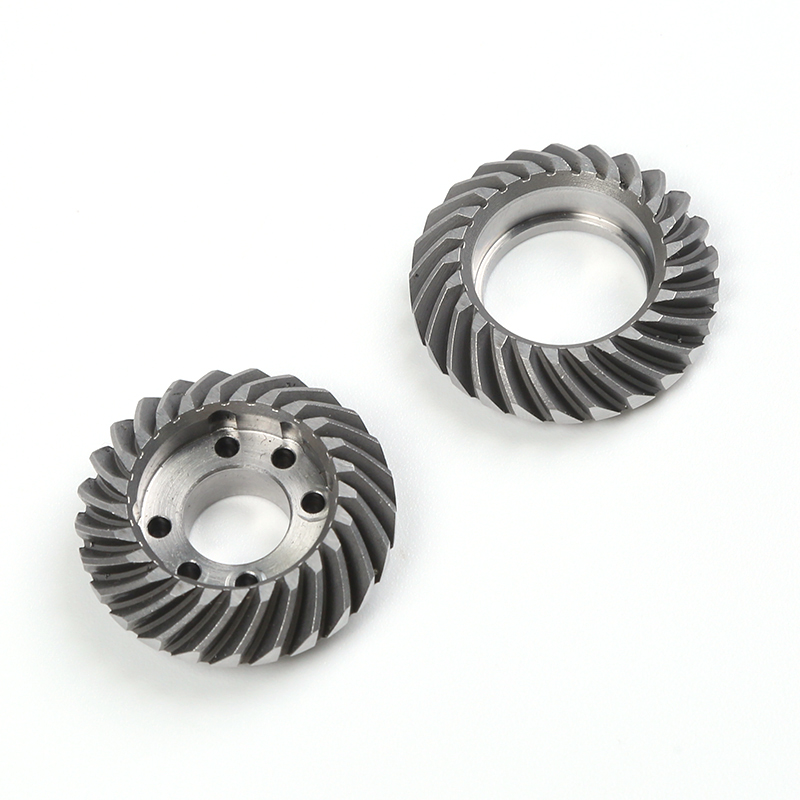
In this guide, we will look at OEM outboard motor gears vs aftermarket gears from the perspective of both a long‑time marine parts manufacturer and a hands‑on outboard user. You will see how gears are designed, what actually causes them to fail, and how to choose the option that gives you the best service life per dollar for your specific boat, engine and usage scenario. [marineengine]
OEM outboard motor gears are produced or directly authorized by the engine manufacturer (e.g. Yamaha, Mercury, Honda) and sold under their brand and part number. They are typically designed alongside the engine and lower unit to meet the brand's durability and warranty standards. [yamahaoutboardmaintenance]
Aftermarket outboard gears are produced by independent manufacturers who reverse‑engineer OEM components and sell compatible parts through distributors, dealers or online channels. Quality ranges from high‑end, OEM‑equivalent gears to cheap, poorly controlled products that can fail quickly under load. [youtube]
Key point: "Aftermarket" is not automatically worse—it depends on who makes the gear and how. [marineengine]
To talk about gear life, we first need to understand typical outboard motor lifespans. Industry data for gasoline outboards shows: [epropulsion]
- Many modern outboard motors can reach 1,500–4,000 operating hours under proper usage and maintenance. [epropulsion]
- Older 2‑stroke outboards often have a shorter expected life, around 1,500 hours, while modern 4‑stroke models, especially from premium brands, can approach or exceed 3,000–4,000 hours before needing major overhaul. [yamahaoutboardmaintenance]
- For recreational boaters, 50–100 hours per year is considered a typical usage range, while commercial and charter operations may accumulate several hundred hours per season. [epropulsion]
The gear set in the lower unit is designed to survive within that overall engine lifespan when the operator follows the manufacturer's maintenance schedule and uses the engine within its intended load and RPM range. [yamahaoutboardmaintenance]
To understand why some gears last longer than others, it helps to see how they work inside the lower unit:
- The engine crankshaft turns a driveshaft down through the mid‑section.
- In the gearcase / lower unit, a pinion gear on the driveshaft meshes with forward and reverse gears on the propshaft.
- These gears convert high‑speed, low‑torque rotation into lower‑speed, high‑torque output at the propeller. [perfprotech]
Because gears run under constant load in a confined, oil‑lubricated environment, any weakness in tooth profile, surface hardness, alignment, or lubrication shows up as pitting, scoring, or tooth breakage long before the engine powerhead fails. [perfprotech]
Whether a gear is OEM or aftermarket, its real‑world longevity depends primarily on six technical factors:
1. Material and Metallurgy
- Quality gears use carefully chosen alloy steels and controlled heat treatment to balance surface hardness (wear resistance) and core toughness (resistance to shock and tooth breakage). [youtube]
- Precise control of carburizing, quenching, and tempering is critical to prevent brittle surfaces or soft tooth roots that fail under heavy loads.
2. Gear Tooth Design and Machining Accuracy
- The tooth profile, contact pattern and surface finish must be optimized to share load across the tooth face and minimize local stress. [perfprotech]
- Tight tolerances in pitch, runout, concentricity, and surface roughness reduce noise, vibration and localized wear.
3. Heat Treatment Consistency
- Inconsistent case depth or surface hardness across a batch causes some gears to fail much earlier than others.
- OEM‑level and top‑tier aftermarket manufacturers use process controls and inspection (e.g., hardness testing, microstructure checks) to ensure every gear meets specification.
4. Fit and Alignment in the Gearcase
- Even a perfect gear fails early if backlash, shim adjustment or bearing condition is wrong.
- Correct setup ensures proper tooth contact and oil film, reducing pitting and overheating.
5. Lubrication and Seal Integrity
- Water intrusion from worn seals quickly destroys even premium gears by causing rust, emulsified oil and poor lubrication. [yamahaoutboardmaintenance]
- Regular gear oil changes and leak checks are critical for gear life.
6. Operating Conditions and User Behavior
- High‑load use such as commercial fishing, heavy boats, towing and frequent full‑throttle running stresses gears far more than light, occasional recreational use. [epropulsion]
- Repeated prop strikes, shifting into gear at high RPM, and ignoring unusual noise or vibration accelerate failure regardless of gear brand.
Once you understand these factors, the OEM vs aftermarket choice becomes a question of which supplier controls them better—and offers the right balance of cost, quality and support for your application. [marineengine]
OEM gears carry the engine manufacturer's brand and must protect that brand's reputation. As a result, they typically offer:
- Tight integration with OEM design goals
The gear geometry, surface treatment and compatibility with the OEM gearcase and bearings are engineered as a system to meet the engine's torque curve and published duty cycle. [yamahaoutboardmaintenance]
- Proven performance and warranty support
OEM parts are validated through the manufacturer's test cycles and are usually covered by standard or extended parts warranties, especially when installed by authorized service centers. [yamahaoutboardmaintenance]
- Predictable fit and interchange
Because the part is exact to the engine model and year, correctly specified OEM gears fit without modification and preserve the original shift feel and noise characteristics. [yamahaoutboardmaintenance]
However, OEM gears are not perfect for every scenario:
- Higher cost per set
OEM pricing incorporates brand margin, distribution layers and dealership overhead, so the price difference vs quality aftermarket can be significant, especially for larger gear sets. [marineengine]
- Limited flexibility and customization
OEMs optimize for broad usage patterns rather than niche or extreme conditions such as intensive commercial use in silty, shallow or tropical environments. [epropulsion]
- Availability and lead times
For older or less common models, OEM parts may have long lead times or be discontinued, pushing operators to explore high‑quality aftermarket alternatives. [marineengine]
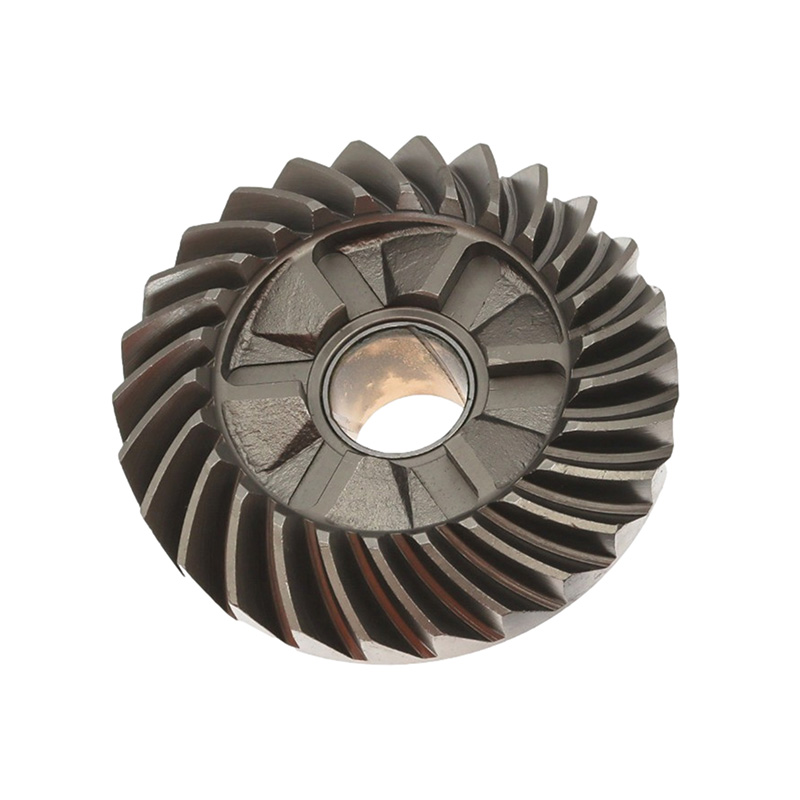
In the outboard world, "aftermarket" covers everything from premium, OEM‑equivalent gear sets made by specialist transmission manufacturers to low‑cost, minimally tested parts intended only to hit a price point. [youtube]
At the high end, aftermarket manufacturers:
- Invest in precision machining centers, gear grinding technology, and controlled heat treatment,
- Apply rigorous inspection, including gear tooth contact checks and hardness testing,
- Often have decades of experience in marine and industrial gear design and production.
At the low end, however, some suppliers:
- Rely on basic material and inconsistent heat treatment.
- Work with looser tolerances, leading to noisy operation and higher pitting risk.
- Offer minimal traceability and quality documentation.
Discussions on marine forums highlight both outcomes:
- Boat owners report good results with quality aftermarket gear sets that match OEM fitment, run quietly and last for many seasons when installed and maintained correctly. [marineengine]
- Others describe early failure with cheaper gears—e.g., tooth chipping, rough running or failure after a short period—often tied to bargain‑priced parts with unknown origin and poor QC. [marineengine]
This is why the manufacturer behind the aftermarket gear matters as much as the OEM label.
With nearly three decades focused on outboard gears and marine transmission components, a specialist manufacturer has the opportunity to combine the best of both worlds: OEM‑grade engineering and aftermarket flexibility and value. [ningbo.made-in-china]
For example, a professional marine gear manufacturer can:
- Develop dedicated outboard gear lines using proven alloy steels, optimized tooth geometry, and controlled case hardening to achieve long service life under marine loading.
- Implement mass production process controls (CNC machining, gear shaving/grinding, in‑line inspection) that reduce variability and keep tooth contact consistent from batch to batch.
- Work closely with distributors, repair shops and fleet operators to refine designs based on field feedback, such as improving robustness for high‑hour commercial use or optimizing for specific brands and HP ranges.
The result is an aftermarket gear that offers OEM‑equivalent fit, reliable lifespan and more competitive cost, especially attractive for:
- Commercial and charter operators targeting maximum uptime per dollar.
- Service shops that need dependable alternatives when OEM lead times are long.
- Owners of older engines where OEM support is limited.
In scenarios where:
- The engine is new or under warranty,
- The boat is used primarily for recreational purposes with moderate hours per year,
- The operator wants to preserve resale value with full OEM parts history,
OEM gears often provide the simplest, lowest‑risk choice, with well‑proven durability that generally matches the typical engine lifespan when maintained properly. [epropulsion]
High‑end aftermarket gears from specialist manufacturers can match or even exceed OEM longevity in cases where: [youtube]
- The engineering and material specification are equal to or better than OEM,
- Heat treatment and inspection are carefully controlled,
- The gears are installed with correct shimming and lubrication practices,
- The engine operates in heavier‑duty cycles than originally assumed by the OEM.
Here, the aftermarket supplier can intentionally over‑engineer specific components for toughness or wear resistance based on feedback from fleets and repair centers.
Bottom line: The gear that "lasts longer" is the one that is engineered, manufactured, installed and maintained to a high standard—whether OEM or premium aftermarket. [youtube]
To decide between OEM and aftermarket outboard gears, use this simple decision framework:
1. Check engine age and warranty status
- Under warranty / very new: In most cases, using OEM gears maintains warranty alignment and resale confidence.
- Out of warranty / older engine: Quality aftermarket offers a stronger cost‑benefit ratio, especially when the engine still has many hours of potential life.
2. Assess your usage pattern
- Light recreational use (50–100 hrs/year): Either OEM or premium aftermarket is acceptable; focus on proper installation and maintenance.
- Heavy commercial or charter use: Look for documented high‑load performance, strong references and technical support from a specialist manufacturer.
3. Evaluate supplier transparency
- Favor suppliers who can explain:
- Gear material and heat treatment approach,
- Inspection methods and quality standards,
- Compatibility with specific engine models.
- Be cautious with products that lack clear technical data or traceability.
4. Balance cost vs downtime risk
- A cheaper gear is not cheaper if failure leads to towing, lost charter days or engine damage.
- Consider total cost of ownership: parts cost, labor, potential downtime and risk to adjacent components.
Regardless of whether you choose OEM or aftermarket, correct setup and care often make the largest difference in real‑world gear lifespan.
- Inspect the full gearcase
Always check bearings, seals, and shift components for wear; replacing gears alone in a worn gearcase shortens life. [youtube]
- Set backlash and shimming correctly
Use proper shims, spacers and torque values according to the engine manufacturer's service manual to ensure correct tooth contact.
- Verify tooth contact pattern
Experienced technicians check contact patterns under light load to confirm that the load is distributed across the tooth face instead of being concentrated on the edges.
- Change gear oil on schedule
Follow the engine manufacturer's recommended gear oil change intervals; contaminated or water‑intruded oil is a leading cause of gear failure. [yamahaoutboardmaintenance]
- Monitor for leaks and water intrusion
Milky oil, metal particles or unusual residue are early warnings that gears or seals need attention. [yamahaoutboardmaintenance]
- Operate with smooth shifting and appropriate RPM
Avoid slamming into gear at high RPM or over‑revving with light props; both shorten gear life by adding unnecessary shock load. [epropulsion]
From a fleet and service‑center perspective, gear selection should be aligned with the duty cycle:
- Recreational coastal cruiser
- Priorities: smoothness, low noise, long intervals between service.
- Recommendation: OEM or premium aftermarket with proven quiet operation and proper surface finish.
- Commercial fishing or workboat
- Priorities: uptime, resilience to shock loads (e.g., debris, sudden throttle changes).
- Recommendation: high‑toughness, case‑hardened aftermarket gears from a specialist marine gear supplier; verify references and field data.
- Rental or training fleet
- Priorities: robustness against operator mistakes, fast turnaround on repairs.
- Recommendation: gears from a supplier that can combine consistent quality with reliable availability, backed by technical after‑sales support.
Specialist suppliers with 29+ years in marine gear manufacturing are uniquely positioned to collect and respond to this field data, fine‑tuning designs and processes over time to deliver long‑life, application‑specific gears. [ningbo.made-in-china]
| Aspect | OEM Outboard Gears | Quality Aftermarket Gears |
|---|---|---|
| Design basis | Co‑designed with engine, validated for broad usage. (yamahaoutboardmaintenance) | Reverse‑engineered, often optimized for specific loads or applications. (youtube) |
| Material & heat treatment | Typically high, standardized per OEM spec. (yamahaoutboardmaintenance) | Can range from equal to OEM to inferior, depending on supplier. (youtube) |
| Consistency & QC | Strong, with brand reputation at stake. (yamahaoutboardmaintenance) | Highly variable; top manufacturers match OEM‑level QC, low‑cost ones may not. (marineengine) |
| Cost | Generally higher due to brand, distribution and dealer margins. (marineengine) | Usually lower; best suppliers offer strong value per hour of service. (youtube) |
| Availability | Good for current models; can be limited for older engines. (marineengine) | Often better for legacy models and bulk / fleet supply. (marineengine) |
| Typical longevity | Matches expected engine life under proper use and service. (epropulsion) | Can match/exceed OEM when engineered and produced to OEM‑equivalent standards. (youtube) |
If you operate multiple vessels, run commercial boats, or service mixed fleets with different brands and horsepower ranges, it is often worth speaking directly with a specialist outboard gear manufacturer. They can help you:
- Analyze real‑world failure modes (pitting, chipping, scuffing, corrosion).
- Select gear materials and treatments tuned to your operating environment (saltwater, high silt, tropical climates).
- Plan standardized gear solutions across engines to simplify maintenance and inventory.
A manufacturer with decades of gear design, testing and marine application experience can provide not only parts but also engineering‑level guidance that directly impacts the longevity and reliability of your outboards. [ningbo.made-in-china]
If you want outboard gears that deliver maximum lifespan, predictable performance and strong total cost of ownership, do not make your decision on price alone. Instead, evaluate:
- The engineering depth behind the gear.
- The quality assurance and traceability the supplier provides.
- The support you can expect before and after installation.
If you are a marine dealer, repair shop or fleet operator looking for OEM‑equivalent or enhanced outboard gears, consider partnering with a specialized gear manufacturer with a long track record in marine driveline components. By aligning gear selection with your actual duty cycle and maintenance practices, you can meaningfully extend the service life of your outboard lower units. [ningbo.made-in-china]
1. Are aftermarket outboard gears always less durable than OEM?
No. High‑quality aftermarket gears from specialist manufacturers can match or exceed OEM durability when they use comparable materials, heat treatment and machining controls, combined with correct installation and maintenance. [youtube]
2. How do I know if an aftermarket gear is good quality?
Look for transparent information on material and heat treatment, clear compatibility listings by engine model, documented QC processes, and proven field use with commercial or fleet customers; avoid anonymous, ultra‑low‑price options with no technical data. [marineengine]
3. How often should I change gear oil to protect my gears?
Follow your engine manufacturer's maintenance schedule, typically checking and changing gear oil at least annually or every 100 hours for many outboards, and inspect for water intrusion or metal particles each time. [epropulsion]
4. Can poor installation shorten the life of even OEM gears?
Yes. Incorrect backlash, improper shimming, worn bearings, or failure to address seal issues can cause early gear failure regardless of whether the gear is OEM or aftermarket. [youtube]
5. Does outboard horsepower or boat size matter for gear life?
Absolutely. Higher horsepower engines, heavy hulls, aggressive propeller setups and commercial duty cycles all increase gear loading, making gear quality, correct setup and diligent maintenance even more critical for long service life. [perfprotech]
1. ePropulsion. "How Long Do Outboard Motors Last: A Newbie's Guide."
https://www.epropulsion.com/news-media/electric-boating-blog/how-long-do-outboard-motors-last [epropulsion]
2. Yamaha Outboard Maintenance. "Guide to Yamaha Outboard Engine Performance & Longevity."
https://yamahaoutboardmaintenance.com/blogs/resources/guide-to-yamaha-outboard-engine-performance-longevity [yamahaoutboardmaintenance]
3. MarineEngine.com Forum. "Should I buy an aftermarket gear set or suck it up and buy the oem?"
https://www.marineengine.com/boat-forum/threads/should-i-buy-an-aftermarket-gear-set-or-suck-it-up-and-buy-the-oem.435126/ [marineengine]
4. YouTube – Outboard Exchange. "Aftermarket Parts vs OEM Parts."
https://www.youtube.com/watch?v=1o1vioDStqk [youtube]
5. PerfProTech. "Propeller & Gear Ratio Selection."
https://www.perfprotech.com/blog/articles/propeller-selection [perfprotech]
6. Made‑in‑China – Ningbo Gear Manufacturers Overview.
https://ningbo.made-in-china.com/suppliers/gear-24.html [ningbo.made-in-china]


