


close
Choose Your Site
Global
Social Media
Views: 222 Author: Gill Transmission Publish Time: 2026-06-02 Origin: Site


Content Menu
● Why Crowning Matters in Outboard Gears
● Core Gear Crowning Terminology
● How Crowning Works Under Misalignment
● Typical Crowning Applications in Marine and Outboard Systems
● Advantages of Crowning for Outboard Gears
>> 1. Reduced Gear Noise and Vibration
>> 2. Improved Load Distribution and Longer Life
>> 3. Greater Tolerance to Manufacturing and Assembly Errors
● How Crowning Is Designed and Manufactured
● Expert Tips: When to Use Crowning in Marine Gear Design
● Case Study – Reducing Noise in a High-Torque Outboard Gearbox
● Practical Inspection Checklist for Marine Technicians
● Digital Content and Documentation Best Practices for Gear Suppliers
● Specification Table for Outboard Gear Crowning
● When Crowning Alone Is Not Enough
● Frequently Asked Questions (FAQ)
Crowning is a subtle but critical gear modification that directly affects noise, load distribution, and durability in marine gearboxes and outboard lower units. For manufacturers and engineers working with outboard gears, understanding and correctly applying crowning can be the difference between a quiet, reliable drivetrain and costly field failures. [khkgears]
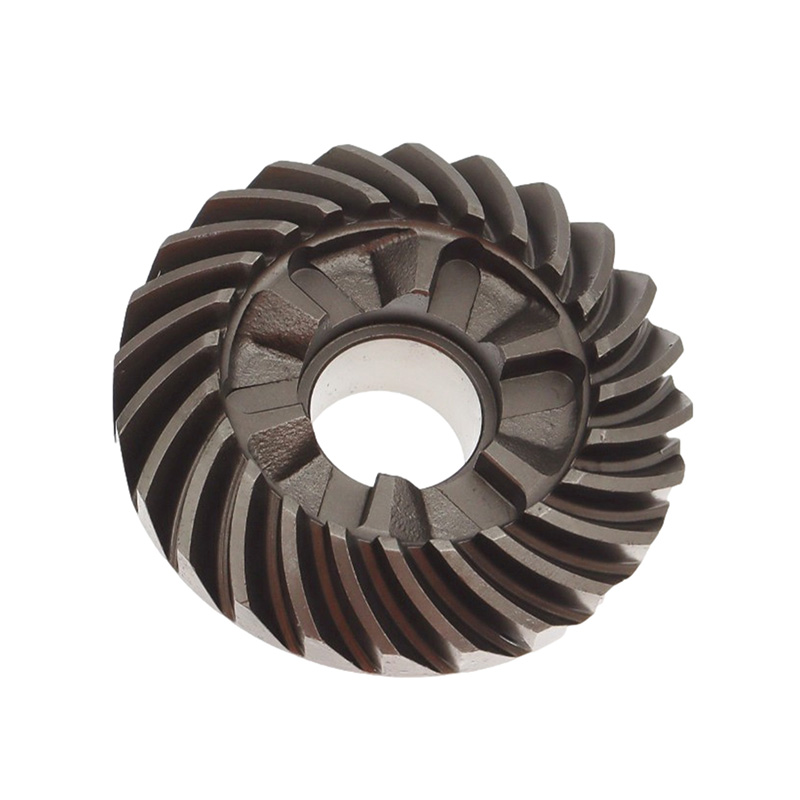
In gear engineering, "crowning" refers to a slight, controlled convex modification of the tooth surface, usually in the face width direction, to improve contact conditions and compensate for misalignment. [khkgears]
- The tooth surface is intentionally made slightly "barrel-shaped" instead of perfectly flat.
- This modification is typically applied to spur gears, helical gears, and bevel gears in precision applications such as outboard gearcases, marine transmissions, and industrial gearboxes. [blog.saleslayer]
For outboard gears, crowning helps maintain stable contact under hull flex, shaft deflection, and assembly tolerances that occur in real-world boating environments. [blog.saleslayer]
From a marine engineer's perspective, gears never operate in ideal lab conditions. Dynamic loads, waves, steering angles, and thermal expansion create misalignments that shift the contact pattern on gear teeth.
Proper crowning helps to:
- Reduce edge contact caused by misalignment between pinion and gear.
- Lower noise and vibration, especially at cruising RPM.
- Extend service life by smoothing load distribution across the tooth.
- Improve tolerance to assembly variation in mass-produced outboard gearcases.
When discussing crowning for outboard gears and marine gearboxes, several terms frequently appear in engineering drawings and technical datasheets. [khkgears]
- Crowning amount: The maximum deviation from a flat tooth surface, usually measured at the center of the face width.
- Crowning radius: The theoretical radius defining the curvature of the tooth surface, often used in bevel and spiral bevel gears.
- Face width: The effective width of the tooth in the axial direction.
- Lead modification: A broader term that includes crowning and other corrections along the face width.
In practice, marine gear engineers often specify crowning in micrometers or as a percentage of face width, based on expected shaft deflection and housing stiffness.
Without crowning, even small misalignments cause contact to concentrate at one edge of the tooth. This leads to high local stress, pitting, and flank damage, especially under the shock loads typical in outboard drives. [blog.saleslayer]
With correctly designed crowning:
- The theoretical contact area moves away from tooth edges.
- Under load, the contact patch "spreads" toward the edges, achieving more uniform pressure.
- The gears can tolerate angular misalignment and housing deformation without severe edge loading.
This is particularly important in outboard gearcases where:
- The vertical driveshaft and horizontal propeller shaft are supported in compact housings.
- Hull motion and steering forces cause dynamic misalignment.
- Corrosion and wear can gradually increase play in bearings and bushings.
Marine and outboard drivetrains integrate multiple gearbox stages and auxiliary gear trains. Common crowning applications include:
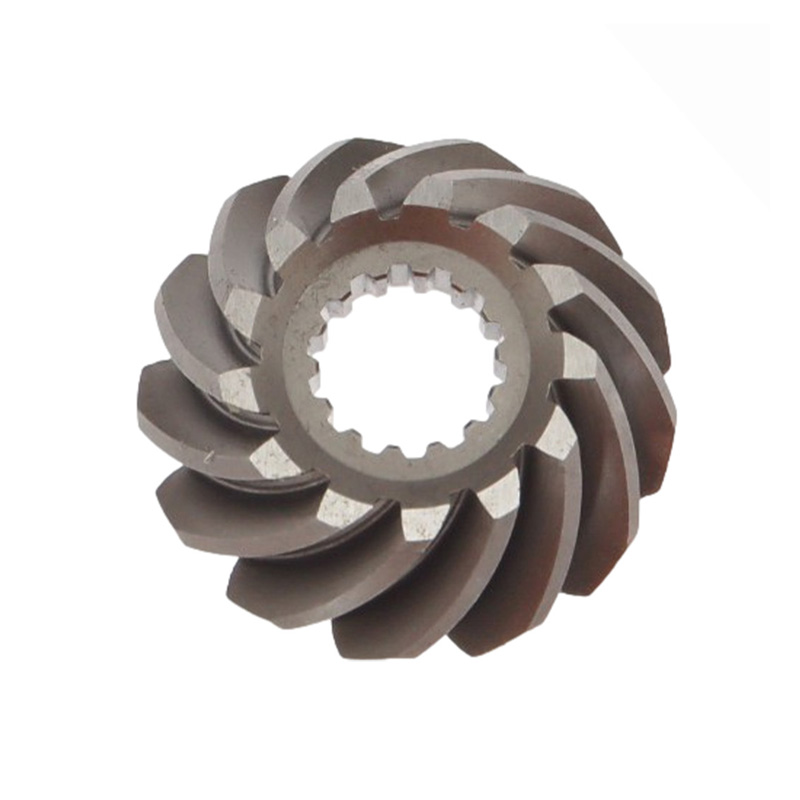
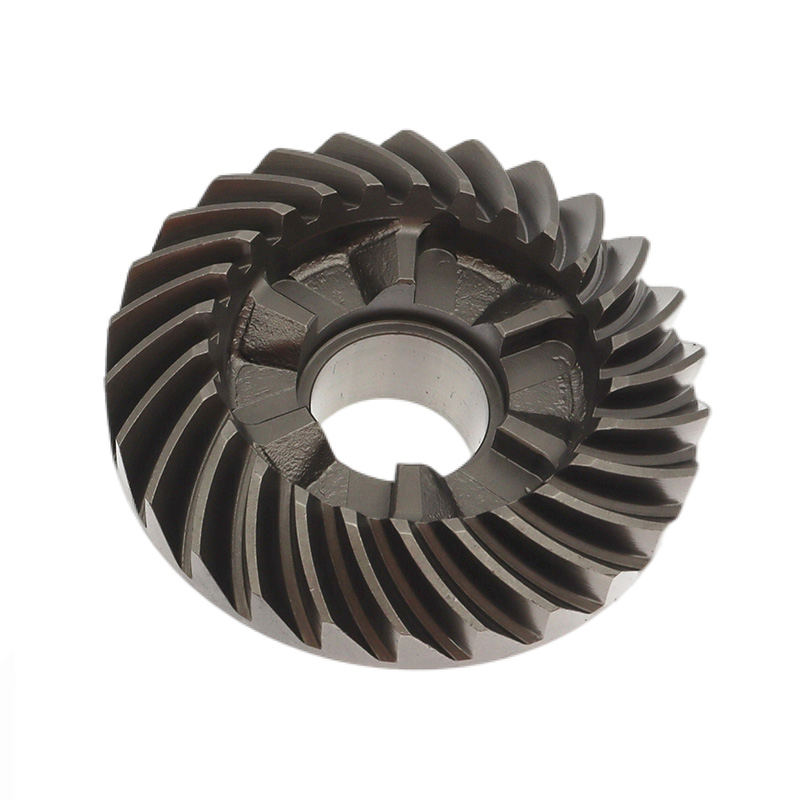
- Outboard lower unit gearsets
Hypoid or bevel gear pairs between the vertical drive shaft and propeller shaft. Crowning helps maintain quiet operation and long life under variable propeller loads.
- Inboard marine transmissions and V-drive gearboxes
Spur and helical gears transmitting high torque from the engine to the propeller shaft, where alignment is influenced by hull structure and engine mounts.
- Trim and tilt actuator gears
Small gears that must retain smooth engagement despite casing deformation and repeated cycling.
By explicitly documenting crowning in these assemblies, manufacturers show potential customers that they design for real-life marine conditions rather than only ideal test setups. [lumar]
From both an engineering and user-experience standpoint, crowning offers several key benefits that matter to boat builders, aftermarket distributors, and end users.
Marine buyers often judge quality by acoustic comfort at cruise. Crowning:
- Damps sensitivity to small misalignments.
- Helps maintain smooth meshing under varying propeller loads.
- Reduces whining noise in the cabin and at the helm.
This directly improves perceived product quality and reduces warranty claims related to "noisy lower units."
Crowning promotes a more even pressure distribution across the tooth face. [blog.saleslayer]
- Lower peak stresses mean slower pitting and flank fatigue.
- Gears handle occasional overloads (e.g., rapid acceleration, cavitation impacts) more safely.
- Service intervals can be extended, which is critical for commercial vessels and fleet owners.
In mass production of outboard gears:
- Housing machining tolerances
- Bearing clearance variation
- Shaft deflection under load
All introduce misalignment. Crowning provides a built-in safety margin so that minor deviations do not immediately translate into premature failure.
In practice, crowning is introduced at the cutting or grinding stage using specialized tooling or CNC corrections. [khkgears]
Typical methods include:
- Adjusting tool path on CNC grinding machines to generate a defined crowning profile.
- Using special cutters or lapping processes for bevel and hypoid gears.
- Applying measured lead modifications based on prototype test data.
Quality control often relies on:
- 3D tooth flank measurement.
- Contact pattern checks using marking compound under load.
- Noise and vibration testing in application-like conditions.
For a marine-focused supplier, showing photos or diagrams of this measurement process can strongly support perceived authority and trust. [hikeseo]
From the perspective of a gear design engineer working in the marine industry, crowning is not "one-size-fits-all." Its amount and pattern should reflect the real operating environment.
Consider adding or optimizing crowning when:
- You see edge contact in blue-contact pattern tests under simulated load.
- Field returns show premature pitting at tooth edges.
- Noise complaints increase after customers add higher-pitch propellers or repower with larger engines.
- You are integrating new housing or bearing designs with different stiffness.
In outboard gears, it is often more effective to tune crowning based on assembled gearbox testing rather than only relying on theoretical shaft alignment.
To illustrate the practical impact of crowning, consider a typical real-world scenario:
A boat manufacturer introduces a new high-torque outboard engine for offshore fishing. Early field tests report:
- Noticeable gear whine at cruising RPM.
- Slight vibration transmitted to the helm.
- Higher-than-expected wear in the lower unit after 200–300 hours.
By reviewing the gear contact pattern, engineers observe edge-loaded contact on the driven gear flank. After introducing a carefully calculated crowning:
- Contact shifts toward the central region of the tooth.
- Noise levels decrease significantly at target RPM.
- Post-test inspection after extended durability cycles shows more uniform wear and reduced pitting.
This type of documented outcome—before/after crowning—offers powerful E-E-A-T evidence that the manufacturer truly understands how to engineer quiet, durable outboard gears. [lumar]
For service technicians and fleet maintenance teams, recognizing whether crowning is performing correctly can guide both diagnostics and component selection.
When inspecting gears from an outboard or marine gearbox:
1. Check the contact pattern
- Apply marking compound and rotate under moderate load.
- Look for central contact with slight spread; avoid sharp edge patterns.
2. Inspect for pitting and micro-pitting
- Localized pitting at the toe or heel often indicates misalignment or insufficient crowning.
3. Listen for characteristic noise
- A rising "whine" with speed often correlates with poor contact and incorrect flank modification.
4. Review technical documentation
- Confirm that gears are designed with appropriate crowning for the installation conditions.
Educating technicians with such clear steps enhances user experience and makes your technical content genuinely helpful, aligning with modern SEO expectations. [hikeseo]
From a content strategy standpoint, manufacturers of outboard gears and marine gearboxes should present crowning information in ways that both engineers and search engines can easily consume.
Based on current industrial SEO best practices: [marketveep]
- Provide clear H2/H3 headings such as "What Is Gear Crowning in Outboard Gearboxes?" or "How Crowning Reduces Marine Gear Noise".
- Include technical spec tables showing crowning amount, face width, gear material, and heat treatment.
- Add visual aids—3D renderings or diagrams showing crowned vs. uncrowned contact patterns.
- Implement technical FAQs with schema markup to win rich results and answer common engineer queries. [blog.saleslayer]
- Publish case studies and field data that demonstrate measurable reductions in noise or failure rates after optimizing crowning.
This approach not only educates buyers but also signals strong experience, expertise, and trustworthiness to Google's quality raters. [lumar]
| Parameter | Typical Range / Example |
|---|---|
| Gear type | Spiral bevel gear (outboard lower unit) |
| Module / DP | Application-specific |
| Face width | 20–40 mm (example) |
| Crowning amount (center) | 10–40 µm, depending on load and stiffness |
| Material | Alloy steel, carburized and ground |
| Surface finish (Ra) | Fine-ground for marine gear applications |
| Target noise performance | Optimized for cruising RPM band |
Although crowning is powerful, it is not a cure-all. Gear performance is also influenced by:
- Material selection and heat treatment.
- Lubrication type and cleanliness.
- Bearing stiffness and pre-load.
- Housing geometry and machining accuracy.
If field issues persist even after optimizing crowning, a holistic drivetrain review—combining FEA, test-bench measurements, and real-boat trials—is recommended.
If you are an outboard engine manufacturer, marine gearbox designer, or aftermarket distributor looking to reduce noise, extend service life, and improve customer satisfaction, consider partnering with a specialist supplier that can design and produce gears with application-specific crowning.
Ningbo Gill Transmission Parts Co., LTD. can support:
- Custom crowning design for outboard gears and marine transmissions.
- Prototype development and test feedback loops.
- Stable, high-quality mass production for global marine OEMs.
Contact our engineering team to review your current gear design, analyze contact patterns, and recommend the optimal crowning strategy for your marine application.
1. What is crowning in an outboard gear?
Crowning is a deliberate, slight convex modification of the gear tooth surface that helps improve load distribution and reduce edge contact in outboard gearsets. [khkgears]
2. How does crowning reduce gear noise in marine applications?
By compensating for misalignment and shifting contact toward the center of the tooth, crowning smooths meshing and lowers noise and vibration at operating speed. [blog.saleslayer]
3. Is crowning necessary for all marine gears?
Not every gear requires crowning, but it is highly recommended for critical gear pairs in outboard lower units and marine transmissions where misalignment and variable loads are expected. [blog.saleslayer]
4. How do I know if my gears need more crowning?
Signs include edge pitting, noisy operation at specific RPM bands, and contact patterns concentrated at the toe or heel of the tooth. Adjusting crowning can often address these issues.
5. Does crowning affect gear strength?
When correctly designed, crowning does not significantly reduce tooth strength; instead, it typically improves durability by lowering peak surface stresses caused by edge loading.
1. KHK Gears – "Crowning | Gear Nomenclature – KHK Gears"
[https://khkgears.net/new/gear_knowledge/gear-nomenclature/crowning.html] [khkgears]
2. Hike SEO – "Google EEAT: How it Affects SEO"
[https://www.hikeseo.co/learn/technical/google-eeat] [hikeseo]
3. Lumar – "The New 'E' in Google's E-E-A-T: Why Experience Matters"
[https://www.lumar.io/blog/industry-news/the-new-e-in-eeat-why-experience-matters-in-website-content/] [lumar]
4. MarketVeep – "4 Best Practices for Mastering Industrial SEO in Manufacturing"
[https://www.marketveep.com/blog/4-best-practices-for-mastering-industrial-seo-in-manufacturing] [marketveep]
5. Sales Layer – "SEO for Manufacturing Companies: The 2026 Strategy Guide"
[https://blog.saleslayer.com/seo-for-manufacturing-companies] [blog.saleslayer]
6. Deer Camp Digital – "SEO Tips for Outdoor and Technical Brands"
[https://deercampdigital.com/seo-tips-for-outdoor-brands/] [deercampdigital]


