


close
Choose Your Site
Global
Social Media
Views: 222 Author: Gill Transmission Publish Time: 2026-06-01 Origin: Site


Content Menu
● What Is Circumferential Backlash?
● Circumferential vs Linear Backlash
● How Circumferential Backlash Is Measured
● Why Circumferential Backlash Matters in Outboard Gears
● Typical Backlash Ranges and Influencing Factors
● Key Design Trade‑offs for Marine Engineers
● Understanding Backlash Through Gear Nomenclature
● Practical Steps to Specify Circumferential Backlash
● Field Lessons from Marine Gearbox Applications
● Advanced Considerations: Thermal and Elastic Effects
● Inspection and Quality Control in Production
● Gear Backlash Parameters: Summary Table
● When to Consult a Gear Specialist
● Call to Action: Optimize Your Outboard Gear Backlash
● Frequently Asked Questions about Circumferential Backlash
Designing reliable outboard gears and marine transmissions means controlling circumferential backlash precisely, not just as a catalog value but as a real-world parameter that affects vibration, noise, and gear life. In this guide, I will walk through how circumferential backlash is defined, measured, and optimized, and share practical insights from working with outboard gear applications in harsh marine environments. [khkgears]
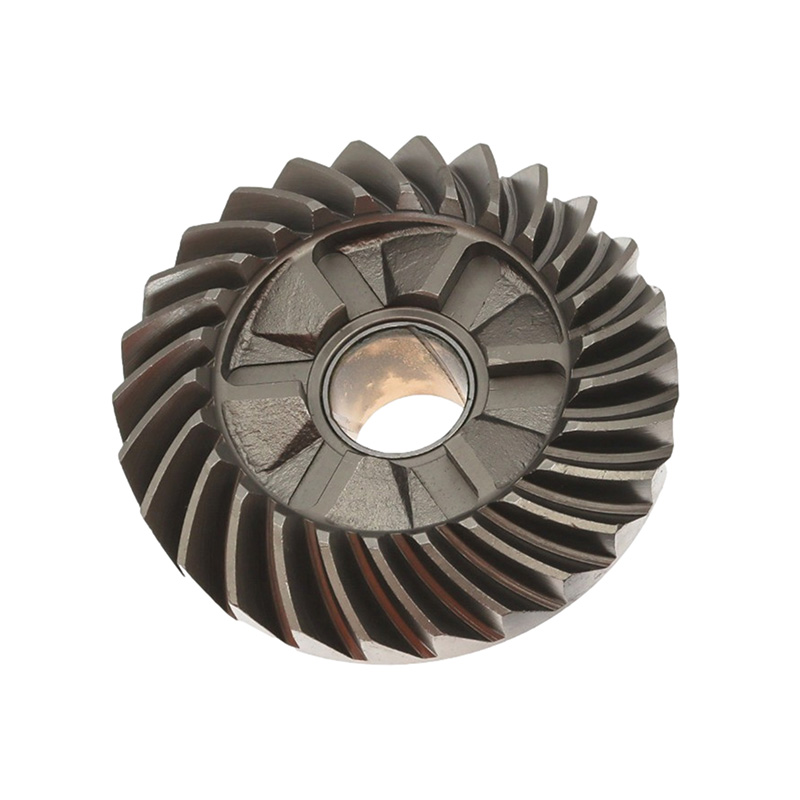
Circumferential backlash is the clearance measured along the pitch circle between the driving and driven gear teeth when one gear is held fixed and the other is rotated in its circumferential direction. In simpler terms, it is the amount of "free rotation" you feel when you rock one gear back and forth while the mating gear is held still. [khkgears]
This value is critical in:
- Outboard gearboxes for small and medium boat engines
- Marine reduction gears and power‑take‑off units
- Steering and trim drive mechanisms in marine propulsion systems [boatmarketingpros]
Too little backlash and you risk jamming, excessive heat, and premature pitting. Too much backlash and you increase shock loads, rattle, and positional error in the drivetrain. [khkgears]
The original nomenclature standards often distinguish between linear backlash (measured along the line of action) and circumferential backlash (measured along the pitch circle). [khkgears]
- Linear backlash: Clearance along the line normal to the tooth profile at the pitch point. [khkgears]
- Circumferential backlash: Same clearance expressed as arc length on the pitch circle, proportional to the angular free rotation at the gear center. [khkgears]
For marine gear designers, circumferential backlash is usually more intuitive because it directly relates to angular play in shafts and propellers. When you see a specification like "backlash 0.25–0.40 mm on pitch circle diameter 120 mm," you can convert this to an angular value that tells you how much twist will appear at the propeller shaft. [khkgears]
In practice, circumferential backlash is measured using a dial gauge or encoder mounted on the gear rim or shaft while the mating gear is fixed. [khkgears]
Typical procedure:
1. Mount the gear pair in a test rig or gearbox housing.
2. Fix the mating gear to remove any rotation.
3. Place a dial indicator tangentially at the pitch circle or at a known radius. [khkgears]
4. Gently rotate the test gear clockwise and counter‑clockwise until the tooth flanks contact alternately.
5. Record the total movement reading as circumferential backlash (often converted to the pitch circle arc). [khkgears]
For precision applications, this procedure is repeated at several points around the gear to check for variation in backlash due to pitch error, eccentricity, or tooth profile deviations. [khkgears]
In outboard engines and marine drivetrains, circumferential backlash impacts:
- Gear noise and rattle at idle: Excessive backlash increases clatter when the load reverses during low‑speed operation or shifting. [boatmarketingpros]
- Shock loads under wave impact: When a propeller unloads and reloads due to wave action, large backlash creates high impact at tooth engagement. [boatmarketingpros]
- Positioning accuracy: In steering and trim systems, backlash translates directly into steering lag and reduced control precision. [khkgears]
- Thermal stability: With marine gearboxes operating across a range of temperatures, backlash must remain safe once components expand. [khkgears]
For companies focused on outboard gears, optimizing circumferential backlash is not just an academic parameter; it directly affects customer perception of smoothness, noise, and reliability on the water. [toprankmarketing]
Typical recommended circumferential backlash for industrial gears depends on:
- Gear module or pitch
- Tooth profile (involute, helical, bevel)
- Accuracy grade (e.g., JIS, ISO)
- Application speed and load [khkgears]
A simplified pattern is:
- High‑precision, low‑load gears: smaller backlash, tightly controlled.
- Moderate‑load industrial gears: medium backlash, balanced for tolerance and thermal effects.
- Heavy‑duty or high‑temperature gears: larger backlash to accommodate expansion and deflection. [khkgears]
In marine environments, designers often bias slightly toward the higher side of the recommended range to account for thermal expansion, lubricant film thickness, and possible misalignment from hull deformation under load. [boatmarketingpros]
When we work on outboard gear sets, we treat circumferential backlash as part of a system of trade‑offs:
- Noise vs safety margin: Reducing backlash lowers rattle but makes the gear more sensitive to tolerance stack‑up and contamination. [khkgears]
- Efficiency vs durability: Very small backlash can reduce sliding loss but increases risk of surface distress under misalignment or debris. [khkgears]
- Manufacturability vs performance: Tight backlash tolerances demand precision machining and assembly, driving costs up. [toprankmarketing]
As a rule of thumb, we define a design window: a target circumferential backlash with allowable upper and lower limits that match real manufacturing capability and the marine duty cycle. [khkgears]
To interpret supplier catalogs and standards correctly, it helps to connect circumferential backlash with other gear nomenclature elements such as:
- Pitch circle diameter
- Module or diametral pitch
- Pressure angle
- Tooth thickness and space width [khkgears]
Circumferential backlash is essentially the difference between tooth space and tooth thickness at the pitch circle when translated into an arc distance. Standards like JIS and ISO define nominal tooth thickness and backlash ranges for specific accuracy grades, which you can use as the starting point for marine gear design. [khkgears]
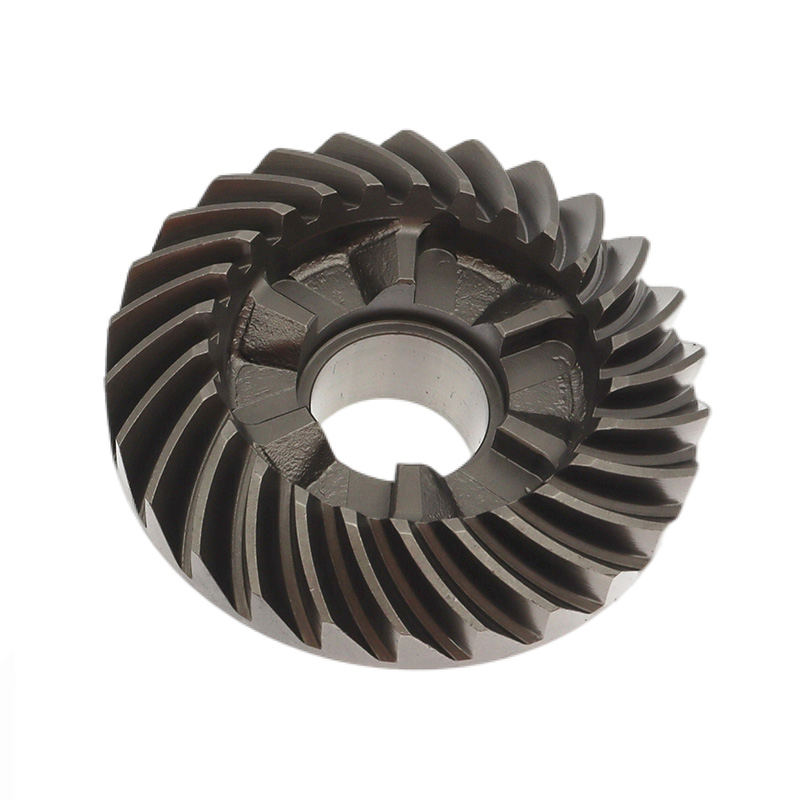
For engineers in outboard gear projects, a structured approach helps turn standard values into reliable real‑world performance.
1. Identify the duty profile
- Continuous vs intermittent operation
- Maximum speed and torque
- Expected shock loads (for example, rapid acceleration or wave impacts) [boatmarketingpros]
2. Select a gear accuracy grade and module
- Use established gear standards (e.g., JIS, ISO) as baseline. [khkgears]
3. Determine nominal backlash range from standards
- Refer to gear catalogs or technical reference tables for recommended backlash per module and accuracy class. [khkgears]
4. Adjust the range for marine conditions
- Add safety margin for temperature rise, lubricant viscosity changes, and possible misalignment in the gearbox housing. [boatmarketingpros]
5. Define inspection and assembly rules
- Set clear measurement positions
- Define acceptable variation around the pitch circle
- Document rework criteria for gears and housings [khkgears]
This process ensures that circumferential backlash is not set randomly but is traceable, repeatable, and aligned with real operating conditions. [toprankmarketing]
From the marine side, we consistently see a few recurring themes when circumferential backlash is not adequately controlled:
- Persistent gear rattle at idle often traces back to backlash that is near or above the upper tolerance limit, combined with low engine speed pulsations. [boatmarketingpros]
- Early pitting or scuffing appears when backlash has been set too tight and lubrication or alignment is less than ideal. [khkgears]
- Customer complaints about "loose" steering or shifting relate directly to accumulated backlash in multiple gear pairs, shafts, and linkages. [boatmarketingpros]
In improvement projects, we rarely adjust only one gear; instead, we review the whole torque path and refine backlash distribution across all meshes to meet both NVH and durability targets. [toprankmarketing]
For high‑duty outboard systems, it is no longer enough to treat circumferential backlash as a fixed value at 20 °C:
- Thermal growth of gears and housings changes tooth contact conditions as the gearbox warms up. [khkgears]
- Elastic deflection of shafts under torque and bending alters the actual tooth engagement, especially in bevel or hypoid marine gears. [khkgears]
Modern engineering practice increasingly uses simulation and digital prototypes to model how backlash evolves over temperature and load cycles, then validates the chosen backlash window with endurance testing. This ensures that gears maintain sufficient clearance at worst‑case conditions while remaining quiet and precise in normal operation. [nav43]
From a manufacturing standpoint, consistent circumferential backlash depends on both gear accuracy and assembly precision.
Key quality‑control practices include:
- Measuring tooth profile and pitch error to ensure the calculated backlash range is achievable. [khkgears]
- Using master gears or fixtures to check functional backlash quickly in production. [khkgears]
- Recording backlash distributions and correlating them with NVH test results on finished gearboxes. [nav43]
For outboard gear suppliers, publishing clear inspection procedures and acceptance criteria helps customers trust the stated backlash values and reinforces perceived authority and reliability. [wgcontent]
Below is a simplified example of how design and application factors relate to circumferential backlash ranges in typical engineering practice. Actual values must follow the relevant standards and testing for each project. [khkgears]
| Application type | Typical gear accuracy | Operating conditions | Circumferential backlash tendency |
|---|---|---|---|
| Precision servo gear | High | Low load, high positional accuracy | Very small, tightly controlled (khkgears) |
| General industrial gearbox | Medium | Steady load, limited shocks | Moderate, balanced range (khkgears) |
| Marine/outboard gear set | Medium to high | Variable load, shock, temperature swing | Medium to slightly higher margin (khkgears) |
| Heavy‑duty high‑temperature unit | Medium | High load, significant thermal effects | Larger clearance to avoid jamming (khkgears) |
Even with standards and catalog values, circumferential backlash tuning for marine applications is rarely "plug‑and‑play." You should consider contacting a gear specialist or outboard gear supplier when:
- You are seeing unexpected NVH issues after assembly despite meeting nominal backlash specs. [boatmarketingpros]
- Your gearbox operates under extreme temperature or shock, such as high‑performance racing boats or continuous heavy loads. [boatmarketingpros]
- You need to coordinate multiple meshes (for example, bevel, spur, and planetary stages) in a compact drivetrain. [khkgears]
A specialist can review design drawings, tolerance stacks, and test data, then propose adjustments to the target circumferential backlash and related parameters (profile modifications, contact ratio, surface treatments). [toprankmarketing]
If you are developing or troubleshooting an outboard gearbox or marine transmission, do not treat circumferential backlash as just another drawing note. Instead, treat it as a core design, manufacturing, and quality‑control parameter that directly affects performance on the water. [boatmarketingpros]
Work with a partner that specializes in marine and outboard gears to:
- Review your current backlash specifications and test results
- Identify improvement opportunities for noise, durability, and efficiency
- Implement a clear inspection and documentation process for production [nav43]
Taking these steps early in the design and sourcing process will help you deliver quieter, smoother, and more reliable marine propulsion systems that your customers immediately notice. [wgcontent]
1. How is circumferential backlash different from angular backlash?
Circumferential backlash is the arc length at the pitch circle corresponding to the free rotational play between two meshing gears, while angular backlash is the same clearance expressed directly as an angle at the gear center. [khkgears]
2. Can I reduce gear noise simply by tightening backlash?
Reducing backlash can help reduce rattle, but setting it too small risks tooth interference, higher heat, and surface damage, especially under misalignment or contamination. The correct approach is to choose a balanced backlash range supported by testing. [khkgears]
3. How often should marine gearboxes be checked for backlash?
For critical outboard systems, backlash inspection is typically performed during prototype validation, at major design changes, and periodically during overhaul or scheduled maintenance, depending on the duty cycle and safety requirements. [boatmarketingpros]
4. Does lubricant type affect recommended backlash?
Lubricant viscosity and additive package influence operating temperature and film thickness, which in turn affect the effective running clearance between teeth, so lubricant choice should be considered when finalizing backlash ranges. [khkgears]
5. What tools are needed to measure circumferential backlash accurately?
Common tools include dial indicators, rotary encoders, master gears, and specialized backlash testers that can mount the gear pair and measure free rotation under defined contact conditions. [khkgears]
1. KHK Gears – "Gear Backlash | Gear Technical Reference." [Link] [khkgears]
2. KHK Gears – "Circumferential Backlash (Gear Nomenclature)." [Link] [khkgears]
3. WG Content – "E‑E‑A‑T for Content Quality." [Link] [wgcontent]
4. TopRank Marketing – "E‑E‑A‑T and SEO: Optimizing for Google's Guidelines." [Link] [toprankmarketing]
5. Boat Marketing Pros – "Digital Marketing Tips for Marine Businesses." [Link] [boatmarketingpros]
6. Nav43 – "SEO Content Marketing for Ecommerce: Driving Discovery, Traffic, Trust." [Link] [nav43]
7. MRAA – "A Boat Dealer's Guide to Winning with SEO." [Link] [mraa]


