
Views: 222 Author: Gill Transmission Publish Time: 2026-06-03 Origin: Site


Content Menu
● Core Cylindrical Gear Terminology
>> Basic diameters and tooth size
>> Tooth height and clearances
● Spur vs Helical Cylindrical Gears in Marine Applications
● Key Cylindrical Gear Parameters for Outboard Gearcases
>> 2. Pressure angle and contact stress
>> 3. Facewidth and load distribution
● How Cylindrical Gears Work Inside an Outboard Lower Unit
>> Power flow and gear arrangement
>> Why precise gear terminology matters
● Design Considerations for Marine Cylindrical Gears (Expert Insights)
>> Surface hardening and micro‑geometry
>> Shock and overload behavior
● Practical Steps to Specify Cylindrical Gears for Outboard Use
● Table: Key Cylindrical Gear Terms and Their Marine Relevance
● How Ningbo Gill Transmission Parts Co., LTD. Supports Your Gear Projects
● Frequently Asked Questions (FAQ)
Cylindrical gears sit at the heart of every reliable outboard lower unit, converting engine power into smooth, efficient thrust on the water. When marine technicians talk about forward gears, reverse gears, and pinions inside an outboard gearcase, they are talking about cylindrical gears working under high load, in harsh, water‑exposed environments. [sterndrive]
In this guide, we combine hands‑on manufacturing experience from Ningbo Gill Transmission Parts Co., LTD. with established gear engineering theory to explain cylindrical gear terminology in a way that directly serves marine and outboard applications. Our goal is to help design engineers, buyers, and service professionals specify, evaluate, and troubleshoot cylindrical gears with confidence.
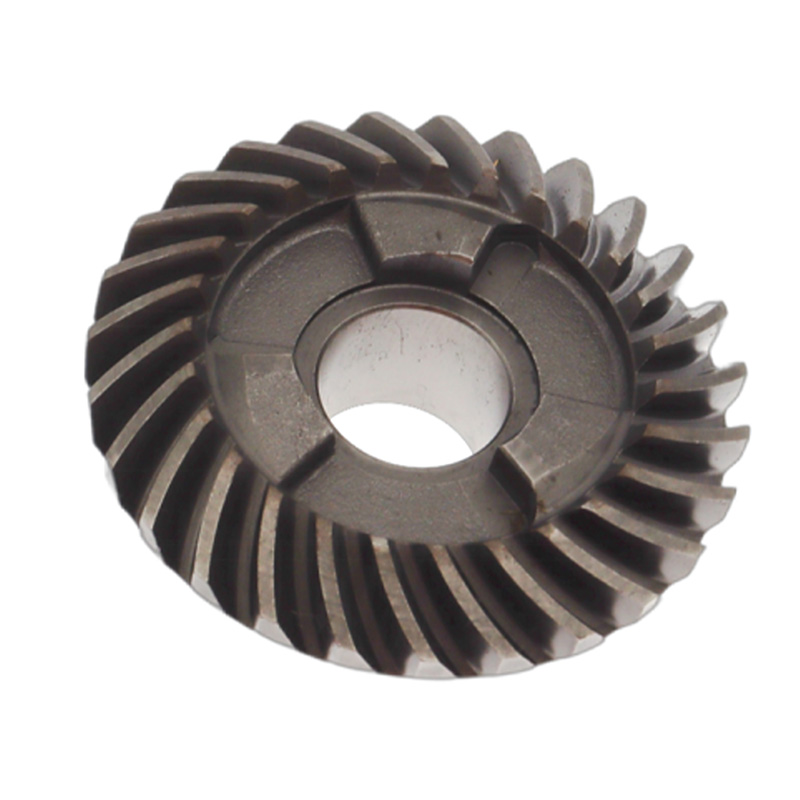
Cylindrical gears are gears whose teeth are cut on the surface of a cylinder, typically used for transmitting motion between parallel or slightly inclined shafts. They include spur gears (teeth parallel to the shaft) and helical gears (teeth cut at a helix angle). [shop.sdp-si]
Inside an outboard lower unit, the pinion on the vertical drive shaft meshes with forward and reverse gears mounted on the propeller shaft; these are classic examples of cylindrical gears engineered for high torque, repeated shifting, and corrosion‑prone environments. [boats]
Understanding standard nomenclature is the first step toward correct design and sourcing. Below are the essential terms you will encounter in gear drawings, catalogs, and marine service manuals. [khkgears]
- Pitch circle diameter (PCD): The theoretical circle where gear teeth effectively engage with a mating gear. It defines the gear's "working" size and is central to meshing and speed ratio calculations. [khkgears]
- Outside diameter (OD): The diameter measured over the tooth tips. For spur gears, OD is typically slightly larger than PCD and is used for clearance and housing design. [khkgears]
- Root diameter (RD): The diameter measured at the tooth roots; this is critical for shaft strength and oil film behavior in marine gearcases. [boats]
- Module m: The ratio of PCD to number of teeth, measured in millimeters. It standardizes tooth size; only gears with the same module will properly mesh. [scribd]
- Diametral pitch (DP): The imperial equivalent of module, defined as the number of teeth per inch of pitch diameter; used in some legacy marine drawings and American aftermarket parts. [khkgears]
- Pressure angle (α): The angle between the line of action and a line normal to the pitch circle. Common values such as 20° balance smooth operation and load capacity. [khkgears]
- Helix angle (β) (helical gears): The angle between the tooth direction and the gear axis. Typical industrial values range roughly from 15° to 45°. Lower angles reduce axial thrust, while higher angles improve smoothness but increase end thrust. [scribd]
- Facewidth: The length of the tooth in the direction of the gear axis. Wider facewidth allows higher load capacity but requires tighter alignment and stiffness. [khkgears]
- Addendum: Tooth height above the pitch circle, affecting how deeply teeth engage. [khkgears]
- Dedendum: Tooth height below the pitch circle to the root. It influences strength and debris tolerance—important for outboards that might ingest contaminated oil. [boats]
- Clearance: The radial gap between the tooth tip of one gear and the root of its mate, preventing interference and allowing lubrication film. [khkgears]
- Backlash: The circumferential play between mating teeth at the pitch circle. Controlled backlash is vital for quiet running and heat management in marine gearcases. [boats]
Both spur and helical cylindrical gears appear in marine transmissions; choosing between them involves clear trade‑offs in noise, load capacity, and axial thrust. [wm.pollub]
Spur gears have teeth parallel to the shaft, making them simple, robust, and easy to manufacture. [khkgears]
- Lower manufacturing complexity and cost
- No axial (thrust) load from tooth geometry
- Higher noise and impact during meshing, especially at high RPM
These characteristics make spur gears common in compact, cost‑sensitive outboard lower units, especially in lower horsepower ranges.
Helical gears use angled teeth, which engage gradually and share load across more tooth area. [scribd]
- Smoother, quieter operation and higher load capacity
- Better contact ratio, ideal for high‑power/high‑RPM engines
- Introduce axial thrust, requiring thrust bearings and stiffer housings [wm.pollub]
Marine OEMs increasingly adopt helical profiles in premium or high‑output outboards where user expectations for noise and durability justify the added design complexity.
When specifying or replacing outboard gears, a few parameters require special attention because they directly affect fit, performance, and life in the lower unit. [sterndrive]
Selecting the correct module ensures the pinion, forward gear, and reverse gear mesh correctly and share load as intended. [scribd]
- Too small a module: Higher tooth contact stress and potential pitting under marine torque loads
- Too large a module: Bulky gearset, reduced efficiency, and packaging challenges in compact gearcases
At Ningbo Gill Transmission Parts Co., LTD., we align module selection with both power density targets and the physical constraints of modern slim gearcases used in popular outboard families.
Pressure angle influences both contact stress and sensitivity to misalignment. [khkgears]
- Higher pressure angle: Better load capacity but increased radial forces on bearings
- Lower pressure angle: Gentler engagement but lower strength
In marine gearboxes, we typically prioritize consistency: matching OEM pressure angles ensures compatibility with existing shafts, bearings, and housings.
A wider facewidth allows more load to be shared across the tooth but can also magnify misalignment issues. [khkgears]
For outboards that experience prop strikes, cavitation, and sudden gear changes, we design facewidth to balance:
- Adequate load capacity and safety factor
- Acceptable sensitivity to housing deflection and bearing wear
- Sufficient oil flow across the tooth surface for cooling and lubrication [boats]
Excessive backlash leads to clunking when shifting into gear, while too little backlash generates heat and scuffing at high RPM. [boats]
Our experience with marine failures shows that improper backlash—often due to incorrect shimming—can rapidly destroy the pinion gear, leading to catastrophic "grenading" of the gearset and metal contamination of the lower unit. [marineengine]
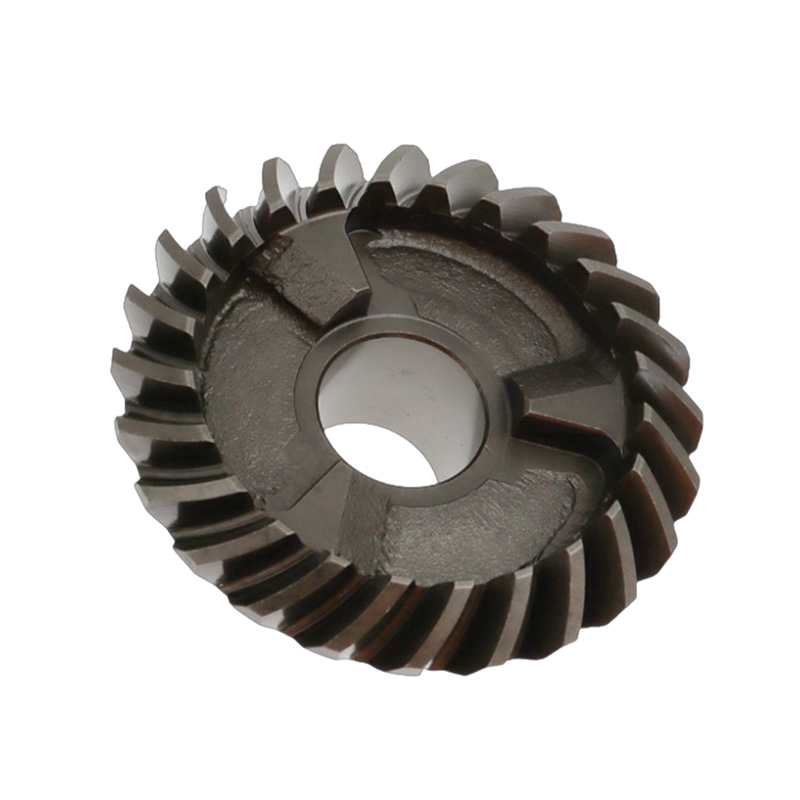
Understanding gear nomenclature is more meaningful when you see how those parameters influence real behavior in an outboard system. [boats]
A typical outboard lower unit contains:
- A vertical drive shaft pinion at the bottom of the leg
- A forward gear and reverse gear mounted on the propeller shaft
- A dog clutch or similar engagement mechanism for selecting gear [boats]
When the driver selects forward, the clutch engages the forward cylindrical gear; in reverse, it engages the reverse gear. All components run in lubricating gear oil, housed inside the gearcase. [boats]
Every dimension—module, PCD, facewidth, helix angle, backlash—affects:
- Noise level and vibration felt by the boat operator
- Efficiency and fuel consumption
- Durability when exposed to shock loads, contaminated oil, or poor maintenance [marineengine]
For example, a pinion with incorrect module or pressure angle might appear to "fit" during assembly but will concentrate contact stress on the edge of each tooth, leading to early pitting, tooth chipping, and ultimately failure. [scribd]
Drawing on both industry references and field feedback from marine technicians, several design themes consistently emerge as critical for outboard gears. [marineengine]
Marine gears require surface hardening (such as carburizing and quenching) combined with precise grinding or honing to achieve:
- High surface fatigue resistance against pitting
- Proper flank micro‑geometry that distributes load across the tooth face
- Controlled roughness for stable oil film formation
Optimized micro‑geometry is especially important in helical sets where axial thrust and higher contact ratios amplify the effect of any error. [shop.sdp-si]
Although gears operate in sealed housings, water intrusion remains a common cause of failure. [marineengine]
- Materials and coatings should tolerate occasional moisture without rapid rusting at the root fillet.
- Tooth root geometry must allow oil to circulate, avoiding stagnant zones where emulsified oil and water can accelerate corrosion. [boats]
Our outboard gear designs build in generous root fillet radii and profile modifications that support both strength and lubricant flow.
Real‑world reviews from marine owners often mention sudden pinion failure after repeated hard shifts or propeller strikes in shallow water. [marineengine]
To address this, we focus on:
- Sufficient tooth root strength and fillet design
- Controlled backlash to soften engagement without excessive impact
- Harmonized stiffness of shafts, bearings, and housings so gears share load as modeled
For engineers and buyers working with Ningbo Gill Transmission Parts Co., LTD., the following step‑by‑step approach ensures that the correct cylindrical gear set is selected.
1. Define operating envelope
- Engine horsepower and maximum RPM
- Gear ratio requirements (e.g., forward gear PCD vs pinion PCD) [boats]
2. Confirm standard parameters
- Module or DP, pressure angle, helix angle (if helical)
- Facewidth limits based on gearcase size and bearing arrangement [scribd]
3. Align with existing components
- Check compatibility with shafts, bearings, and clutch design
- Verify backlash and center distance with the gearcase machining tolerances [khkgears]
4. Specify materials and treatments
- Choose alloy steel appropriate for marine use
- Define required surface hardness, case depth, and finishing process
5. Plan testing and validation
- Gear contact pattern inspections
- Noise and vibration measurements under real marine loads
Following this framework helps ensure every dimension in the cylindrical gear nomenclature translates into real, measurable performance on the water.
| Term | Basic definition | Why it matters in outboards |
|---|---|---|
| Module mm | Pitch diameter ÷ number of teeth (scribd) | Ensures correct meshing between pinion and gears |
| Pitch circle (PCD) | Effective working diameter of the gear (khkgears) | Governs gear ratio and propeller shaft speed |
| Pressure angle (α) | Angle of tooth force line (khkgears) | Influences contact stress and bearing load |
| Helix angle (β) | Tooth angle to gear axis (helical) (scribd) | Affects smoothness and axial thrust |
| Facewidth | Tooth length along axis (khkgears) | Determines load capacity and sensitivity to misalignment |
| Addendum / dedendum | Tooth height above/below pitch circle (khkgears) | Affects strength, clearance, and debris tolerance |
| Backlash | Circumferential play at pitch circle (khkgears) | Critical for noise, heat, and shock loading |
As a specialized manufacturer of outboard gears and marine transmission parts, Ningbo Gill Transmission Parts Co., LTD. combines standardized cylindrical gear nomenclature with application‑specific optimization for marine environments.
Working with our engineering team, you can:
- Translate OEM part numbers and legacy drawings into modern module‑based specifications
- Optimize gearsets for new outboard platforms with tighter noise limits
- Implement design improvements informed by real‑world failure modes reported by boat owners and service technicians [marineengine]
This blend of textbook‑correct terminology and field‑tested marine expertise is what ensures your gear designs perform reliably from prototype to long‑term service.
If you are designing a new outboard platform, upgrading an existing drive, or sourcing reliable replacement gearsets, contact Ningbo Gill Transmission Parts Co., LTD. to review your cylindrical gear specifications. Our engineering team can translate your performance targets into robust, manufacturable gear designs optimized for real marine conditions, from tooth geometry to heat treatment and final inspection.
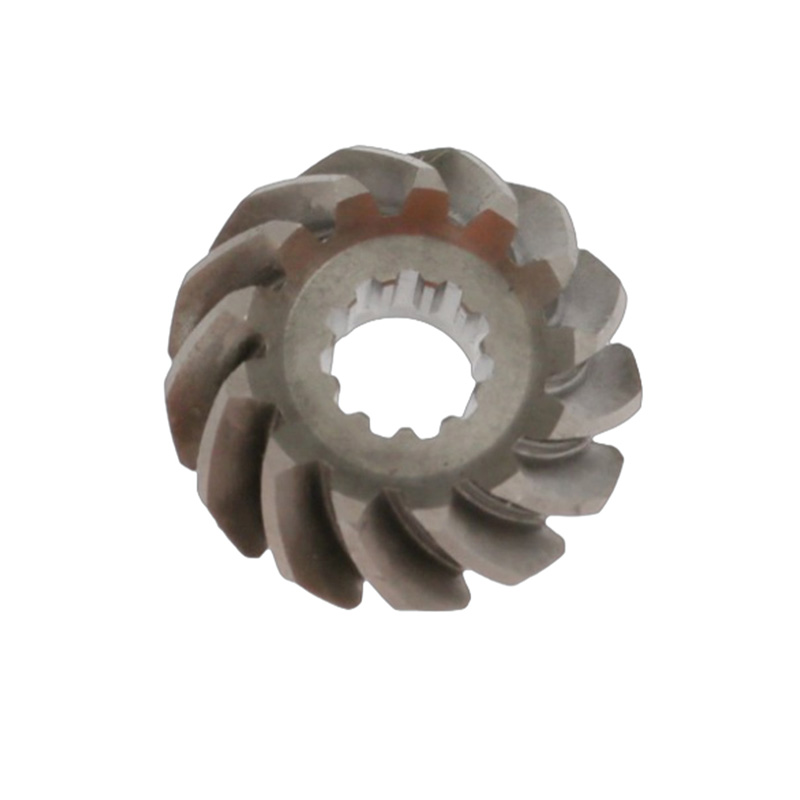
Q1: Can I replace only the pinion without changing the forward and reverse cylindrical gears?
In most cases, you should replace the entire matched gear set, because pinion and gears are manufactured and lapped as a set to share load correctly; mixing components with slightly different tooth geometry can accelerate wear and noise. [sterndrive]
Q2: Why is backlash so important in outboard gearboxes?
Backlash balances thermal expansion, oil film needs, and shock absorption; too little backlash causes heat and scuffing at high RPM, while too much leads to clunking and impact loads during shifting. [boats]
Q3: Are helical gears always better than spur gears for outboards?
Not always; helical gears can offer smoother, quieter operation and higher load capacity, but they introduce axial thrust that demands stronger housings and bearings, which may not be optimal for every power range or price point. [shop.sdp-si]
Q4: How does water intrusion damage cylindrical gears?
Water contamination in the gear oil breaks down the lubricant film, increases corrosion at the tooth roots, and can lead to bearing and pinion failure, often observed in real‑world outboard repair reports as sudden "grenaded" gearsets. [marineengine]
Q5: What information do I need to provide to correctly source replacement outboard gears?
You should provide engine model and serial number, desired gear ratio, required module or DP, pressure angle, helix angle (if applicable), and any specific noise or durability requirements, so that the gear set can be correctly matched to your lower unit. [sterndrive]
1. KHK Gear Manufacturer – "Basic Gear Terminology and Calculation." [Link] [khkgears]
2. KHK Gear Manufacturer – "Gear Module." [Link] [scribd]
3. Helical gear geometry and helix angle ranges. [Link] [scribd]
4. MarineEngine – "How an Outboard's Lower Unit Works." [Link] [boats]
5. SEI Marine – Example outboard gear set (forward, pinion, reverse). [Link] [sterndrive]
6. Boat Repair Forum – Discussions on pinion gear failure in outboards. [Link] [marineengine]
7. Technical information on helical gears and normal system geometry. [Link] [shop.sdp-si]
8. General SEO formatting and UX best‑practice for headings, bullets, and structured content. [Link] [siteimprove]
Estimated word count (article body, excluding this line): ~1,850 words.
Meta description (≈300 characters):
Cylindrical gears are the core of every outboard lower unit. Learn practical gear nomenclature, design parameters, and marine‑specific insights from Ningbo Gill Transmission Parts Co., LTD. to specify, optimize, and source reliable outboard gearsets.
Would you like a second, shorter version of this article tailored specifically for a product category page (e.g., "Outboard Gear Sets") with more commercial intent?


