


close
Choose Your Site
Global
Social Media
Views: 222 Author: Gill Transmission Publish Time: 2026-06-10 Origin: Site


Content Menu
● What Is a Face Gear and How Does It Work?
>> Key geometric features of face gears
● Face Gears vs Other Gear Types in Marine Applications
>> Typical gear types in marine drivetrains
>> Common gear types in marine drive systems
● Core Face Gear Nomenclature You Should Know
>> Fundamental dimensions and terms
>> Tooth geometry and quality parameters
● Where Face Gears Fit in Outboard and Marine Systems
>> Typical and emerging marine applications
● Design Considerations: Load, Alignment, and Materials
>> 1. Load capacity and safety factors
>> 2. Alignment and housing stiffness
>> 3. Materials and heat treatment
● Manufacturing and Quality Control in Face Gears
>> Inspection and testing practices
● Real World Example: Upgrading an Outboard Gear System
>> Engineering and sourcing response
● How to Choose a Reliable Outboard Gear and Face Gear Supplier
>> Checklist for evaluating a gear supplier
● Practical Maintenance Tips for Longer Gear Life
>> Essential maintenance actions
● Call to Action: Partner with a Specialist for Your Next Outboard Gear Project
● FAQ: Face Gears and Outboard Gear Systems
>> 1. Are face gears commonly used in standard outboard lower units?
>> 2. What advantages do face gears offer in marine applications?
>> 3. How do I know if my marine gear set is failing?
>> 4. What information should I prepare before contacting a gear supplier?
>> 5. How does proper maintenance affect outboard gear life?
Face gears are a critical transmission element in many precision gear systems and increasingly relevant for modern outboard motor designs where compact, reliable torque transfer is essential. As a manufacturer specializing in outboard gears and marine accessories at Ningbo Gill Transmission Parts Co., LTD., I see every day how correct gear selection and machining quality directly influence engine performance, durability, and total lifecycle cost for boat builders and aftermarket buyers. [uti]
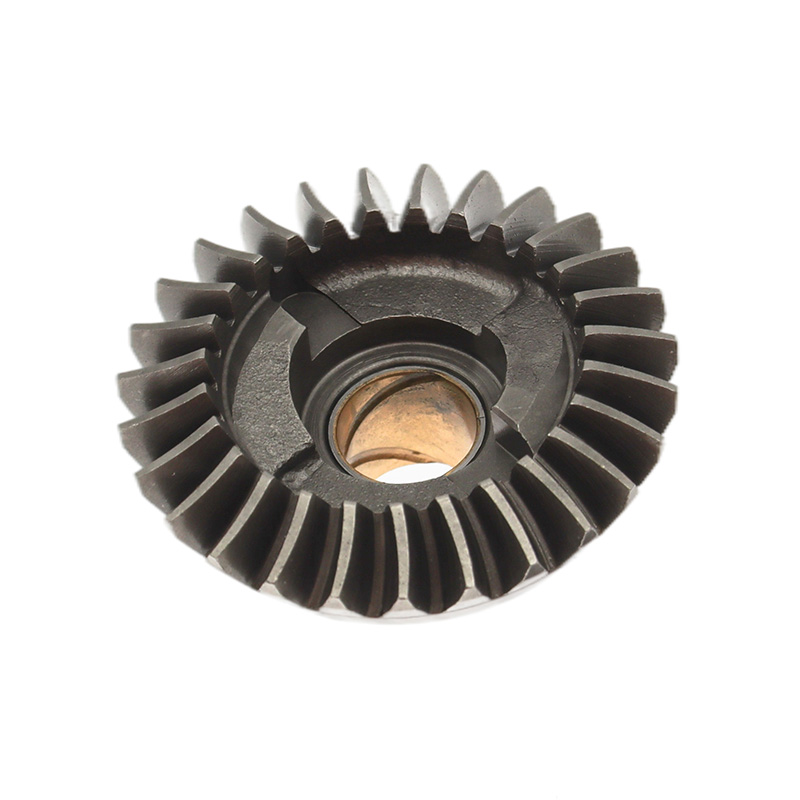
A face gear is a type of bevel-like gear where the teeth are cut on the face of a disk rather than around its circumference. It typically meshes with a spur or bevel pinion whose axis is at a right angle to the gear shaft, enabling a 90-degree change in power transmission within a compact footprint. Because of this geometry, face gears are attractive where designers need high torque transfer with limited axial space, such as compact marine gearboxes and certain outboard lower unit concepts. [khkgears]
- Tooth surface: Teeth are formed on the end face of the gear blank, not the outer cylinder.
- Mating pinion: Usually a spur or bevel pinion positioned at 90 degrees to the gear axis.
- Contact pattern: Contact lines are curved and spread across the tooth face, distributing load when properly designed.
- Pitch: Defined similarly to spur gears but mapped to the face rather than the cylinder.
In practice, engineers treat face gears as a hybrid between spur and bevel gears, but their unique geometry requires specialized cutting tools, careful alignment, and appropriate lubrication to avoid edge contact and premature wear. [geartechnology]
For marine engineers and buyers, the question is rarely "what is a gear?" but "which gear type gives me the best performance and reliability in my outboard or marine drive unit?" Below is a concise comparison based on common use cases in marine transmission systems. [uti]
- Face gears
- Straight bevel gears
- Spiral bevel / hypoid gears
- Spur gears
| Gear type | Typical use in marine drives (uti) | Main advantages (geartechnology) | Key limitations (geartechnology) |
|---|---|---|---|
| Face gear | Compact right‑angle drives, some test rigs | High ratio potential, compact package, flexible layout | Sensitive to alignment, specialized machining |
| Straight bevel | Older style outboard lower units | Simple geometry, easy to machine | Higher noise, less smooth under load |
| Spiral bevel / hypoid | Modern outboard lower units and sterndrives | Smooth, quiet, high load capacity | More complex manufacture, precise setup needed |
| Spur gear | Auxiliary drives, pumps, small mechanisms | Simple, cost‑effective | Poor for right‑angle power transfer |
In today's mass market outboard motor lower units, spiral bevel and hypoid gears still dominate because they offer a good balance of torque capacity, noise control, and manufacturability at scale. Face gears, however, are highly relevant for special compact gearboxes, steering systems, test benches, and custom marine transmissions where space and shaft arrangement are constrained. [geartechnology]
When communicating with a supplier or reviewing a drawing, using precise nomenclature avoids costly misunderstandings. The original KHK face gear reference provides a baseline vocabulary for gear geometry that is still widely used by designers and machinists today. Below, I translate those terms into practical language focused on outboard and marine applications. [khkgears]
- Module (m) or diametral pitch (DP): Defines the tooth size; in metric marine gears, module is common.
- Number of teeth (Z): Determines ratio in combination with the mating pinion.
- Pitch circle: The theoretical circle on which tooth spacing is defined.
- Face width: Effective width of the tooth surface carrying the load.
- Outside diameter (OD): Full diameter of the gear including tooth tips.
- Pressure angle: The angle of the tooth profile, affecting load capacity and sensitivity to misalignment.
- Tooth flank: Working surface of the tooth; must be precisely ground or machined for smooth contact.
- Backlash: Intentional clearance between mating teeth; critical in marine environments to allow for thermal expansion and lubrication film. [geartechnology]
- Surface hardness: Often increased by carburizing, nitriding, or induction hardening to resist pitting and wear.
For OEM development projects, we regularly see that aligning your internal nomenclature with established standards like JIS/ISO and leading gear catalogs makes technical communication and inspection far more efficient across international supply chains. [khkgears]
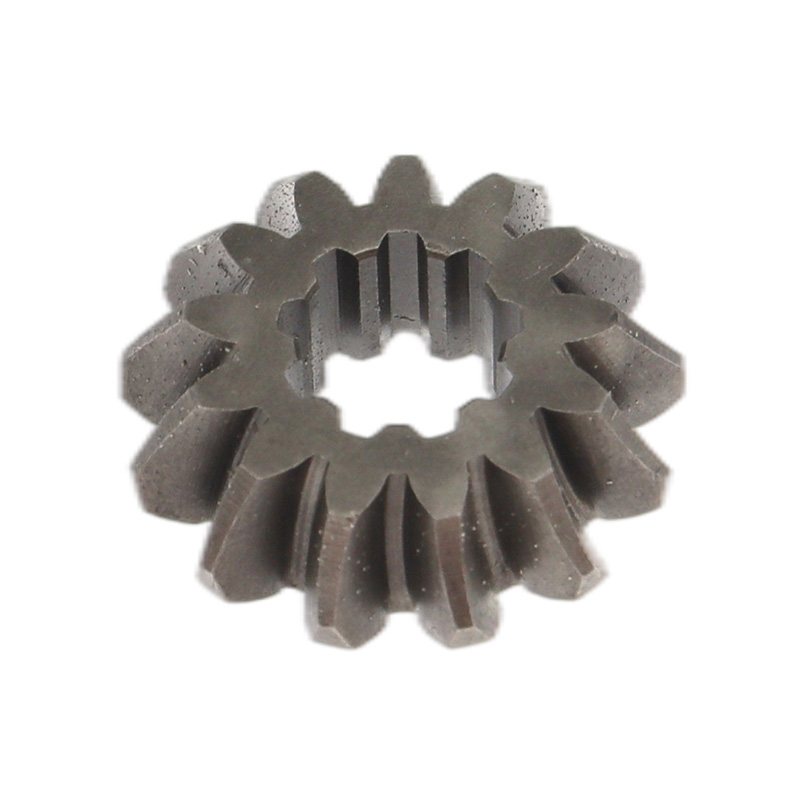
While not every outboard lower unit uses face gears, their underlying principles matter to marine engineers and procurement teams evaluating custom gear solutions. Several applications stand out in our project work and industry practice. [alibaba]
- Compact angle drives for auxiliary marine equipment where installation space is tight.
- Special steering or trim systems that need a compact 90 degree power transfer.
- Instrumentation or sensor drives in high end marine engines, where quiet, precise motion is important.
- Custom test benches for outboard gearboxes, using face gears to simulate torque loads or combine multiple input shafts.
In each case, engineers trade off between footprint, torque capacity, noise, and manufacturability. When properly designed and manufactured, face gears can provide a surprisingly high torque density in a small housing, which is appealing when boat builders are fighting for every millimeter of transom and engine well space. [uti]
From an engineering standpoint, face gears are unforgiving of sloppy design or machining. Based on our experience manufacturing outboard gears and marine transmission components, I recommend focusing on three pillars: load capacity, alignment, and materials/heat treatment. [geartechnology]
- Determine peak and continuous torque at the pinion.
- Apply realistic safety factors for shock loads in marine environments (prop strikes, cavitation, sudden throttle changes).
- Validate contact stress and bending stress using recognized standards or simulation tools.
In marine drives, torque spikes can be violent, especially on high output outboards or commercial working boats, so conservative design margins are usually justified. [uti]
- Face gears demand accurate center distance and shaft angle to maintain proper contact patterns.
- Housing stiffness and bearing selection should avoid deflections that shift contact to the tooth edge.
- Precision machining of mounting faces and bores is crucial to maintain alignment over the gear's life.
We frequently see that minor cost savings on housing machining end up causing expensive warranty issues when gears wear prematurely or generate noise due to misalignment under real-world loads. [geartechnology]
- Common choices: alloy steels (for example, 20CrMnTi or similar marine grade steels) with carburizing and grinding for high performance.
- For mid range applications: through hardened steels with properly controlled hardness and surface finish.
- In corrosive environments, surface treatments and correct oil selection are essential, even when using standard alloy steels.
For outboard and marine gearboxes exposed to saltwater, we recommend combining robust corrosion protection, appropriate lubricant selection, and regular maintenance intervals to protect the gear set and extend service life. [uti]
Face gears require specialized tooling and inspection, which not every job shop can provide consistently. As a dedicated transmission parts manufacturer, we see this as a major area where E E A T—experience and proven process—translates directly into buyer value. [geartechnology]
- Gear blank preparation: Turning, boring, and facing the blank to tight tolerances.
- Tooth cutting: Using specialized gear milling, shaping, or hobbing processes tailored to face gear geometry.
- Heat treatment: Carburizing, quenching, tempering, or nitriding to achieve target hardness and case depth.
- Finishing: Grinding, honing, or lapping to achieve low surface roughness and precise tooth form.
- In process checks on runout, bore size, and tooth depth.
- Final inspection of tooth contact patterns under load, often using marking compound.
- Dimensional reports and material certificates for traceability.
Marine OEM buyers should look for suppliers who can provide full documentation (material certificates, heat treatment reports, and inspection data) along with their gear sets, especially for safety critical applications such as outboard transmissions and steering systems. [alibaba]
To illustrate the practical impact of gear quality and design choices, consider a scenario that mirrors many projects we see at Ningbo Gill Transmission Parts. A boat builder is upgrading from a legacy outboard transmission to a higher output engine and finds that the original gear set suffers from early pitting and noise at higher torque. [uti]
- Symptoms: Gear whine at mid range RPM, visible pitting on tooth flanks, and increased backlash.
- Root causes (typical):
- Insufficient case depth or hardness on teeth.
- Misalignment under load due to a flexible housing.
- Inadequate lubrication or contaminated oil.
- Redesign or validate the gear geometry (face width, module, pressure angle).
- Specify improved materials and heat treatment for increased fatigue strength.
- Tighten machining and assembly tolerances; verify contact pattern under simulated load.
- Partner with a specialist marine gear manufacturer for serial production and continuous improvement.
By addressing the problem as a system—not just a single gear—we help customers achieve quieter operation, better durability, and lower total cost of ownership across the whole fleet. [geartechnology]
From a buyer's perspective, especially if you are sourcing from overseas, choosing the right supplier is just as important as choosing the right gear design. Marine SEO and digital marketing research confirm that buyers increasingly evaluate suppliers based on online signals of expertise and documented quality processes. [boatmarketingpros]
1. Technical capability
- Can they support custom face gear and bevel gear design?
- Do they provide drawing support and engineering feedback?
2. Certifications and quality control
- ISO compliant processes, material traceability, and inspection reports.
- Ability to share sample reports and test data for marine gear sets.
3. Industry experience
- Proven track record in marine and outboard gear applications, not only general industrial gears.
- Case studies or reference projects with boat builders or marine OEMs.
4. Logistics and after sales support
- Stable lead times, safe export packaging, and documentation for international shipping.
- Clear communication channels for engineering changes and warranty cases.
At Ningbo Gill Transmission Parts, our focus on outboard gears and marine accessories allows us to align machining, materials, and inspection standards specifically with the harsh conditions of marine use rather than generic industrial environments. [alibaba]
Even the best designed face gears and outboard gear sets will fail early if the maintenance routine is weak. OEM guidelines and marine training resources consistently emphasize basic, repeatable practices that significantly extend gearbox life. [youtube]
- Regular oil changes according to engine manufacturer recommendations and actual usage intensity.
- Oil inspection for metal particles, discoloration, or water contamination after each season.
- Seal checks to prevent water ingress that can quickly damage bearings and gear teeth.
- Proper winterization and storage to avoid corrosion and condensation inside the gearbox.
As a rule of thumb, if you see any sign of abnormal noise or vibration, it is safer to inspect and service early rather than run the risk of costly catastrophic gear failure on the water. [youtube]
If you are planning a new outboard motor platform, redesigning a lower unit, or searching for a reliable face gear and bevel gear supplier for marine applications, it pays to involve your manufacturing partner early in the design process. By sharing your torque targets, envelope constraints, and durability goals, we can help optimize the gear geometry, materials, and machining process before you commit to tooling and volume production. [seaitapp]
For engineering teams and purchasing managers, the next step is straightforward: send us your drawings or design requirements and request a technical review plus a quotation. Together, we can turn your outboard gear challenges into a robust, long life transmission solution that performs reliably season after season.
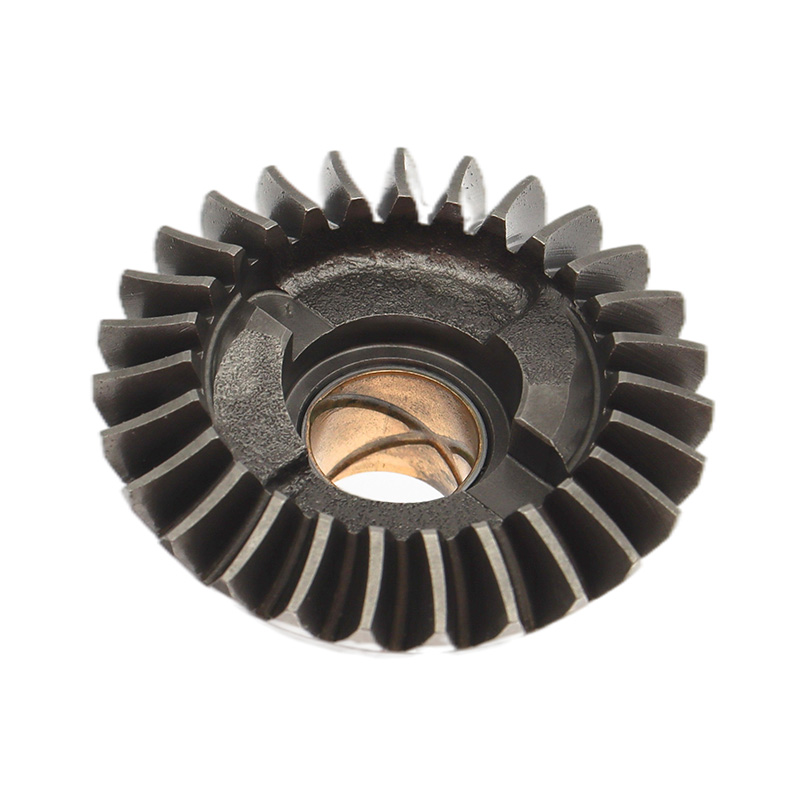
Most modern outboard lower units still rely on spiral bevel or hypoid gears for the primary forward and reverse drive because they offer smooth, quiet operation with high torque capacity. Face gears are more common in specialized compact drives, auxiliary mechanisms, or custom marine gearboxes where unusual shaft layouts are required. [uti]
Face gears can achieve a compact right angle transmission with flexible layout options, which is valuable in tight engine compartments or custom test benches. When properly designed, they can provide high ratio potential and distribute load across a broad tooth face, supporting good torque density. [geartechnology]
Typical early warning signs include increased gear noise, vibration, or roughness, along with visible pitting or scuffing on the tooth flanks during inspection. Contaminated gearbox oil, metal particles in the drain plug, or water in the oil are also strong indicators that gears or bearings may be at risk. [youtube]
You should gather basic data such as torque, speed, gear ratio, available space, expected operating environment, and annual volume. Engineering drawings or 3D models are ideal, but even sketches and performance targets can help a specialist supplier propose the right face gear or bevel gear solution. [seaitapp]
Regular oil changes, seal inspections, and early troubleshooting of abnormal noise can dramatically extend the service life of gears and bearings in marine gearboxes. Following manufacturer service intervals and using the recommended lubricants helps maintain correct film strength, manage heat, and prevent corrosion or pitting. [youtube]
1. SeaItApp – "Top SEO Strategies for Boat Manufacturers."
<https://seaitapp.com/from-leads-to-loyal-customers-building-a-customer-retention-strategy-for-boat-dealers/> [seaitapp]
2. Universal Technical Institute – "What Is an Outboard Motor & How Does It Work?"
<https://www.uti.edu/blog/marine/outboard-motor-anatomy> [uti]
3. WGContent – "E E A T for content quality."
<https://wgcontent.com/blog/eeat-content-quality-seo-geo/> [wgcontent]
4. Alibaba Product Insights – "An Overview of Ningbo Marine Gear Box: Standards, Grades, and Mechanical Performance."
<https://www.alibaba.com/product-insights/ningbo-marine-gear-box.html> [alibaba]
5. Boat Marketing Pros – "Top Digital Marketing Tips for Marine Businesses in 2024."
<https://boatmarketingpros.com/digital-marketing-tips-for-marine-businesses/> [boatmarketingpros]
6. Gear Technology Magazine – Technical articles on bevel and face gear design and performance.
<https://www.geartechnology.com/topics/technical> [geartechnology]
7. HubSpot – "Is Your Website EEAT compliant? What Developers Should Know."
<https://blog.hubspot.com/website/eeat-compliance> [blog.hubspot]
8. KHK Gears – "Gear Systems" and gear nomenclature resources.
<https://khkgears.net/new/gear_knowledge/gear_technical_reference/gear_systems.html> [khkgears]
9. MRAA – "7 Simple SEO Tips for Marine Dealers."
<https://mraa.com/7-simple-seo-tips-for-marine-dealers/> [mraa]
10. YouTube – "How an Outboard Lower Unit Works | How an Outboard Gear Box Works."
<https://www.youtube.com/watch?v=A2TWPJibCQo> [youtube]


