


close
Choose Your Site
Global
Social Media
Views: 222 Author: Gill Transmission Publish Time: 2026-04-28 Origin: Site


Choosing the right gear materials for outboard motors is one of the most critical decisions you can make if you care about reliability, noise, and lifecycle cost on the water. As a manufacturer deeply involved in outboard gears and marine transmission parts, I have seen how material choices directly decide whether a drive system runs smoothly for thousands of hours—or fails after a few harsh seasons of saltwater use. [accio]
In this guide, we'll walk through the fundamentals of gear material selection, show how marine conditions change the rules compared with standard industrial gears, and share practical insights from real-world manufacturing and testing. The focus is on outboard gearboxes, but the principles apply to many marine powertrain components.
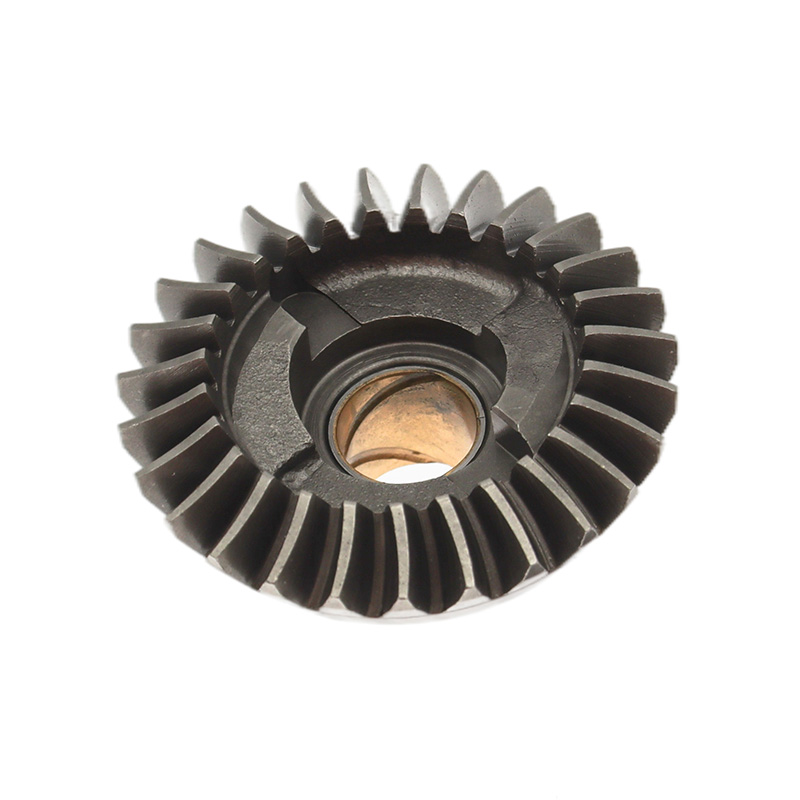
Marine gears live a harder life than most industrial gears. They must: [rjnautical]
- Transmit high torque at low speeds during acceleration and heavy load maneuvers. [rjnautical]
- Endure constant shock loads from waves and propeller impacts with debris or cavitation. [accio]
- Resist corrosion from saltwater, humidity, and sometimes polluted harbors. [accio]
- Keep noise and vibration low to improve comfort on board. [smoothmovesseats]
In practice, that means your material must simultaneously deliver:
- High bending and contact fatigue strength at the gear teeth.
- Good toughness to resist chipping and pitting under shock.
- Excellent corrosion resistance or robust surface protection.
- Stable dimensions and hardness after heat treatment.
For outboard gears, the usual trade-off is between alloy steels with surface hardening (for extreme strength) and stainless or special steels with sophisticated coatings and lubrication to push saltwater durability even further. [rjnautical]
Basic carbon steels (such as plain medium‑carbon steels) are common in low‑load industrial gears, but they are rarely the first choice for serious marine outboard applications. [accio]
Advantages
- Easy to machine.
- Low material cost.
Limitations in marine environments
- Lower fatigue strength compared with alloy steels.
- Poor corrosion resistance; require aggressive coatings and perfect sealing.
- Dimensional changes and distortion can be harder to control under heat treatment.
For this reason, carbon steels are typically reserved for secondary components (e.g., some shafts or non-critical gears) in well‑sealed housings and mild environments, not for heavy‑duty outboard final drives.
Most high‑quality outboard gears use alloy steels that are carburized, hardened, and ground to achieve a hard wear‑resistant surface with a tough core. Common families include chromium, nickel‑chromium, and molybdenum‑alloy steels. [rjnautical]
Why alloy steels dominate outboard gearboxes
- High tooth strength after carburizing and quenching, enabling compact gears to transmit high torque.
- Excellent fatigue resistance under repeated load reversals.
- Ability to combine hard cases (for wear) with tough cores (for impact).
Typical process chain for marine gear alloy steels often follows this pattern: [accio]
1. Rough machining (turning, milling).
2. Hobbing or shaping gear teeth.
3. Carburizing and quenching to create a hard surface layer.
4. Grinding to correct distortion and achieve precise tooth geometry.
5. Final inspection and performance testing.
With the correct alloy, case depth, and grinding quality, outboard gearsets can survive thousands of running hours, even under aggressive shifting and heavy throttle use. [rjnautical]
In some marine applications, especially where gearboxes are exposed to spray or frequent immersion, certain stainless steels become attractive despite higher costs. [accio]
Benefits
- Strong resistance to rust and pitting, reducing risk in case of sealing failure.
- Good long‑term appearance and lower maintenance demands.
Challenges
- Generally harder to machine.
- Heat treatment must be carefully controlled to maintain both corrosion resistance and mechanical strength.
- Often require higher material and processing cost, so they are used strategically (e.g., shafts, auxiliary gears, or hybrid designs).
Modern designs sometimes use hybrid assemblies: alloy steel gears for highest load sections, combined with stainless shafts or housings to protect against corrosion from leaks and condensation. [accio]
Nonferrous alloys such as bronze are widely used for worm gears and certain low‑speed marine gearsets because they offer: [accio]
- Excellent sliding properties and low friction against steel worms.
- Good galling resistance and relatively quiet operation.
However, for high‑speed outboard gearboxes, bronze is usually a secondary choice due to lower load capacity and potential wear at very high contact stresses. You may still find bronze or brass components in:
- Bearing cages.
- Low‑load auxiliary gears.
- Older or specialized marine drive designs.
Although metal remains the standard for high‑load marine gears, engineering plastics and composites are slowly gaining ground in low‑to‑medium load systems (e.g., trim actuators, accessory drives, or interior mechanical systems). [smoothmovesseats]
Benefits
- Very low noise and vibration.
- Lightweight, which matters in small outboards and auxiliary systems.
- Corrosion‑free by nature.
Limitations
- Lower temperature resistance compared with steel.
- Creep and dimensional changes under long‑term load.
- Limited suitability for high‑torque final drives.
In an outboard gearbox, plastic is typically limited to non-critical, low‑load components, not the main forward/reverse gearset.
Saltwater is aggressive. Chloride ions accelerate pitting and crevice corrosion, especially on unprotected carbon or alloy steels. Once corrosion pits form on gear teeth, they become stress concentrators, accelerating fatigue crack initiation. [accio]
To manage this, serious marine gear design uses a mix of:
- Corrosion‑resistant alloys or stainless steels in exposed areas.
- High‑quality surface treatments, such as nitriding, carburized case hardening, or specialized coatings.
- Robust sealing and lubrication systems to keep water away from the tooth flanks. [accio]
Unlike constant‑load industrial drives, marine propellers frequently encounter:
- Sudden load changes when a prop hits debris.
- Rapid shifts from forward to reverse thrust during docking.
- Transient load spikes due to cavitation or aeration in rough seas. [rjnautical]
These events put extreme demands on toughness and impact resistance. The core of a carburized alloy steel gear must be able to absorb energy without brittle failure, which is why through‑hardening alone is rarely enough—surface hardening plus a tough core is the standard for quality outboard gears. [rjnautical]
Recent marine industry trends strongly emphasize on‑board comfort, including reduced noise and vibration. For gear design, that translates to: [boatus]
- Optimized tooth geometry (profile and lead modifications) to reduce transmission error.
- High‑precision grinding after heat treatment.
- Sometimes using composite or plastic components in low‑load areas to damp vibration. [smoothmovesseats]
Material choice directly influences how well the gear can be ground to fine tolerances and maintain them over its lifetime.
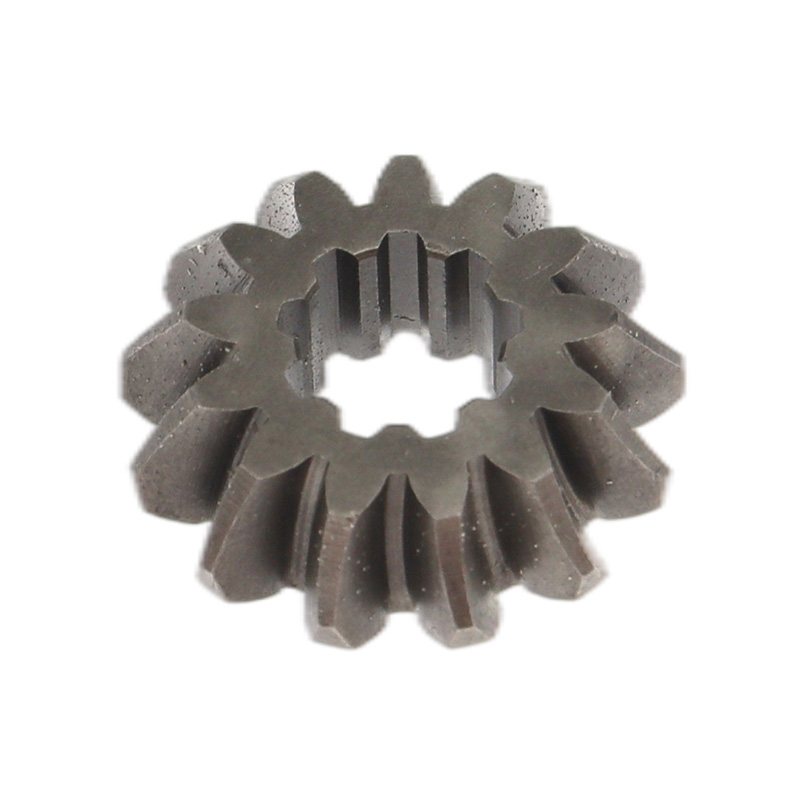
Raw material selection is only half of the story. Heat treatment transforms alloy steel into a high‑performance gear.
For outboard gears, case carburizing is a primary choice: [accio]
- Carbon is diffused into the surface at elevated temperature.
- The gear is quenched, forming a hard martensitic case.
- The core remains relatively softer and tougher.
Typical outcomes:
- Case hardness sufficient to resist pitting and wear under high contact stress.
- Core toughness allowing the gear to survive shock loads.
Post‑heat treatment distortion is inevitable, especially with complex gear shapes. Precision grinding: [accio]
- Restores accurate tooth profile and lead.
- Reduces noise and vibration.
- Ensures consistent load distribution across the tooth face.
In high‑end marine gear production, grinding is not optional; it is a critical step that separates long‑life gearsets from noisy, short‑lived ones.
When we design and manufacture outboard gears for demanding boat builders and aftermarket clients, we evaluate materials against a structured set of criteria. [rjnautical]
- Engine power and maximum torque: The higher the torque, the stronger and more fatigue‑resistant the gear material must be. [accio]
- Gear ratio and tooth size: High reduction ratios and small pinions increase tooth contact stress.
- Operating environment: Saltwater vs. freshwater, temperature range, operating hours per year.
- Safety and certification requirements: Compliance with standards and certifications such as ISO 9001 and marine‑specific norms. [accio]
- Maintenance reality: Will the gearbox receive regular oil changes and inspections, or must it survive neglect?
Below is a conceptual comparison of typical materials used in marine gear systems:
| Material type | Marine load capacity | Corrosion resistance | Machinability | Typical marine use case |
|---|---|---|---|---|
| Medium carbon steel | Low–medium (accio) | Poor (accio) | Good (accio) | Secondary gears in sealed, mild conditions |
| Carburized alloy steel | High (accio) | Moderate (accio) | Fair | Main outboard gearsets, prop drive |
| Stainless steel (martensitic or duplex) | Medium–high (accio) | Good–excellent (accio) | Fair–difficult | Shafts, exposed components, hybrid gears |
| Bronze / nonferrous alloy | Low–medium (accio) | Good (accio) | Good | Worm gears, low‑speed drives |
| Engineering plastics | Low (smoothmovesseats) | Excellent (smoothmovesseats) | Excellent | Auxiliary low‑load mechanisms |
This framework helps narrow down the optimum choice based on your performance vs. cost vs. environment trade‑offs.
Marine powertrain technology is evolving quickly, and material technology is part of that evolution. [yachtingworld]
Beyond classical carburizing and nitriding, new thin‑film coatings and treatments are emerging to:
- Reduce friction and wear.
- Improve scuffing resistance under marginal lubrication.
- Add extra corrosion protection in borderline environments. [accio]
As an example, some high‑end sailing gear systems now combine titanium components for superior corrosion resistance with composite or carbon elements to reduce weight, a trend that could gradually influence heavy‑duty transmission designs as manufacturing costs fall. [yachtingworld]
More boat owners and shipyards are asking about sustainability, not just performance. [smoothmovesseats]
- Some marine components now incorporate recycled or bio‑based materials in non‑critical parts. [smoothmovesseats]
- Improved gear geometry and higher‑strength alloys can reduce material volume, achieving lighter drives without sacrificing durability.
While the main gearsets in outboard gearboxes still rely on tried‑and‑true alloy steels, the overall system—housings, auxiliaries, and comfort‑related components—is moving toward lighter and more environmentally conscious materials. [yachtingworld]
Modern marine gear suppliers increasingly rely on digital simulation and accelerated testing to validate material choices. [rjnautical]
- Finite element analysis (FEA) to predict stress and fatigue life.
- Lab‑based salt‑spray and endurance tests to replicate years of exposure in months. [accio]
This data‑driven approach reduces trial‑and‑error and ensures that new materials and treatments genuinely add value before they reach the market.
As a company focused on outboard gears and marine transmission parts, a manufacturer like Ningbo Gill Transmission Parts Co., LTD. (or any serious marine gear specialist) typically adds value in several key ways: [accio]
Instead of offering generic industrial gears, a marine specialist:
- Designs tooth geometry for marine loading patterns (forward, reverse, and shock).
- Selects material and heat treatment based on specific outboard engine platforms, target horsepower ranges, and propeller loads. [rjnautical]
This reduces failure risk and improves user satisfaction in the real operating environment.
A professional marine gear supplier builds quality into the process: [accio]
- Verified material traceability and chemistry control.
- Multi‑stage inspection from raw material to finished gear.
- Routine salt‑spray and endurance tests for representative samples.
This is what ensures that every gearset delivered achieves the intended strength, hardness, and corrosion resistance.
Marine markets require both OEM batch production and small‑lot customization. [accio]
- OEMs need consistent, scalable supply.
- Aftermarket customers may request special ratios, retrofits, or performance upgrades.
A capable manufacturer aligns its material choices and heat‑treatment capacity to support both, without compromising lead time or quality.
If you are an engineer, boat builder, or aftermarket buyer, here is a simple step‑by‑step approach to gear material selection for an outboard drivetrain:
1. Define your torque and duty cycle
- Identify maximum engine torque and expected shock loading. [rjnautical]
- Estimate annual operating hours and typical throttle usage.
2. Clarify the environment
- Saltwater vs. freshwater operation.
- Storage conditions (dry indoor vs. on‑mooring year-round).
3. Set your noise and comfort targets
- Decide how quiet the system must be relative to market expectations. [boatus]
4. Shortlist materials
- For heavy‑duty outboards: carburized alloy steel gears with robust sealing.
- For auxiliary mechanisms or exposed components: consider stainless or composites where appropriate. [accio]
5. Align with certifications and standards
- Ensure the manufacturer follows recognized quality standards and marine testing protocols. [accio]
6. Validate with sample testing
- Request test reports or conduct your own teardown and inspection to confirm hardness, case depth, and surface quality. [accio]
By following this framework and partnering with a supplier experienced in marine gear design, you can minimize trial‑and‑error and focus on delivering reliable performance on the water.
If you are designing, upgrading, or troubleshooting outboard gears or marine gearboxes, the right material and treatment choices can dramatically extend service life, reduce warranty claims, and enhance the onboard experience.
Whether you need:
- Custom gearsets matched to a specific outboard platform,
- Advice on material upgrades for corrosion or noise issues, or
- A long‑term manufacturing partner for OEM or aftermarket programs,
consider partnering with a dedicated marine gear specialist that combines material science, heat‑treatment expertise, and application‑level testing for the harsh realities of the marine environment. [rjnautical]
Q1: Why can't I just use standard industrial gears in an outboard motor?
A1: Industrial gears are not always designed for saltwater corrosion, repeated reverse thrust, and high shock loads from waves and debris, so they may wear or fail much faster in marine use. [rjnautical]
Q2: Are stainless steel gears always better than alloy steel in marine applications?
A2: Not necessarily; stainless offers better corrosion resistance but often lower fatigue strength and more difficult machining, so carburized alloy steels usually remain the first choice for heavily loaded outboard gearsets. [accio]
Q3: How important is grinding after heat treatment for marine gears?
A3: Grinding is critical to correct distortion, achieve precise tooth geometry, reduce noise, and ensure uniform load sharing, all of which directly affect durability in outboard gearboxes. [accio]
Q4: Can engineering plastics replace metal gears in an outboard gearbox?
A4: Plastics are excellent for low‑load, noise‑sensitive components, but they typically cannot handle the high torque and temperature conditions of main outboard gearsets, so they are used only in auxiliary functions. [smoothmovesseats]
Q5: What are the early signs that gear material or heat treatment is inadequate in a marine gearbox?
A5: Early symptoms include abnormal noise, vibration, metallic particles in oil, visible pitting or micro‑chipping on tooth flanks, and faster‑than‑expected backlash growth during regular inspections. [rjnautical]
- SPC – Outboard Motors Learner's Guide. Overview of outboard motor components and operating conditions.
https://coastfish.spc.int/Sections/training/fts_pdf/statutory/outboard_lg_en.pdf [coastfish.spc]
- R&J Nautical – A Complete Guide to Outboard Motors and How They Operate. Technical explanation of outboard gearboxes and torque transmission.
https://www.rjnautical.com/blog/a-complete-guide-to-outboard-motors-and-how-they-operate/ [rjnautical]
- Accio – Professional Fishing Boat Gearbox Manufacturing. Discussion of marine gearbox material selection, heat treatment, and quality verification.
https://www.accio.com/supplier/gearbox-manufacturing-for-fishing-boats [accio]
- Yachting World – The Best New Sailing Gear Innovations for 2026. Trends in advanced marine materials and lightweight components.
https://www.yachtingworld.com/yachts-and-gear/the-best-new-sailing-gear-innovations-for-2026-162114 [yachtingworld]
- Smooth Moves Seats – Marine Comfort Innovations & Trends in 2026. Industry focus on comfort, noise reduction, and advanced materials.
https://smoothmovesseats.com/blog/marine-comfort-innovations-trends-in-2026/ [smoothmovesseats]
- BoatUS – Technology Abounds in the New Boats & Products of 2026. Marine technology trends and onboard systems.
https://www.boatus.com/expert-advice/expert-advice-archive/2026/february/new-boats-products-2026 [boatus]


