


close
Choose Your Site
Global
Social Media
Views: 222 Author: Gill Transmission Publish Time: 2026-04-30 Origin: Site


When you design, repair, or upgrade outboard gears and marine power transmission systems, it is essential to understand the fundamentals of gear types and terminology. This guide combines hands‑on factory experience from Ningbo Gill Transmission Parts Co., LTD. with standard industry definitions, so marine engineers, boat OEMs, and serious DIYers can make better decisions about performance, noise, and durability. [mostlyserious]
In marine drivetrains, the wrong gear selection can lead to excessive noise, premature wear, vibration, and even catastrophic failure at sea. Understanding standardized gear language allows you to: [geartechnology]
- Communicate clearly with suppliers, OEMs, and service yards
- Compare outboard gear sets and lower units across brands
- Diagnose tooth damage, alignment issues, and lubrication failures
- Optimize for torque, noise, and efficiency in specific hull and propeller setups
For manufacturers like Ningbo Gill Transmission Parts Co., LTD, using precise terminology is also part of demonstrating engineering expertise and E‑E‑A‑T (Experience, Expertise, Authoritativeness, Trustworthiness) to both customers and search engines. [wgcontent]
Below is an overview of common gear types you will encounter in outboard gears, stern drives, and auxiliary marine machinery. [publisherdesk]
Spur gears have straight teeth cut parallel to the shaft. [geartechnology]
Key characteristics: [publisherdesk]
- Simple to manufacture and cost‑effective
- High efficiency at moderate speeds
- Can be noisy at high speed because tooth engagement is sudden
Typical marine uses:
- Low‑speed auxiliary drives
- Pumps and winches where noise is less critical
Helical gears have teeth cut at an angle (helix angle) to the shaft, giving them smoother engagement than spur gears. [geartechnology]
Benefits in marine applications: [publisherdesk]
- Reduced noise and vibration in the gearbox
- Higher load‑carrying capacity due to more teeth in contact
- Better suited to high‑speed outboard and inboard transmissions
Because of these characteristics, helical gears are widely used in modern marine gearcases, especially where comfort and NVH (noise, vibration, harshness) are critical selling points. [thatware]
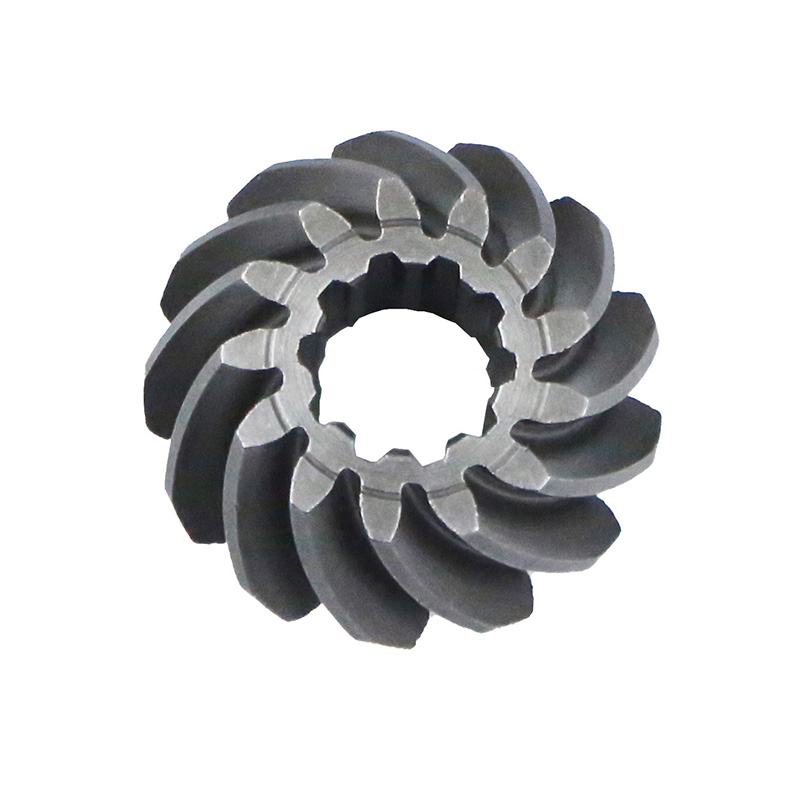
When shafts intersect or cross at angles—as in an outboard lower unit that turns vertical crankshaft rotation into horizontal propeller rotation—engineers use bevel and hypoid gears. [geartechnology]
- Straight bevel gears: Teeth are straight; used for intersecting shafts at right angles in lower‑speed, lower‑load mechanisms. [publisherdesk]
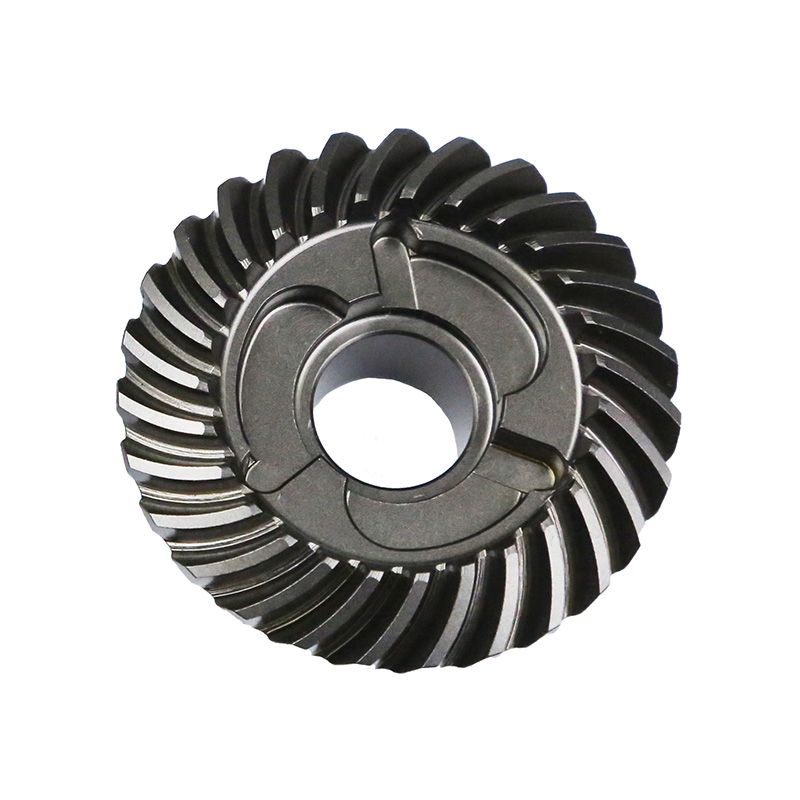
- Spiral bevel gears: Teeth are curved, giving smoother engagement and higher load capacity; widely used in marine drives. [geartechnology]
- Hypoid gears: Similar to spiral bevel but with shaft offset, enabling compact packaging and quieter operation at high speed. [publisherdesk]
In many modern outboards, spiral bevel or hypoid gear sets are at the heart of the lower unit, balancing compact size, torque capacity, and low noise. [thatware]
Worm gears consist of a worm (similar to a screw) meshing with a worm wheel. [geartechnology]
In marine environments, worm gears are less common in main propulsion but often appear in: [publisherdesk]
- Steering mechanisms
- Lifting and tilting systems
- Winches and davits where high reduction ratios and self‑locking behavior are desirable
To specify or troubleshoot an outboard gear set, you need more than the gear type; you must know tooth geometry terms and how they relate to performance. [geartechnology]
Tooth size is described differently in metric and inch‑based systems. [baike.mysteel]
- Module (m): Metric measure defined as pitch diameter divided by number of teeth
- Diametral pitch (DP): Inch‑based measure defined as number of teeth per inch of pitch diameter
Larger module / lower DP means larger, stronger teeth, which is important for high‑torque, low‑speed marine propulsion. [publisherdesk]
The pressure angle is the angle between the line of action (contact line) and the tangent to the pitch circle. [geartechnology]
Common values: [publisherdesk]
- 20° (standard in many industrial gears)
- 25° or higher in high‑strength applications
In outboard gears, a higher pressure angle can increase load capacity, but also influences bearing loads and noise, so it must be selected carefully. [geartechnology]
For helical and spiral bevel gears, helix angle and face width directly affect torque capacity and smoothness. [publisherdesk]
- Helix angle: Higher angles increase contact ratio and smoothness but raise axial thrust loads
- Face width: Wider face distributes load over a larger area, improving durability under shock loads such as rapid throttle changes or cavitation events
Backlash is the small clearance between mating gear teeth. In marine gearcases, correctly set backlash is essential to: [geartechnology]
- Compensate for thermal expansion and oil film
- Avoid binding under high load
- Control noise and shock loading
Service technicians often check blueing or marking compound contact patterns on outboard spiral bevel gears to adjust shim stacks and ensure the load is centered on the tooth face. [publisherdesk]
From an end user's standpoint, gear design is not just a drawing or specification sheet—it directly impacts how a boat behaves on the water. [mostlyserious]
For coastal cruisers, fishing boats, and passenger vessels, gear whine is a real comfort and sales issue. [mraa]
- Helical and spiral bevel gears reduce tonal noise compared with straight spur or straight bevel gears. [geartechnology]
- Precise tooth finishing and grinding further reduce vibration and whine in outboard gearboxes. [publisherdesk]
Gear tooth geometry, surface finish, and lubrication regime influence mechanical losses in the driveline. [geartechnology]
Even small improvements in efficiency can matter over hundreds of engine hours, especially for commercial vessels or charter fleets. [thatware]
Marine drivetrains see shock loads from wave impact, rapid gear shifting, and propeller strikes, combined with corrosive saltwater environments. [thatware]
Good gear design and selection provide: [thatware]
- Adequate safety factor in tooth bending and contact stress
- Materials and surface treatments suited to marine corrosion and pitting
- Robust alignment and bearing support to protect teeth over thousands of cycles
From the perspective of a manufacturer and OEM partner, here is a practical, step‑by‑step way to select or specify gears for marine applications. [siggear]
Define how and where the boat will be used: [mostlyserious]
1. Engine horsepower and maximum RPM
2. Typical load (light recreational vs. commercial duty)
3. Freshwater vs. saltwater and expected operating hours per year
4. Required noise level and comfort expectations
Based on duty cycle: [publisherdesk]
1. Select helical or spiral bevel for high‑speed outboard and stern drive gearboxes where noise and smoothness matter.
2. Confirm required gear ratio from engine to propeller.
3. Choose module/DP, pressure angle, and helix angle to balance strength, size, and noise.
Marine gear sets typically use alloy steels with carburizing or nitriding to achieve a hard, wear‑resistant surface and tough core. [geartechnology]
Check that:
- Material meets fatigue and impact requirements
- Surface hardness, case depth, and residual stress profiles match duty cycle
As recommended by gear industry editorial standards, engineering teams should validate designs with instrumented testing, not only simulations. [mostlyserious]
- Run dynamometer tests to confirm temperature, noise, and efficiency
- Inspect tooth contact pattern and wear under realistic lubrication and load
- Collect user feedback from early fleet deployments and refine tooth geometry if needed
Drawing on experience from supplying gears and transmission parts to international marine OEMs, several recurring lessons stand out. [siggear]
Shifting pressure angle or helix angle by just a few degrees, combined with improved grinding, often cuts perceived gear whine significantly without changing the basic housing or bearings. This is particularly valuable when OEMs want quieter premium outboard models using existing platforms. [thatware]
When shipyards, engine makers, and component suppliers all use the same gear terminology, field issues can be resolved faster. Instead of vague "it's noisy," teams can discuss backlash, micro‑pitting, scuffing, or misalignment in clear terms and converge on actionable fixes. [mostlyserious]
The table below summarizes key terms every marine engineer or serious boater should know when dealing with outboard gears and gear terminology. [publisherdesk]
| Term | Brief meaning for marine use |
|---|---|
| Gear type | Spur, helical, bevel, hypoid, or worm configuration used in the driveline |
| Module / DP | Measure of tooth size; larger module or lower DP means stronger, bigger teeth |
| Pressure angle | Angle of tooth force; affects strength, bearing loads, and noise |
| Helix angle | Tooth angle in helical and spiral bevel gears; influences smoothness and axial thrust |
| Backlash | Clearance between teeth; critical for noise, lubrication, and thermal expansion |
| Contact pattern | Actual tooth contact area under load; used for shimming and quality checks |
| Face width | Tooth width across gear face; larger widths carry more load and resist shock |
Use this table as a quick reference when reading drawings, talking to suppliers, or reviewing service reports. [publisherdesk]
For marine and outboard gear companies, how you present knowledge on your website is as important as the knowledge itself. [linkedin]
Search quality guidelines increasingly reward first‑hand experience and specific, real cases. On a gear terminology page, you can: [wgcontent]
- Reference long‑term partnerships with marine OEMs (without disclosing confidential details)
- Mention typical failure modes you help customers solve, such as root cause of premature gear pitting
- Share anonymized "before and after" examples of noise or durability improvements
Expert content is specific, consistent, and well‑structured. To signal expertise: [linkedin]
- Use correct technical vocabulary consistently throughout the page
- Cite relevant standards or industry magazines where appropriate
- Provide diagrams or photos showing gear types and contact patterns
Authority grows when multiple signals align. On a marine gear terminology page, you can: [wgcontent]
- Link out to respected gear and marine engineering resources
- Keep your terminology and definitions updated as standards evolve
- Include a short author bio for the engineer or product manager responsible for the article
A high‑performing gear terminology page should end with a specific call to action that matches user intent. [mraa]
If you are:
- A marine OEM or transmission designer:
- Share your target horsepower range, duty cycle, and packaging constraints to receive a custom gear set proposal for your outboard or stern drive platform.
- A distributor or service center:
- Request a technical data sheet and stocking recommendation for common replacement outboard gear sets and matched accessories.
- A boat owner or fleet manager:
- Contact our technical team to discuss noise, vibration, or durability issues and receive guidance on diagnosis and potential gear upgrades.
By turning technical terminology into real design and purchasing decisions, you protect your end users, your brand reputation, and your bottom line. [mostlyserious]
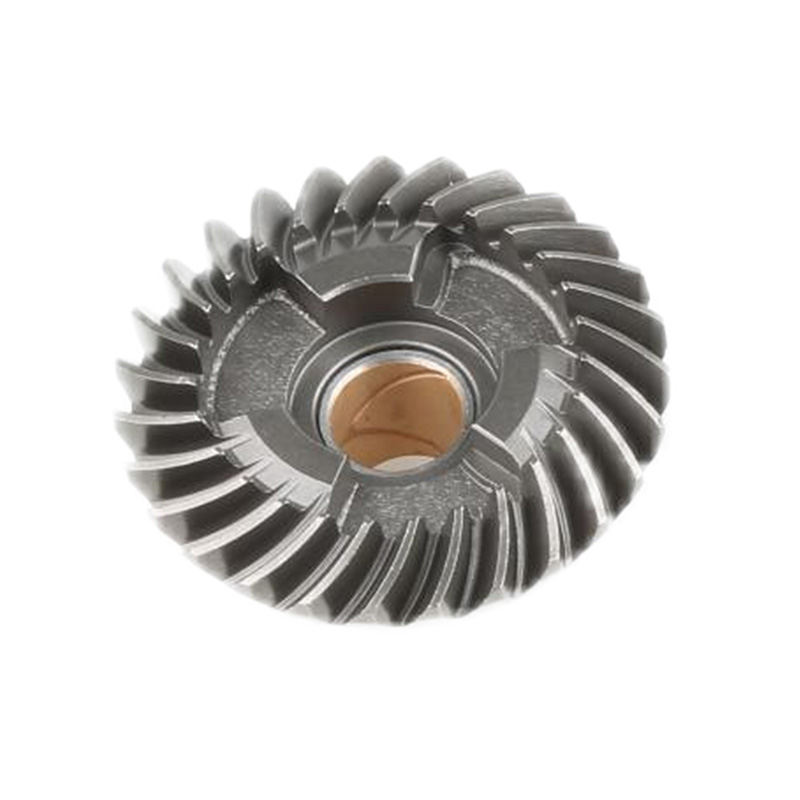
Q1: Why do most modern outboards use spiral bevel or hypoid gears instead of simple bevel gears?
A1: Spiral bevel and hypoid gears offer smoother engagement, higher load capacity, and lower noise at high RPM, which makes them ideal for compact, high‑speed outboard gearcases. [geartechnology]
Q2: How do I know if gear noise is coming from incorrect backlash?
A2: Excessively tight backlash can cause overheating and whine under load, while too much backlash often leads to clunking when shifting or changing load; checking with feeler gauges and marking compound helps diagnose the issue. [publisherdesk]
Q3: Does changing gear ratio always require a new housing?
A3: Not always, but significant ratio changes usually require different tooth counts and sometimes altered center distances, which may force changes to the housing or bearing layout in marine gearcases. [geartechnology]
Q4: Which is more important in marine gears, tooth strength or surface hardness?
A4: Both matter: tooth geometry and size set bending strength, while surface hardness and case depth protect against pitting and wear in high‑load, lubricated, marine conditions. [publisherdesk]
Q5: How often should outboard gear oil be changed to protect gears?
A5: Many manufacturers recommend at least annual changes or after a specified number of operating hours, with more frequent changes in commercial service or harsh environments to prevent corrosion and wear. [thatware]
1. Marine Retailers Association of the Americas – "7 Simple SEO Tips for Marine Dealers" (content strategy and CTA patterns for marine sector). (https://mraa.com/7-simple-seo-tips-for-marine-dealers/)
2. WG Content – "E‑E‑A‑T for content quality" (guidance on experience, expertise, authority, and trust). (https://wgcontent.com/blog/eeat-content-quality-seo-geo/)
3. Mostly Serious – "How to Write Expert Content: A Step‑by‑Step Guide" (expert‑driven content and interview‑based insights). (https://www.mostlyserious.io/insights/how-to-write-expert-content-step-by-step)
4. Gear Technology Magazine – Editorial Guidelines (focus on factual, expert technical gear content). (https://www.geartechnology.com/contribute)
5. Publisher Desk – "10 Essential E‑E‑A‑T Best Practices to Boost Your Website's Credibility" (depth, technical language, and authority signals). (https://www.publisherdesk.com/google-e-e-a-t-best-practices/)


