


close
Choose Your Site
Global
Social Media
Views: 228 Author: Gill Transmission Parts Publish Time: 2026-10-12 Origin: Site


Content Menu
● What Does "Trolling Motor Shaft Length" Actually Mean?
● Bass Boat Trolling Motor Shaft Length Chart
>> Why Boat Length Alone Is Not Enough
● How to Measure Your Bass Boat for a Trolling Motor Shaft
>> 1. Prepare the Boat in Its Normal Fishing Configuration
>> 2. Identify the Actual Mounting Surface
>> 3. Measure Vertically to the Waterline
>> 4. Apply the Selected Manufacturer's Conditions
● How Deep Should a Bass Boat Trolling Motor Run?
>> Why an Undersized Shaft Causes Problems
>> Set Depth for Conditions, Not Just Appearance
● Choosing Between Shorter and Longer Shaft Options
>> When a Shorter Shaft Can Work
>> When a Longer Shaft Deserves Consideration
>> Why "Longest Available" Is Not a Good Buying Rule
● Worked Examples: Turning Measurements into a Decision
>> Example 1: A 20-Inch Bow-to-Waterline Measurement
>> Example 2: A 24-Inch Measurement with Rough-Water Use
>> Example 3: A Measurement in an Overlapping Range
● An Expert Procurement Checklist: Specify More Than Length
● Common Bass Boat Trolling Motor Sizing Mistakes
>> Copying Another Boat's Setup
>> Mixing Manufacturer Formulas
>> Assuming Shaft Length Determines Thrust
>> Ignoring the Stowed Position
● Final Selection Checklist and Marine Parts Support
>> 1. What shaft length do I need for a 17-foot bass boat?
>> 2. Is a 45-inch trolling motor shaft long enough?
>> 3. Should I choose a 52-inch or 60-inch shaft?
>> 4. Does Garmin use the same sizing chart as Minn Kota?
>> 5. Can I shorten a trolling motor shaft myself?
>> 6. Is a trolling motor shaft the same as a propeller shaft?
How long is the shaft for a bass boat trolling motor? The right length depends on the distance from your bow's mounting surface to the waterline—not simply your boat's overall length. As a starting point, Minn Kota recommends 42–45-inch shafts for a 16–22-inch bow-to-waterline distance, 48–52 inches for 22–28 inches, and 54–60 inches for 28–34 inches. Always confirm the recommendation for your specific motor and fishing conditions.
The most important principle is submersion: your trolling motor must remain deep enough to deliver consistent propulsion when the bow moves.
At Ningbo Gill Transmission Parts Co., LTD., our perspective comes from 29 years of developing, manufacturing, and supplying propeller shafts and other marine components. However, a trolling motor's vertical shaft is not the same component as a rotating propeller shaft. This guide combines that component-focused perspective with published motor-manufacturer sizing guidance.
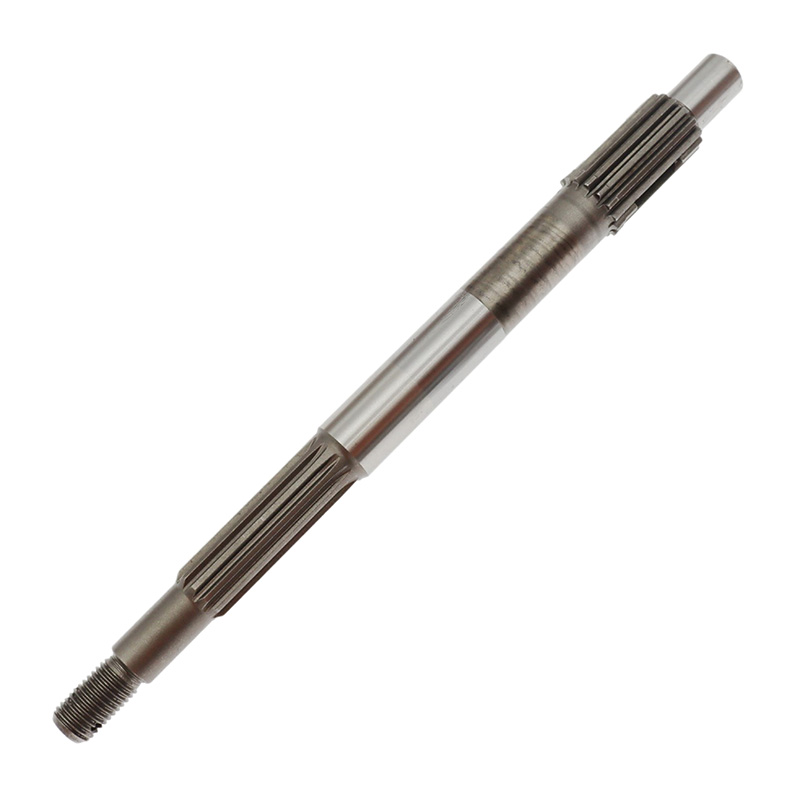
A bow-mounted trolling motor uses a vertical shaft to position its lower motor assembly below the boat. Its adjustable mounting arrangement allows the operator to change running depth within the motor's permitted range.
A propeller shaft performs a different function: it transmits rotation to the propeller. Confusing these components can lead to incorrect replacement-part inquiries.
When choosing trolling motor shaft length, you are selecting the motor's available vertical reach, not the length of its internal propeller shaft.
Measurement conventions also matter. Garmin specifies that its Force Kraken shaft measurement runs from the bottom of the shaft cap to the top of the propeller drive. Therefore, nominal shaft lengths should not automatically be treated as identical across different motor designs.
Use the following bow-mount recommendations as a screening tool, then check your selected motor's installation requirements.
| Bow mounting surface to waterline | Minn Kota recommended shaft length |
|---|---|
| 16–22 inches | 42–45 inches |
| 22–28 inches | 48–52 inches |
| 28–34 inches | 54–60 inches |
These are manufacturer-specific recommendations, not universal dimensions for every trolling motor. At shared range boundaries, operating conditions and the selected model need additional consideration.
A 19-foot bass boat does not automatically require the same trolling motor shaft as every other 19-foot boat.
Bow height, mounting position, hull design, loading, and fishing conditions influence the distance the motor must reach. Overall boat length provides context, but bow-to-waterline distance provides the relevant starting measurement.
Avoid buying a motor solely because another angler uses that length on a similarly sized boat.
Measure with your usual fuel, batteries, tackle, and other equipment aboard. Where practical, account for the people normally carried.
Loading affects the boat's position in the water. A measurement taken on an empty boat may not represent its fishing configuration.
Locate the surface supporting the trolling motor mount.
Do not measure from the bow rail, the highest point of the deck, or an unrelated platform. If a mounting plate changes the motor's installed height, include that arrangement when assessing fit.
With the boat floating in calm water, measure straight down from the mounting surface to the waterline.
Record the distance in inches. Do not estimate it from a photograph or measure diagonally along the hull.
Garmin specifically instructs owners to measure bow-to-waterline distance under calm conditions.
Use the chart for your chosen motor family.
For rough-water fishing, Minn Kota instructs users to add 5 inches to the waterline measurement. Garmin instructs Force users to add 8 inches where large waves are common before consulting its chart.
These allowances are alternatives within different manufacturers' methods. Do not combine them into a single universal formula.
Before purchasing, confirm:
- The motor can reach its required operating depth.
- The depth adjustment remains within permitted limits.
- The motor can deploy without interference.
- The stowed assembly fits the available deck space.
- Cables and accessories can move without becoming trapped.
A suitable waterline measurement does not eliminate the need for an installation check.
Minn Kota's general recommendation is to submerge the center of the motor section at least 12 inches. Its guide also includes a propeller-tip submersion recommendation, so the applicable model instructions should determine the exact reference point.
Do not casually substitute "top of the motor," "propeller center," and "propeller tip." Those locations produce different measurements.
If the shaft is too short, the propeller may become insufficiently submerged as the bow rises.
A longer usable shaft provides more depth-adjustment range, but the objective is not maximum depth. The objective is reliable submersion within the motor's specified installation and operating limits.
A motor that looks correctly positioned at the dock may need adjustment when the boat encounters waves.
Evaluate its operating depth during a controlled on-water check. Follow the manufacturer's instructions rather than lowering it indefinitely.
A shorter option can be appropriate when:
- The bow-to-waterline measurement fits its published range.
- Normal fishing conditions are sheltered.
- The motor maintains the required submersion.
- Deployment and stowing work correctly.
Shorter is not inherently better. It is suitable only when it meets the installation requirements.
Consider the longer approved option when:
- The bow sits higher above the water.
- The manufacturer's rough-water allowance changes the selection.
- Your measurement falls within overlapping recommended ranges.
- Additional usable depth is needed without compromising fit.
Garmin explicitly recommends selecting the longer shaft when measurements fall within overlapping ranges. That instruction should not be assumed to apply identically to every brand.
A longer motor must still fit your boat.
Check its stowed footprint, head position, accessory clearance, and deployment path. Excess length may create an awkward installation even when underwater reach is sufficient.
Choose the shortest option that satisfies the selected manufacturer's requirements and your actual operating conditions.
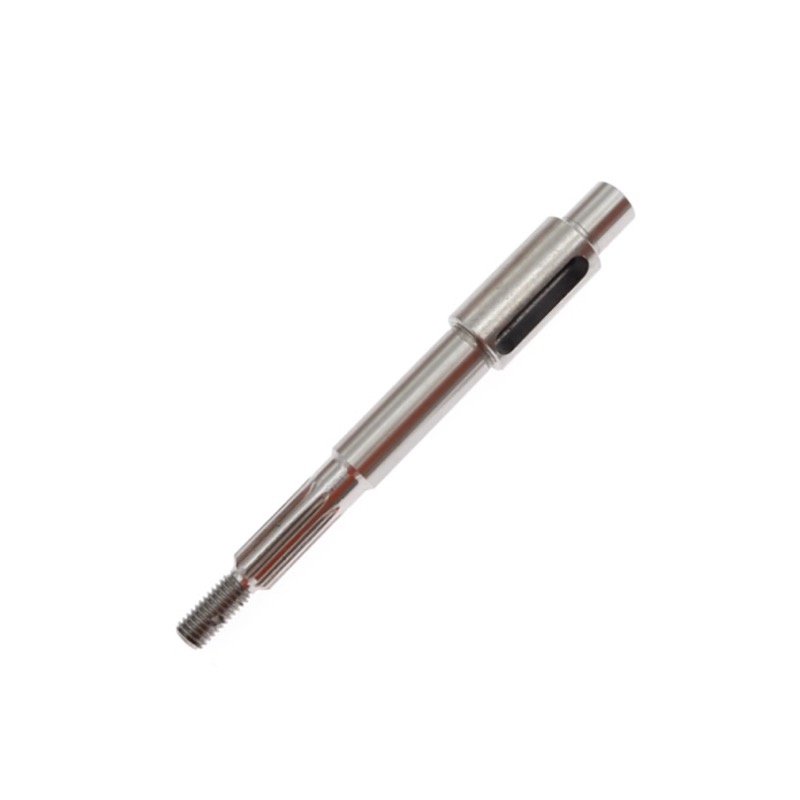
The following examples illustrate published sizing methods. They are not customer case studies or installation guarantees.
A bass boat measures 20 inches from its mounting surface to calm water.
Minn Kota's chart places that measurement within its 16–22-inch band, corresponding to a 42–45-inch shaft.
For a Garmin Force or Force Pro, the same measurement falls within the 15–26-inch range associated with a 57-inch shaft.
The different results demonstrate why a single generic chart cannot replace model-specific guidance.
A second boat measures 24 inches and regularly fishes rough water.
Under Minn Kota's method, adding 5 inches produces a 29-inch selection measurement. That falls within the 28–34-inch band, corresponding to 54–60 inches.
Under Garmin's large-wave method, adding 8 inches produces 32 inches. That exceeds the published 26-inch maximum in the Force/Force Pro 57-inch range.
For that Garmin example, do not assume the 57-inch option remains suitable. Consult the manufacturer or installer about an appropriate alternative.
A Garmin Force buyer measures 18 inches.
That distance appears within both the 50-inch and 57-inch published ranges. Garmin's overlap instruction points the buyer toward the longer option.
The lesson is straightforward: follow the complete guidance, including notes beneath the chart—not just the product's headline shaft length.
From a marine-component sourcing perspective, "I need a 52-inch shaft" is incomplete information.
For an assembled trolling motor, record:
1. Motor manufacturer and exact model.
2. Bow-to-waterline measurement.
3. Mounting arrangement.
4. Normal load and fishing conditions.
5. Available stowing space.
6. Relevant accessories and clearance requirements.
For a replacement shaft or associated component, also provide the serial number, part number, and photographs where available.
Dimensional similarity does not establish interchangeability. The correct inquiry must identify both the component's function and its intended assembly.
This distinction is especially important for repair shops and distributors handling trolling motor shafts, outboard drive shafts, and propeller shafts.
A friend's motor length is useful background, not proof of compatibility.
Measure your own boat and check your selected model.
MotorGuide's published catalog describes measuring from the bow mounting location to the waterline and adding 20 inches as a general guideline.
That differs from Minn Kota's chart and Garmin's model-specific ranges. Use one applicable method consistently rather than selecting convenient numbers from several sources.
Shaft length and thrust solve different problems.
Shaft length addresses reach and submersion. Thrust selection addresses propulsion requirements. Minn Kota provides separate guidance for these decisions and considers loaded boat weight when recommending thrust.
Inspect the motor both deployed and stowed.
A purchase decision should account for practical deck use, not just whether the propeller reaches the water.
Before ordering, confirm that you have:
- Measured the actual mounting surface to calm water.
- Accounted for your normal fishing configuration.
- Used the selected motor's published sizing guidance.
- Applied the appropriate rough-water allowance.
- Checked deployment, depth adjustment, and stowed clearance.
- Identified the exact model and required component.
For complete trolling motor selection, confirm fit with the motor manufacturer or a qualified installer.
For propeller shafts and related marine transmission components, contact Ningbo Gill Transmission Parts Co., LTD. with your application, existing part number, dimensional drawing, material requirements, and expected order quantity. Clearly identifying the component helps us evaluate your inquiry without confusing a trolling motor support shaft with a rotating transmission shaft.
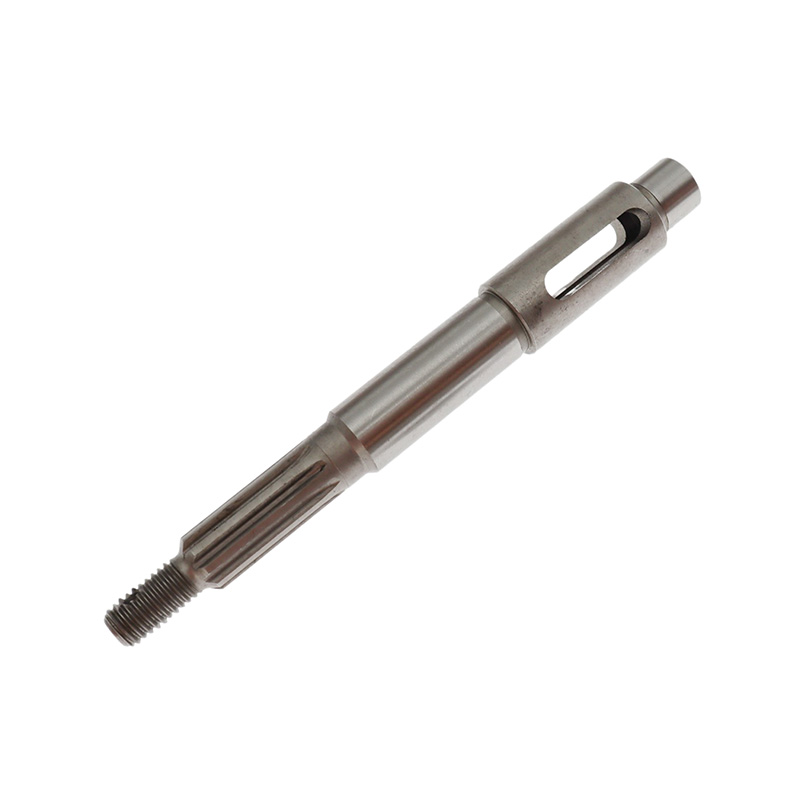
Boat length alone cannot determine the answer. Measure the bow mounting surface to the waterline, then consult the selected motor's chart and operating-condition allowances.
It may be. Minn Kota recommends 42–45 inches for a 16–22-inch bow-to-waterline distance. Rough-water adjustments and model-specific instructions can change the selection.
Compare your measurement with the applicable product guidance. In Minn Kota's chart, 48–52 inches corresponds to 22–28 inches, while 54–60 inches corresponds to 28–34 inches.
No. Garmin publishes model-specific ranges and a different large-wave allowance. Use the guidance for the motor you intend to install.
Do not assume shortening is approved. Ask the manufacturer or an authorized service provider whether your model permits modification, and clarify the installation and warranty implications before proceeding.
No. The vertical trolling motor shaft positions the submerged motor assembly. A propeller shaft transmits rotation to the propeller. Specify which component you need when requesting a replacement.
1. [Minn Kota — Trolling Motor Selection & Boat Size Guide]. Primary source for bow-mount shaft recommendations, submersion guidance, rough-water allowances, and the distinction between shaft selection and thrust selection.
2. [Garmin Support — Choosing the Appropriate Force Trolling Motor Shaft Length]. Primary source for Force-family sizing ranges, the 8-inch large-wave adjustment, overlapping-range guidance, and the Force Kraken measurement convention.
3. [MotorGuide — Product Catalog]. Manufacturer source for its general bow-to-waterline-plus-20-inches sizing guideline.


