


close
Choose Your Site
Global
Social Media
Views: 237 Author: Gill Transmission Parts Publish Time: 2026-10-21 Origin: Site


Content Menu
● Which Boat Output Shaft Are You Checking?
● Understanding Boat Output Shaft Play: Four Different Measurements
>> Axial Play: Movement Along the Shaft
>> Radial Play: Side-to-Side Movement
>> Rotational Play: Movement Before Engagement
>> Runout: Wobble During Rotation
● How Much Propeller Shaft Clearance Is Normal?
● How to Measure Boat Output Shaft Play Properly
>> 1. Make the Propulsion System Safe
>> 2. Identify What Is Actually Moving
>> 3. Prepare a Stable Indicator Setup
>> 4. Measure Axial and Radial Movement Separately
>> 5. Check Runout Independently
● Three Diagnostic Details That Prevent Expensive Mistakes
>> Measurement Location Changes the Result
>> Shaft Wear Can Make a New Bearing Feel Loose
>> A Baseline Makes Later Inspections More Useful
● When Does Shaft Play Require Immediate Attention?
● Repair the Cause, Not Just the Movement
● What Marine Parts Buyers Should Specify
● Get the Right Component for the Measured Problem
>> Is a Little In-and-Out Play in an Outboard Propeller Shaft Normal?
>> Should an Inboard Propeller Shaft Have Zero Bearing Clearance?
>> Is Propeller Shaft Play the Same as Gear Backlash?
>> Can I Check Shaft Play Without Removing the Propeller?
>> Does Excessive Shaft Play Mean the Shaft Must Be Replaced?
>> Can a New Propeller Shaft Still Have Movement?
How much play should a boat output shaft have? There is no universal acceptable measurement. The correct amount depends on the propulsion system, the direction of movement, and the manufacturer's inspection procedure. Slight movement may be intentional in one assembly but indicate wear in another.
The essential distinction is clearance: a designed operating gap is not the same as looseness caused by damaged bearings, worn journals, or an incorrectly assembled drivetrain. Before accepting advice such as "a little play is normal," identify exactly which shaft is moving.
At Ningbo Gill Transmission Parts Co., LTD., our manufacturing perspective reflects 29 years of specialization in marine components, including outboard gears, crankshafts, drive shafts, and propeller shafts. Our approach to this question starts with identifying the assembly, measuring the movement, and checking the applicable specification—not guessing by feel.
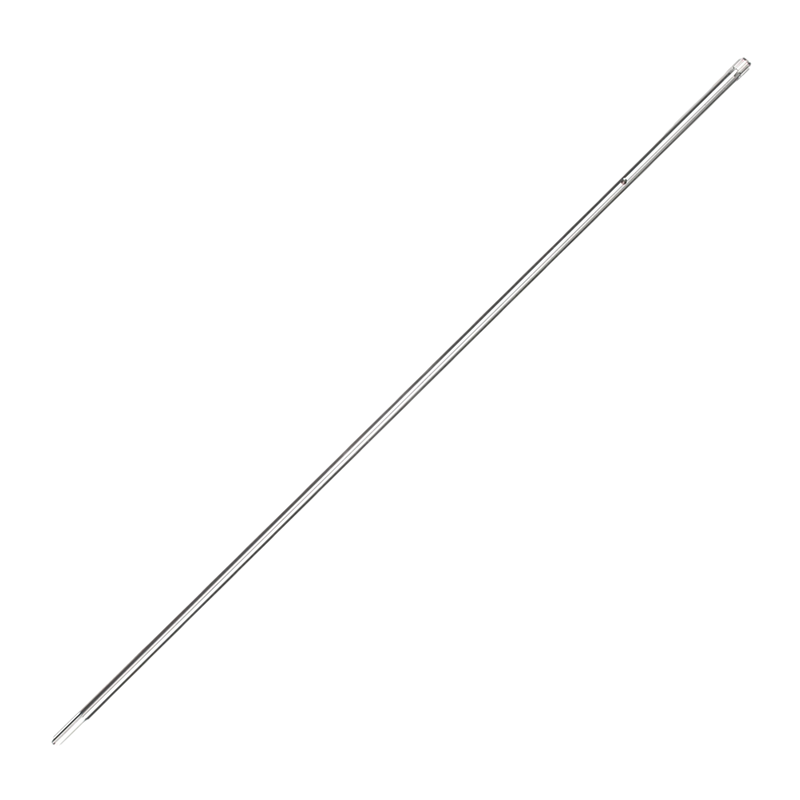
"Boat output shaft" can describe several different components. Confusing them leads to incorrect clearance comparisons and unnecessary replacement.
| Component | Location and function | Relevant checks |
|---|---|---|
| Marine transmission output shaft | Transfers power from an inboard gearbox to the coupling | Bearing endplay, radial movement, flange condition |
| Inboard propeller shaft | Runs from the coupling toward the propeller | Bearing clearance, shaft wear, alignment, runout |
| Outboard propeller shaft | Extends from the lower unit and carries the propeller | Model-specific endplay, radial movement, runout |
| Outboard drive shaft | Transfers power vertically through the lower unit | Bearing condition and model-specific assembly settings |
A water-lubricated stern bearing does not operate like the bearing arrangement inside an outboard gearcase. Neither should be judged using an unrelated gearbox specification.
Record the engine or transmission model and serial number before looking for limits. Production changes can affect bearings, carriers, spacers, and adjustment procedures.
Axial play, also called endplay, is movement inward and outward along the shaft's centerline.
Its acceptable value depends on the assembly. Some arrangements use a specified endplay range; others require a defined bearing preload or another controlled setting.
Do not assume that tightening a nut until movement disappears is an appropriate repair. That can change the bearing setting without correcting the underlying problem.
Radial play is movement perpendicular to the shaft.
On an inboard propeller shaft, movement may reflect the clearance within a water-lubricated bearing. At an outboard propeller shaft, it may involve the bearings, carrier, shaft journal, or movement elsewhere in the assembly.
Measure near the specified inspection point. Movement at a long unsupported shaft end can include deflection and does not automatically equal bearing clearance.
A propeller may turn through an angle before resistance is felt. Depending on the drivetrain and selected gear, this can include gear backlash, clutch engagement clearance, or movement within the propeller hub.
Rotational free movement is not an axial or radial clearance measurement. A hand check cannot establish whether gear backlash meets its specification.
Runout describes variation in the indicated position of a surface as the shaft rotates.
A bent shaft can show runout without excessive bearing play. Conversely, a shaft can have excessive bearing clearance without being bent.
These conditions need separate checks because their repairs differ.
For water-lubricated rubber bearings, some clearance is necessary. Water moves through the bearing grooves and forms a lubricating film between the shaft and bearing surface.
The following published new-bearing ranges illustrate how clearance changes with shaft diameter.
| Shaft diameter | Published shaft clearance for new bearings |
|---|---|
| 3/4–1 3/8 inches | 0.003–0.008 inch |
| 1 7/16–1 7/8 inches | 0.004–0.010 inch |
| 2–2 3/8 inches | 0.006–0.012 inch |
These figures apply to the referenced water-lubricated bearing guidance. They are not universal limits for every bearing material, installation, or propulsion system.
Three distinctions matter:
- New-bearing clearance is not automatically the replacement limit.
- Published shaft clearance is not necessarily the movement measured at the propeller tip.
- A stern-bearing value must not be applied to an outboard gearcase or transmission output bearing.
For example, a 1-inch inboard shaft may legitimately operate with a small designed bearing gap. That does not prove that the same measured movement is acceptable at an outboard propeller shaft.
The final acceptance criterion must come from the applicable equipment or bearing documentation.
A hand check is useful for finding an obvious problem. A repeatable measurement is more useful for deciding what to repair.
Stop the engine, remove the key, and prevent accidental starting using the manufacturer's isolation procedure.
Secure the vessel and propulsion unit before working. Keep hands clear of sharp propeller edges, and never perform these checks with the engine running.
For underwater access, shaft disconnection, or internal gearbox work, use a qualified marine technician.
Observe the shaft, propeller hub, bearing carrier, and housing separately.
Ask:
- Does the propeller move relative to the shaft?
- Does the shaft move relative to the housing?
- Does the carrier move with the shaft?
- Is the movement axial, radial, or rotational?
A loose propeller installation can resemble shaft trouble. Movement of an entire carrier points toward a different inspection than movement within its bearings.
Use a dial indicator with suitable resolution and a rigid mounting arrangement.
Reference the indicator to the appropriate housing or bearing support. A flexible bracket or unstable mounting surface can create misleading readings.
Follow the service manual for contact location, assembly condition, gear selection, and applied force. Avoid aggressive levering.
For endplay, align the indicator with the shaft axis and apply controlled inward and outward movement as specified.
For radial movement, position the indicator perpendicular to the shaft and check the required directions.
Repeat each measurement. If readings vary significantly, investigate the setup before concluding that the component is defective.
Where the manufacturer permits, rotate the shaft slowly by hand and record the total indicated variation.
Measure on the specified surface. Threads, splines, corrosion, or surface damage can distort the result.
Do not substitute a visual impression of propeller wobble for a shaft runout measurement.
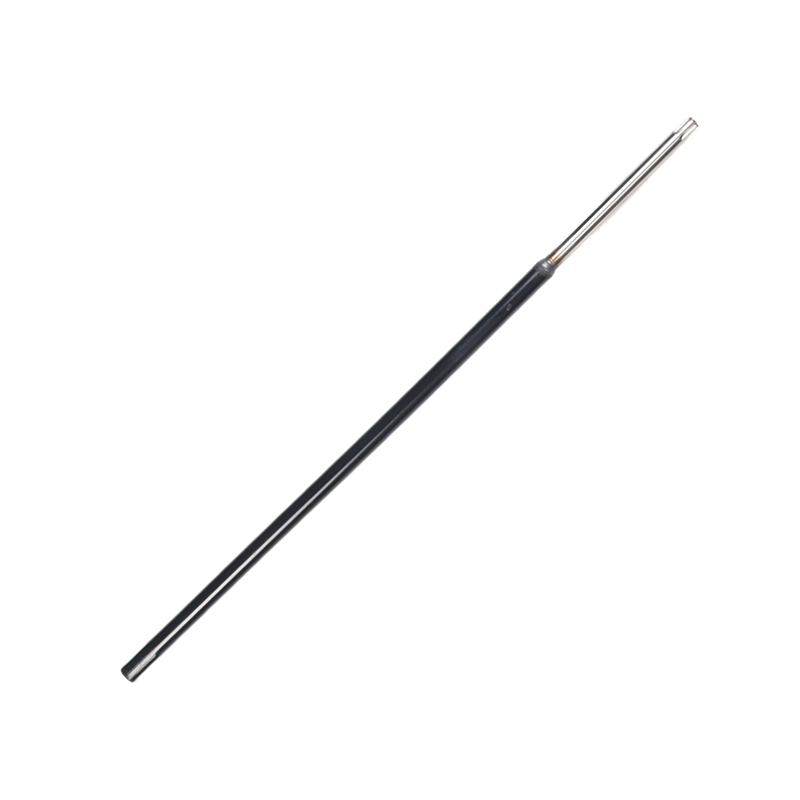
A reading taken close to a bearing and another taken far along an exposed shaft may differ.
That difference can involve shaft flex, bearing movement, or movement in the supporting structure. Record the indicator contact point and where force was applied.
Without those details, two technicians can report different numbers while inspecting the same assembly.
Replacing a bearing does not restore material lost from the shaft journal.
If the running surface is undersized, tapered, scored, or unevenly worn, a replacement bearing may still have excessive clearance.
When accessible, measure the shaft at several positions and orientations. Compare its condition with the shaft and bearing requirements before selecting a repair.
From a component-manufacturing perspective, the bearing seat and journal deserve as much attention as the nominal shaft diameter.
After a verified repair or installation, record the accepted measurements.
Include:
- Equipment model and serial number.
- Component identification.
- Indicator location and test method.
- Axial movement, radial movement, and runout.
- Date, operating hours, and relevant observations.
A consistent inspection history helps distinguish a longstanding condition from developing wear. It supports diagnosis but does not replace the specified service limit.
Arrange professional inspection before further operation when movement accompanies:
- New or worsening vibration.
- Grinding, knocking, or rough rotation.
- Gear oil leakage.
- Milky or water-contaminated gear lubricant.
- Visible shaft wobble.
- A recent grounding or propeller impact.
- Movement of a bearing carrier or coupling connection.
These signs do not identify one certain failure. They indicate that a simple "normal play" explanation is insufficient.
Fishing line also deserves attention. Line wound around an outboard propeller shaft can damage the gearcase seals, allowing water contamination. Routine propeller removal provides an opportunity to inspect this area.
Do not conduct a high-speed trial simply to see whether unexplained shaft looseness becomes worse.
The correct repair depends on which interface has deteriorated.
| Inspection finding | Appropriate next investigation |
|---|---|
| Excessive clearance at an inboard stern bearing | Bearing condition, shaft journal wear, alignment, water supply |
| Outboard shaft movement beyond specification | Bearings, carrier, journals, thrust components, assembly settings |
| Excessive runout | Shaft straightness, support condition, impact damage |
| Propeller moves independently of shaft | Hub, thrust washer arrangement, retention hardware |
| Movement returns after repair | Fit, housing condition, alignment, unresolved operating cause |
Avoid adding shims, changing spacers, or tightening retainers without the specified procedure. Gear position and bearing settings can interact, so removing movement by improvisation may introduce another problem.
Likewise, do not assume that a new seal will solve leakage when the shaft surface or bearing support remains defective.
For repair shops, distributors, and equipment manufacturers, "replacement output shaft" is not a complete purchasing description.
Provide:
1. Engine, drive, or gearbox model and serial range.
2. Original part number and any superseding number.
3. Shaft drawing or verified dimensions.
4. Bearing journal and seal-running surface requirements.
5. Spline, thread, shoulder, and gear-interface details.
6. Applicable material, heat-treatment, and inspection requirements.
A shaft that looks similar may differ at a critical bearing seat or thrust shoulder. Overall length alone cannot establish compatibility.
At Ningbo Gill Transmission Parts Co., LTD., our focus spans the components that work together: outboard gears, crankshafts, drive shafts, and propeller shafts. For sourcing discussions, the most useful starting point is a documented application and a clear description of the failed interface.
Before ordering replacement parts, confirm which shaft is moving, how it was measured, and which specification applies.
Send Ningbo Gill Transmission Parts Co., LTD. your equipment identification, part number, drawings or dimensions, inspection readings, and photographs. Request an application-specific discussion for your propeller shaft, drive shaft, crankshaft, or outboard gear requirement—not a replacement selected by appearance alone.
It can be, depending on the gearcase design. However, movement must be checked against the correct model's service specification. The amount felt by hand cannot establish whether the assembly is acceptable.
Not in a water-lubricated rubber bearing designed with an operating gap. Clearance supports lubrication. The required value depends on the bearing design, shaft size, and installation requirements.
No. Shaft play normally describes axial or radial movement. Gear backlash is clearance between mating gear teeth. Rotational movement at the propeller can include several sources and is not a direct backlash measurement.
You can perform an initial observation, but the propeller may obscure the source of movement. Removal may be necessary to inspect the shaft, splines, thrust components, and seal area. Follow the manufacturer's procedure.
Not necessarily. Bearings, carriers, or other supporting components may be responsible. Shaft replacement depends on journal dimensions, straightness, surface condition, and the applicable repair criteria.
Yes. Designed operating clearance remains after correct assembly. Unexpected movement can also originate in reused bearings, worn housings, incorrect components, or assembly errors. Check the complete system rather than assuming the new shaft is defective.
- Duramax Marine. [Johnson Cutless® Sleeve and Flanged Bearings — Product Catalog]. Manufacturer guidance covering water lubrication, bearing construction, shaft fit, and clearance requirements. [duramaxmarine]
- Pacific Marine & Industrial. [Cutless Bearing Clearances and Replacement Guidelines]. Source of the new-bearing clearance ranges reproduced in the table; the publisher attributes these ranges to U.S. Navy BuShips guidance. [pacificmarine]
- Steve D'Antonio Marine Consulting. [Shaft Bearing Etiquette]. Technical discussion of water-lubricated shaft bearings, inspection, lubrication, and installation considerations. [stevedmarineconsulting]
- Mercury Marine. [Quick Tip: Inspecting Your Prop and Prop Shaft]. Published November 8, 2023. Owner inspection and propeller-shaft maintenance guidance. [mercurymarine]
- Mercury Marine. [Propeller Maintenance]. Guidance on periodic propeller removal and inspection for fishing line. [mercurymarine]
- Mercury Marine. [Quick Tip: How to Remove Fishing Line from Your Prop Shaft]. Explanation of fishing-line damage to gearcase seals and the associated risk to gearcase lubrication. [mercurymarine]


