


close
Choose Your Site
Global
Social Media
Views: 222 Author: Gill Transmission Parts Publish Time: 2026-06-22 Origin: Site


Content Menu
● Introduction: Why Marine Gear Sourcing Is Changing
● Defining "Imported" vs "China-Made" Marine Gears
>> What Buyers Usually Mean by "Imported Marine Gears"
>> What "China-Made Marine Gears" Actually Covers
● Cost Structure Comparison: Where the Price Gap Really Comes From
>> Non-Production Cost and Margin Layers
● Quality and Reliability: Are China-Made Marine Gears Catching Up?
>> Process Control and Certification
>> Tolerance, Noise, and Durability Performance
● Total Cost of Ownership (TCO) Over the Gear Lifecycle
>> Upfront Price vs Replacement and Downtime
>> Inventory and Lead Time Impacts
● Engineering Capability and Customization Options
>> Design Support from Imported Brands
>> Agile Engineering from Specialized China-Made Suppliers
● Risk Management: Compliance, Traceability, and Supplier Stability
>> Standards, Compliance, and Documentation
>> Long-Term Supplier Partnerships
● Case-Type Scenario: When China-Made Gears Win – And When Imported Makes Sense
>> Scenario 1 – Recreational Outboard OEM
>> Scenario 2 – Heavy-Duty Commercial Fleet
● Practical Sourcing Checklist for Marine Gears
>> 10-Step Evaluation Framework
● Imported vs China-Made Marine Gears at a Glance
● Where a 29-Year China-Made Specialist Adds Unique Value
● How to Move from Trial to Long-Term Partnership
>> Recommended Implementation Steps
● Action-Oriented Conclusion and CTA
● FAQ
When you compare imported marine gears from traditional Western brands with China-made marine gears, you are no longer just comparing "cheap vs premium." Today's procurement teams must balance lifecycle cost, proven reliability, compliance, and supply chain risk in a far more data-driven way. As someone who has spent years working with OEMs and distributors in the marine transmission and outboard segment, I have seen this shift first-hand from both the factory floor and the buyer's side. [made-in-china]
In this article, I will take a practical, experience-based look at imported vs China-made marine gears, with a focus on cost, quality systems, engineering capabilities, and long‑term support. This perspective is informed by nearly three decades of specialized manufacturing experience from China-based outboard gear producers such as Ningbo Gill Transmission Parts Co., LTD., alongside global sourcing trends in marine components. [made-in-china]
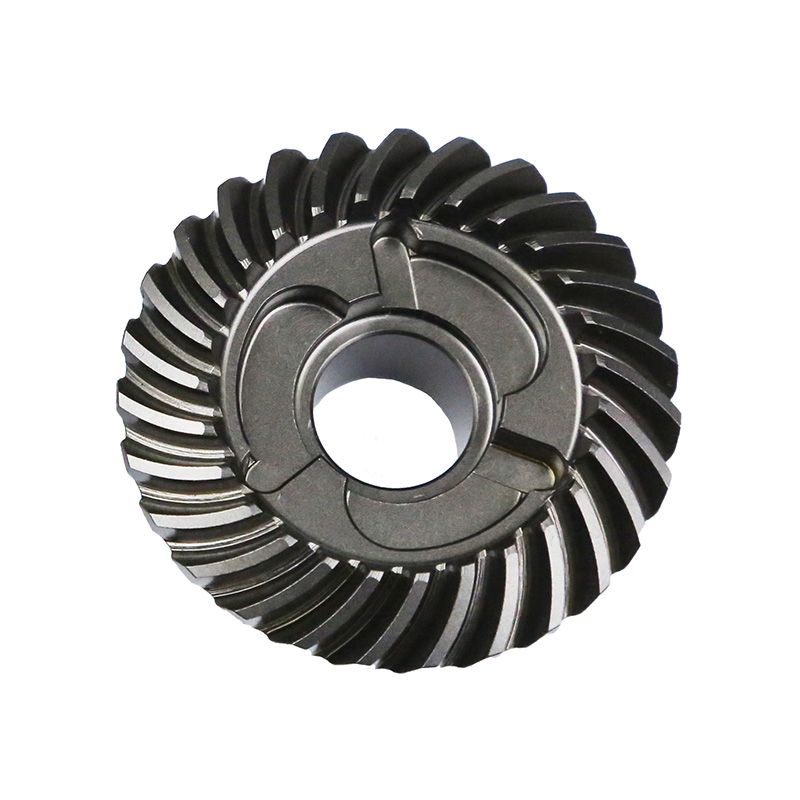
Before comparing, we need clear definitions that match how real buyers use these terms in RFQs and supplier shortlists.
In many markets, "imported marine gears" typically refers to:
- Gears branded by long-established manufacturers in Europe, Japan, or North America.
- Products that often command a brand premium due to decades of reputation in OEM and aftermarket channels.
- Supply routed through regional distributors, with multi-level margin stacking in the final selling price. [made-in-china]
These imported gears are still highly regarded for consistency, documentation, and global service networks, especially for high-horsepower applications and critical commercial fleets. [made-in-china]
"China-made marine gears" is a much broader category and can include:
- High-volume, low-cost gears from trading-oriented factories with minimal specialization.
- Specialized transmission manufacturers with 20–30 years focused specifically on marine and outboard gears, operating modern CNC and heat-treatment lines. [made-in-china]
- Private-label / OEM parts manufactured in China but sold under foreign brands at a premium.
From a buyer's perspective, the critical distinction is not "China vs non-China" but specialized, process-controlled factories vs generic, low-cost suppliers.
From a procurement standpoint, the price you see on a marine gear invoice reflects far more than raw production cost.
Key cost drivers for any marine gear include:
- Alloy steel and forging cost
- CNC machining time and tool life
- Heat treatment, carburizing, quenching, and grinding
- Precision inspection and rejection rate
China-made gears from specialized factories benefit from:
- Proximity to large steel suppliers and heat-treatment ecosystems.
- High equipment utilization over long production runs for outboard gears.
- Lower labor cost per machining hour compared with most Western countries. [made-in-china]
This often translates into 20–40% lower ex-factory cost for comparable gear specifications, depending on volume and specification complexity. [made-in-china]
Imported marine gears usually carry extra cost layers:
- Brand and marketing premium.
- Distributor, regional agent, and dealer margins.
- Higher overhead in high-wage countries (engineering, compliance, management).
China-made marine gears exported directly from manufacturers often:
- Reduce or remove some intermediary margins via direct OEM supply or consolidated distribution.
- Provide factory-level engineering support as part of the cooperation, not an extra cost.
For B2B buyers, the real comparison should be total landed cost for a given performance level, not just unit price.
From my experience with OEM audits and factory visits, the quality gap between leading China-based gear manufacturers and traditional imported brands has narrowed dramatically over the past decade.
High-end marine gear suppliers in China increasingly operate with:
- ISO 9001 quality management systems, sometimes combined with IATF16949 automotive practices.
- PPAP / APQP methodologies when serving global OEMs.
- In-house metallurgical labs for hardness, microstructure, and surface integrity checks. [made-in-china]
Imported marine gear brands do maintain an advantage in long-established process libraries, application experience, and extensive field-data records in harsh marine environments. However, specialized Chinese factories with 25+ years of marine focus have accumulated significant outboard-specific failure data and design improvements as well.
For typical outboard gear applications (e.g., 2–200 HP leisure craft), leading China-made gears now commonly achieve:
- Precision grinding tolerances in line with AGMA/ISO standards used by imported brands. [made-in-china]
- Noise and vibration performance acceptable for mainstream recreational and light-commercial use when matched with proper gearboxes and lubrication.
- Hardness and case depth that support service lives comparable to mid-range imported products, assuming proper installation and maintenance. [made-in-china]
Where imported gears still tend to dominate is:
- Extreme-duty commercial or military marine transmissions.
- Very high horsepower or highly specialized applications where failure cost is critical.
Unit price is only the first line in your cost model. A serious buyer looks at TCO over 5–10 years.
When evaluating TCO, consider:
- Initial purchase price per gear set.
- Expected service life under your operating profile.
- Cost and lead time of replacement parts.
- Cost of vessel downtime (especially for commercial fleets).
A higher-priced imported gear may deliver longer life in extreme conditions, which lowers replacement frequency. A well-engineered China-made gear, sourced from a specialized factory, can offer an attractive middle path: competitive initial cost with robust reliability, especially for leisure and light-commercial fleets where duty cycles are moderate.
Lead time and stock strategy also change the real cost.
- Imported gears shipped from distant warehouses can suffer from long replenishment cycles and MOQ constraints.
- China-made gears supplied directly from a long-term partner often allow flexible batch production, enabling better alignment with your demand forecasting.
Shorter lead times and better coordination reduce:
- Safety stock requirements.
- Emergency air freight charges.
- Lost revenue from stock-outs.
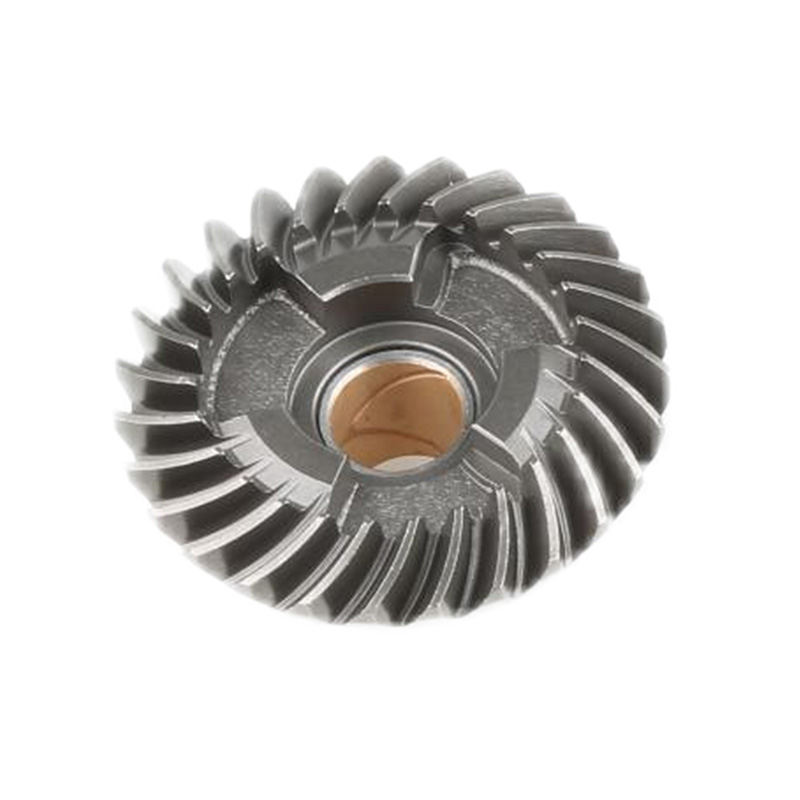
As an industry practitioner, one of the biggest differences I see lies in how quickly a supplier can co-engineer a gear solution around your application.
Imported marine gear brands tend to:
- Offer well-documented catalogs and standardized product ranges.
- Provide conservative design margins for reliability across many use cases.
- Be slower and more expensive when it comes to custom design changes or small-batch special parts.
For large OEMs, these brands can still be the first choice for flagship product lines and highly demanding propulsion systems.
Specialized China-made marine gear manufacturers with decades of focus on outboard and marine driveline parts typically:
- Maintain in-house R&D teams dedicated to gear tooth optimization, noise reduction, and surface treatment improvements.
- Support small engineering iterations quickly, such as minor profile changes or material upgrades for specific markets.
- Use flexible production lines that can handle multiple gear profiles without excessive retooling time.
For buyers who need application-specific optimization rather than off-the-shelf catalog parts, such agility can be a major competitive advantage.
E-E-A-T in B2B technical content is not just about what you claim; it is about how you manage risk in real projects.
Imported marine gears:
- Often come with long-standing conformity to class rules and marine standards (e.g., classification society approvals for certain gearboxes).
- Provide consistent documentation sets and traceability that have been accepted by regulators in many jurisdictions.
Leading China-made marine gear suppliers increasingly provide:
- Full material traceability and heat-treatment records.
- Dimensional reports and, where required, third-party testing from accredited labs. [made-in-china]
- Customized documentation packages aligned with the buyer's internal quality system.
For buyers, the key is to audit and verify, not assume either side is automatically compliant. Serious Chinese manufacturers will welcome factory audits and sample validation runs.
Risk is heavily influenced by how your supplier behaves over time:
- Imported brands sometimes offer strong continuity but may be less flexible on prices and MOQs during market swings.
- China-made gear suppliers that have survived 20–30 years of export cycles have usually proven their resilience, process maturity, and willingness to co-develop solutions with customers.
From a practical sourcing standpoint, many successful OEMs now dual-source: one imported brand plus one high-quality China-made partner, balancing risk, cost, and flexibility.
To make this more concrete, consider two typical buyer scenarios.
- Target: Mid-range outboard engines for leisure boats.
- Priorities: Competitive retail pricing, acceptable noise level, dependable but not extreme-duty lifecycle.
- Sourcing trend: Many OEMs in this segment now lean toward China-made outboard gears from long-experienced factories, leveraging lower cost, good quality, and responsive engineering support.
Result: The OEM can improve margin and price competitiveness while maintaining field reliability, provided that the supplier passes audits and pre-production testing.
- Target: High-horsepower marine propulsion systems for commercial workboats.
- Priorities: Maximum uptime, minimal failure risk, strong global service network.
- Sourcing trend: Buyers here still often prefer established imported marine gear brands with a long track record in similar duty cycles.
Result: Higher unit cost is justified by lower perceived risk and mature global support.
From a buyer's perspective, here is a simple, actionable checklist to compare imported vs China-made suppliers.
1. Define your application duty cycle and failure cost clearly.
2. Request drawings, material specs, and heat-treatment details.
3. Verify certifications (e.g., ISO 9001) and process documentation.
4. Review factory equipment: CNC, grinding, and testing capabilities.
5. Audit sample parts: hardness, tolerance, surface finish, noise tests.
6. Evaluate communication responsiveness and engineering support.
7. Compare total landed cost (including logistics and duties).
8. Assess lead time, flexibility, and capacity for peaks.
9. Check references in your region or similar applications.
10. Start with pilot batches and structured field testing before scaling.
Following this framework, many buyers discover that high-quality China-made marine gears from specialized factories are a strong alternative or complement to traditional imported brands, particularly in outboard and small-to-medium marine applications.
| Factor | Imported Marine Gears | China-Made Marine Gears |
|---|---|---|
| Typical unit price | Higher, brand premium | Lower, cost advantage |
| Main strength | Long track record, strong branding | Cost-performance balance, agility |
| Quality consistency | Very high with top brands | High at specialized factories, variable at low-cost suppliers |
| Customization speed | Slower, more rigid | Faster, flexible |
| Documentation & traceability | Mature, standardized | Increasingly strong at leading manufacturers |
| Best fit applications | Extreme-duty, high-risk, high-HP | Outboard gears, small-to-medium marine, cost-sensitive projects |
For buyers specifically evaluating China-made marine gears, long-experienced specialists in outboard gears stand out in several ways:
- Focused expertise in marine and outboard gear design, rather than general-purpose gear production.
- Deep understanding of typical failure modes in gears used in coastal, river, and mixed-use environments.
- Ability to co-develop and refine gears based on your test feedback, not just deliver catalog parts.
This combination of cost efficiency, process maturity, and application expertise is why many global OEMs now regard high-end China-made marine gears as strategic components in their sourcing mix.
Once you decide to seriously compare imported and China-made marine gears, the next step is to structure a controlled trial.
- Start with a detailed technical exchange (drawings, material specs, testing standards).
- Run a pilot batch of China-made gears in parallel with your existing imported solution.
- Conduct bench testing and limited field deployment with clear KPI tracking (noise, wear, failure rates).
- Review results jointly with the supplier's engineering team and refine designs if needed.
- Scale up procurement gradually, retaining a dual-sourcing strategy where appropriate.
This approach allows you to capture cost savings and engineering advantages from China-made gears while managing risk in a professional, data-driven way.
Imported marine gears and China-made marine gears are no longer a simple "good vs cheap" choice. For many applications—especially outboard and small-to-medium marine driveline systems—China-made gears from specialized, long-experienced manufacturers can deliver a compelling blend of cost efficiency, reliability, and engineering support. At the same time, imported gears remain the benchmark in extreme-duty or mission-critical applications where historical performance and global support are paramount.
If you are currently relying only on imported marine gears, now is the right time to benchmark China-made gears from a specialist outboard gear manufacturer through a structured pilot project. By doing so, you can uncover hidden margin, improve supply flexibility, and maintain the performance your customers expect.
Q1: Are China-made marine gears reliable enough for OEM applications?
A1: When sourced from specialized manufacturers with strong process control and marine experience, China-made gears can meet OEM-level quality requirements for many outboard and small-to-medium marine applications.
Q2: How can I verify the true quality level of a China-made gear supplier?
A2: Combine factory audits, sample testing (hardness, tolerance, noise), and limited field trials. Evaluate not only parts but also documentation, communication, and responsiveness.
Q3: Will using China-made gears affect my brand perception?
A3: Most end users judge performance, reliability, and warranty support rather than origin. If your technical validation is solid, China-made gears can support your brand positioning.
Q4: What is the biggest risk when buying low-cost China-made gears?
A4: The main risk is sourcing from non-specialized or purely price-driven suppliers with weak process control. This can lead to inconsistent quality, higher failure rates, and reputation damage.
Q5: Is dual-sourcing (imported + China-made) a good strategy?
A5: Yes. Many OEMs use imported gears for their most critical lines and qualified China-made gears for cost-sensitive or high-volume models, balancing risk and margin.
1. "Marine Gear Box Suppliers – Global Directory and Price Overview." *Made-in-China.com*. Available at: [https://www.made-in-china.com/manufacturers/marine-gear-box.html] [made-in-china]
2. "Marine Transmission and Gear Market Trends." *Industry supplier listings and product catalogs*. Representative overview: [https://www.made-in-china.com] [made-in-china]


