


close
Choose Your Site
Global
Social Media
Views: 299 Author: Gill Transmission Parts Publish Time: 2026-11-24 Origin: Site


Content Menu
● Understanding OEM Marine Transmission Parts and ODM Marine Parts Manufacturing
>> What Are OEM Marine Transmission Parts?
>> What Is ODM Marine Parts Manufacturing?
● OEM vs ODM Marine Parts: A Practical Comparison
● Why Outboard Gears Require More Than a Manufacturing Label
>> Gear Geometry Must Match the Complete Assembly
>> Material and Heat Treatment Need Measurable Requirements
● Cost Comparison: Evaluate the Entire Supply Relationship
>> Separate Development Costs From Production Costs
>> Compare Total Ownership Cost
● Design Ownership, Tooling, and Supplier Dependence
● A Five-Gate Qualification Process for Marine Parts Buyers
>> Gate 1: Define the Application
>> Gate 2: Assign Engineering Responsibility
>> Gate 3: Approve First Articles
>> Gate 4: Validate Production Readiness
>> Gate 5: Control Repeat Orders
● An Illustrative Sourcing Scenario: Same Component, Different Route
>> Route A: Buyer-Led OEM Manufacturing
>> Route B: Supplier-Led ODM Development
● Building a Useful Request for Quotation
● Evaluating a Marine Transmission Parts Manufacturer
● Choosing the Right Manufacturing Partner
>> 1. Are OEM Marine Transmission Parts Always Better Than ODM Parts?
>> 2. Is ODM Marine Parts Manufacturing Always Faster?
>> 3. Who Owns a Custom Outboard Gear Design?
>> 4. Can a Supplier Manufacture a Gear From a Sample?
>> 5. What Determines Minimum Order Quantity?
>> 6. Can the Same Manufacturer Support OEM and ODM Projects?
Choosing between OEM marine transmission parts and ODM marine parts manufacturing comes down to one central question: who should control the product design? For outboard gears, drive shafts, and related drivetrain components, that decision influences development costs, technical responsibility, intellectual property, and long-term supply flexibility.
At Ningbo Gill Transmission Parts Co., LTD., our perspective comes from 29 years focused on the research, development, production, and sale of marine transmission components. We believe buyers should evaluate manufacturing models through engineering requirements—not labels alone.
This guide explains the practical differences and provides a framework for selecting the right approach.
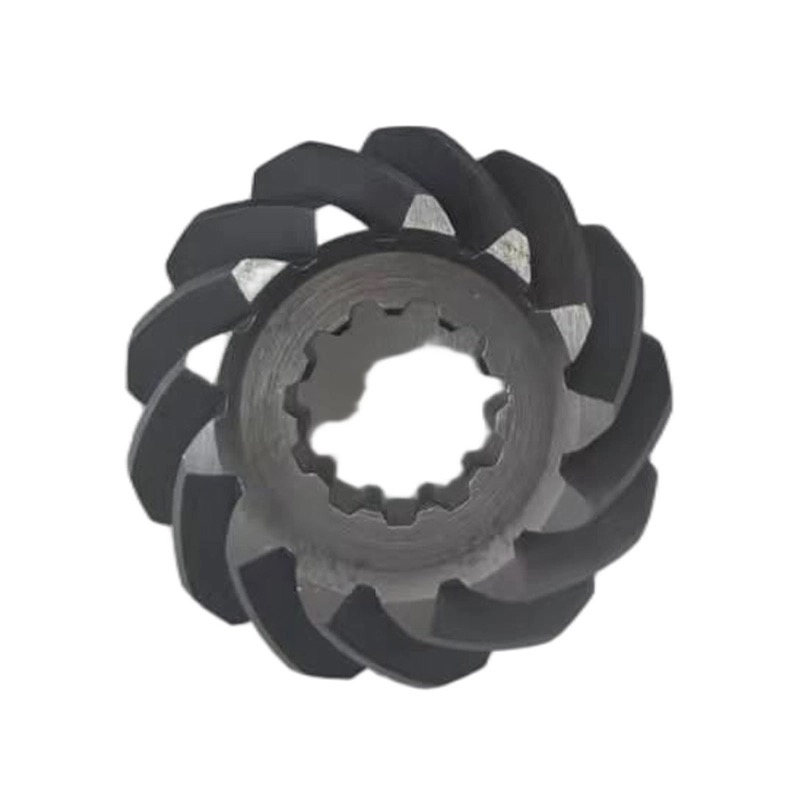
In a contract-manufacturing relationship, OEM generally means the buyer provides the product design and specifications, while the supplier manufactures the components.
For custom outboard gears, the buyer's technical package might include:
- Gear geometry and mating-component requirements.
- Material grade and heat-treatment specifications.
- Dimensional tolerances and surface-finish requirements.
- Inspection methods and acceptance criteria.
- Drawing revisions and identification requirements.
The manufacturer contributes production expertise and may recommend design-for-manufacturing improvements. However, changes to approved specifications should require documented authorization.
One distinction matters: in the replacement-parts market, "OEM" can also describe original-brand parts. A component manufactured to a customer's drawing is not automatically a genuine engine-brand replacement part or evidence of brand authorization.
With ODM, the supplier develops some or all of the design and manufactures the resulting product.
The starting point may be an existing component platform or a new design developed around the buyer's operating requirements.
For example, a buyer might specify installation interfaces, operating conditions, target performance, and commercial objectives. The supplier then proposes the detailed design and production approach.
ODM therefore extends beyond private-label packaging. For load-bearing marine components, it can involve geometry development, material selection, prototyping, and validation planning.
The buyer still needs to approve requirements and verify suitability for the intended application.
| Decision factor | OEM marine transmission parts | ODM marine parts manufacturing |
|---|---|---|
| Design leadership | Primarily buyer-led | Primarily supplier-led |
| Starting information | Approved drawings and specifications | Functional requirements or an existing platform |
| Buyer engineering workload | Usually greater | Often reduced, but not eliminated |
| Customization | Controlled by buyer specifications | Depends on platform limits and development scope |
| Development expenditure | Buyer funds its design work and production preparation | Supplier design charges may be separate or included in pricing |
| Launch timing | Depends on design maturity and production readiness | May be shorter when an existing design is suitable |
| Design rights | Buyer-contributed rights should be documented | Existing and newly developed rights require clear allocation |
| Supplier transfer | Depends on access to drawings, tooling, and process information | Can be difficult when essential design information remains supplier-owned |
| Best fit | Buyers with defined technical requirements | Buyers seeking substantial design support |
Neither model guarantees better quality, lower prices, or faster delivery. Those outcomes depend on design maturity, production capability, validation requirements, and contractual clarity.
An outboard gear does not operate independently. Its performance depends on its relationship with mating gears, bearings, shafts, housing geometry, lubrication, and assembly settings.
A component can meet selected dimensions yet still perform poorly if the inspection plan overlooks critical interfaces.
For custom outboard gear manufacturing, review:
- Tooth geometry and mating compatibility.
- Contact pattern and backlash under defined assembly conditions.
- Shaft and bearing location accuracy.
- Relevant runout and mounting dimensions.
- Operating load, speed, and duty cycle.
For bevel gear applications, the ISO 10300 family provides a relevant framework for load-capacity assessment. Such calculations support engineering decisions but do not replace application-specific testing.
Our purchasing recommendation is straightforward: approve an inspection and validation plan alongside the drawing, not after samples arrive.
"High-strength steel" is not a complete purchasing specification.
Where case hardening is specified, buyers should define the required material condition, surface hardness, effective case depth, and relevant metallurgical acceptance criteria.
The appropriate values depend on the design and service conditions. A hardness range copied from another gear is not a reliable substitute for engineering assessment.
Request a documentation package covering material identification, agreed heat-treatment results, and final dimensional inspection.
For both OEM and ODM projects, the essential question is whether the supplier can demonstrate consistent compliance with the approved requirements.
A meaningful quotation should distinguish between:
1. Engineering and design work.
2. Tooling, fixtures, and gauges.
3. Prototype manufacturing.
4. Testing and inspection.
5. Recurring production.
6. Packaging and logistics.
OEM may be economical when the buyer already owns a validated design. ODM may reduce duplicated development work when the supplier has a suitable platform.
However, neither advantage is automatic. A supposedly ready-made ODM design may require substantial changes, while an OEM drawing may need little production preparation.
Ask suppliers to explain their assumptions before comparing totals.
Total ownership cost includes more than the purchase price.
A practical comparison considers engineering expenditure, inspection effort, inventory, freight, expected nonconformance costs, and the cost of changing suppliers.
For marine transmission components, warranty exposure and service disruption also deserve attention.
Avoid comparing one quotation that includes extensive validation with another that includes only basic dimensional inspection. Normalize the scope first.
The lowest unit price is useful only when the products and supporting obligations are genuinely comparable.
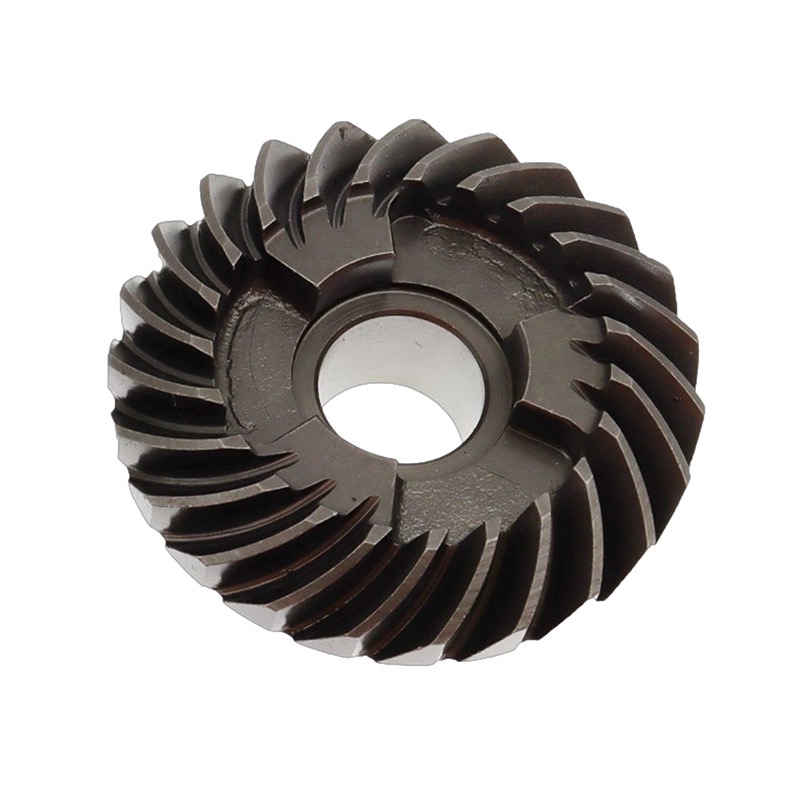
OEM and ODM describe working arrangements; they do not replace a written agreement.
Before development begins, separate three categories:
- Background intellectual property: designs, methods, and technology that already existed.
- Project intellectual property: new work created during the assignment.
- Physical assets: tooling, fixtures, gauges, samples, and production records.
Define ownership, permitted use, confidentiality, access, maintenance, and transfer conditions for each.
For ODM marine parts manufacturing, clarify whether other buyers can purchase the same base design. If exclusivity is required, specify the product scope, territory, duration, and commercial conditions.
For OEM projects, do not assume paying for tooling automatically provides every document needed to relocate production.
Legal ownership and practical transferability are related, but they are not identical.
The following framework is a practical purchasing recommendation, not a mandatory industry procedure.
Provide the intended assembly, operating conditions, interfaces, forecast volume, and target market.
Separate mandatory requirements from preferences. If a reference sample is supplied, explain whether it represents fit, performance, appearance, or all three.
Record who approves geometry, materials, heat treatment, testing, and revisions.
For supplier-developed designs, establish what technical information the buyer will receive.
Agree on sample quantities, measurements, reporting formats, and acceptance criteria before production.
For relevant gear applications, consider mating checks and assembly-level evaluation alongside individual-part inspection.
A satisfactory prototype does not establish repeatable production.
Review process controls, measuring equipment, subcontracted operations, traceability, and the handling of nonconforming parts. Evaluate a pilot batch under the agreed production route.
Require revision identification and advance notification of changes affecting approved requirements.
Define when changes to material sources, heat treatment, tooling, or manufacturing methods require review or revalidation.
This prevents an approved sample from becoming disconnected from later shipments.
Consider an aftermarket distributor developing an outboard forward gear. This is a hypothetical example, not a reported customer project.
The distributor owns complete drawings, material requirements, and an established validation plan.
OEM manufacturing allows it to retain design authority while selecting a supplier for production capability.
Its main challenge is confirming that the manufacturing process consistently reproduces the approved design.
The distributor has installation requirements and market demand but lacks a complete technical package.
An ODM approach allows a supplier to develop the design. The buyer must still agree on performance requirements, validation, documentation access, and commercial rights.
The lesson is not that one route is superior. The better route matches the buyer's actual engineering resources and ownership objectives.
A detailed request for quotation reduces assumptions and makes proposals easier to compare.
For OEM marine transmission parts, provide:
- Controlled drawings and revision numbers.
- Material and heat-treatment requirements.
- Critical dimensions and inspection criteria.
- Required reports and traceability.
- Forecast quantities and delivery expectations.
For ODM marine parts manufacturing, add:
- Functional and installation requirements.
- Known performance problems or development objectives.
- Available reference parts and their limitations.
- Required design deliverables.
- Ownership and exclusivity expectations.
For either model, request itemized development charges, production pricing assumptions, sample milestones, and procedures for approving changes.
A photograph alone rarely provides enough information for a dependable technical quotation.
A quality-management certificate is a useful starting point, not a substitute for product evidence.
Review the certificate's validity, scope, and connection to the relevant manufacturing site. Then examine how the supplier controls the processes that matter to your component.
Useful evidence includes:
- Inspection reports tied to specific drawings.
- Material and batch identification records.
- Measuring-equipment calibration records.
- Heat-treatment documentation where applicable.
- Nonconformance and corrective-action procedures.
- Written engineering-change controls.
ISO 9001 addresses quality-management systems. It does not independently establish that a particular outboard gear meets its application requirements.
Ask what the supplier measures, how results are recorded, and what happens when a result fails.
Choose OEM when you have a mature design, need direct specification control, and can manage engineering approval.
Consider ODM when supplier-led development fills a genuine capability gap and the proposed design can be validated for your application.
A hybrid approach can also work: the buyer controls critical interfaces and performance requirements while the supplier develops selected features.
At Ningbo Gill Transmission Parts Co., LTD., our focus on outboard gears and related marine components gives this discussion a clear priority: turn purchasing expectations into measurable technical requirements.
Send our team your drawings or reference samples, application details, annual demand, and required documentation. Request a feasibility review that identifies the suitable manufacturing route, missing technical information, and proposed sample-approval steps.
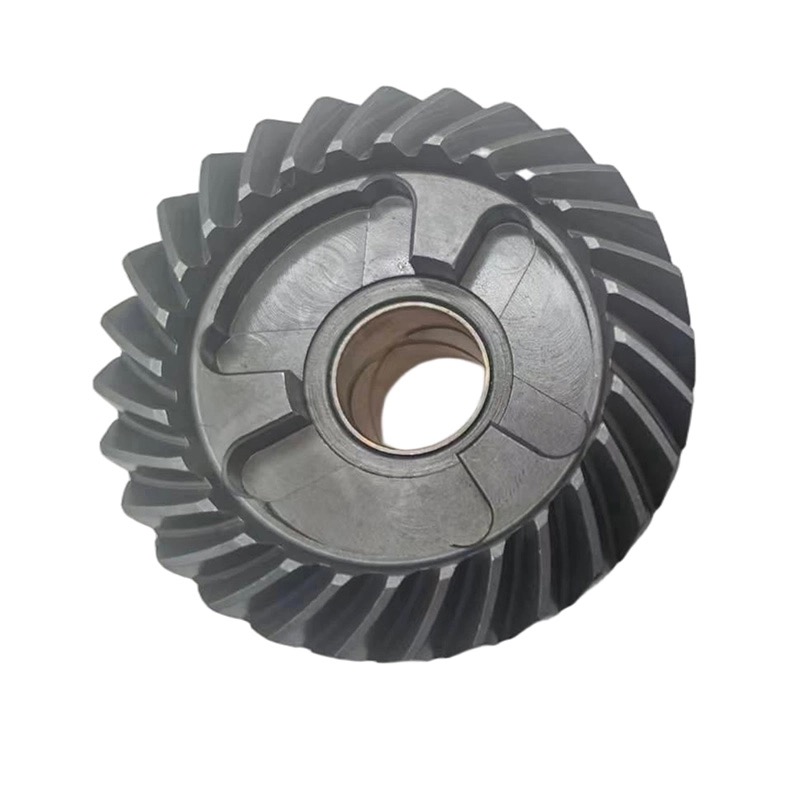
No. Quality depends on design suitability, materials, process control, inspection, and validation. A well-qualified ODM component can meet demanding requirements, while an inadequately controlled OEM project can produce inconsistent results.
No. An established, suitable design may shorten development. A new design requiring extensive engineering and testing may not. Compare schedules against defined deliverables rather than manufacturing labels.
Ownership depends on existing rights and the contract. Define buyer contributions, supplier background technology, newly developed features, and usage rights before sharing sensitive information or funding development.
A sample can support measurement and development, but it may not reveal original tolerances, material requirements, heat treatment, or design intent. Confirm lawful use and establish a complete specification before production.
Material purchasing, setup time, tooling, heat-treatment batches, inspection requirements, and production scheduling can all affect minimum quantities. Neither OEM nor ODM has a universal minimum.
Yes, where its capabilities support both. Assess the specific engineering and production scope. A supplier's ability to manufacture drawings does not automatically demonstrate complete design-development capability.
1. Ningbo Gill Transmission Parts Co., LTD. — "Custom Gear, Drive Shaft, Propeller Shaft Manufacturer & Supplier in China." Company history, marine-component focus, and product range. Company-published information. [gilltransmission]
2. Komaspec — "What Is OEM vs ODM Contract Manufacturing?" Background on manufacturing responsibilities, customization, and contractual intellectual-property considerations. [komaspec]
3. inFlow Inventory — "OEM vs ODM: Difference Between OEM and ODM Manufacturing." Supporting discussion of design leadership, tooling, and supplier-owned platforms. [inflowinventory]
4. International Organization for Standardization — "Calculation of Load Capacity of Bevel Gears — Part 1: Introduction and General Influence Factors," ISO 10300-1:2014. Reference for the engineering scope of bevel-gear load assessment; projects should confirm the applicable edition. [iso]
5. International Organization for Standardization — "Quality Management Systems: An Introduction." Background on documented processes, responsibilities, and quality-management practices. [iso]
6. International Organization for Standardization — "ISO 9001 Explained." Supporting explanation of process control, documented information, performance evaluation, and continual improvement. [iso]


