


close
Choose Your Site
Global
Social Media
Views: 222 Author: Gill Transmission Publish Time: 2026-05-08 Origin: Site


Planetary gear mechanisms represent one of the most efficient and compact power transmission solutions in modern engineering, particularly for outboard motors and marine propulsion systems. These sophisticated gear systems deliver exceptional torque density, operational efficiency, and durability—critical performance characteristics for boat engines operating in demanding aquatic environments. As a marine transmission parts manufacturer at Ningbo Gill Transmission Parts Co., LTD., understanding planetary gear technology is essential for developing superior outboard gear systems that meet the rigorous demands of recreational and commercial vessels. [stober]
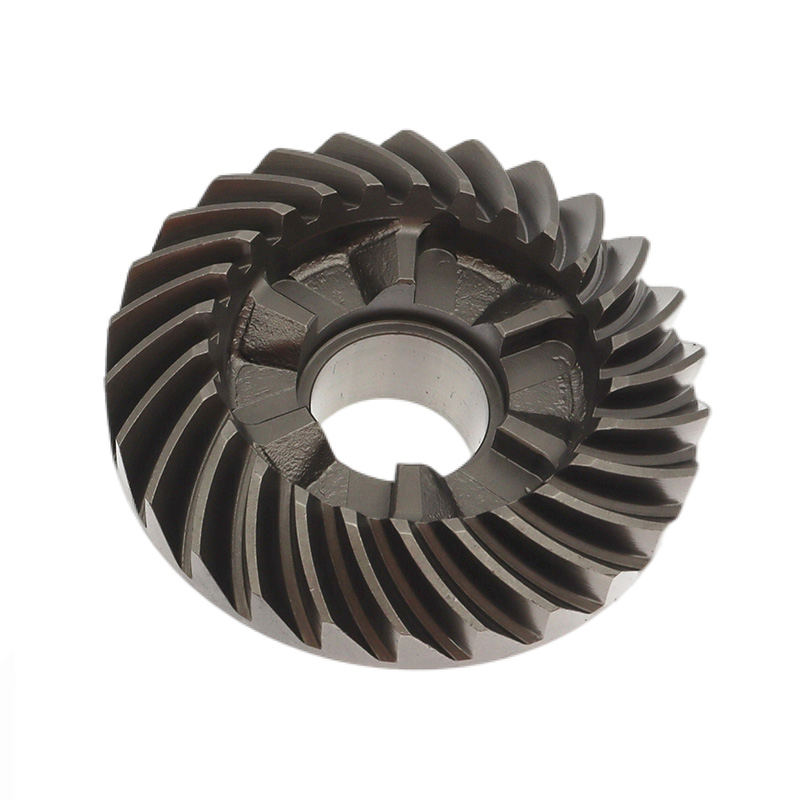
A planetary gearbox (also known as an epicyclic gear system) consists of three fundamental components working in synchronized motion: the sun gear positioned at the center, multiple planet gears orbiting around it, and an external ring gear (also called an annulus) that encases the entire assembly. This innovative configuration enables the system to achieve high gear ratios within a remarkably compact footprint—an essential advantage for space-constrained marine applications like outboard motor lower units. [chamolgear]
The operational principle relies on simultaneous engagement between all three components, creating multiple contact points that distribute mechanical loads evenly across the gear teeth. Power enters through the input shaft connected to the sun gear, travels through the orbiting planet gears, and exits via the carrier assembly that holds the planet gears in position. This multi-path power transmission significantly reduces stress on individual gear teeth compared to conventional parallel-axis gearboxes, resulting in extended service life even under continuous high-torque operation. [mechtex]
The sun gear serves as the primary driving element, mounted centrally on the input shaft and receiving rotational power directly from the engine's crankshaft. In outboard motor applications, this component must withstand continuous torque fluctuations as the engine cycles through varying RPM ranges during acceleration, cruising, and maneuvering operations. High-quality sun gears manufactured from case-hardened alloy steel provide the necessary surface durability to resist pitting and wear under marine operating conditions where shock loads from wave impacts are common. [mechtex]
Multiple planet gears (typically three to six depending on torque requirements) mesh simultaneously with both the sun gear and ring gear, creating what engineers call "load sharing". Each planet gear rotates on its own axis while orbiting around the sun gear, effectively multiplying the number of teeth in contact at any given moment. This distributed contact pattern is particularly valuable in marine transmissions where sudden propeller strikes against submerged objects can generate catastrophic shock loads—the planetary configuration helps absorb and dissipate these forces across multiple gear interfaces rather than concentrating stress on a single tooth pair. [lancereal]
The planet gears mount on precision bearings attached to the carrier assembly, which maintains exact spacing and alignment throughout operation. For outboard applications where vibration and oscillating loads are constant factors, the carrier must provide rigid support while accommodating thermal expansion differences between components as the gearbox transitions from cold start-up to normal operating temperatures. [mechtex]
The ring gear features internal teeth that engage the outer surfaces of the planet gears, typically forming the stationary member in reduction gear applications. In marine lower units, the ring gear often integrates directly into the gearcase housing, providing structural support while serving as the reaction member that enables speed reduction and torque multiplication. This integration reduces component count and simplifies the overall assembly—critical factors for achieving the watertight sealing required in submerged gearbox applications. [en.wikipedia]
Planetary systems can operate in three fundamental configurations by fixing different components while using the other two as input and output members: [chamolgear]
1. Ring gear fixed, sun gear input, carrier output - This arrangement provides speed reduction with torque multiplication, the most common configuration for outboard motor lower units where high engine RPM must be reduced to optimal propeller speeds [uti]
2. Sun gear fixed, carrier input, ring gear output - This mode reverses the speed relationship, offering speed increase with torque reduction, occasionally used in high-speed planing applications
3. Carrier fixed, sun gear input, ring gear output - This configuration achieves the highest reduction ratios for applications requiring maximum torque output at very low speeds
Single-stage planetary gearboxes typically achieve reduction ratios between 3:1 and 10:1, but marine applications frequently require greater reductions. Engineers can obtain ratios exceeding 100:1 by stacking multiple planetary stages in series, with the output carrier of the first stage driving the sun gear of the subsequent stage. This multi-stage approach maintains the compact envelope that makes planetary systems ideal for slender outboard lower units while delivering the substantial speed reduction needed to optimize propeller efficiency. [en.wikipedia]
The gear ratio calculation depends on the number of teeth on each component: Ratio = 1 + (Ring Gear Teeth ÷ Sun Gear Teeth) when the ring gear is held stationary. For example, a sun gear with 24 teeth and a ring gear with 72 teeth produces a 4:1 reduction ratio, meaning the output shaft rotates once for every four input rotations, while torque increases by approximately the same factor (accounting for efficiency losses). [en.wikipedia]
Planetary gearboxes achieve torque densities 30-50% higher than equivalent parallel-shaft designs, meaning they can transmit greater power in a smaller, lighter package. For outboard motors where every kilogram affects boat performance and fuel consumption, this weight advantage directly translates to improved efficiency and handling characteristics. The concentric arrangement of components also creates a naturally balanced configuration that minimizes vibration—a significant benefit for reducing operator fatigue and extending the service life of surrounding components like propeller shafts and steering mechanisms. [stober]
The load-sharing characteristic inherent to planetary designs enables these gearboxes to handle torque peaks that would overwhelm conventional gear trains. When an outboard propeller suddenly encounters resistance from water weeds, submerged debris, or impacts with the bottom in shallow water, the resulting shock load distributes across multiple planet gears rather than concentrating on a single gear mesh. This resilience makes planetary systems exceptionally well-suited for recreational boating applications where operators may not always maintain optimal water depth awareness. [stober]
Wheel drive planetary configurations used in heavy-duty marine applications can deliver torque outputs exceeding 332,000 Nm—sufficient to drive large commercial vessel propellers or azimuth thrusters that require both high torque and precise directional control. [lancereal]
Modern planetary gearboxes achieve mechanical efficiencies between 95-98% due to rolling contact between teeth and minimal sliding friction. This high efficiency means more engine power reaches the propeller rather than being wasted as heat in the transmission, directly improving fuel economy—a critical consideration as marine fuel costs continue rising. The 2026 maritime industry trends emphasize sustainable propulsion technologies, with regulatory bodies like the IMO enforcing stricter emissions standards that make efficient power transmission increasingly important. [linkedin]
The most widespread application of planetary gears in recreational boating occurs in outboard motor lower units, where these transmissions provide the 90-degree directional change and speed reduction necessary to convert high-RPM engine output into efficient propeller rotation. The gearbox must withstand continuous submersion in seawater (a highly corrosive environment), resist cavitation erosion from propeller-generated bubbles, and maintain precise alignment despite flexing loads transmitted through the motor mount. [uti]
Modern outboard designs incorporate planetary stages that work in conjunction with traditional forward/reverse clutch mechanisms, allowing boaters to shift between forward propulsion, neutral, and reverse operation without stopping the engine. The clutch dog system engages different output gears to change propeller rotation direction, while the planetary reduction stage operates continuously to optimize speed and torque relationships. [youtube]
The marine transmission gearbox market has experienced significant growth, with technological advancements including smart gearboxes with integrated IoT sensors and AI-based diagnostics enhancing operational efficiency. Commercial vessels increasingly adopt planetary systems that incorporate real-time condition monitoring, allowing operators to track gear tooth wear, lubricant quality, and bearing temperatures to schedule maintenance proactively rather than experiencing unexpected failures during critical operations. [linkedin]
The global maritime trade volume is projected to grow at 4% annually through 2030, directly fueling demand for reliable, high-performance transmission systems. Asia-Pacific regions lead this growth, driven by expanding maritime infrastructure and government support for shipping industry modernization initiatives. [linkedin]
As the marine industry transitions toward sustainable power sources, planetary gearboxes play an essential role in hybrid propulsion systems that combine diesel engines with electric motors. These configurations require transmissions capable of seamlessly blending power from multiple sources while maintaining consistent output to the propeller. The compact nature of planetary designs allows integration of electric motors directly into the gear housing, creating combined powertrains that optimize efficiency across varying operational profiles. [fortunebusinessinsights]
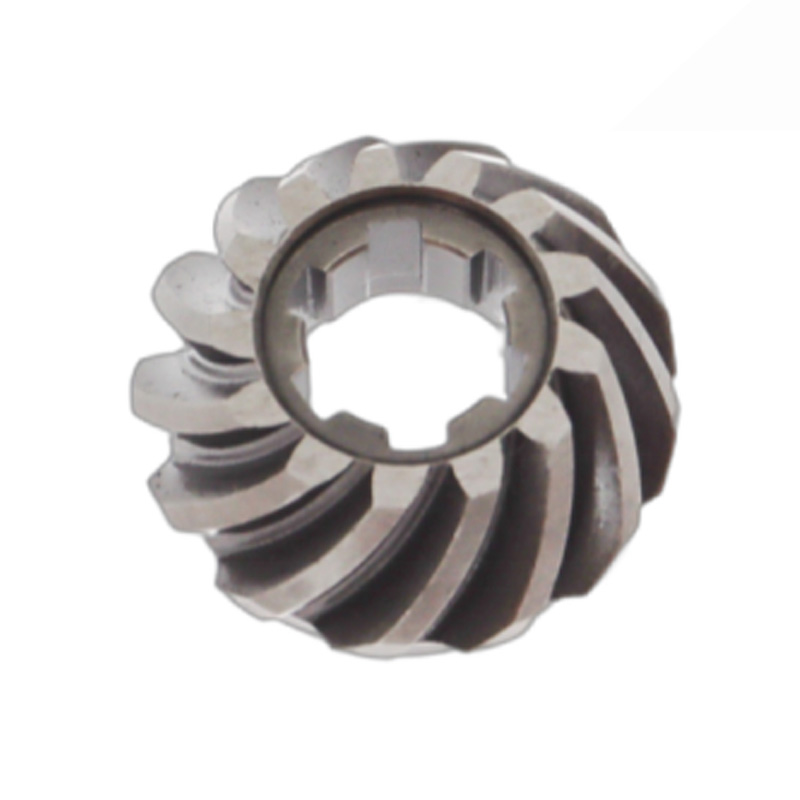
When specifying planetary gearboxes for marine applications, engineers must account for peak torque loads that can exceed nominal ratings by 200-300% during propeller strikes or emergency reversing maneuvers. Industry best practice recommends applying service factors between 1.5 and 2.5 depending on duty cycle severity and expected shock loading conditions. For recreational outboards operating in unknown waters with potential for propeller impacts, conservative design margins ensure reliable operation throughout the product's intended service life.
Marine planetary gearboxes require specialized corrosion-resistant materials and sealing technologies that conventional industrial applications don't demand. Stainless steel or titanium components resist seawater corrosion, while advanced elastomer seals prevent water ingress that would contaminate lubricants and cause accelerated wear. The gearcase design must also incorporate hydrodynamic considerations to minimize drag as the lower unit moves through water, balancing structural strength requirements against performance optimization. [tntcustommarine]
Outboard motors typically operate in harsh conditions with limited opportunities for preventive maintenance, making durability and serviceability critical selection factors. Planetary gearboxes designed for marine use should feature readily accessible inspection ports for lubricant sampling and condition assessment, along with replaceable wear components that allow rebuilding without complete unit replacement. Expected service intervals of 100-200 operating hours align with typical recreational boating usage patterns while ensuring components don't approach failure limits between maintenance opportunities.
The 2026 marine industry has seen rapid adoption of IoT-enabled transmission systems that provide real-time performance data to operators and fleet managers. Sensors embedded within planetary gearboxes monitor parameters including gear tooth temperature, vibration signatures, and lubricant pressure, transmitting this information to onboard displays or shore-based monitoring centers. Predictive analytics algorithms analyze these data streams to identify developing problems before they cause catastrophic failures, significantly reducing unscheduled downtime and maintenance costs. [linkedin]
Manufacturers are increasingly utilizing advanced materials including case-hardened alloy steels, powder metallurgy components, and specialized surface treatments to enhance gear performance. Carburizing and nitriding processes create ultra-hard surface layers that resist contact fatigue while maintaining tough, ductile cores capable of absorbing shock loads. Some high-performance applications now employ titanium planet carriers that reduce rotating mass and system inertia, improving throttle response and reducing transmission losses during speed changes. [mechtex]
Regulatory pressure from organizations like the IMO through MARPOL standards and IMO 2020 emissions regulations compels shipowners to adopt energy-efficient transmission systems. Planetary gearboxes contribute to these sustainability goals by maximizing mechanical efficiency, reducing fuel consumption, and enabling hybrid propulsion architectures that lower overall emissions. The global push toward carbon-neutral shipping by 2050 will continue driving innovation in transmission technology, with lightweight, high-efficiency planetary systems playing a central role. [fortunebusinessinsights]
The marine transmission gearbox market presents significant opportunities driven by fleet modernization initiatives and expanding international maritime trade. The United Nations Conference on Trade and Development (UNCTAD) reported 2.4% growth in maritime trade during 2023, with continued expansion anticipated through 2028. This growth creates corresponding demand for advanced propulsion systems featuring sophisticated planetary transmissions, offering substantial market potential for specialized manufacturers like Ningbo Gill Transmission Parts Co., LTD. [fortunebusinessinsights]
Proper lubricant selection and monitoring forms the foundation of planetary gearbox longevity in marine applications. Synthetic gear oils specifically formulated for marine use provide superior water separation properties, corrosion inhibition, and thermal stability compared to conventional petroleum-based lubricants. Regular lubricant analysis through oil sampling programs can detect early signs of component wear by identifying metallic particles, water contamination, or oxidation byproducts before they cause secondary damage.
Routine visual inspections should examine external seals for leakage, check fastener torque values, and verify proper alignment between the gearbox and propeller shaft. More comprehensive diagnostics using vibration analysis equipment can detect gear tooth damage, bearing wear, or misalignment issues that aren't apparent during normal operation. Thermal imaging surveys identify hot spots indicating inadequate lubrication or excessive friction losses that require corrective action. [youtube]
Marine planetary gearboxes should follow time-based or condition-based replacement schedules for wear components including bearings, seals, and gear sets. Bearings typically require replacement at 50-70% of their calculated L10 life (the operating hours at which 10% of identical bearings would be expected to fail) to maintain reliability. Gear teeth should be replaced when visual inspection reveals significant pitting, spalling, or profile modification that affects smooth meshing—continuing to operate damaged gears risks catastrophic failure that could damage surrounding components and create safety hazards.
1. What is the primary advantage of planetary gears over conventional gear systems in outboard motors?
Planetary gearboxes offer superior torque density and compact design compared to parallel-shaft transmissions, enabling them to transmit higher power in the limited space available within outboard lower units. The load-sharing characteristic across multiple planet gears also provides exceptional shock load resistance, critical for handling propeller strikes and sudden reversing operations common in recreational boating applications. [lancereal]
2. How do planetary gear ratios affect outboard motor performance?
The gear ratio determines the relationship between engine RPM and propeller speed, directly impacting boat performance characteristics. Higher reduction ratios (e.g., 2.5:1 to 3:1) provide greater torque multiplication for heavy loads or water skiing, while lower ratios (1.5:1 to 2:1) enable higher top speeds for performance applications. Proper ratio selection matches engine power characteristics to hull design and intended usage patterns. [uti]
3. What maintenance intervals are recommended for marine planetary gearboxes?
Most manufacturers recommend inspecting gear oil and seals every 50-100 operating hours, with complete lubricant changes at 100-200 hour intervals depending on operating conditions. Severe service applications involving frequent shallow water operation, high-speed running, or heavy load towing may require more frequent service. Always consult manufacturer specifications for your specific model and operating environment. [youtube]
4. Can planetary gearboxes be used in saltwater environments without special treatment?
Marine-grade planetary gearboxes incorporate corrosion-resistant materials, specialized coatings, and advanced sealing systems specifically designed for saltwater operation. However, regular freshwater flushing after saltwater use, proper storage procedures, and timely replacement of seals and anodes remain essential to maximize service life. Standard industrial planetary gearboxes not designed for marine use will experience rapid deterioration in saltwater environments. [tntcustommarine]
5. How does planetary gear technology support hybrid and electric marine propulsion?
Planetary gearboxes enable efficient power blending from multiple sources in hybrid systems, allowing seamless integration of diesel engines and electric motors. The compact design permits direct integration of electric motors within the transmission housing, creating combined powertrains that optimize fuel efficiency across varying operational profiles. As the marine industry transitions toward sustainable propulsion, planetary technology provides the flexibility to accommodate evolving power source requirements. [fortunebusinessinsights]
1. Chamol Gear - A Complete Guide to Planetary Transmission Gear. Retrieved from https://www.chamolgear.com/a-complete-guide-to-planetary-transmission-gear/
2. STOBER - What is a Planetary Gearbox and How Does it Work? Retrieved from https://www.stober.com/blog/how-does-a-planetary-gearbox-work/
3. LinkedIn - Marine Transmission Gearboxes Market 2026: A Deep Dive into Industry Dynamics. Retrieved from https://www.linkedin.com/pulse/marine-transmission-gearboxes-market-2026-5qqxe
4. Lancereal - Planetary Gears: Principles of Operation. Retrieved from https://www.lancereal.com/planetary-gears-principles-of-operation/
5. UTI - What Is an Outboard Motor & How Does It Work? Retrieved from https://www.uti.edu/blog/marine/outboard-motor-anatomy
6. Fortune Business Insights - Marine Transmission Gearbox Market Size, Share & Forecast Report 2026-2034. Retrieved from
https://www.fortunebusinessinsights.com/marine-transmission-gearbox-market-115071
7. Mechtex - Planetary Gearbox: Introduction, Working Principle, and Components. Retrieved from https://mechtex.com/blog/what-is-planetary-gearbox-and-what-are-its-components
8. Wikipedia - Epicyclic Gearing. Retrieved from https://en.wikipedia.org/wiki/Epicyclic_gearing
9. Assunmotor - Planetary Gearbox: How It Works, Types, and Advantages. Retrieved from https://assunmotor.com/blog/planetary-gearbox/
10. TNT Custom Marine - The Science and Art of Gearcase Hydrodynamics. Retrieved from https://tntcustommarine.com/2020/09/the-science-and-art-of-gearcase-hydrodynamics/


