


close
Choose Your Site
Global
Social Media
Views: 222 Author: Gill Transmission Publish Time: 2026-05-09 Origin: Site


The Philippines holds a prominent position as the world's fourth-largest shipbuilding nation with over 130 registered shipyards and 11,000 skilled workers as of November 2025. However, the country's marine supply chain relies heavily on imported high-precision components, particularly propeller shafts, creating opportunities for strategic partnerships with specialized manufacturers across Asia. The Philippine maritime sector built 484 vessels in 2024, driving consistent demand for quality transmission components across commercial fishing, cargo transport, and offshore applications. [bworldonline]
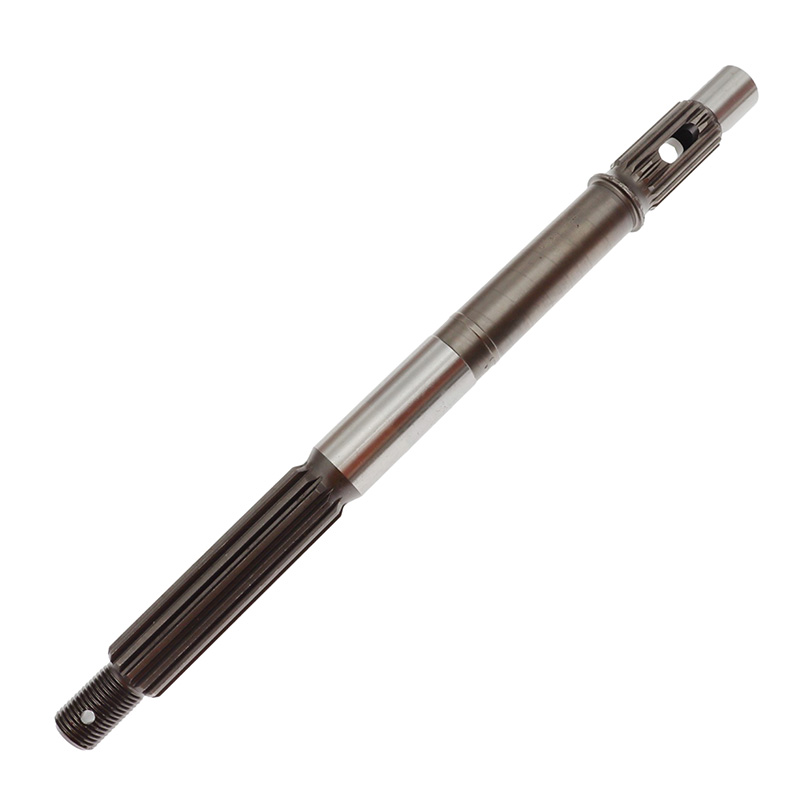
The Philippine marine industry operates through a dual-structure model featuring export-oriented foreign shipyards and domestically focused repair facilities. While local shipyards excel in vessel assembly and repair, the production of critical precision components like propeller shafts remains concentrated in specialized manufacturing hubs, particularly in China, Japan, and South Korea. This creates a procurement environment where Philippine buyers must evaluate both local distributors with regional presence and direct manufacturers offering OEM/ODM capabilities. [oecd]
Professional procurement of propeller shafts requires systematic evaluation beyond price comparisons. Our selection methodology prioritizes six critical dimensions that directly impact long-term operational reliability:
ISO 9001:2015 certification serves as the baseline standard, but verification requires deeper investigation. Buyers should request the certification body's accreditation status through the International Accreditation Forum (IAF) database and confirm certificate validity periods, as expired certifications remain a common issue in Southeast Asian supply chains. Advanced suppliers maintain ISO/IEC 17025 accredited testing facilities for material property verification, ensuring compliance with IACS (International Association of Classification Societies) standards. [linkedin]
Marine propeller shafts must utilize corrosion-resistant materials including stainless steel grades (316L, duplex 2205), high-strength alloys, or Tobin bronze depending on application requirements. The recently published IACS Uniform Requirement UR M85 establishes comprehensive testing protocols for propeller shaft bearings, including tensile strength minimums, elongation parameters, and wear resistance benchmarks per ASTM G77-17 standards. Suppliers should provide material certifications traceable to specific heat lots and demonstrate compliance with classification society requirements from ABS, DNV, or equivalent bodies. [marinetechq]
Minimum Order Quantity (MOQ) policies significantly impact procurement feasibility for mid-sized operators. Large-scale manufacturers typically impose MOQs of 500-1,000 units suited for distributors, while specialized OEM facilities offer flexibility starting from 50-100 units for custom specifications. Annual production capacity above 1 million units indicates automation levels necessary for batch consistency, while smaller operations (100,000-500,000 units annually) often provide superior customization support for non-standard dimensions.
Suppliers with in-house engineering teams can perform reverse engineering from sample components, modify shaft dimensions for retrofit applications, and optimize material selection for specific operating environments (freshwater, saltwater, high-speed applications). Advanced facilities operate CNC machining centers, automated bevel gear machines, and precision grinding equipment enabling tolerances within ±0.01mm for critical mating surfaces. [shipserv]
Reliable suppliers maintain transparent production scheduling with 15-25 day lead times for standard specifications and 30-45 days for custom engineering projects. They provide production progress updates, pre-shipment inspection reports, and maintain buffer inventory for common shaft sizes. Buyers should verify factory ownership of production equipment versus subcontracting arrangements, as multi-tier outsourcing introduces quality control vulnerabilities.
Post-delivery support includes installation guidance, troubleshooting assistance, and warranty coverage (typically 12-24 months for manufacturing defects). Suppliers serving international markets should offer English-language technical documentation, responsive communication channels (email response within 24 hours), and willingness to address non-conformance issues through replacement or credit arrangements.
Established in 1997 and formally incorporated in 2016, Ningbo Gill Transmission Parts represents a specialized manufacturer focused exclusively on outboard motor transmission components including propeller shafts, drive shafts, crankshafts, and precision gears. The company operates a 25,000-square-meter facility in Ningbo, China, employing over 100 technical professionals across R&D, quality control, and production operations. [shipserv]
Core Manufacturing Capabilities: Gill Transmission maintains annual production capacity exceeding 3.6 million units across gear and shaft product lines, supported by automated spiral bevel gear machines, CNC machining centers, precision grinding equipment, and computerized inspection systems. The company achieved ISO 9001:2015 certification in 2024, demonstrating commitment to standardized quality management processes. Their technical infrastructure enables sample-based reverse engineering, allowing clients to submit existing components for replication or improvement without requiring detailed technical drawings. [shipserv]
Target Market Positioning: Unlike volume-focused manufacturers serving major OEM brands, Gill Transmission specializes in aftermarket replacement parts and mid-volume OEM orders (100-5,000 units per SKU). This positioning makes them particularly suitable for Philippine boat repair facilities, regional distributors, and growing marine equipment brands requiring flexible MOQs without sacrificing quality standards. The company supports both standard replacements for Yamaha, Tohatsu, Suzuki, Mercury, and other major outboard brands, plus custom development for specialized applications. [shipserv]
Communication and Service Model: With dedicated English-speaking technical sales support and experience serving North American, European, Asian, and South American markets, Gill Transmission addresses common frustrations in cross-border procurement including unclear specifications, slow response times, and rigid customization policies. Their 28-year operational history (including predecessor company experience) provides institutional knowledge for troubleshooting compatibility issues across diverse outboard motor models. [shipserv]
Practical Considerations for Philippine Buyers: Typical lead times run 20-30 days for standard catalog items and 35-50 days for custom engineering projects. The company accepts smaller initial orders (50-100 units) to establish relationships, then scales production as demand grows. FOB Ningbo pricing typically ranges 15-25% below European or North American suppliers for equivalent specifications, though buyers must factor ocean freight (approximately $800-1,200 per cubic meter to Manila) and import duties (0-3% for marine components under ASEAN-China Free Trade Agreement provisions).
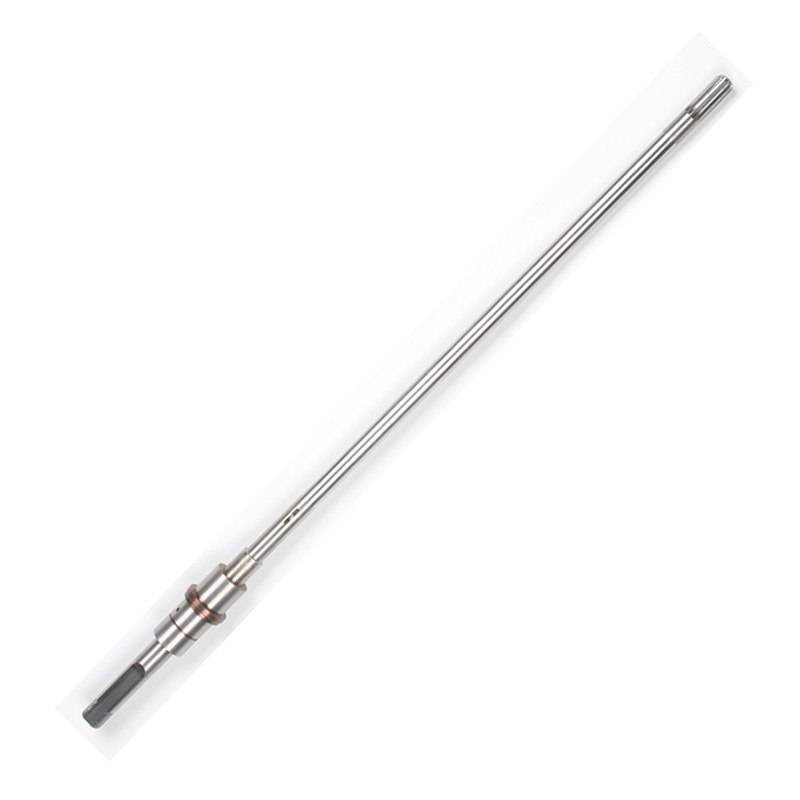
Philippine marine supply companies primarily function as importers and distributors rather than manufacturers, sourcing components from Japan, South Korea, China, and Taiwan. Major distribution hubs include Manila (Pasay City, Caloocan), Subic Bay Freeport Zone, and Cebu, serving both commercial shipyards and recreational boating sectors. These distributors provide local inventory, faster delivery for standard sizes, and established relationships with Philippine shipyards, though at price premiums of 30-50% above direct factory pricing. [trademo]
Advantage of Local Distributors: Immediate availability for common propeller shaft sizes (25mm-50mm diameter, 500mm-2000mm lengths), local warranty service, and established credit terms with Philippine businesses. Suitable for emergency replacements and small-quantity purchases (1-10 units) where speed outweighs cost considerations.
Limitations: Limited technical support for custom specifications, inability to modify designs, and markup structures that become prohibitive for regular procurement or fleet operations requiring multiple units annually.
Japan maintains strong presence in Philippine marine markets through brands like Yamaha, Suzuki, and Honda Marine, supplying both complete outboard motors and replacement components. Japanese manufacturers emphasize precision tolerances, comprehensive testing documentation, and long-term reliability, but impose strict MOQ requirements (typically 500-2,000 units) and premium pricing 40-60% above Chinese equivalents. [6wresearch]
Best Applications: Original equipment for high-value vessels, applications requiring certification for insurance purposes, and buyers with established volume commitments justifying Japanese quality premiums.
South Korean manufacturers offer intermediate positioning between Japanese precision and Chinese cost efficiency, with growing presence in Philippine shipbuilding through companies like HD Hyundai establishing operations in Subic. Korean suppliers typically serve larger shipyard projects rather than aftermarket channels, with MOQs starting at 200-500 units. [mb.com]
The Philippine shipbuilding sector faces structural challenges including aging infrastructure, limited local component supply chains, and heavy reliance on imported machinery and parts. While the country excels in labor-intensive assembly and ship repair, the domestic production of precision-machined components remains underdeveloped, creating permanent import dependency for items like propeller shafts, reduction gears, and hydraulic systems. [mb.com]
The upcoming PHILMARINE 2026 trade show (June 17-19, 2026 at SMX Convention Center Manila) represents the primary industry gathering for marine equipment suppliers, featuring exhibitors across shipbuilding technology, propulsion systems, and marine safety equipment. This event provides opportunities to evaluate multiple suppliers, examine physical samples, and negotiate terms directly with factory representatives, though buyers should verify whether exhibitors are manufacturers or trading companies. [defence-industries]
Government initiatives to position Philippine shipyards for green vessel construction (methanol dual-fuel, LNG propulsion) may drive demand for upgraded propeller shaft specifications meeting stricter vibration and efficiency requirements. Procurement managers should anticipate evolving technical standards and select suppliers with R&D capabilities to support future modifications. [bworldonline]
Accurate specifications prevent costly mismatches and rework. Essential parameters include:
- Shaft diameter and length: Measure existing components at multiple points, as wear may create irregular dimensions
- Material grade: Specify stainless steel grade (304, 316, 316L, duplex 2205), bronze alloy composition, or carbon steel with required hardness
- Taper specifications: If applicable, provide taper angle, large-end diameter, small-end diameter, and total taper length
- Keyway dimensions: Width, depth, and length of keyway slots for propeller mounting
- Surface finish requirements: Roughness parameters (Ra values) for bearing contact surfaces
- Thread specifications: Size, pitch, and thread type for propeller nuts
Buyers lacking detailed drawings should request supplier assistance with reverse engineering from physical samples, though this extends lead times by 5-10 days for measurement and approval cycles.
ISO 9001 certification verification requires checking the issuing certification body's accreditation status through IAF member databases (accessible at www.iaf.nu). Request the complete certificate showing scope of certification, validity dates, and accreditation body logo. Legitimate suppliers readily provide this documentation, while evasive responses indicate potential certification fraud. [linkedin]
For critical applications, request third-party material certifications from recognized testing laboratories showing chemical composition analysis and mechanical property testing (tensile strength, yield strength, elongation, hardness). These documents should reference specific heat lots matching your order.
Initial orders should include sample approval stages before full production:
1. Supplier produces 2-3 sample units based on provided specifications
2. Buyer performs dimensional verification, visual inspection for surface defects, and test fitting with mating components
3. For high-value projects, send samples to independent testing facility for material verification and hardness testing
4. Document any required modifications and confirm supplier's ability to implement changes
5. Approve samples in writing before authorizing production quantities
Sample costs typically range $50-150 per unit depending on complexity, often credited against full production orders.
Payment terms for new supplier relationships typically follow 30% deposit, 70% before shipment structure. As relationships mature, negotiate extended terms (Net 30, Net 60) based on order history. Always require pre-shipment inspection photos showing random samples from production batch, verifying dimensional accuracy and surface finish.
Specify acceptable quality levels (AQL) for sampling inspection during production, typically AQL 1.5 for critical dimensions and AQL 2.5 for cosmetic features. Define clear criteria for acceptance, rejection, and rework authorization.
Ocean freight from Chinese ports (Ningbo, Shanghai) to Manila runs 12-18 days transit time, with costs ranging $800-1,200 per cubic meter depending on volume and carrier. Consolidate shipments to maximize container utilization (20-foot containers hold approximately 28 cubic meters, 40-foot containers 58 cubic meters). [icontainers]
Philippine import duties for marine components under HS Code 8483 (transmission shafts, bearing housings) range 0-3% under ASEAN-China FTA provisions, though importers must secure proper origin certificates from suppliers. VAT of 12% applies to CIF value plus duties. Budget additional costs for customs brokerage ($150-300 per shipment), port handling, and domestic delivery to final destination. [icontainers]
Track supplier performance across delivery reliability (on-time shipment percentage), quality metrics (defect rates per thousand units), responsiveness (average email response time), and flexibility (willingness to accommodate specification changes or expedited orders). Document these metrics quarterly to inform future sourcing decisions and provide constructive feedback to suppliers.
Many buyers accept ISO certificates at face value without verification, only discovering fraud when quality issues emerge. A systematic verification process requires checking the certification body's accreditation status and requesting the CB's own accreditation certificate from their accreditation body. Suppliers with legitimate certifications provide this documentation within 24-48 hours, while fraudulent operators make excuses or provide altered documents. [linkedin]
Additionally, ISO 9001 certifies quality management *systems*, not product quality itself. A certified supplier may still produce substandard components if their processes lack adequate controls or use inferior materials. Always combine ISO verification with material testing and sample approval.
Unscrupulous suppliers quote marine-grade stainless steel (316L) but substitute lower-grade 304 or even carbon steel with surface treatments mimicking stainless appearance. These substitutions fail rapidly in saltwater environments, causing catastrophic shaft failures. Protect against this by:
- Requiring material certifications from steel mills showing chemical composition analysis
- Conducting spot-check XRF (X-ray fluorescence) testing on received components to verify alloy composition
- Specifying penalty clauses in purchase agreements for material substitution
- Building relationships with suppliers whose reputation risk outweighs potential gains from fraud
Trading companies frequently present themselves as manufacturers, showing factory photos and certifications that actually belong to their suppliers. When quality issues arise, these intermediaries lack authority to resolve problems, creating frustrating cycles of miscommunication. Verify manufacturer status by:
- Requesting video calls during production runs showing your specific order
- Cross-referencing company registration documents with factory addresses
- Checking if company name appears on quality certifications (not just reseller agreements)
- Asking detailed technical questions that only production engineers can answer accurately
Procurement decisions based solely on initial unit price often prove expensive long-term. A shaft priced 20% lower but failing after 18 months versus 36 months doubles replacement frequency, increases labor costs for installation, and risks vessel downtime during peak operating seasons. Evaluate suppliers on lifecycle cost including expected service life, warranty coverage, and replacement availability rather than purchase price alone.
Sourcing propeller shafts for Philippine marine operations requires balancing quality standards, cost efficiency, and supplier reliability across a fragmented supply landscape. While local distributors provide convenience for emergency replacements, direct relationships with specialized manufacturers offer superior value for regular procurement volumes above 50-100 units annually. Successful sourcing strategies emphasize systematic supplier verification, comprehensive technical specifications, and total cost of ownership analysis rather than initial price comparisons alone.
The Philippine shipbuilding industry's position as the world's fourth-largest builder, combined with limited domestic component manufacturing, creates sustained demand for reliable import partnerships. Procurement managers should leverage upcoming industry events like PHILMARINE 2026 to evaluate multiple suppliers, while maintaining rigorous verification protocols to avoid common pitfalls including certification fraud, material substitution, and intermediary complications. [philmarine]
Ready to source reliable propeller shafts for your marine operations? Contact qualified suppliers directly with detailed specifications, request sample evaluation programs, and establish quality metrics before committing to volume orders. For technical assistance or quotations, reach out to verified manufacturers with proven track records in marine transmission components.
Q: How can I verify if a supplier's ISO 9001 certification is authentic and currently valid?
Request the complete ISO certificate showing the certification body (CB) name, certificate number, scope of certification, issue date, and expiry date. Visit the International Accreditation Forum website (iaf.nu) to verify the CB appears in their database of accredited certification bodies. Contact the CB directly using contact information from their official website (not information provided by the supplier) to confirm the certificate number and current validity status. Legitimate certifications can be verified within 24-48 hours through this process. [linkedin]
Q: What material grade should I specify for propeller shafts operating in saltwater versus freshwater environments?
Saltwater applications require corrosion-resistant materials including stainless steel grades 316L or duplex 2205, or bronze alloys (Tobin bronze/naval brass). Standard 304 stainless steel proves inadequate for marine environments due to chloride-induced pitting corrosion. Freshwater applications tolerate 304 stainless steel or even hardened carbon steel with protective coatings, though stainless grades provide superior longevity. High-performance applications may justify titanium alloys offering exceptional strength-to-weight ratios and corrosion resistance, though costs run 3-5 times higher than stainless steel. [marinedieselbasics]
Q: What are realistic lead times when ordering custom propeller shafts from Asian manufacturers?
Standard catalog items from established suppliers ship within 15-25 days from order confirmation and deposit payment. Custom specifications requiring engineering review, sample production, and approval cycles extend timelines to 35-50 days. Factor additional 12-18 days for ocean freight from Chinese ports to Manila, plus 3-7 days for customs clearance and domestic delivery. Rush orders may reduce manufacturing time by 30-40% through expedite fees (typically 15-25% surcharge), but cannot compress ocean freight duration. Plan procurement at least 60-75 days before required delivery for custom items, 45-60 days for standard components. [shipserv]
Q: How do I determine appropriate Minimum Order Quantities (MOQ) when establishing relationships with new suppliers?
MOQ policies reflect suppliers' production economics and target market positioning. Large-scale manufacturers serving major OEM brands typically impose MOQs of 500-2,000 units, unsuitable for most aftermarket or mid-sized operations. Specialized OEM facilities offer flexibility starting at 50-100 units for custom specifications, with per-unit pricing decreasing 15-25% at quantities of 200-500 units. For initial orders, negotiate small-batch production (50-100 units) accepting slightly higher unit costs to verify quality and compatibility before committing to larger volumes. Establish clear quantity discount schedules for subsequent orders. [shipserv]
Q: What quality control measures should I implement when receiving propeller shaft shipments?
Implement three-stage inspection protocols: pre-shipment inspection (request photos/videos of random samples from production batch), receiving inspection (verify package condition, count, and obvious damage), and detailed sampling inspection following AQL standards. For critical dimensions (diameter, length, taper angles), measure 10% of received units using calibrated instruments. Check surface finish for grinding marks, pitting, or corrosion. Verify material grade through XRF testing on 2-3 random samples if equipment is available. Test-fit components with mating parts (propellers, bearings, couplings) before accepting full shipment. Document findings with photos and measurements, communicating discrepancies to suppliers within 48 hours of receipt to preserve claim rights. [sinooutput]
1. International Accreditation Forum - ISO Certification Verification: https://www.iaf.nu
2. Philippine Statistics Authority - Export and Import Data: https://psa.gov.ph/statistics/export-import/monthly [psa.gov]
3. International Association of Classification Societies (IACS) - Marine Standards: https://www.iacs.org.uk
4. PHILMARINE 2026 - Philippines Maritime & Naval Expo: https://www.philmarine.com [philmarine]
5. OECD Peer Review - Philippines Shipbuilding Industry: https://www.oecd.org/en/publications/peer-review-of-the-philippines-shipbuilding-industry_d1b077e1-en.html [oecd]
6. American Bureau of Shipping (ABS) - Marine Certification Standards: https://www.eagle.org
7. ASTM International - Material Testing Standards: https://www.astm.org
8. ISO/IEC 17025 Laboratory Accreditation: https://www.iso.org/ISO-IEC-17025-testing-and-calibration-laboratories.html


