


close
Choose Your Site
Global
Social Media
Views: 222 Author: Gill Transmission Publish Time: 2026-04-20 Origin: Site


In any gear system, backlash is the small amount of clearance or "play" between mating gear teeth. This clearance is necessary for lubrication and manufacturing tolerances, but excessive backlash can cause noise, vibration, impact loading, and positioning errors. [khkgears]
Anti-backlash gears are specially designed gears that actively reduce or eliminate this play by applying a preloaded force between two meshing tooth flanks. In practice, this often means using a split gear composed of two identical gear halves, offset by springs so that each half presses against opposite sides of the mating gear's teeth. [patents.google]
For marine applications such as outboard gears, steering systems, trim controls, and throttle linkages, anti-backlash designs can significantly improve smoothness, accuracy, and durability in harsh, high-vibration environments. [statusmobility]
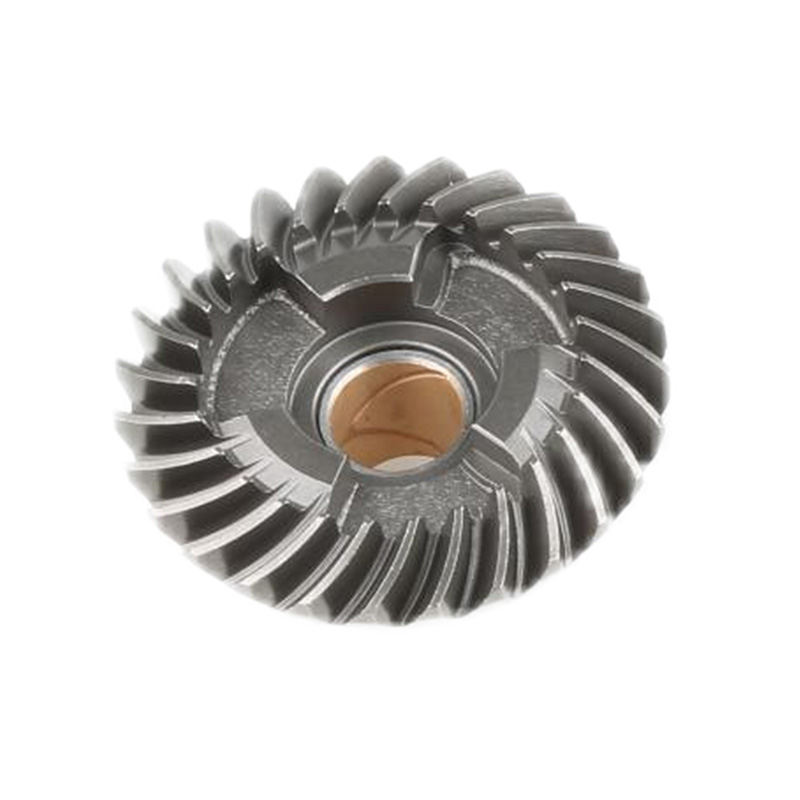
In industrial automation, backlash often shows up as lost motion—the actuator moves, but the load lags. On a boat, the same phenomenon is immediately felt as rattle, knocking, and delayed response. [khkgears]
In our experience supplying outboard gears and marine transmission parts, excessive backlash commonly leads to:
- Gear rattle at idle: Unpleasant metallic noise, especially in lightweight outboards.
- Harsh shifting: Noticeable clunk when engaging forward or reverse.
- Steering "dead band": Turning the wheel produces no immediate response, hurting handling and safety.
- Accelerated wear: Impact loading between tooth flanks and bearings increases fatigue and pitting. [statusmobility]
For high-torque outboards, even small rotational play at the gear mesh can translate into large angular errors at the propeller or rudder, especially in precision trolling, maneuvering in tight marinas, or dynamic positioning systems. Anti-backlash gears help engineers keep this under control. [rapiddirect]
The most widely used design is the split spur gear (also called a double anti-backlash gear). It consists of: [patents.google]
- Two identical spur gear halves, same module/DP and number of teeth.
- A shared hub or shaft connection.
- A set of torsion springs, wave springs, or leaf springs between the halves.
The springs pre-load the two halves so that one half contacts the drive tooth flank, and the other half contacts the opposite flank. As a result: [patents.google]
- Backlash is effectively "zero" under the rated preload.
- The spring absorbs small dimensional variations, misalignment, and wear.
- Lost motion is dramatically reduced compared with a conventional single-piece gear. [khkgears]
In miniature precision systems—like instrument drives and small actuators—some patented designs ensure the overall thickness is only slightly larger than a single gear, keeping the gear compact while hiding the springs within the tooth space. [patents.google]
Although spur geometry is the most common, anti-backlash concepts can be adapted to:
- Helical gears: For quieter drives, with angled teeth and axial forces.
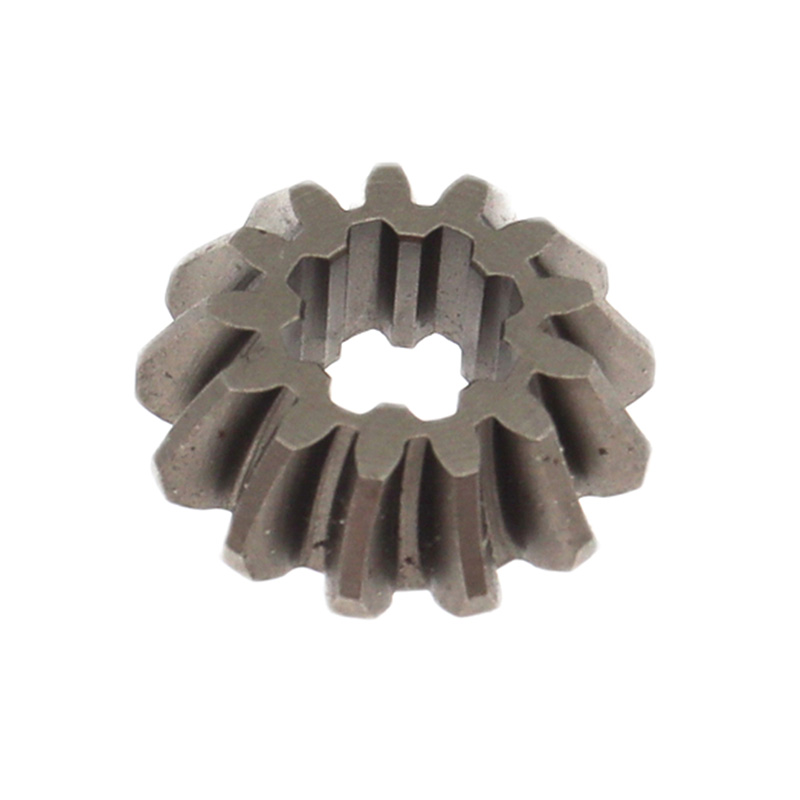
- Bevel gears: Used in marine gearboxes to turn power 90°, such as in outboard lower units.
In these cases, the anti-backlash function still relies on split halves and preload, but the exact spring structure, tooth form, and assembly method must be carefully engineered to avoid misalignment and uneven tooth loading. [rapiddirect]
In the original KHK technical reference, anti-backlash gears are mainly presented for precision motion control, instrumentation, and automation. From a marine and outboard gears perspective, typical use cases include: [khkgears]
- Steering systems: Rack-and-pinion or rotary steering where play translates directly into steering slack.
- Throttle and shift actuation: Electronic or mechanical gear selectors that must respond smoothly and predictably.
- Trim/tilt systems: Electro-mechanical drives that position the outboard precisely.
- Position feedback: Encoders or feedback mechanisms inside marine electric drives where backlash skews sensor readings.
Beyond marine, anti-backlash gears are widely used in:
- CNC positioning stages and robotics. [rapiddirect]
- Optical instruments and test equipment. [patents.google]
- Precision printers and packaging machinery, where register errors must be minimized. [rapiddirect]
When designing or specifying anti-backlash gears for outboard gear systems or marine drives, we advise engineers to focus on five key dimensions.
- Module / DP and tooth count: Must match the mating gear, while providing the required torque capacity. [khkgears]
- Precision grade: Higher AGMA/ISO tolerance improves motion accuracy but requires tighter control of mounting and alignment. [rapiddirect]
- Face width: Wider gears carry more torque and better handle shock loads common in marine drives.
Common gear materials include alloy steels, stainless steels, and high-performance bronzes. For marine and outboard applications, the selection must balance: [khkgears]
- Corrosion resistance (saltwater exposure, condensation).
- Fatigue strength (torque spikes at shifting and acceleration). [statusmobility]
- Weight (important in small outboards and portable motors).
Heat treatments such as carburizing, nitriding, or induction hardening can significantly boost surface hardness and wear resistance, which is critical when backlash is intentionally minimized and tooth flanks are always in contact. [rapiddirect]
The preload torque is the heart of an anti-backlash design. Too low, and backlash reappears under load; too high, and the system suffers from excessive friction, heat, and wear. [patents.google]
Best practice is to:
1. Calculate the maximum expected torque ripple and reversing loads in the marine drive.
2. Select a preload that eliminates backlash under normal operating conditions while staying within spring fatigue limits.
3. Validate the chosen preload through bench testing and vibration analysis. [statusmobility]
Anti-backlash gears are only as good as their mounting. To get full benefit:
- Maintain proper center distance and verify backlash under preload at multiple angular positions.
- Ensure shaft stiffness is adequate to avoid torsional wind-up that reintroduces apparent play.
- Use precise housings and bearing seats to keep misalignment and runout within specified limits. [statusmobility]
Since anti-backlash gears maintain constant flank contact, lubrication quality is crucial. For marine applications, we recommend:
- High-quality gear oils or greases suitable for mixed rolling–sliding contact.
- Seals, gaskets, and corrosion-resistant coatings to prevent water ingress and contamination. [statusmobility]
- Scheduled oil analysis for high-value marine gearboxes to monitor wear particles.
The table below summarizes the practical differences engineers and buyers should consider.
| Aspect | Standard Gear Pair | Anti-Backlash Gear Pair |
|---|---|---|
| Backlash | Designed-in clearance, adjustable by mounting. (khkgears) | Actively preloaded to approach zero backlash. (patents.google) |
| Motion Accuracy | Limited by gear tolerances and center distance setting. (rapiddirect) | Superior positioning accuracy and repeatability. (patents.google) |
| Noise/Vibration | Higher rattle under torque reversal and low loads. | Noticeably quieter and smoother under reversing loads. (statusmobility) |
| Complexity | Simple one-piece gear; easy to manufacture and assemble. (rapiddirect) | Split construction with springs; more demanding to design and assemble. (patents.google) |
| Cost | Lower manufacturing and maintenance cost. | Higher unit cost but lower cost of poor quality (less wear and rework). |
| Typical Use | General power transmission, low-precision drives. | Marine steering, precision actuators, robotics, metering systems. (rapiddirect) |
From our work with boat builders and system integrators, a structured selection approach helps avoid costly redesigns later.
1. Define performance requirements
- Required output torque and speed range.
- Allowable angular error at the propeller, rudder, or actuator.
- Target noise and vibration levels, especially at idle and low speed.
2. Choose gear type and geometry
- Determine whether spur, helical, or bevel geometry best fits your drive layout.
- Match module/DP and tooth count with existing mating gears.
3. Specify material and surface treatment
- For saltwater environments, prioritize corrosion resistance and fatigue strength.
- Select appropriate heat treatment to handle continuous contact on tooth flanks. [statusmobility]
4. Set preliminary preload
- Start from theoretical torque and backlash targets.
- Consider safety factors for shock loads during gear engagement and wave impact.
5. Prototype and test
- Conduct no-load and loaded backlash measurements across temperature ranges.
- Perform vibration and noise tests at multiple speeds. [statusmobility]
- Check for overheating or abnormal wear after extended run-in.
6. Iterate design and finalize specification
- Adjust spring stiffness, preload, or tooth modifications if required.
- Lock in drawings, tolerances, and quality inspection standards.
For OEM projects, we typically collaborate early in the design cycle, so gear geometry and housing constraints evolve together rather than fighting each other at the end.
Modern gear manufacturing provides several process options, each with implications for anti-backlash performance.
- Machining (hobbing, shaping, grinding): Offers high accuracy and flexibility across sizes; grinding is often used for precision anti-backlash gears. [rapiddirect]
- Forging: Excellent fatigue performance for heavy-duty gears, though extreme thinness is limited by forming forces. [rapiddirect]
- Powder metallurgy: Attractive for high-volume, smaller gears, but precision and density must be tightly controlled. [rapiddirect]
For anti-backlash gears used in marine drives, machined and heat-treated steel gears remain the mainstream choice, due to their combination of strength, precision, and adaptability. [rapiddirect]
When anti-backlash gears are part of a marine gearbox or steering unit, overhaul procedures should include:
- Measurement of tooth wear and pitting under magnification.
- Verification of spring condition and preload.
- Check of shaft, bearing, and housing alignment.
- Load tests, vibration analysis, and thermal monitoring to detect abnormal behavior. [statusmobility]
Replacing seals, gaskets, and lubricants is essential to maintain protection against water and contaminants, which is critical in marine environments. [statusmobility]
A typical use case from the field involves a mid‑size outboard boat whose steering felt vague around center. The system used a compact gear mechanism between the steering wheel and the cable drive.
The engineering team observed:
- Around 5–7 degrees of steering wheel rotation before any noticeable rudder response.
- Audible rattle when the helm reversed direction in rough seas.
By replacing the standard spur gear pair in the steering unit with split anti-backlash gears, correctly preloaded and aligned, the team achieved:
- Steering slack reduced to less than 1 degree at the wheel.
- Noticeable reduction in noise and vibration at the helm.
- Improved confidence for the operator when docking and maneuvering in tight spaces.
This type of improvement is representative of what anti-backlash solutions can deliver when properly engineered for marine conditions. [khkgears]
As a company specialized in outboard gears and marine transmission components, Ningbo Gill Transmission Parts Co., LTD. can support OEMs and system integrators through the full project lifecycle:
- Co‑engineering of custom anti-backlash gears tailored to specific outboard or marine gearbox platforms.
- Selection of marine‑grade materials and coatings for corrosion resistance.
- Implementation of precision manufacturing and rigorous inspection of gear geometry, preload, and tooth contact.
- Technical support for installation, troubleshooting, and overhaul in real marine environments. [statusmobility]
If you are developing a new outboard platform or upgrading an existing marine gearbox, our engineering team can help you evaluate whether anti-backlash gears are the right solution for your performance and durability targets.
If you need quieter, more precise, and more durable marine or outboard gear systems, consider integrating anti-backlash gear solutions into your next design.
Contact Ningbo Gill Transmission Parts Co., LTD. to:
- Discuss your torque, speed, and backlash requirements.
- Review sample drawings or reverse‑engineer your existing components.
- Develop a customized anti-backlash gear set optimized for your marine application.
Our engineering team can provide early‑stage design input as well as full‑scale production and quality control support.
Q1. Do anti-backlash gears completely eliminate backlash?
A1. They are designed to minimize functional backlash under the specified preload, but some small elastic deformation and manufacturing tolerance will always exist. For most marine steering and actuation systems, this residual error is negligible. [patents.google]
Q2. Are anti-backlash gears suitable for high‑torque marine gearboxes?
A2. Yes, provided that gear size, material, and preload are correctly engineered. For very high‑power main reduction stages, designers may combine careful backlash adjustment, tooth modification, and torsional damping with selected anti-backlash elements in critical subsystems. [statusmobility]
Q3. How do I maintain anti-backlash gears in a marine environment?
A3. Follow manufacturer recommendations for lubricant type and change intervals, inspect springs and tooth flanks during overhaul, and always replace seals and gaskets to prevent water ingress. [rapiddirect]
Q4. Will anti-backlash gears increase friction and reduce efficiency?
A4. There is some additional friction from the preload, but when correctly sized, this loss is small compared with the gains in smoothness, control, and reduced impact loading. For precision marine actuators, the trade‑off is usually beneficial. [patents.google]
Q5. Can I retrofit an existing outboard or steering system with anti-backlash gears?
A5. In many cases, yes. Retrofitting requires verifying space constraints, shaft sizes, and bearing capacity, then designing a compatible split gear with appropriate preload. An engineering assessment is recommended to ensure reliability and safety. [khkgears]
1. KHK Gear Manufacturer, "Anti-backlash Gears – Gear Technical Reference."
https://khkgears.net/new/gear_knowledge/gear_technical_reference/anti-backlash-gears.html [khkgears]
2. RapidDirect, "Gear Manufacturing 101: A Guide on the Gear Production Processes."
https://www.rapiddirect.com/blog/gear-manufacturing/ [rapiddirect]
3. Status Mobility, "Things need to be considered while overhauling Marine Gearboxes."
https://statusmobility.com/things-need-to-be-considered-while-overhauling-marine-gearboxes/ [statusmobility]
4. Google Patents, "US4189951A – Anti-backlash gear."
https://patents.google.com/patent/US4189951A/en [patents.google]
5. PIC Design Catalog, "Anti-Backlash Spur Gears."
https://www.pic-designcatalog.com/p2-5-144.html [pic-designcatalog]


