


close
Choose Your Site
Global
Social Media
Views: 298 Author: Gill Transmission Parts Publish Time: 2026-11-19 Origin: Site


Content Menu
● Corrosion-Resistant vs Standard Marine Parts: A Side-by-Side Comparison
● How Seawater Exposure Changes Marine Material Selection
>> Dry interiors, splash zones, and continuous immersion
>> Pitting, crevice corrosion, and galvanic attack
● Marine Materials Compared: Coated Steel, 316 Stainless, and Duplex
>> Coated carbon or alloy steel: Economical when protection is maintainable
>> 316 and 316L stainless steel: Useful, but not seawater-proof
>> Duplex and super duplex stainless steel: Grade selection still matters
● Marine Propeller Shafts: Inspect the Interfaces Before Upgrading the Alloy
● How to Verify Corrosion Resistance Before You Buy
>> Compare supplier evidence, not salt spray hours alone
>> Compare total installed cost, not just the unit price
● Request a Marine Propeller Shaft Quote
>> 1. Are corrosion-resistant marine parts worth the extra cost?
>> 2. Can 316 stainless steel stay submerged in seawater?
>> 3. Is duplex stainless steel always better for a propeller shaft?
>> 4. Do stainless steel marine parts still need sacrificial anodes?
>> 5. Can a coating make a standard marine part suitable for saltwater?
>> 6. What should I do if I find pits on a marine propeller shaft?
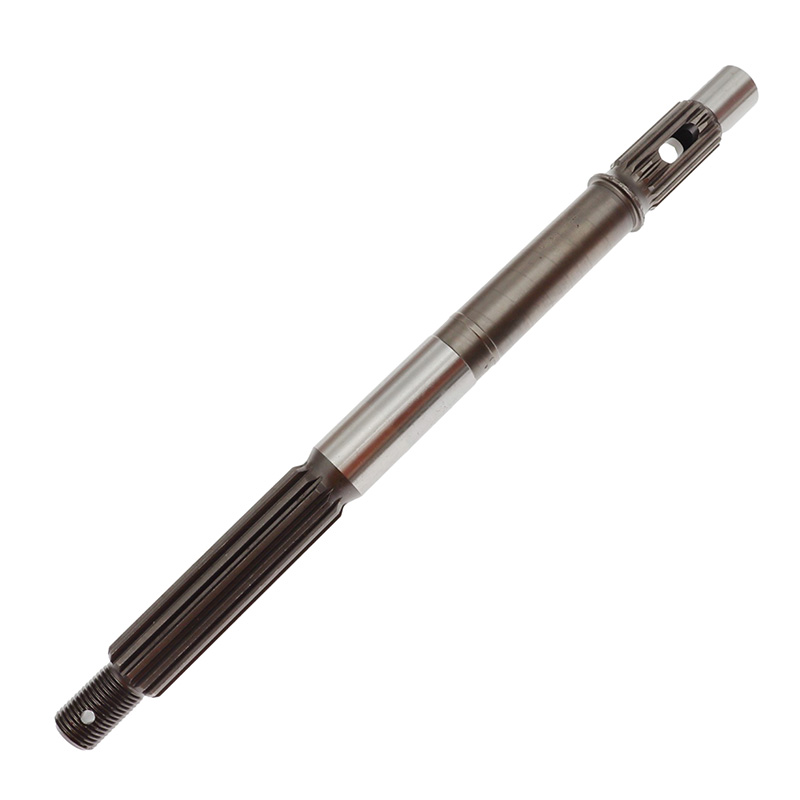
Corrosion-resistant marine parts are usually the better choice when seawater exposure is frequent, inspection is difficult, or failure would take a vessel out of service. Standard marine parts can be the better buy in dry, accessible locations where a suitable coating can be inspected and repaired. For marine propeller shafts, the decision is more demanding: compare the shaft material, seals, liner, propeller hub, and adjacent metals as an assembly, not as separate line items.
Ningbo Gill Transmission Parts Co., LTD. brings 29 years of experience in the development, manufacture, and sale of propeller shafts and other marine components. From a shaft supplier's perspective, the most useful question isn't "Which metal lasts longer?" It's "Where can water reach this assembly, and what happens if protection fails there?"
| Buying factor | Corrosion-resistant marine parts | Standard marine parts |
|---|---|---|
| How they resist corrosion | Rely on a specified alloy, an engineered protection system, or both | Often rely on paint, plating, or another conventional finish |
| Best-fit locations | Repeated splash, difficult-to-inspect joints, or submerged service when the specification supports it | Dry or sheltered locations, especially where inspection and maintenance are straightforward |
| Main failure risks | Pitting, crevice attack, or galvanic incompatibility despite a clean-looking surface | Rust at coating damage, edges, and fastener holes; deterioration beneath a failed finish |
| Initial cost | May be higher, depending on alloy, machining, testing, and documentation | Often lower for comparable parts with a conventional material and finish |
| Maintenance | Still requires inspection of joints, seals, and adjacent metals | May also need periodic coating repair or renewal |
| What to specify | Exact grade, service environment, finish, and acceptance criteria | Base material, coating system, protected surfaces, and repair requirements |
"Standard" describes a baseline specification, not poor quality. A coated steel bracket can work well inside a dry machinery space. A stainless bracket with a salt-trapping joint can be a poor choice in a splash zone. The goal is to match the protection to the exposure and the consequence of failure.
- Dry or sheltered interiors: A standard coated part can be economical where the surface stays dry, damage is visible, and repairs are easy. Check whether condensation, bilge water, or washdowns make the actual location wetter than its label suggests.
- Splash and spray zones: Repeated wetting and drying can leave concentrated salt deposits around joints, threads, and edges. Specify a material or coating for that exposure and give water a place to drain. Don't assume a submerged cathodic protection system will protect surfaces that are only intermittently wet.
- Continuous immersion: Evaluate the alloy, adjoining metals, sealing details, and protection system together. A shaft surface exposed to moving water and a narrow gap beneath its hub can face different corrosion conditions even though both are underwater.
Pitting corrosion produces small, localized cavities when the protective film on a metal such as stainless steel breaks down. The surface can look sound overall while individual pits deepen. On a shaft, a pit's depth and location matter more than the amount of visible rust, particularly where the shaft is highly stressed.
Crevice corrosion develops in confined areas such as the space beneath a washer, inside a joint, or under deposits. Water trapped there can become more aggressive than the surrounding water. When comparing marine parts, examine the installed joint geometry rather than judging only an exposed, polished sample.
Galvanic corrosion can occur when dissimilar metals are electrically connected and share an electrolyte such as seawater. A small area of less noble metal connected to a large area of more noble metal can be especially vulnerable. Before upgrading one part, check whether the change could increase corrosion on a neighboring fastener, housing, or fitting.
Coated steel is a practical option for accessible brackets and housings. Certain engineered shaft assemblies also use steel with designated protection at water-exposed areas. That is different from putting a general-purpose painted component into permanent immersion.
Request the coating specification, the surfaces it covers, and the repair procedure. Pay special attention to masked areas, machined edges, and surfaces likely to be damaged during installation. A coating that performs well on a flat sample may leave the actual part vulnerable if its edges or interfaces are poorly protected.
The molybdenum in 316-series stainless steel generally improves resistance to chloride pitting compared with 304. That makes 316 or 316L worth considering for some exposed hardware, but it doesn't qualify either grade for every submerged application. Warm seawater, stagnant gaps, and deposits can still promote localized attack.
Avoid approving an item described only as "marine-grade stainless steel." Ask for the exact grade and product form, then confirm that its mechanical properties and corrosion resistance fit the job. This is particularly important when the part carries propulsion loads rather than simply holding a cover in place.
Duplex stainless steels combine two metallurgical phases and can offer high strength and good resistance to localized corrosion. But "duplex" covers a family of alloys: lean duplex, grades such as 2205, and super duplex grades such as 2507 do not offer the same corrosion resistance.
A higher-alloy grade can be worth evaluating for severe chloride exposure or difficult maintenance access. It is not an automatic substitute for a specified propeller shaft alloy. Confirm the required mechanical properties, delivery condition, dimensional tolerances, and any applicable vessel classification requirements before approving a change.
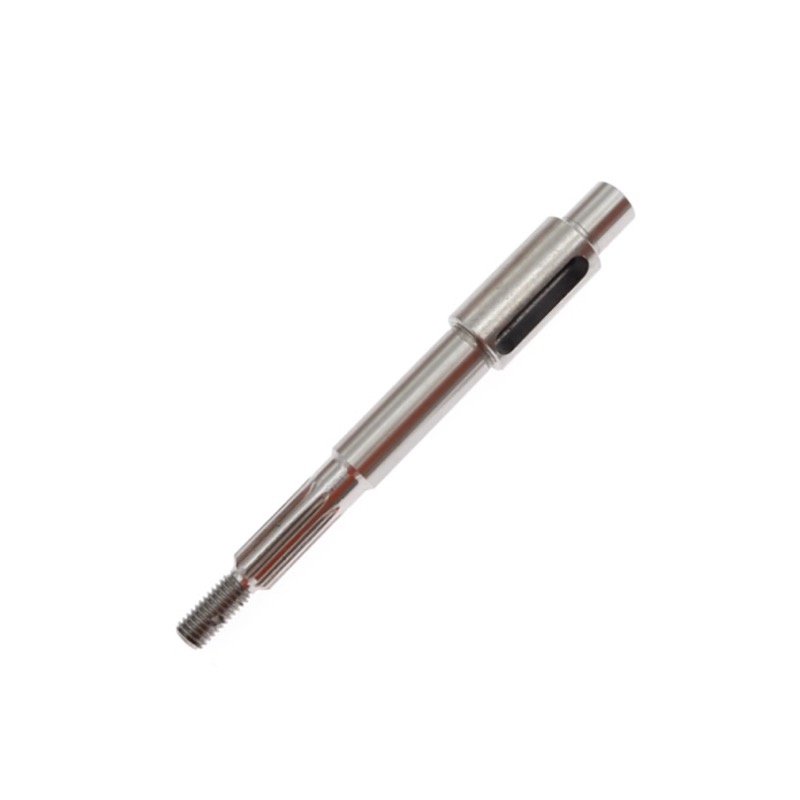
A propeller shaft transmits torque while operating within a system of bearings, seals, and connections. The visible shaft surface tells only part of the story. When reviewing a shaft drawing or investigating recurring corrosion, start with three locations:
1. Propeller hub and shaft taper. Identify where water can enter, where it can remain trapped, and how the design keeps it away from vulnerable surfaces. Compare sealing arrangements along with shaft grades when evaluating competing quotes.
2. Seal track and liner. Check the specified surface finish, dimensions, and wear limits. A corrosion-resistant material does not compensate for a damaged seal track or a liner that no longer fits as intended.
3. Keyways, shoulders, and section changes. Record the position and depth of any pits. If damage is close to a highly stressed feature, have the shaft assessed against the applicable acceptance criteria before polishing it or returning it to service.
Consider a hypothetical refit: a shaft shows little external staining, but disassembly reveals concentrated attack beneath the propeller hub. Ordering the same design in a different alloy might improve resistance, but it would not tell you whether a seal leaked, a gap retained seawater, or adjacent materials contributed to the damage. Document where the attack occurred and review those interfaces before deciding what to change.
An ASTM B117 salt spray report describes performance under controlled test conditions. It does not turn laboratory hours into years at sea. If a quote promises "1,000 hours," ask what was tested: a flat coupon or a production part, a scribed or unscratched surface, and which coating thickness. Then ask what counted as failure: red rust, blistering, or corrosion spreading from a deliberate scratch.
For a shaft order, request material traceability and the required inspection records. A material certificate identifies the supplied material and its reported properties; a dimensional report shows whether the finished part meets drawing requirements. Neither substitutes for the other, and neither alone proves service life.
For a bracket you can replace dockside, a lower-cost coated part may save money even if it needs periodic attention. For a shaft that requires haul-out to access, the same purchasing logic may be expensive. Compare both options over the same period and include acquisition, installation, inspections, repairs, and expected downtime.
For example, suppose an upgraded assembly costs $900 more and an unplanned replacement would cost $6,000 in haul-out, labor, and lost operating time. With all other costs held equal, the upgrade breaks even if it reduces the probability of one such event by 15 percentage points over the comparison period. That is a purchasing example, not a corrosion forecast. Without credible operating history, compare several scenarios rather than presenting one as a prediction.
Send Ningbo Gill Transmission Parts Co., LTD. your shaft drawing or sample details, vessel type, operating waters, duty cycle, and the location of any previous wear or corrosion. Include the propeller, seal, and liner specifications if available, and identify any required classification, traceability, or inspection documents. A quote based on those details gives you a clearer comparison than one based on shaft diameter and a generic material description.
Often, when the part sees regular saltwater exposure, is hard to inspect, or can interrupt vessel operation if it fails. For a sheltered, easily replaced part, standard coated steel may offer better value. Compare installed cost and maintenance access, not just purchase price.
Do not assume it is suitable based on the grade name alone. Temperature, deposits, water circulation, and tight crevices affect the risk of localized attack. Verify the grade against the actual immersion conditions, especially for parts that are critical or difficult to replace.
No. Some duplex grades provide greater resistance to chloride attack than conventional stainless grades, but a shaft also has to meet mechanical, dimensional, and installation requirements. Compare exact grades and delivery conditions, and check whether the substitution needs approval.
That depends on the assembly. Where the design uses sacrificial anodes, they protect electrically connected metals by corroding preferentially in the water. A stainless upgrade does not by itself justify removing an anode or changing its type. Review the protection arrangement for the whole assembly.
Yes, when the coating system is specified for the actual exposure and the component can be prepared, coated, inspected, and repaired as required. But a coating suitable for salt spray is not necessarily suitable for continuous immersion or for a shaft surface that contacts a seal or bearing.
Document their location and extent before removing material. Ask the shaft supplier or a qualified marine engineer to assess the damage against the drawing and applicable acceptance criteria. Do not assume that polishing makes a pitted shaft fit for service, particularly near a keyway or shoulder.
- American Bureau of Shipping, *Excerpt from ABS Rules Developed for Propeller Manufacturers*, §9.5, "Protection Against Corrosion." Supports the discussion of exposed shaft surfaces, hub sealing, liners, and material-dependent protection. Check the current rules for the vessel before applying the excerpt to a project. [ww2.eagle]
- Outokumpu, *What Makes Stainless Steel Corrosion Resistant?* Supports the material comparison and the explanation of passive-film breakdown, chloride pitting, and crevice corrosion. [outokumpu]
- Outokumpu, *Duplex Stainless Steel* and *Building Sustainable Marine Structures with Duplex Stainless Steel*. Support the distinctions among duplex grades and the discussion of splash zones, submerged service, and cathodic protection. These are material-selection resources, not propeller shaft approvals. [outokumpu]
- Sherwin-Williams Protective & Marine, *The Limitations of ASTM B117 Salt Spray (Fog) Testing*. Supports the distinction between controlled test results and field service life. [industrial.sherwin-williams]


