


close
Choose Your Site
Global
Social Media
Views: 231 Author: Gill Transmission Parts Publish Time: 2026-11-20 Origin: Site


Content Menu
● Choose a Solid or Flex Shaft Before You Drill the Hull
● Measure the RC Boat Drivetrain Before Ordering Parts
>> Record the Dimensions That Control Fit
>> Make Sure the Shaft Can Come Out Again
● Build and Install a Solid RC Boat Drive Shaft
>> 1. Dry-Fit the Shaft, Tube, and Motor
>> 2. Mark the Hull Opening and Check the Propeller Envelope
>> 3. Secure the Tube Without Changing the Alignment
>> 4. Set End Play, Lubricate, and Fit the Propeller
● Install a Flex Shaft in a Surface-Drive RC Boat
● Three Workshop Checks That Prevent Rework
>> Isolate the Source of Binding Before Adjusting Everything
>> Find the Leak Path Before Resealing the Hull
>> Keep the First Water Test Short and Change One Thing at a Time
● Troubleshoot RC Boat Drive Shaft Noise, Heat, and Vibration
● Planning a Custom Marine Drive Shaft?
>> Can I Build an RC Boat Drive Shaft From Threaded Rod?
>> Is a Solid Shaft or Flex Shaft Better for a First Build?
>> How Much Clearance Should I Leave Between the Drive Dog and Strut?
>> Can I Shorten an RC Boat Propeller Shaft?
>> Why Does My RC Boat Vibrate Only Under Load?
>> Does Marine Grease Make a Stuffing Tube Waterproof?
Learning how to build a RC boat drive shaft starts with a decision that matters more than shaft diameter: does your hull need a straight, rigid drive or a flexible cable routed to a rear strut? A solid propeller shaft is a practical starting point for many scale boats and low-speed workboats. A matched flex-shaft assembly is often the better choice for a fast hull designed around a surface drive. This guide covers both builds, from measuring the drivetrain to diagnosing vibration after the first water test.
At Ningbo Gill Transmission Parts Co., LTD., we bring 29 years of experience in developing, manufacturing, and supplying drive shafts and other marine components. The manufacturing principle behind this guide is simple: check the interfaces before committing to a part. That means verifying how the shaft fits the motor coupling, how it runs in its supports, and how the propeller seats. For a model-specific clearance, lubricant, or service interval, follow the instructions for the hardware you install.
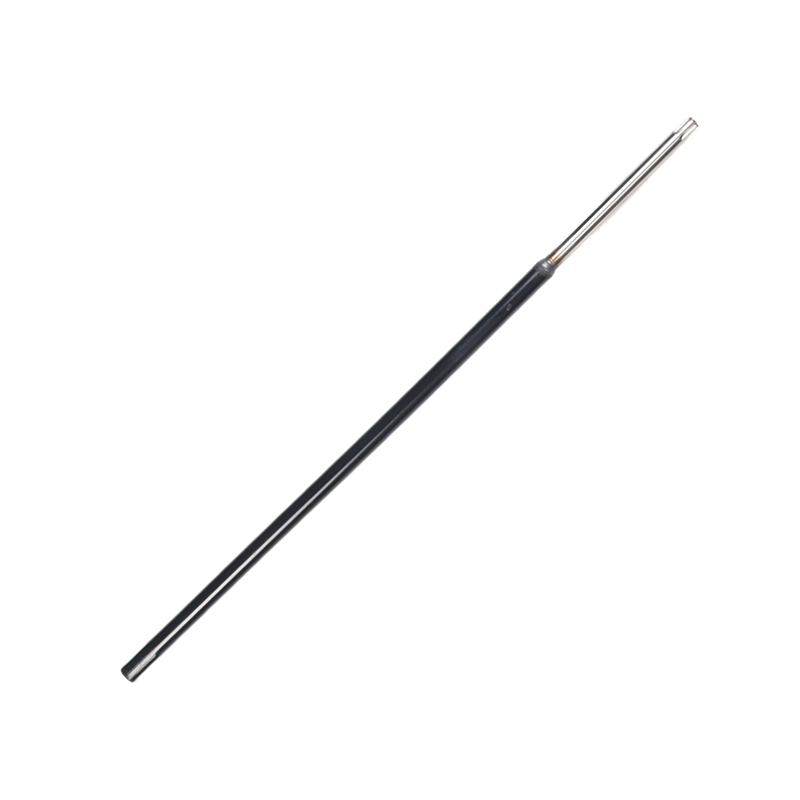
A solid shaft is a straight metal rod supported by bushings or bearings. It runs inside a *stuffing tube*, the fixed tube that carries the shaft through the hull. The motor and shaft should line up without the coupling having to pull either one into position.
A flex shaft uses a wound cable to transmit torque along a gradual curve. In a typical surface-drive layout, a rear strut supports the propeller-end stub shaft. A *drive dog* engages the propeller hub so the propeller turns with the shaft.
| Build decision | Solid propeller shaft | Flexible drive shaft |
|---|---|---|
| Typical application | Scale boat, tug, or other model with a straight shaft line | Fast model designed for a surface drive |
| What to mock up first | Motor, coupling, tube, and propeller line | Motor collet, cable route, strut, and propeller position |
| Main installation risk | Forcing the coupling to correct misalignment | Routing the cable through a tight bend or setting the wrong end clearance |
| Practical starting point | A matched shaft-and-tube assembly if you lack machining tools | A matched cable, stub shaft, liner where required, and compatible hardware |
A flexible motor coupling and a flex shaft are not the same thing. A flexible coupling can accommodate limited misalignment within its rating; it does not turn a rigid shaft into a curved drive or compensate for a misplaced tube.
Set the hull in a cradle. Temporarily position the motor, tube, strut if fitted, and propeller. Check the installation with the hatch in place. A setup can look perfect from above and still leave no room to reach the collet, withdraw the cable, or remove the motor.
| Dimension or interface | What to record |
|---|---|
| Motor output | Shaft diameter and usable engagement length |
| Drive coupling | Motor-side and shaft-side bore sizes, or the required collet size |
| Shaft and tube | Shaft diameter, tube outside diameter, and their lengths |
| Propeller connection | Thread size and pitch, or drive-dog and hub dimensions |
| Hull geometry | Tube exit point, shaft angle, and clearance around the propeller |
| Service access | Room to release the coupling and withdraw the shaft or cable |
Be explicit about where each length starts and ends. *Overall shaft length*, *tube length*, and *installed length from coupling to propeller seat* describe different measurements. For example, an "M4 prop shaft" listing tells you about the propeller-end thread, not necessarily the diameter of the plain shaft where the motor coupling grips it. Measure or confirm both before ordering.
Try the removal path during the mock-up. Can a wrench reach the coupling? Can the shaft clear the rudder? If it cannot, is the rudder easy to remove? This check can save a rebuild: moving a temporary motor mount is much easier than moving a tube after the hull adhesive has cured.
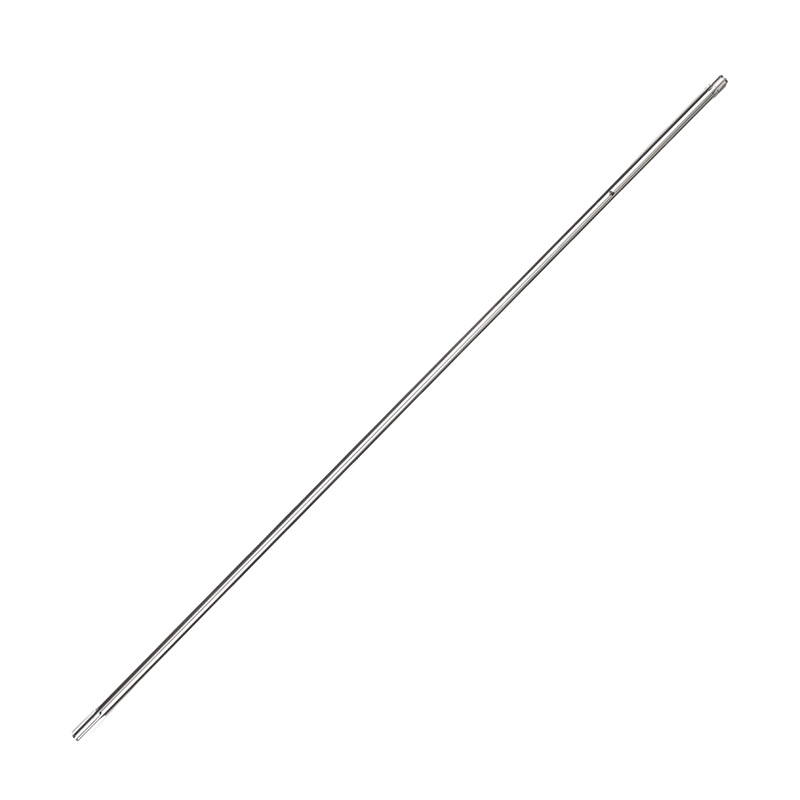
For a first build, assemble a matched shaft, tube, and supports rather than trying to machine the rotating shaft from raw stock. If the design requires a custom shaft, use a drawing that specifies the bearing surfaces, propeller thread, and coupling end. A threaded rod that accepts the propeller is not automatically suitable as a running surface for a bushing or seal.
Disconnect the battery and leave the propeller off during alignment. Put the shaft in its tube, set the assembly in the hull, and bring the motor into position. The coupling should engage both shafts without drawing them sideways. If you have to push the tube or lift the motor to make them meet, adjust the mounts rather than tightening the coupling under load.
Mark the tube centerline and exit point from the dry fit. Start with a pilot hole, then open it gradually to fit the tube. Check the propeller's full swept area against the hull, rudder, and other hardware. Do this before bonding: clearing the hull at one blade position does not prove the entire propeller will clear as it rotates.
Use an adhesive or sealing system compatible with the hull and tube materials. Support the tube so it cannot drift while the joint cures. Keep adhesive away from bearings, bushings, seals, and the shaft bore. Once cured, turn the shaft again by hand before tightening the motor mount. If rotation was smooth before bonding but not afterward, inspect the tube position before blaming the shaft.
*End play* is the shaft's movement along its axis. Set it according to the shaft assembly instructions, using the specified washers or collars. Do not tighten the propeller hardware until the shaft binds, and do not assume the motor bearings are intended to take propeller thrust. Apply the lubricant specified for the assembly; a sealed shaft unit may have different requirements from a serviceable tube. Fit and secure the propeller only after the drivetrain passes the hand-rotation check.
Use a matched flex cable and stub shaft rather than improvising with wire rope or adapting an unknown cable. Verify the permitted rotation direction with the cable supplier, especially if you plan to use reverse. Confirm the propeller hand separately and state the viewing direction when describing clockwise or counterclockwise rotation.
1. Mock up the cable route. Position the motor and rear strut so the cable follows a gradual curve. Move the components if the cable must bend sharply at the collet or strut entrance.
2. Verify the liner and engagement. Check whether the stuffing tube uses a separate liner and how far the cable must engage in the motor collet. Only shorten an assembly if its instructions permit it.
3. Set the specified rear clearance. Measure at the points named by the hardware manufacturer, such as between the drive dog and the strut or thrust washer. Do not copy a gap from a different boat.
4. Lubricate and reassemble. Use the specified lubricant, secure the collet as instructed, and turn the drive by hand. Confirm the cable can still be removed for servicing without disturbing the bonded tube.
Turn the shaft by hand with the propeller removed and the motor disconnected from the shaft. Then reconnect the coupling and repeat. If the shaft turns smoothly alone but binds once coupled, inspect motor alignment and coupling fit first. If it binds in both conditions, check the shaft, tube, and supports. A tight spot that repeats once per revolution is a reason to inspect for a bent shaft or eccentric hardware, not to add more grease.
With the boat stationary in shallow water and the motor off, watch the inside of the tube penetration. Use a dry paper towel to distinguish moisture around the outside of the tube from moisture at the shaft opening. The first points you toward the hull joint; the second toward the shaft seal, lubricant, or running clearance. A dry static test is a baseline, not proof that the hull will stay dry under power.
Start with the specified propeller and a brief, low-throttle run. Retrieve the boat and disconnect the battery before checking for water ingress, loosening, unusual heat, or fresh rubbing marks. If vibration starts after a propeller swap, reinstall the known-good propeller before moving the motor or strut. Changing several settings together can hide the cause even when the boat seems to improve.
| Symptom | First check |
|---|---|
| Shaft turns freely until the coupling is tightened | Check whether the coupling is pulling the shafts out of alignment. |
| Vibration begins after a propeller change | Inspect the propeller for damage and verify that the hub seats correctly. |
| Heat appears near a bushing or strut | Look for binding, incorrect clearance, or insufficient lubrication. |
| Water appears inside the hull | Trace it to the tube joint, shaft opening, or another hull penetration before resealing. |
| The flex cable shows broken strands or a kink | Stop using it. Replace it and check the route before running the new cable. |
After running, dry the hull and inspect the drive hardware. Remove, clean, and relubricate a serviceable flex cable at the interval specified for your boat. For example, Traxxas recommends regreasing the flex cable on the Spartan and M41 every three runs or about 15 minutes of on-throttle operation. That is a model-specific schedule, not a rule for all shaft assemblies.
Contact Ningbo Gill Transmission Parts Co., LTD. with a dimensioned sketch, the motor and propeller interfaces, expected speed and load, operating environment, and estimated order quantity. Mark any dimensions that must remain fixed. For a one-off RC repair, first check whether the original manufacturer offers a matched replacement; for a repeat build or a nonstandard interface, a drawing gives a supplier a clear starting point for a manufacturing review.
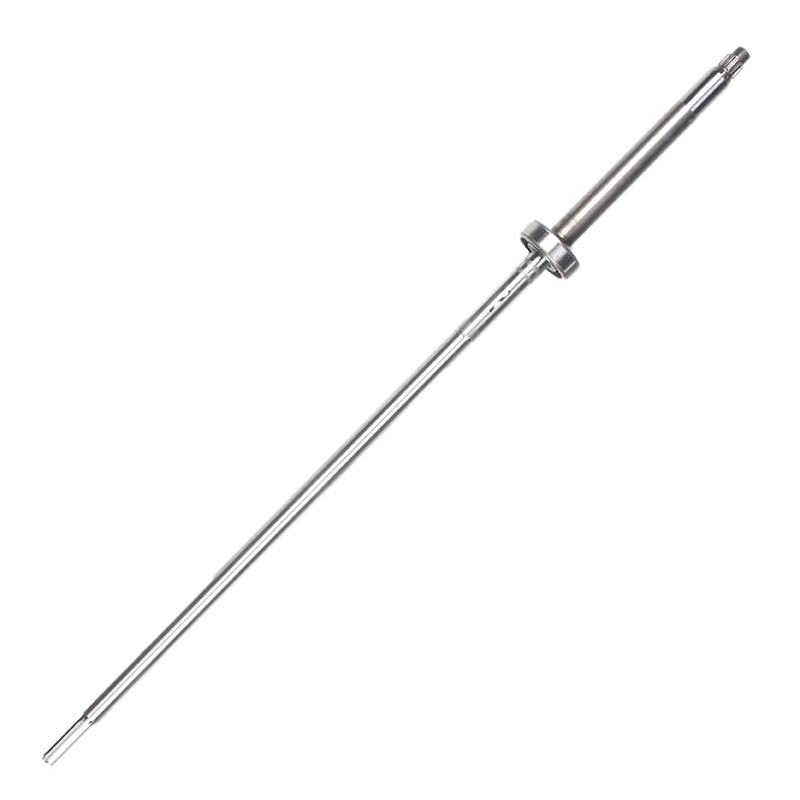
Use a purpose-made shaft or a properly machined blank for the rotating assembly. Threaded rod may fit a propeller, but its threaded surface is not a substitute for the smooth, correctly sized surfaces that run in bushings or seals.
Choose the solid shaft if your hull allows a straight motor-to-propeller line and the planned drive suits that layout. If the hull was designed for a curved cable and rear strut, use a matched flex assembly rather than redesigning the hull around a rigid shaft.
Use the clearance and measuring points specified for your cable and strut assembly. Check the gap after tightening the collet, since the cable can shift as you secure it. If no specification is available, ask the supplier before running the boat.
Yes, if the specific shaft assembly is designed to be shortened. Confirm which end can be modified and how much length you need to retain for engagement. Do not cut through a bearing surface, seal surface, or required threaded section.
Start with the propeller and its seating, then check the coupling, strut, and motor mount for movement. Smooth hand rotation rules out some forms of binding, but it does not prove the propeller or shaft will run smoothly at speed.
No. The specified grease can help limit water entry in designs that use it, but it cannot repair a loose tube joint or replace a damaged seal. Find the leak path before adding lubricant or sealant.
- [Traxxas — How to Perform Basic Marine Maintenance]. Manufacturer guidance on flex-cable removal, lubrication, strut maintenance, propeller inspection, and the Spartan/M41 service interval. [traxxas]
- [Traxxas — Spartan 5707 Owner's Manual, hosted by ManualsLib]. Model-specific reference for surface-drive layout, drive-strut adjustment, and maintenance. [manualslib]
- [Raboesch Models — Product Catalog]. Manufacturer reference for model marine hardware, including propeller shafts, couplings, and propellers. [raboeschmodels]
- [Cornwall Model Boats — Raboesch Propeller Shaft Listings]. Product examples showing how thread designation, shaft length, tube size, and support arrangements vary across assemblies. [cornwallmodelboats.co]
- [Goodies RC — How to Align an RC Boat Prop Shaft]. Secondary reference for hand-rotation checks, coupling alignment, and common causes of binding. [goodiesrc]


