


close
Choose Your Site
Global
Social Media
Views: 255 Author: Gill Transmission Parts Publish Time: 2026-10-13 Origin: Site


Content Menu
● What Are Custom Marine Parts and Standard Marine Parts?
>> Custom Marine Parts: Built Around a Defined Application
>> Standard Marine Parts: Established Specifications and Repeatable Supply
● Custom Marine Parts vs Standard Marine Parts: Comparison Table
● Fit and Performance: Why Marine Drive Shafts Need System-Level Evaluation
>> Dimensional Fit Is Only the Starting Point
>> Alignment and Dynamic Behavior Matter
● Materials and Corrosion: Customization Does Not Automatically Mean Better Durability
>> Specify the Environment Before Selecting the Alloy
>> Balance Corrosion Resistance With Mechanical Requirements
● Cost and Lead Time: Compare the Complete Procurement Outcome
>> Initial Price Is Not Total Ownership Cost
>> An Illustrative Break-Even Calculation
>> Ask About Availability, Not Just Production Time
● Three Practical Scenarios: When Each Option Makes Sense
>> Scenario 1: Routine Like-for-Like Replacement
>> Scenario 2: Engine or Gearbox Conversion
>> Scenario 3: Repeated Corrosion or Bearing Damage
● How to Specify Custom Marine Parts: A Six-Step Purchasing Checklist
>> 1. Define the Component and Its Function
>> 2. Provide Controlled Technical Information
>> 3. Describe Operating Conditions
>> 4. Agree on Inspection and Documentation
>> 5. Confirm Applicable Approval Requirements
● Expert Perspective: Customize the Constraint, Not the Entire Assembly
● Discuss Your Marine Component Requirements With Ningbo Gill
>> Are Custom Marine Parts Always Better Than Standard Marine Parts?
>> Do Custom Marine Drive Shafts Always Last Longer?
>> Can a Standard Marine Shaft Be Modified?
>> What Information Is Needed for a Custom Marine Parts Quotation?
>> How Can Buyers Reduce Repeat-Order Risk?
>> Does a Custom Part Automatically Meet Classification Requirements?
Custom marine parts vs standard marine parts is a choice between application-specific engineering and established, repeatable specifications. Neither option is automatically better. The right decision depends on compatibility, operating conditions, replacement urgency, documentation, and lifetime cost.
For marine drive shafts and related transmission components, our purchasing principle is straightforward: compatibility comes before price. A readily available shaft offers little value if its material, geometry, or operating limits do not match the propulsion system.
At Ningbo Gill Transmission Parts Co., LTD., our company background includes 29 years of experience in developing, manufacturing, and selling marine components, with a focus on drive shafts. This guide presents an engineering-led comparison to help boatbuilders, repair businesses, distributors, and vessel operators make more informed sourcing decisions.
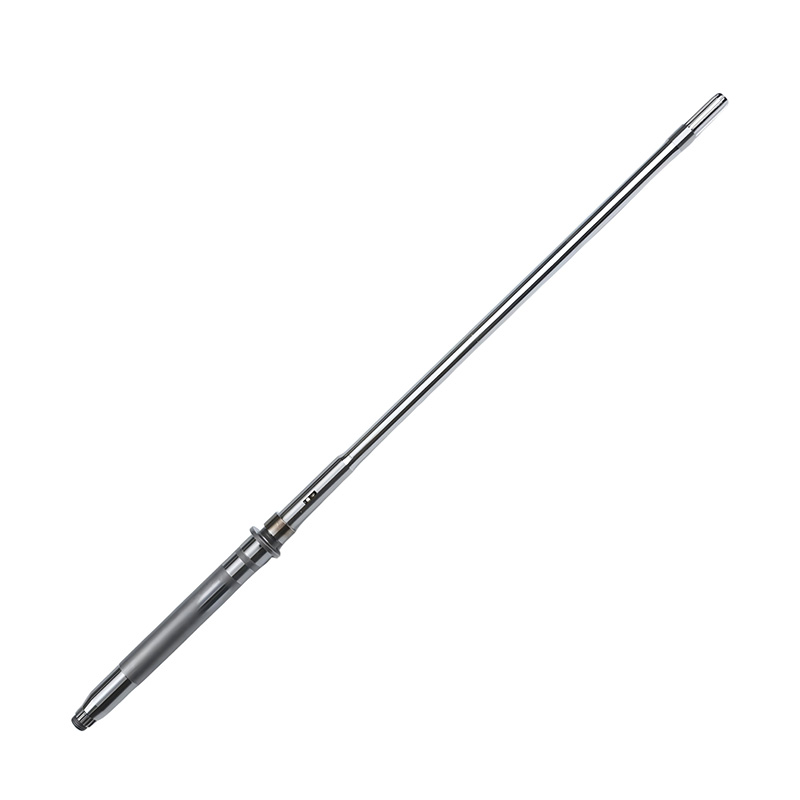
Custom marine parts are manufactured to an agreed drawing, specification, or application requirement. Customization may involve shaft length, diameter, splines, keyways, coupling interfaces, material, surface finish, or inspection requirements.
The purpose is not simply to create something different. It is to satisfy a requirement that an existing product cannot adequately meet.
Typical applications include:
- Replacing discontinued marine transmission components.
- Integrating a different engine or gearbox.
- Matching unusual mounting or coupling arrangements.
- Addressing a documented material or durability problem.
- Producing components for a new vessel design.
A custom part can still use standardized materials and interfaces. Only the features requiring adaptation need to change.
Standard marine parts follow an established manufacturer specification or catalog configuration. They are suitable when the vessel's requirements match the product's verified dimensions, materials, and operating limits.
However, "standard" does not mean universally interchangeable. Two shafts with the same nominal diameter may differ in taper, thread, keyway, material condition, or coupling fit.
Another important distinction: a shaft machined to a customer's specified length may be custom-made without involving a completely new engineering design.
The following table describes typical purchasing considerations, not guaranteed outcomes.
| Comparison factor | Custom marine parts | Standard marine parts |
|---|---|---|
| Fit | Manufactured to agreed application requirements | Suitable when catalog specifications match |
| Design flexibility | Features can be adapted within engineering constraints | Limited to available configurations |
| Initial cost | May include engineering, setup, and validation | May avoid new development costs |
| Lead time | Depends on design approval, materials, and production | Potentially shorter when the correct item is stocked |
| Documentation | Must be defined in the purchase specification | Depends on the manufacturer and product |
| Repeatability | Requires controlled drawings and revisions | Benefits from an established product specification |
| Replacement sourcing | Depends on retained technical information | Depends on continued product availability |
| Main purchasing risk | Incomplete requirements or insufficient validation | Incorrect interchangeability assumptions |
The practical question is not "Which category is superior?" It is "Which option meets the verified requirements with the lowest overall risk?"
A marine drive shaft must connect correctly with surrounding components. Depending on the assembly, critical features may include:
- Overall length and bearing journal dimensions.
- Coupling diameter, flange arrangement, or spline geometry.
- Propeller taper and thread details.
- Keyway dimensions and position.
- Straightness, runout, and surface finish.
Avoid accepting "close enough" dimensions without engineering review. An apparently minor interface difference can prevent correct assembly or require unplanned modifications.
When comparing custom marine drive shafts with standard replacements, obtain the complete specification—not just a photograph, product name, or nominal size.
A correctly machined shaft can still operate poorly in an unsuitable installation.
DNV's shaft-alignment guidance considers the interaction between the shaft line, bearings, propeller loads, and hull deflections. Its services also address shaft dynamics and alignment verification during newbuilding and conversion projects.
Similarly, ABS guidance treats propulsion shaft alignment as a calculation-and-verification process, rather than a simple visual check.
This leads to an important purchasing lesson: customization cannot compensate for unresolved alignment problems. Where necessary, investigate the installation before commissioning a replacement shaft.
Avoid applying one universal alignment tolerance to every vessel. Acceptance criteria must suit the actual arrangement and applicable requirements.
Marine material selection requires more detail than "corrosion-resistant stainless steel."
Outokumpu explains that chloride-containing environments, including seawater, can promote pitting and crevice corrosion. Tight crevices and stagnant conditions can weaken the protective passive layer.
A component exposed to seawater continuously faces different conditions from one installed in a protected machinery space.
Useful specification details include:
- Saltwater, brackish-water, or freshwater exposure.
- Continuous immersion or intermittent wetting.
- Temperature and periods of inactivity.
- Crevices, deposits, and cleaning access.
- Contact with other metals and corrosion-protection arrangements.
A custom component is valuable when its material and geometry address these conditions. Changing dimensions alone does not establish better corrosion resistance.
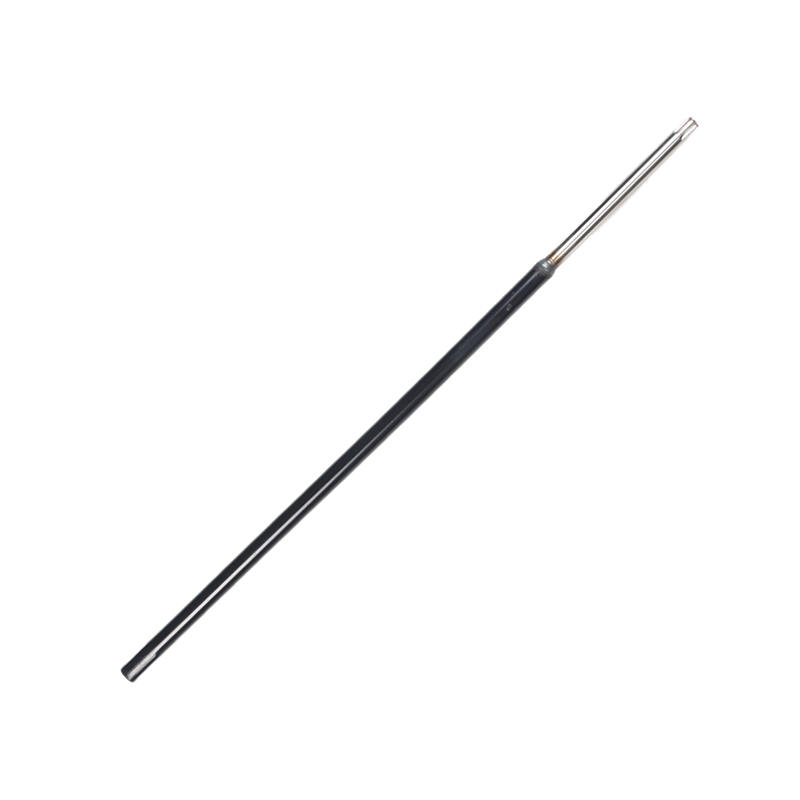
For marine shafting, corrosion resistance is only one selection criterion. Strength, fatigue performance, material condition, and the applicable engineering requirements also matter.
Western Branch Metals publishes application-specific information for its Aqualoy shafting products, including strength and corrosion characteristics. These distinctions illustrate why a generic stainless-steel label is insufficient.
They do not establish one alloy as the correct choice for every shaft.
Ask suppliers to identify the exact material designation and condition, then evaluate suitability for the intended duty. Do not substitute materials solely because their names sound similar.
A standard part may offer an attractive purchase price when it matches the application and is readily available. A custom part may add drawing preparation, manufacturing setup, or inspection costs.
However, the invoice does not capture every consequence.
A useful comparison is:
Total ownership cost = purchase cost + engineering and installation + downtime + maintenance and replacement.
This framework prevents a cheaper component from appearing economical when it introduces additional installation work or operational risk.
Consider two hypothetical quotations:
| Cost item | Standard option | Custom option |
|---|---|---|
| Part purchase | $900 | $1,500 |
| Engineering and installation | $700 | $300 |
| Planned downtime | $1,200 | $800 |
| Combined initial project cost | $2,800 | $2,600 |
These figures are illustrative, not company quotations or industry averages. They show how a higher component price can coexist with a lower project cost.
The custom option would lose that advantage if its development schedule created additional downtime. Recalculate using actual quotations, installation estimates, and vessel operating costs.
For standard marine replacement parts, confirm stock status and dispatch timing.
For custom components, separate the schedule into:
1. Requirements clarification.
2. Drawing approval.
3. Material procurement.
4. Manufacturing.
5. Inspection and dispatch.
A delivery promise is meaningful only when its starting point and dependencies are clear.
These are hypothetical decision examples, not reported customer projects.
A service workshop needs a replacement for a documented, current-production assembly. The standard component matches its interfaces, material specification, and operating requirements.
The standard option is sensible. Additional customization may offer no practical benefit.
A vessel conversion changes the transmission interface or shaft arrangement. The previous component no longer matches the approved configuration.
A custom marine shaft may be appropriate, but the revised system needs engineering review. Interface compatibility alone does not verify alignment or dynamic suitability.
A shaft repeatedly shows localized corrosion or the installation suffers bearing damage.
Do not immediately order an identical replacement—or assume customization will solve the problem. Investigate exposure conditions, material suitability, alignment, and the failure mechanism first.
The corrective action may involve a different material, revised geometry, installation changes, or maintenance improvements.
Identify whether the part is an inboard propulsion shaft, an outboard drive shaft, a coupling, or another transmission component.
Different applications require different specifications. A general request for a "marine shaft" leaves too much unresolved.
Supply a drawing with dimensions, tolerances, material, and revision identification.
When only a sample exists, distinguish between reverse-engineering the sample and verifying the original design. Wear or damage may make the sample unsuitable as the sole dimensional reference.
Include relevant power, speed, duty cycle, environment, and interface information.
For a propulsion-system change, provide enough information for the responsible engineer to assess system implications—not merely manufacture the connecting part.
Define acceptance requirements before production.
Depending on the component and project, documentation may include:
- Material certificates and traceability records.
- Dimensional inspection results.
- Agreed runout or straightness measurements.
- Surface-treatment records, where specified.
- Additional testing required by the engineering specification.
Not every component requires every test. The inspection plan should reflect its function and risk.
Ask whether vessel classification, customer specifications, or project rules require particular approvals.
A supplier's certificate does not automatically equal approval of the installed propulsion system. Confirm responsibilities with the relevant engineer, shipyard, or classification society.
Retain the approved drawing, revision history, inspection requirements, and part identification.
This turns a one-off custom component into a controlled, repeatable purchasing specification.
Our recommended approach is to identify the exact constraint before deciding how much customization is necessary.
If the problem is shaft length, preserve compatible standard interfaces where appropriate. If the problem is material suitability, reconsider the material rather than adding unnecessary geometric changes.
A hybrid approach can combine a custom feature with established components elsewhere in the assembly.
This keeps the decision focused: solve the verified problem while avoiding unnecessary design changes. Every changed feature should have a clear purpose and an agreed acceptance criterion.
Whether you need a standard replacement or a custom marine transmission component, start with the application—not the catalog label.
Send Ningbo Gill Transmission Parts Co., LTD. your drawing or sample details, vessel application, operating conditions, quantity, and required delivery date. Request a technical review and quotation identifying specifications, documentation, and delivery assumptions.
With 29 years of company experience in marine-component development, manufacturing, and sales, Ningbo Gill welcomes enquiries focused on selecting the right component for the actual requirement.
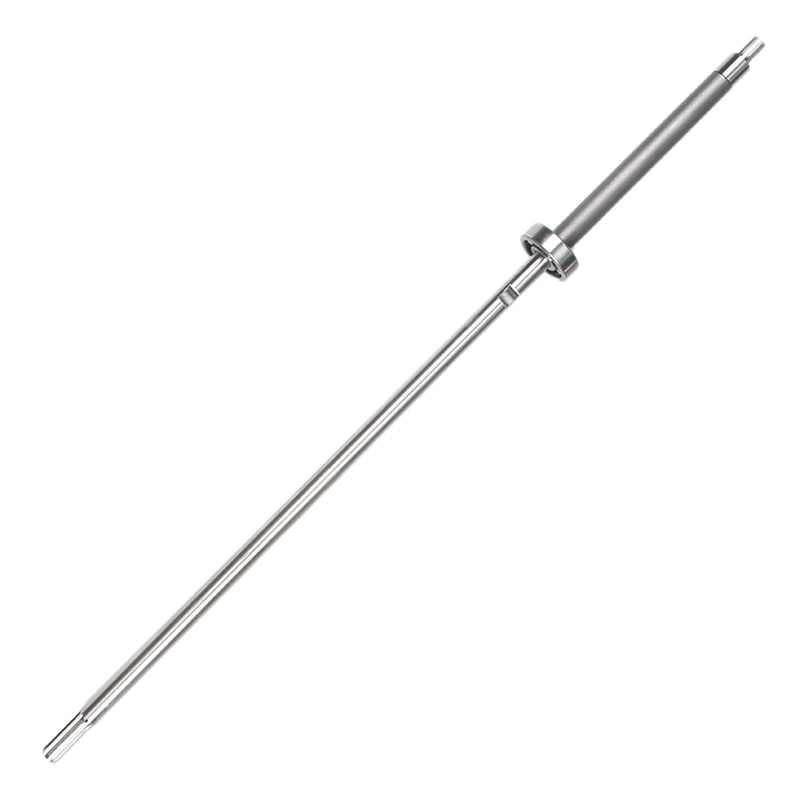
No. Custom parts are useful when standard specifications cannot meet verified requirements. A correctly specified standard component can be the simpler choice for routine replacement.
No. Service life depends on material suitability, loading, corrosion conditions, manufacturing quality, installation, and maintenance. Custom dimensions alone do not guarantee greater durability.
Possibly, but modifications require technical review. Altering a keyway, diameter, or other feature can affect fit and load-carrying capability. Confirm suitability before machining.
Provide drawings or reference information, quantity, material requirements, operating conditions, mating interfaces, inspection expectations, and delivery needs. Identify any missing information explicitly.
Use controlled drawings, clear revision numbers, agreed materials, and documented inspection requirements. Ensure future orders refer to the approved specification rather than an informal description.
No. Compliance depends on applicable rules, design review, manufacturing documentation, and any required surveys or approvals. Confirm the approval process before production.
1. American Bureau of Shipping. [Guidance Notes on Propulsion Shafting Alignment, September 2019]. Technical basis for the discussion of alignment calculations, bearing reactions, and installation verification. [ww2.eagle]
2. DNV. [Propulsion Shaft Alignment Services]. Supports the discussion of shaft-line interactions, hull deflections, propeller loads, and alignment-related operational problems. [dnv]
3. Outokumpu. [What Makes Stainless Steel Corrosion Resistant?]. Explains chloride-related pitting, crevice corrosion, alloying, and design considerations. [outokumpu]
4. Western Branch Metals. [Aqualoy 22 / Aqualoy 22HS]. Manufacturer information illustrating application-specific marine-shafting material properties; not an endorsement or universal material recommendation. [wbmetals]
5. DNV. [Shaft Torsional Vibrations Service]. Supports the distinction between dimensional compatibility and system-level dynamic assessment. [dnv]
6. Ningbo Gill Transmission Parts Co., Ltd. [Product Listing]. Public listing includes driving shafts, propeller shafts, and related transmission products. The 29-year company history and development, manufacturing, and sales background were supplied for this article rather than independently verified. [jecd.en.alibaba]


