


close
Choose Your Site
Global
Social Media
Views: 222 Author: Gill Transmission Publish Time: 2026-05-01 Origin: Site


A gear train is a set of two or more gears that mesh together to transmit power from one shaft to another while changing speed, torque, or direction of rotation. [journal.scau.edu]
In outboard motors and marine transmissions, gear trains convert high‑speed, low‑torque input from the engine into lower‑speed, high‑torque output at the propeller, and they also reverse rotation to deliver forward and reverse thrust. [thatware]
In practical terms, a well‑designed gear train allows you to:
- Start heavy loads (boats, propellers) smoothly. [journal.scau.edu]
- Maintain efficient cruising speeds at optimal engine RPM. [journal.scau.edu]
- Protect the drivetrain from shock loads and vibration. [ship-research]
This article explains how different gear trains work, how to calculate gear ratios, and how marine engineers decide which gear train is best for outboard gear sets. [thatware]
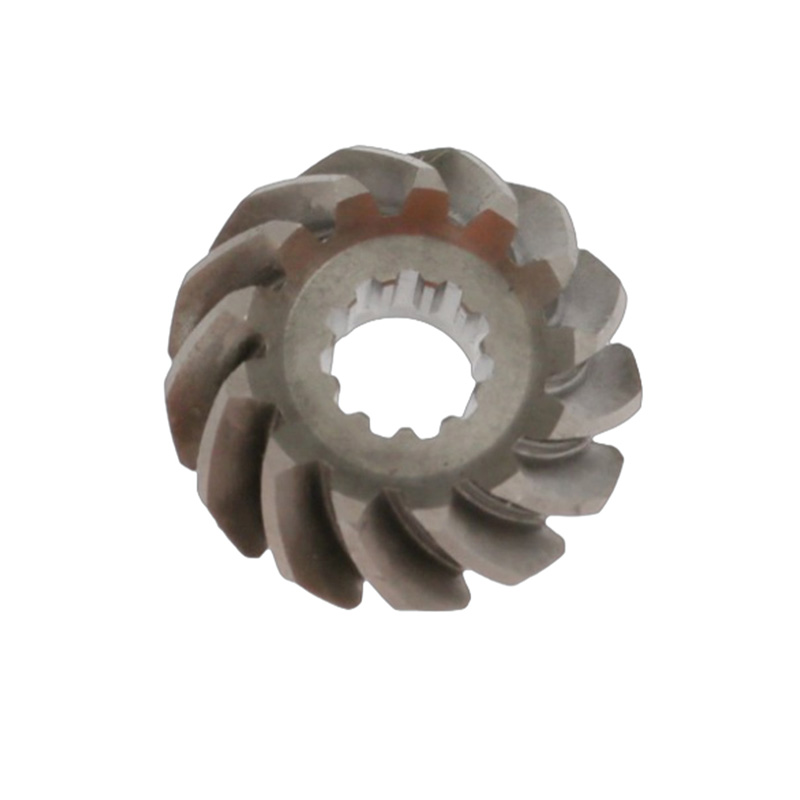
From an engineering and manufacturing perspective, almost every mechanical transmission falls into one of the following gear train categories. [journal.scau.edu]
A simple gear train is a series of gears mounted on separate shafts, where each shaft carries only one gear. [journal.scau.edu]
Characteristics:
- One gear per shaft. [journal.scau.edu]
- Easy to design and manufacture. [journal.scau.edu]
- Used where moderate speed reduction and simple layouts are enough. [journal.scau.edu]
Typical use cases in marine applications:
- Auxiliary drives (oil pumps, water pumps). [journal.scau.edu]
- Steering and trim systems. [journal.scau.edu]
From our production experience, simple gear trains are ideal when the center distance is fixed and only small speed changes are required, because they keep machining and inspection costs low. [journal.scau.edu]
A compound gear train has at least one shaft carrying two gears rigidly fixed together so they rotate at the same speed. [journal.scau.edu]
Key advantages:
- Achieve large speed reduction or increase in a compact space. [journal.scau.edu]
- Allow fine tuning of gear ratios by mixing different tooth counts. [journal.scau.edu]
- Offer good flexibility when designer must obey strict center distances. [journal.scau.edu]
Marine relevance:
- Used where gearbox size is constrained, such as inboard marine transmissions, winches, and some stern‑drive units. [ship-research]
In our own gear manufacturing for marine customers, compound gear trains are often chosen when noise and vibration limits are strict, because we can distribute the ratio over several stages and reduce load on each mesh. [ship-research]
A planetary gear train, also called an epicyclic gear train, consists of: [journal.scau.edu]
- A sun gear at the center.
- Several planet gears meshing with the sun.
- A planet carrier holding the planet gears.
- An outer ring gear with internal teeth.
Different members (sun, carrier, ring) can be the input, output, or fixed reaction element, giving many gear ratios in a compact footprint. [journal.scau.edu]
Benefits for outboard and marine drives:
- Very high power density in a small diameter—valuable where space in the gearcase is limited. [journal.scau.edu]
- Smooth load sharing across planet gears, improving durability. [ship-research]
- Easy integration of multiple ratios without large external housings. [journal.scau.edu]
Although many outboard gearcases still use bevel gear pairs rather than planetary sets, planetary gear trains are increasingly used upstream (e.g., in hybrid marine transmissions and electric outboards) because they handle high torque peaks efficiently. [thatware]
At the core of any gear train design is the gear ratio, which relates input speed and torque to output speed and torque. [journal.scau.edu]
For a simple gear pair, the speed ratio is:
- Gear ratio i=speed of driver/speed of driven = Zdriver/Zdriven, where Z is the number of teeth. [journal.scau.edu]
Example 1 – simple gear pair:
- Driver gear: 20 teeth.
- Driven gear: 40 teeth.
- Gear ratio i = 40 / 20 = 2 . [journal.scau.edu]
This means the driven gear turns at half the speed of the driver and delivers roughly twice the torque (ignoring losses). [journal.scau.edu]
For a gear train with multiple stages:
- Overall gear ratio = product of each stage's ratio. [journal.scau.edu]
Example 2 – compound gear train:
- Stage 1: 20T driving 40T → ratio 2.
- Stage 2: 15T on same shaft as 40T driving 45T → ratio 3.
- Overall ratio = 2 × 3 = 6. [journal.scau.edu]
The output runs at one‑sixth of the input speed with approximately six times the torque. [journal.scau.edu]
From a marine perspective, we use these calculations to ensure that engine peak power RPM matches the most efficient propeller RPM for a given hull and load. [thatware]
As a manufacturer of outboard gears and marine transmission parts, we see how theory translates into daily engineering decisions. [thatware]
In a typical outboard motor gearcase:
- A vertical drive shaft from the engine meshes with a forward bevel gear and a reverse bevel gear. [thatware]
- A sliding clutch dog selects forward or reverse by coupling to the corresponding gear. [thatware]
- The selected bevel gear drives the propeller shaft at a reduced speed and reversed direction. [thatware]
Even though this looks like a simple arrangement, it is effectively a compact gear train designed around tight constraints:
- Very limited housing volume. [thatware]
- Constant exposure to corrosive seawater. [thatware]
- High torsional vibration from combustion engines. [ship-research]
Our design and manufacturing teams pay particular attention to:
- Tooth profile accuracy (AGMA / ISO classes) to minimize noise and pitting. [ship-research]
- Material and heat treatment suitable for repeated shock loading. [ship-research]
- Surface treatments and sealing that enhance corrosion resistance in saltwater. [ship-research]
This real‑world experience allows us to refine gear train designs beyond textbook calculations, especially when balancing efficiency, durability, and cost for different outboard power ranges. [ship-research]
No gear train is perfectly efficient. In practice, engineers must account for power losses due to:
- Sliding friction at gear tooth contacts. [ship-research]
- Churning and splash losses in lubricating oil. [ship-research]
- Bearing and seal friction. [ship-research]
Typical meshing efficiency of well‑designed spur and helical gear trains can exceed 95%, while planetary gear trains in high‑quality transmissions also achieve similar figures. [journal.scau.edu]
For marine and outboard applications, even a small loss in efficiency translates directly into:
- Higher fuel consumption. [digitaldeckhand]
- Increased operating temperature and shorter lubricant life. [ship-research]
- Reduced available thrust at the propeller. [thatware]
From our experience, three practical design and maintenance steps significantly improve gear train efficiency:
1. Optimize gear geometry (pressure angle, helix angle, tooth modifications) for the operating load spectrum, not just nominal load. [ship-research]
2. Use marine‑grade lubricants with viscosity matched to both low‑speed maneuvering and high‑speed operation. [ship-research]
3. Maintain correct alignment and preload of bearings during assembly and service. [ship-research]
Beyond basic gear ratio, marine gear trains must satisfy additional constraints that are less critical in general industrial machinery. [thatware]
1. Load spectrum and shock events
Outboard and inboard marine drives experience:
- Frequent gear engagement under load (forward‑neutral‑reverse). [ship-research]
- Sudden propeller impacts with debris or shallow ground. [ship-research]
- Highly variable thrust due to waves and cavitation. [thatware]
We incorporate safety factors and tooth modifications based on test data, not just catalog rating formulas. [ship-research]
2. Noise and vibration (NVH)
Boat owners are increasingly sensitive to gear whine and vibrations at cruising speed. [thatware]
To reduce NVH we:
- Use higher‑precision gear grades than minimum standards where needed. [ship-research]
- Apply micro‑geometry corrections such as lead crowning and profile relief. [ship-research]
- Validate designs with dynamic testing on marine gearboxes to capture real loading modes. [ship-research]
3. Corrosion and sealing
Seawater and brackish water environments require:
- Alloy steels with proper case hardening and post‑treatment. [ship-research]
- Protective coatings on non‑working surfaces. [ship-research]
- Gear case and shaft seals designed to keep water out while minimizing drag. [ship-research]
4. Maintainability
From a user's point of view, the best gear train is the one that is easy to maintain and forgiving of minor misuse. [varn.co]
We reflect this in:
- Clear inspection tolerances for backlash and contact pattern. [journal.scau.edu]
- Gear geometries that tolerate some misalignment without catastrophic failure. [ship-research]
- Availability of drop‑in replacement gear sets for popular outboard models. [thatware]
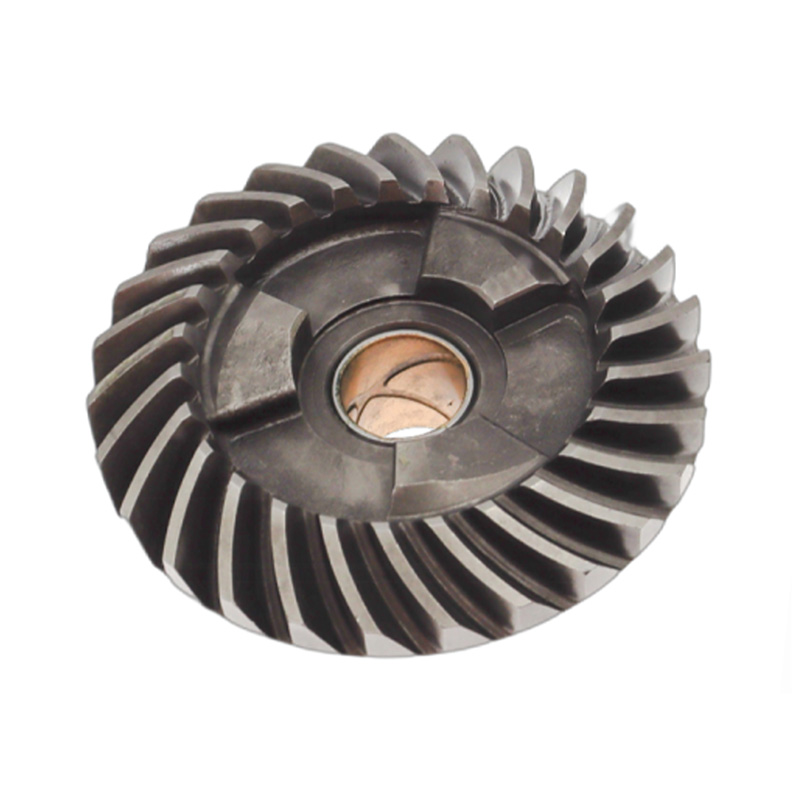
When marine OEMs or serious refit yards come to us to discuss a new outboard or auxiliary drive, we typically walk through this step‑by‑step selection process. [varn.co]
1. Define operating conditions
- Maximum and continuous engine power and RPM.
- Target boat speed and propeller characteristics.
- Duty cycle (recreational, commercial, patrol, etc.). [thatware]
2. Determine required overall gear ratio
- Match engine power band to propeller load curve using empirical data or simulation. [thatware]
- Decide whether a single fixed ratio or multiple ratios (inboard transmission) are needed. [journal.scau.edu]
3. Choose the gear train type
- Simple or bevel gear pairs for compact outboard gearcases. [thatware]
- Compound gear trains where large ratio changes are required over short distances. [journal.scau.edu]
- Planetary trains where multi‑speed or hybrid drive configurations are considered. [thatware]
4. Select materials and heat treatment
- Choose alloys and processes suitable for marine loads and corrosion resistance. [ship-research]
5. Validate by analysis and testing
- Finite element analysis and tooth contact analysis for stress and contact patterns. [ship-research]
- Bench testing on gearboxes under representative torque and speed profiles. [ship-research]
Feedback from boat owners, service technicians, and OEM partners highlights recurring problems that are directly tied to gear train design and quality. [varn.co]
Typical symptoms reported by users:
- Whining noise on acceleration or at specific RPM ranges. [ship-research]
- Difficulty engaging gears, often accompanied by "clunk" or grinding. [ship-research]
- Loss of thrust or intermittent slipping under heavy load. [ship-research]
- Premature oil contamination (metallic particles) after short operating hours. [ship-research]
These issues often trace back to one or more root causes:
- Incorrect backlash or contact pattern after repair. [journal.scau.edu]
- Wear or deformation of tooth flanks due to overload. [ship-research]
- Misalignment in the gearcase or shaft support bearings. [ship-research]
- Use of low‑grade aftermarket gear sets not designed for the original duty cycle. [varn.co]
By contrast, high‑precision outboard gears with proper design margins show:
- Stable noise levels over thousands of hours. [ship-research]
- Clean oil samples with minimal metallic debris. [ship-research]
- Consistent shift quality even after repeated shock loads. [ship-research]
We continuously integrate this field feedback into our gear geometry and heat treatment process windows, which is a key part of our experience‑based engineering approach. [digicobweb]
Recent research in gear train dynamics, especially for propulsion systems, focuses on vibration, noise, and transient response under realistic marine loading. [journal.scau.edu]
Some notable trends include:
- Dynamic response testing of gear‑propulsion systems under gear mesh excitation to map resonance and vibration modes more accurately. [ship-research]
- Combining knowledge‑based virtual design with experimental validation to speed up gearbox development and improve reliability predictions. [journal.scau.edu]
- Increasing use of digital twins that connect on‑board sensor data with design models to predict remaining useful life of gear trains. [journal.scau.edu]
For marine OEMs and serious operators, the implication is clear: gear train design is shifting from static safety factors to data‑driven, lifecycle‑oriented engineering. [journal.scau.edu]
As a supplier, we align with these trends by:
- Using simulation‑driven design loops early in the gear definition stage. [journal.scau.edu]
- Incorporating test data from marine duty cycles into our design standards. [ship-research]
- Offering design‑for‑diagnostics options, such as gear tooth forms optimized for vibration analysis. [journal.scau.edu]
To turn technical knowledge into practical value for boat owners and maintenance crews, we recommend a simple maintenance checklist for gear trains in outboard gearcases and marine gearboxes. [digitaldeckhand]
Routine inspection (every 50–100 hours or per OEM spec):
- Check gear oil level and color through inspection plug or sight glass. [digitaldeckhand]
- Inspect for water intrusion (milky oil). [digitaldeckhand]
- Listen for new or changing noise patterns under load. [digitaldeckhand]
Seasonal or annual service:
- Drain and replace gear oil with marine‑approved lubricant. [digitaldeckhand]
- Remove and inspect the magnetic drain plug for metal particles. [digitaldeckhand]
- Check propeller shaft play and seals for leaks. [digitaldeckhand]
When abnormal conditions are detected:
- Avoid continuing operation at high load. [digitaldeckhand]
- Document symptoms (RPM, speed, noise) and share with your gear supplier or service center. [varn.co]
- Consider sending oil samples for analysis to detect early gear train damage. [digitaldeckhand]
By following such a checklist, users can extend the life of their marine gear trains and catch problems while they are still inexpensive to correct. [digitaldeckhand]
| Gear train type | Main features (journal.scau.edu) | Typical marine use (ship-research) | Key advantages (journal.scau.edu) |
|---|---|---|---|
| Simple gear train | One gear per shaft; straightforward layout | Pumps, steering, auxiliary drives | Easy to design and service; low cost |
| Compound gear train | Multiple gears on some shafts; multi‑stage ratios | Compact marine gearboxes and winches | Large ratio change in small space; flexible layouts |
| Planetary gear train | Sun, planets, carrier, ring gear | Hybrid drives, electric outboards, advanced transmissions | High power density; multiple ratios; smooth load sharing |
| Bevel gear pair (train) | Conical gears changing direction of rotation | Standard outboard motor gearcases | Compact 90‑degree power transfer; proven in marine field |
If you are:
- An outboard motor OEM or designer looking to refine gear train design for new models, or
- A distributor or service partner seeking high‑precision replacement outboard gears,
we invite you to contact Ningbo Gill Transmission Parts Co., LTD.
Our engineering team can support you from concept selection and gear train calculation through to prototype manufacturing and series production, ensuring that your marine gear trains deliver quiet, efficient, and durable performance on the water. [varn.co]
1. What is the main purpose of a gear train in an outboard motor?
A gear train converts high‑speed engine rotation into lower‑speed, higher‑torque rotation at the propeller, and reverses direction to provide forward and reverse thrust. [thatware]
2. Why do some marine gearboxes use planetary gear trains?
Planetary gear trains provide high power density, multiple ratios, and smooth torque transfer in a compact package, which is valuable in hybrid or multi‑speed marine transmissions. [thatware]
3. How often should outboard gear trains be serviced?
Most manufacturers recommend at least annual gear oil changes and inspections, with more frequent checks for heavily used commercial boats or harsh environments. [digitaldeckhand]
4. What are common signs of gear train problems in outboards?
Unusual whining or grinding noises, difficult shifting, metal particles in gear oil, and loss of thrust under load are all warning signs that should be investigated promptly. [digitaldeckhand]
5. Can aftermarket gears affect gear train reliability?
Yes. Gears that do not match original design quality, tooth geometry, or material specifications can increase noise, reduce efficiency, and shorten service life in marine applications. [varn.co]
1. Digicobweb – "E‑E‑A‑T Best Practices That Drive Trusted Visibility."
https://digicobweb.com/guide-to-e-e-a-t-best-practices/ [digicobweb]
2. Varn – "How to write and review E‑E‑A‑T SEO content."
https://varn.co.uk/insights/how-to-write-eeat-content/ [varn.co]
3. LowFruits – "How to Write SEO‑Optimized Content That Ranks."
https://lowfruits.io/blog/seo-optimized-content/ [lowfruits]
4. Ship Research – "Dynamic response characteristics of gear transmission–propulsion systems under gear excitation" (Chinese ship research article).
https://www.ship-research.com [ship-research]
5. Journal of South China Agricultural University – "Research on virtual design of gearbox gear based on knowledge."
https://journal.scau.edu.cn/cn/article/pdf/preview/10.7671/j.issn.1001-411X.201912024.pdf [journal.scau.edu]
6. Digital Deckhand – "Technical SEO for Marine Websites to Ensure Search Visibility."
https://digitaldeckhand.com/technical-seo-for-marine-websites/ [digitaldeckhand]
7. ThatWare – "SEO For Ship Building Services | Marine – Maritime Companies SEO."
https://thatware.co/seo-for-ship-building-services/ [thatware]
8. Kalicube – "60 Simple Tips to Improve E.E.A.T for SEO."
https://kalicube.com/learning-spaces/faq-list/seo-glossary/60-ways-to-optimize-for-googles-e-e-a-t/ [kalicube]


