


close
Choose Your Site
Global
Social Media
Views: 222 Author: Gill Transmission Publish Time: 2026-05-06 Origin: Site


An involute gear profile is the global standard for power transmission because it delivers smooth torque transfer, easy manufacturability, and robust performance even under misalignment—exactly what marine and outboard gear systems demand. In this enhanced guide, I will explain involute gears from an engineer's perspective and connect the theory directly to outboard gears and marine propulsion applications. [tec-science]
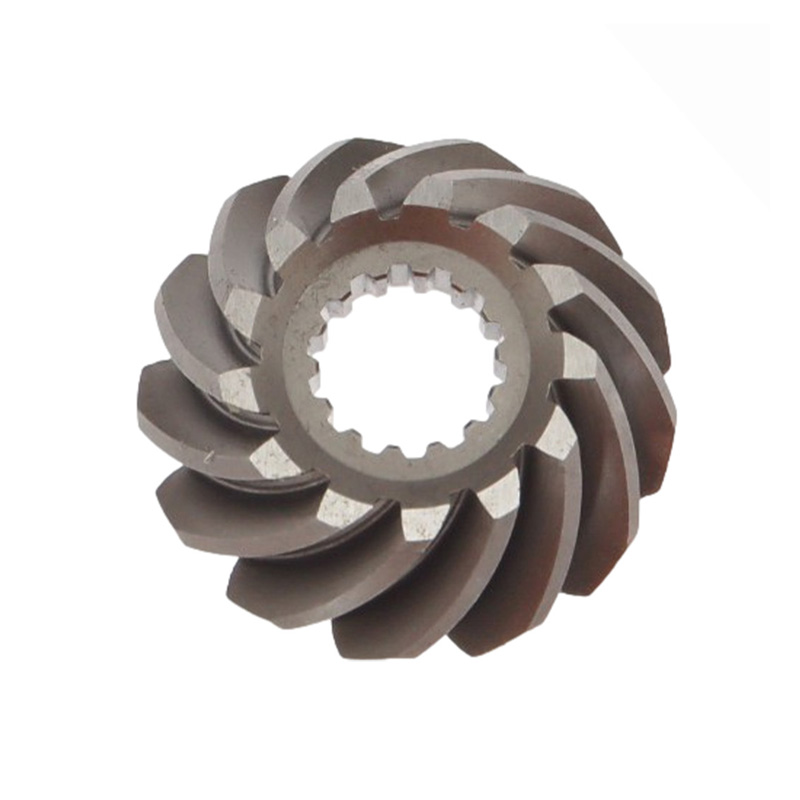
An involute gear is a gear whose tooth flanks are shaped by the involute of a circle, a curve generated by "unwinding" a taut line from a base circle. Two mirror‑inverted involutes form the left and right sides of each tooth, giving a consistent flank geometry that guarantees smooth meshing. In modern mechanical engineering, this tooth form is used almost exclusively in power transmission gearboxes, from automotive transmissions to marine reduction gears. [gearmeenyon]
The involute curve can be imagined in two equivalent ways. [tec-science]
- A straight "rolling line" is rolled around a base circle without slipping; the trajectory of a point on that line is the involute.
- A string is wrapped around a base circle and unwound while kept taut; the end of the string traces the same involute. [tec-science]
As the involute extends farther from the base circle, its radius of curvature increases, so the curve becomes "flatter" away from the base. For gear teeth, two such curves—mirrored about the tooth centerline—define the active profile that engages with the mating gear. [tec-science]
To design or evaluate an involute gear, engineers use a consistent set of geometric parameters. [tec-science]
The module m is the fundamental size parameter of a gear in metric systems; it is the pitch diameter divided by the number of teeth. It directly defines tooth height: [tec-science]
Addendum ha=m
Dedendum hd=m+c
Clearance c≈0.167⋅m
Whole depth h=2m+c[tec-science]
A larger module means larger, stronger teeth, but also fewer teeth for the same diameter. [tec-science]
In inch‑based systems, tooth size is often expressed as diametral pitch DP which is the inverse of module: DP = 1/m. This describes how many teeth fit per unit of pitch diameter. [tec-science]
The standard reference pitch diameter d0 is given by d0 = m⋅z, where z is the number of teeth. It serves as the reference circle for calculating the circular pitch p0, the arc distance between identical tooth flanks on that circle: [tec-science]
- p0 =m⋅π [tec-science]
Only gears with the same module (and therefore identical circular pitch) can mesh correctly without interference. [tec-science]
To avoid root–tip collision between two meshing gears, the region at the tooth root is rounded with a fillet and set to a root diameter (dedendum circle), while the tooth tips define the tip diameter (addendum circle). For standard gears: [tec-science]
- Tip (addendum) diameter: da = m⋅(z+2)
- Root (dedendum) diameter: dd = m⋅(z−2)−2c [tec-science]
Proper root fillet design is critical for fatigue strength, especially in marine gears that see repeated shock loads from wave impact and rapid throttle changes. [gearmeenyon]
Tooth shape is governed not only by module but also by the pressure angle, the angle between the line of action (tangent to the base circles) and the line connecting the gear centers. [tec-science]
- The base circle diameter is related to the pitch diameter by
cos(α0)= db/d0. [tec-science]
- A larger pressure angle increases the "squareness" of the tooth, raising load capacity but also radial forces.
- Typical standard pressure angles are 20° (most common), with 14.5° and 25° also used for specific applications. [tec-science]
For marine and outboard gears, 20° pressure angle is widely adopted because it balances load capacity, manufacturability, and noise. [gearmeenyon]
In involute gears, the tooth flanks are spaced at a constant base pitch pb along the base circle. This base pitch is related to the circular pitch by the same pressure‑angle factor: [tec-science]
- cos(α0)= pb/p0[tec-science]
Because involute gears maintain a constant base pitch, the contact point between two meshing teeth moves in a straight line—called the line of action—ensuring constant velocity ratio and smooth torque transfer. This is a central reason they dominate propulsion gear design. [tec-science]
Marine engines, including outboard motors, operate in a demanding environment: variable loads, vibration, misalignment, and harsh corrosion conditions. Involute gears offer several advantages that make them ideal for these systems: [gearmeenyon]
- Robust to center‑distance variation: Small manufacturing and assembly deviations still preserve smooth meshing because the involute geometry maintains conjugate action over a range of center distances. [tec-science]
- Smooth torque transmission: The contact ratio can be designed to keep multiple tooth pairs in contact, reducing vibration and noise in gearboxes and outboard lower units. [gearmeenyon]
- Efficient power transfer: Properly designed involute gears minimize sliding losses along the line of action, improving overall drivetrain efficiency.
- Ease of manufacture: Standard hobbing tools for 20° involute profiles reduce tooling cost and ensure consistent quality in mass‑produced marine gear sets. [tec-science]
For outboard gears, these benefits translate into quieter operation, better throttle response, and improved durability of forward, reverse, and pinion gears in the lower unit. [gearmeenyon]
A powerful technique in advanced gear design is profile shift, where the gear tooth profile is cut using a portion of the involute farther from the base circle, without changing the base circle itself. [tec-science]
- Positive profile shift makes the tooth flanks flatter, enlarges the tooth root, and increases bending strength. [tec-science]
- It can help avoid undercut in gears with a low tooth count, a common issue in compact marine reduction gearboxes.
- Properly balanced profile shifts between pinion and gear can improve load sharing, contact ratio, and noise behavior.
In marine reduction and reversing gears, profile‑shifted involute gears are often used to carry high torque from compact engines while maintaining acceptable noise and vibration levels. [blog.ansi]
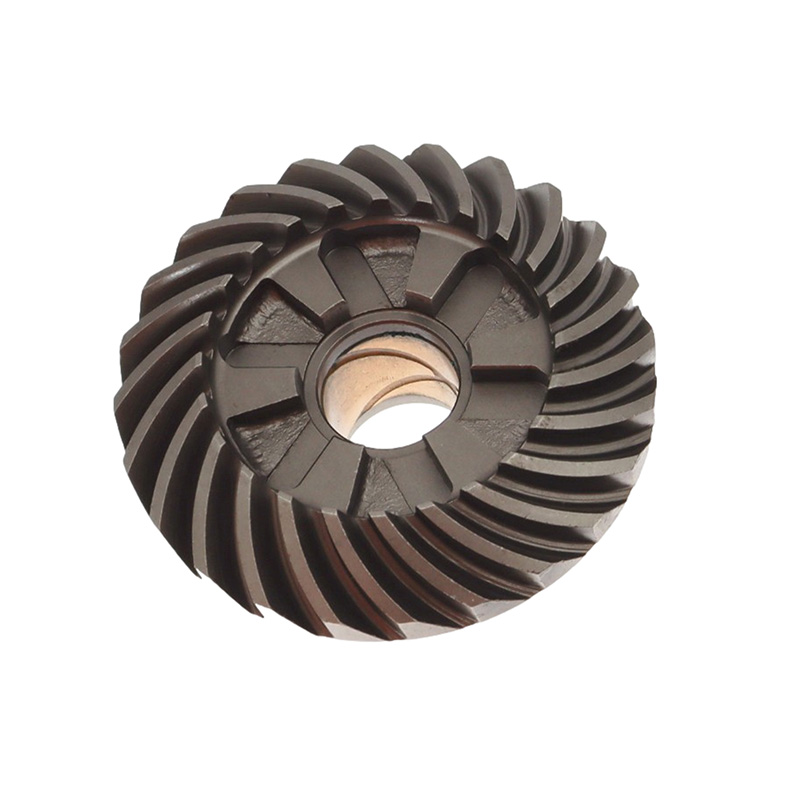
For non–profile‑shifted gears, the standard center distance a0for backlash‑free meshing is:
- a0 = m/2* (z1 + z2) [tec-science]
The circular tooth thickness and space width at the reference pitch circle are equal, each being half the circular pitch:
- s0 = e0 = p0/2 = m/2 *π [tec-science]
In practical marine gearbox design, a controlled amount of backlash is deliberately introduced to:
- Compensate for thermal expansion and manufacturing tolerances.
- Avoid jamming under load and accommodate lubrication films.
- Reduce risk of scuffing and micropitting in heavily loaded tooth contacts. [gearmeenyon]
For high‑speed outboard gears, precise backlash control is a key lever for balancing smooth shift feel, durability, and noise.
From an industry practitioner's view, the gear tooth profile is only one part of reliable marine gear design. The following aspects are equally critical:
- Material selection: High‑strength alloy steels with good hardenability are standard for marine propulsion gears to withstand cyclic bending and pitting loads. [gearmeenyon]
- Heat treatment: Carburizing and quenching create a hard, wear‑resistant surface with a tough core, ideal for repeated shock loads from propeller impacts or cavitation events. [gearmeenyon]
- Surface finishing: Grinding and honing of the involute profile improve contact pattern control, reduce noise, and increase fatigue life.
- Lubrication strategy: Marine gearboxes rely on high‑performance gear oils, often with extreme‑pressure additives, combined with well‑designed oil circulation and cooling paths to maintain film thickness under heavy loads. [gearmeenyon]
These disciplines must be integrated with accurate involute geometry for the gear set to perform reliably in real‑world marine conditions.
Engineers typically follow a structured workflow when developing involute outboard gears. A simplified version looks like this: [fictiv]
1. Define requirements
- Engine power and speed range, target propeller speed, reduction ratio.
- Noise and vibration targets, packaging constraints in the lower unit.
2. Select base geometry
- Choose module m, pressure angle (usually 20°), tooth counts, and center distance.
- Calculate pitch, addendum, dedendum, and root diameters.
3. Model in CAD
- Use parametric equations or CAD tools to generate the involute tooth profile, ensuring correct base pitch and pressure angle. [fictiv]
- Create 3D models of pinion, forward gear, and reverse gear, including root fillets and crowning if required.
4. Strength and contact analysis
- Check bending and contact stresses against marine gear standards such as ANSI/AGMA 6032 for marine gear units. [blog.ansi]
- Adjust module, face width, or profile shift to meet safety factors.
5. Prototype and test
- Manufacture prototype gears using hobbing, heat treatment, and grinding. [gearmeenyon]
- Run bench tests for load capacity, temperature, noise, and tooth contact patterns under representative duty cycles.
6. Iterate for production
- Refine tolerances, backlash, and surface finish for mass production.
- Implement robust quality control for tooth profile and lead measurements.
From an application‑engineering standpoint, several design and manufacturing practices repeatedly prove their value in outboard gears: [blog.ansi]
- Target a healthy contact ratio: Aim for more than one pair of teeth in contact at all times to reduce noise and shock loads.
- Fine‑tune profile modifications: Use tip relief and lead crowning to accommodate shaft deflections, housing deformation, and manufacturing errors, which are common in lightweight outboard housings.
- Focus on alignment: Small misalignments cause edge loading and early pitting; precise machining of bearing bores and careful assembly are critical.
- Monitor lubrication quality: Oil contamination or water ingress from failed seals rapidly accelerates gear wear; marine gear oils and robust seals are non‑negotiable.
- Validate under real duty cycles: Test under varying loads, rapid shifts, and high‑speed operation to capture worst‑case scenarios that may not appear in static calculations.
These practices, combined with high‑fidelity involute geometry, directly improve durability, noise performance, and user satisfaction in marine propulsion systems. [blog.ansi]
If you are developing or upgrading outboard gears or other marine propulsion gearboxes and need reliable, high‑performance involute gears, our engineering team at Ningbo Gill Transmission Parts Co., LTD. can help you select or custom‑design the optimal gear geometry, materials, and surface treatments for your application. Contact us to discuss your torque, speed, and packaging requirements and to explore tailored solutions for your next marine drivetrain project. [gearmeenyon]
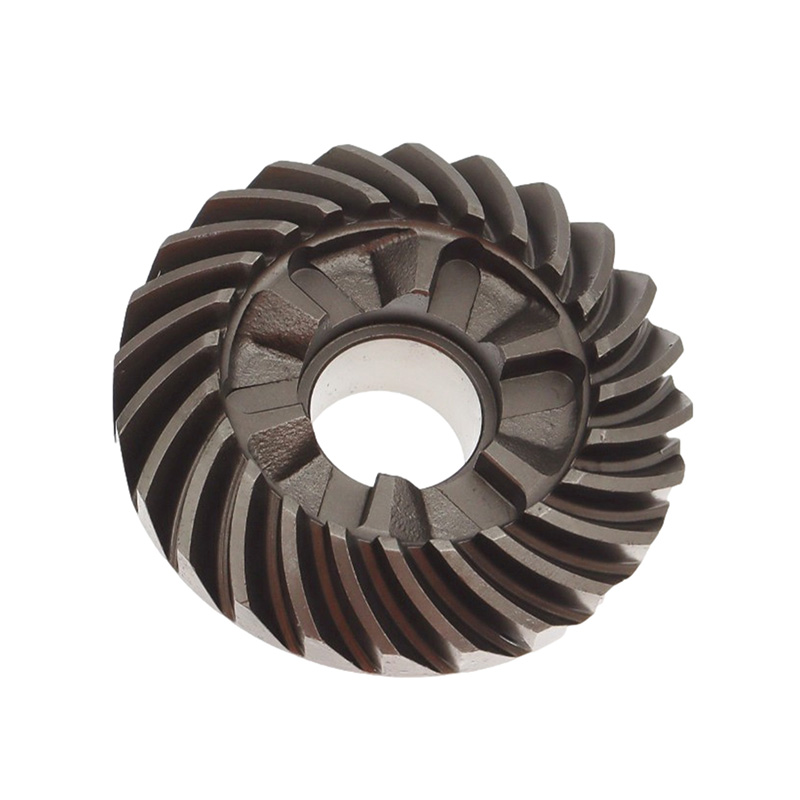
Q1: Why are involute gears preferred over other tooth profiles in marine gearboxes?
Involute gears maintain constant velocity ratio, tolerate minor center‑distance errors, and are easy to manufacture with standard hobbing tools, making them highly reliable for marine gearboxes. [gearmeenyon]
Q2: Does pressure angle affect noise in outboard gears?
Yes. Higher pressure angles increase load capacity but also radial forces, which can raise noise if not balanced with bearing and housing design; 20° is a widely accepted compromise in marine applications. [gearmeenyon]
Q3: What is the role of profile shift in small outboard gearsets?
Profile shift helps avoid undercut in low‑tooth‑count pinions, improves tooth root strength, and can refine contact patterns for lower noise and higher load capacity in compact gearboxes. [gearmeenyon]
Q4: How important is gear material compared to tooth geometry?
Both are critical. Inaccurate geometry causes immediate meshing problems, while inadequate materials or heat treatment lead to premature fatigue and pitting under marine loading conditions. [gearmeenyon]
Q5: What standards apply to marine gear design?
Designers often refer to standards such as ANSI/AGMA 6032 for rating and applying spur and helical marine gear teeth, combined with company‑specific test specifications for real‑world duty cycles. [blog.ansi]
1. Tec‑Science – "Construction and Design of Involute Gears" – Detailed explanation of involute geometry, module, pressure angle, and base pitch. [https://www.tec-science.com/mechanical-power-transmission/involute-gear/geometry-of-involute-gears/] [tec-science]
2. KHK Gear Technical References – "Involute Gear Profile" – Original reference article on gear tooth profile fundamentals. [https://khkgears.net/new/gear_knowledge/gear_technical_reference/involute_gear_profile.html]
3. Fictiv – "Creating Involute Gears in CAD" – Practical workflow for modeling involute gears in parametric CAD. [https://www.fictiv.com/articles/creating-involute-gears-in-cad] [fictiv]
4. ANSI/AGMA – "ANSI/AGMA 6032 Standard for Marine Gear Units: Rating and Application for Spur and Helical Gear Teeth" – Guidance for design and rating of marine propulsion reduction gears. [https://blog.ansi.org/ansi/ansi-agma-6032-standard-for-marine-gear/] [blog.ansi]
5. Meenyon – "Key Design Features of Marine Reduction Gear Systems" – Overview of marine gearbox design focus areas, including geometry, materials, lubrication, and monitoring. [https://www.gearmeenyon.com/a-key-design-features-of-marine-reduction-gear-systems.html] [gearmeenyon]


