


close
Choose Your Site
Global
Social Media
Views: 222 Author: Gill Transmission Publish Time: 2026-04-25 Origin: Site


In real marine powertrains, gear backlash is the difference between a gearbox that feels smooth and precise and one that rattles, wears fast, or fails at the worst possible moment offshore. As a manufacturer specializing in outboard gears and marine driveline components, we deal with backlash not as an abstract formula but as a daily engineering and quality‑control challenge. [geartechnology]
In this guide, I'll walk through what gear backlash really is, how it is defined and calculated, why it matters so much in outboard motors and marine gearboxes, and how professional manufacturers design, measure, and optimize it for reliability and performance. [windmillstrategy]

Gear backlash is the small clearance or "play" between the teeth of two meshing gears when you reverse the direction of rotation. If you gently turn the output gear back and forth while holding the input gear, the angular motion you feel before the teeth fully engage is backlash. [gearsolutions]
From an engineering point of view, backlash is:
- A deliberate design allowance to prevent tooth interference and binding. [geartechnology]
- A way to absorb manufacturing tolerances, thermal expansion, and shaft deflection. [motioncontroltips]
- A factor that directly affects noise, precision, and wear in marine applications. [gearsolutions]
Backlash is not a defect in itself; it becomes a problem only when it is too large, too small, or inconsistent across the gear mesh. [geartechnology]
In the marine environment, backlash is exposed by harsh conditions that most industrial gear trains never see. [investor.wedbush]
Key reasons backlash is critical in outboard gears and marine transmissions:
- Frequent load reversals
Shifting from forward to neutral to reverse, docking maneuvers, sudden throttle changes, and wave impacts repeatedly reverse torque direction, making backlash clearly felt as clunking or delay. [gearsolutions]
- High shock loads
Propeller strike, cavitation, or sudden deceleration load the gearbox with sharp torque spikes, amplifying any excess backlash into impact loads between teeth. [motioncontroltips]
- Corrosion and lubrication challenges
Saltwater, humidity, and contaminated lubricants accelerate wear, increasing backlash over time if gear materials and surface treatments are not carefully chosen. [geartechnology]
- User perception of quality
Boat owners notice gear "play" as shift shock, mechanical noise, or vibration, and they often associate this directly with product quality and brand reputation. [windmillstrategy]
This is why companies that specialize in marine gears invest heavily in backlash design windows, inspection procedures, and long‑term durability testing rather than just meeting generic gear standards. [hashmeta]
Backlash can be expressed in two main ways: [gearsolutions]
- Linear backlash (circumferential) – the distance between mating tooth flanks along the pitch circle.
- Angular backlash – the angle through which one gear can rotate while the mating gear is fixed before tooth flanks fully engage.
In practice, marine gearbox designers work with the backlash tolerance specified at the pitch circle for each gear pair, then convert to angular backlash at the shaft if necessary. [geartechnology]
In manufacturing, backlash is typically checked by: [motioncontroltips]
- Mounting gears at the specified center distance.
- Locking one gear and applying a light torque to the other in one direction to contact one flank.
- Reversing torque to contact the opposite flank and measuring either:
- The angular rotation using a dial indicator on the shaft, or
- The circumferential displacement at the pitch circle.
Quality‑oriented manufacturers define backlash windows (minimum, nominal, maximum) for each gear model and verify every batch using calibrated gauges and statistical process control. [hashmeta]
Even in a perfect CAD model, backlash must be intentionally included; in real production it is influenced by many factors. [gearsolutions]
Main contributors to gear backlash:
- Tooth thickness variation due to cutting, grinding, or heat‑treatment distortion. [geartechnology]
- Pitch and runout errors, which shift teeth away from their ideal positions. [geartechnology]
- Center distance variation from housing machining tolerances or thermal expansion. [geartechnology]
- Bearing clearances and shaft deflection, especially under marine shock loads. [motioncontroltips]
- Wear and pitting over time, particularly in poorly lubricated or contaminated marine gearboxes. [gearsolutions]
Marine‑grade gear design must assume that all these variables stack up in real use, not just in the lab, which is why serious manufacturers combine design simulation with on‑water durability testing. [hashmeta]
There is no universal "perfect" backlash value; acceptable backlash depends on: [gearsolutions]
- Gear type (spur, helical, bevel, hypoid).
- Module or DP and gear size.
- Operating speed and load.
- Precision requirements (e.g., positioning vs. power transmission).
- Environment (temperature, lubrication, contamination).
For marine outboard gears, designers typically target a moderate backlash window that: [motioncontroltips]
- Prevents tooth binding with thermal expansion and casing deformation.
- Limits impact loads and gear rattle at idle and low speed.
- Provides stable performance over the entire service life, not just when new.
From a user's perspective, the gear should feel crisp when shifting but not slam or rattle; from a manufacturer's perspective, the backlash distribution across production must stay well inside a carefully defined tolerance band. [windmillstrategy]
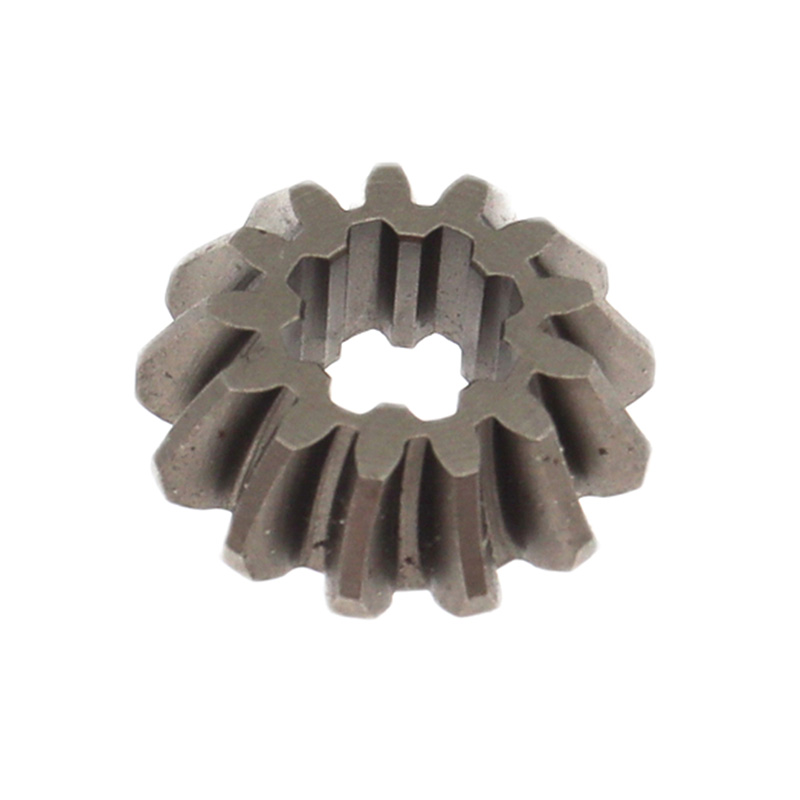
When backlash exceeds the design window, you may see: [gearsolutions]
- Noticeable clunking or knocking when shifting or reversing direction.
- Increased impact loads on tooth flanks, accelerating wear and pitting.
- Poor positional accuracy in steering or trim mechanisms.
- More noise and vibration, especially at idle and low load.
In marine drives, excessive backlash often appears after long service in harsh conditions, poor lubrication, or misalignment due to housing deformation. [motioncontroltips]
Insufficient backlash creates different risks: [motioncontroltips]
- Teeth may bind or jam when components expand with temperature.
- Lubricant film can be squeezed out, leading to scuffing or seizure.
- The gearbox can overheat and lose efficiency.
- Bearing loads increase due to constant gear flank interference.
In outboard motors, too little backlash may not be obvious at the dock, but it can cause rapid damage under sustained high‑load cruising. [motioncontroltips]
From a manufacturer's standpoint, achieving stable backlash is a combination of design, process control, and testing. [windmillstrategy]
Typical professional approach:
1. Design with realistic tolerances
- Run tolerance stack‑ups to understand the combined effect of gear tooth, housing, bearing, and shaft variation. [geartechnology]
- Choose a backlash window that balances marine durability with smooth shifting. [gearsolutions]
2. Use appropriate gear cutting and finishing
- Apply precision hobbing, shaping, or grinding depending on the load class and required quietness. [motioncontroltips]
- Control heat‑treatment distortion to keep tooth thickness and profile within tight limits. [geartechnology]
3. Implement systematic inspection
- Measure tooth thickness, runout, pitch error, and single‑flank or double‑flank composite errors. [geartechnology]
- Spot‑check backlash on assembled gearsets and maintain SPC records for continuous improvement. [hashmeta]
4. Marine‑specific durability testing
- Test gearboxes under salt‑spray, thermal cycling, and shock‑load conditions that simulate real boating usage. [hashmeta]
- Monitor backlash growth over load cycles to validate long‑term reliability.
This is the level of engineering rigor marine OEMs expect from specialized suppliers of outboard gears and transmission parts. [windmillstrategy]
To optimize backlash at the design stage: [motioncontroltips]
- Specify higher precision gear grades where necessary.
- Use helical or ground gears for critical, low‑noise stages.
- Optimize tooth profile modifications (crowning, tip relief) to handle alignment and load distribution.
- Design housings and shafts to minimize deflection under marine loads.
During production and assembly, backlash can be fine‑tuned by: [gearsolutions]
- Adjusting center distance using shims or spacers.
- Selecting matched gear pairs from measured batches to stay within a tighter window.
- Using preloaded bearings where appropriate to limit shaft play. [motioncontroltips]
- Re‑shimming and re‑setting gearsets after initial run‑in in high‑end systems. [gearsolutions]
In some gear trains, anti‑backlash gears or compensation methods are used: [motioncontroltips]
- Split gears with spring loading to keep teeth engaged on both flanks.
- Adjustable anti‑backlash designs for lighter load, high‑precision stages. [gearsolutions]
- Software compensation in CNC or servo‑based systems to correct residual backlash. [gearsolutions]
Though these are more common in industrial automation, the same design principles can inform high‑precision marine steering, trim, or control gear trains. [motioncontroltips]
From a practical, on‑the‑water perspective, technicians and experienced boaters can use the following quick diagnostic checklist when they suspect backlash problems:
1. Listen during shifting
- Loud metallic clunks when engaging gear may indicate excessive backlash or worn components. [geartechnology]
2. Check shift feel
- A "mushy" or delayed engagement can suggest too much play; harsh, difficult shifts may indicate too little clearance. [geartechnology]
3. Inspect lubricant
- Metal particles or abnormal discoloration can indicate accelerated wear from impact loading. [geartechnology]
4. Check propeller shaft play
- Excessive radial or axial movement can amplify backlash and accelerate gear wear. [motioncontroltips]
5. Monitor noise at idle and cruise
- Rattling or whining under specific loads often correlates with backlash, alignment, or bearing issues. [gearsolutions]
If these symptoms appear, professional inspection and measurement of backlash and bearing clearances are strongly recommended. [geartechnology]
If you design or maintain outboard motors, stern drives, or marine transmissions, controlling backlash is not optional—it is a core reliability and customer‑experience issue. [gearsolutions]
As a specialist in outboard gears and marine driveline components, our engineering team can:
- Help you define realistic backlash windows for your specific marine duty cycle.
- Co‑develop custom gearsets optimized for your outboard platforms.
- Support you with material selection, heat treatment, and quality inspection plans tailored to saltwater environments. [windmillstrategy]
Get in touch with our engineering team today to discuss your current gear challenges or upcoming powertrain projects, and explore how optimized backlash design can improve both durability and on‑water user experience.
No. A small, controlled amount of backlash is necessary to avoid tooth binding, allow for thermal expansion, and maintain a lubricating film between tooth flanks. Zero backlash is only appropriate in very specific precision mechanisms and usually not in high‑load marine power transmission. [motioncontroltips]
For commercial or heavily used vessels, a professional inspection that includes backlash checks is advisable during major services or any time abnormal noise, shifting behavior, or metallic debris in the oil is detected. Recreational boats should follow manufacturer maintenance schedules but remain attentive to symptoms. [geartechnology]
In electronically controlled steering, trim, or hybrid systems, control software can partially compensate for measured backlash, improving positioning accuracy. However, in primary power transmission (engine to propeller), mechanical backlash still must be properly designed and controlled; software cannot fix worn or misaligned gears. [gearsolutions]
The fundamental concept is the same, but marine gears face more frequent load reversals, higher shock loads, and harsher environmental conditions (saltwater, humidity, variable lubrication), which demand more conservative design margins and durability testing. [motioncontroltips]
Common signs include louder‑than‑normal clunks when shifting, unusual rattling at idle, vibration under steady load, and metallic debris in the gear oil. Only a trained technician with proper measuring equipment can confirm backlash values and identify the root cause. [geartechnology]
1. "What causes backlash and how can it be optimized?" – Gear Solutions. [gearsolutions]
https://gearsolutions.com/features/what-causes-backlash-and-how-can-it-be-optimized/
2. "Backlash – Gear Technology Magazine." [geartechnology]
https://www.geartechnology.com/topics/backlash
3. "How to get zero backlash out of gearing?" – Motion Control Tips. [motioncontroltips]
https://www.motioncontroltips.com/get-zero-backlash-gearing/
4. "SEO for Industrial Companies: An SEO/Content Creation Guide" – Windmill Strategy. [windmillstrategy]
https://www.windmillstrategy.com/seo-for-industrial-companies-comprehensive-guide/
5. "SEO for Manufacturing Companies: Complete Industrial Marketing Guide" – Hashmeta. [hashmeta]
https://hashmeta.com/blog/seo-for-manufacturing-companies-complete-industrial-marketing-guide/
6. "Boating Industry SEO: The Ultimate Guide to Growing Your Marine …" – BusinessNewswire / Wedbush (marine SEO best practices). [investor.wedbush]
https://investor.wedbush.com/wedbush/article/businesnewswire-2026-2-19-boating-industry-seo-the-ultimate-guide-to-growing-your-m
7. "5 Essential SEO Tips to Help Boost Your Marine E‑commerce" – Digital Deckhand. [digitaldeckhand]
https://digitaldeckhand.com/selling-your-boating-products-online-5-essential-seo-tips/


