


close
Choose Your Site
Global
Social Media
Views: 222 Author: Gill Transmission Publish Time: 2026-04-21 Origin: Site


Designing reliable outboard gears and other marine gear components starts with one thing: precise gear dimension calculation. In real projects—whether you are troubleshooting a noisy outboard lower unit or optimizing a compact marine gearbox—small mistakes in gear dimensions quickly turn into vibration, premature wear, or catastrophic failure on the water. [khkchilun]
As a manufacturer focused on outboard gears, marine transmission parts, and precision gear components, Ningbo Gill Transmission Parts Co., LTD. has seen both well‑designed and poorly‑designed gears in real marine applications. This guide combines classic gear dimension formulas (as in KHK's technical references) with hands‑on experience from marine and outboard gear projects to give you a practical, engineer‑friendly roadmap for calculating gear dimensions that actually work in harsh marine environments. [blog.genalpha]
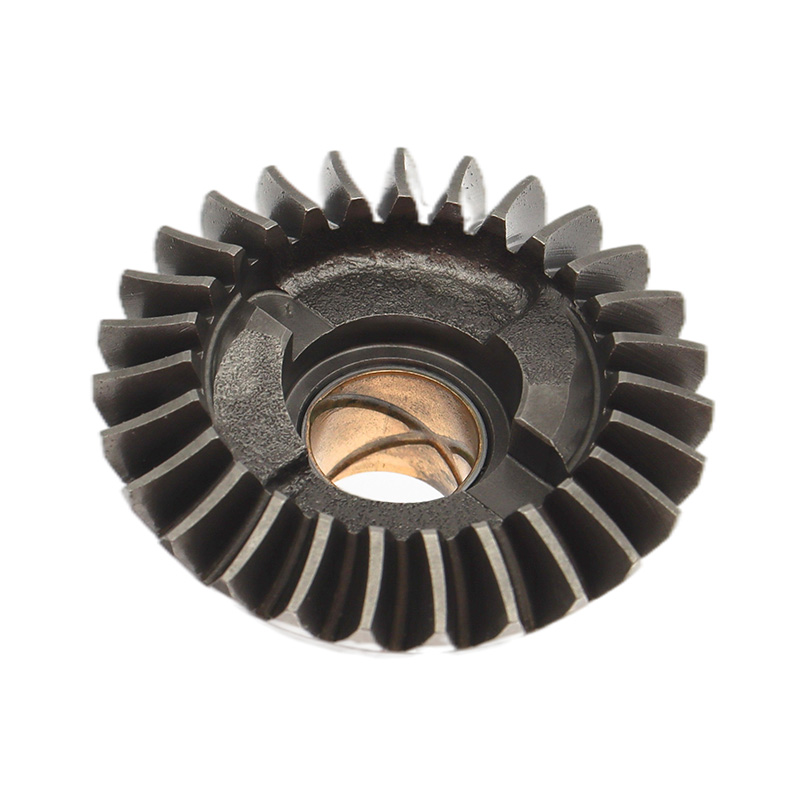
Before getting into details, engineers should understand the core parameters that drive every subsequent dimension. [khkchilun]
- Module (m) – Metric size parameter that defines tooth size; used widely in industrial and marine gear design. [khkchilun]
- Number of teeth (z) – Primary variable that controls gear ratio, pitch diameter, and tooth strength. [khkchilun]
- Pressure angle (α) – Affects tooth shape, load distribution, and noise; common values are 20° and 25° for involute gears. [khkchilun]
- Pitch circle diameter (d) – The basic "working" diameter where tooth forces are considered to act. [khkchilun]
- Addendum and dedendum – Determine tooth height and engagement depth, impacting strength and risk of interference. [khkchilun]
In outboard and other marine gearboxes, these parameters must be coordinated with shaft center distance, housing constraints, corrosion allowance, and lubrication conditions, not just theoretical formulas. [html.rhhz]
Below is a simplified summary of the most commonly used gear dimension relationships, conceptually aligned with standard gear references such as KHK's "Calculation of Gear Dimensions." [khkchilun]
For a spur gear (metric, standard full‑depth involute):
- Pitch circle diameter:
d=m×z
- Addendum (standard):
ha≈m
- Dedendum (standard):
hf≈1.25m
- Whole depth:
h=ha+hf
- Outside (tip) diameter:
da=d+2ha
- Root diameter:
df=d−2hf
These relationships are conceptually consistent with traditional gear handbooks and KHK technical data, which list dimension tables and formula derivations for different gear types. [khkchilun]
For marine applications, you often adjust dedendum, backlash, and tip relief to account for misalignment, thermal expansion, and shaft deflection under load, instead of blindly using textbook values. [html.rhhz]
Before any formula, clarify:
- Required gear ratio (for example, propeller speed vs. engine RPM)
- Available center distance and gearbox envelope inside the lower unit
- Maximum torque and expected shock loads from wave impact or sudden throttle changes
- Preferred material and heat treatment (e.g., carburized alloy steel for marine gears)
These constraints will drive your choice of module, tooth count, and face width. [blog.genalpha]
1. Select an initial module (m) based on torque and space.
2. Choose preliminary tooth numbers z1 and z2 that satisfy the required ratio i=z2/z1
3. Check that tooth numbers avoid undercutting and resonance issues, especially for small pinions (common in outboard gears).
This stage reflects the general guidance provided in gear technical references, but in practice you must iterate with your marine gearbox layout. [khkchilun]
For each gear:
- d1=m×z1(pinion pitch diameter)
- d2=m×z2(gear pitch diameter)
- da1=d1+2m and da2=d2+2m(outside diameters, assuming standard addendum)
In outboard gearcases, the outside diameter must clear the housing and adjacent components while leaving enough room for lubrication channels and seals.
For a spur gear pair:
- Nominal center distance:
a=(d1+d2)/2
In reality, engineers often apply center distance modification to manage backlash, tooth contact, and noise, especially where housing machining tolerances are tight. [khkchilun]
Using standard relationships:
a≈m, hf≈1.25
df=d−2hf
However, for marine gears:
- You may increase root fillet radius and slightly adjust dedendum to improve fatigue resistance under cyclic torque.
- Additional root clearance may be introduced to tolerate shaft deflection and mounting errors without edge contact.
This balance between textbook geometry and field‑proven modifications is a key difference between a generic gear and a marine‑grade outboard gear.
Most generic technical references assume clean, predictable industrial environments. Marine and outboard applications add specific challenges: [khkchilun]
- Corrosive environment – Saltwater, condensation, and galvanic corrosion demand robust material and coating choices.
- Shock loads – Propeller strikes and wave slamming induce high peak torques.
- Misalignment – Long, slender shafts and flexible housings lead to dynamic misalignment and load concentration.
- Temperature swings – Cold start, hot oil, and external water‑cooling can induce thermal gradients.
To reflect real‑world experience:
- Gear dimension calculations should always be coupled with strength checks, contact stress analysis, and safety factors tailored to marine loads. [html.rhhz]
- Additional backlash and crowning are commonly used to prevent scuffing and edge loading in misaligned conditions.
Drawing on practical marine gear design work similar to that carried out at Ningbo Gill Transmission Parts Co., LTD., the following guidelines help refine theoretical dimensions:
- Start from the pinion: In outboard drives, the pinion often has very few teeth and sees the highest torque per tooth. Prioritize its root strength and avoid undercut.
- Use conservative contact ratios: Aim for a contact ratio that balances noise control with manufacturability. Too low increases noise; too high may complicate tooling.
- Design for manufacturability: Ensure that outside diameter, root fillet, and face width are compatible with your grinding, hobbing, and heat treatment capabilities.
- Factor in heat treatment distortion: Adjust root and outside diameters to accommodate expected deformation after carburizing or quenching.
These adjustments are seldom captured fully in generic textbook tables, but they strongly influence field reliability.
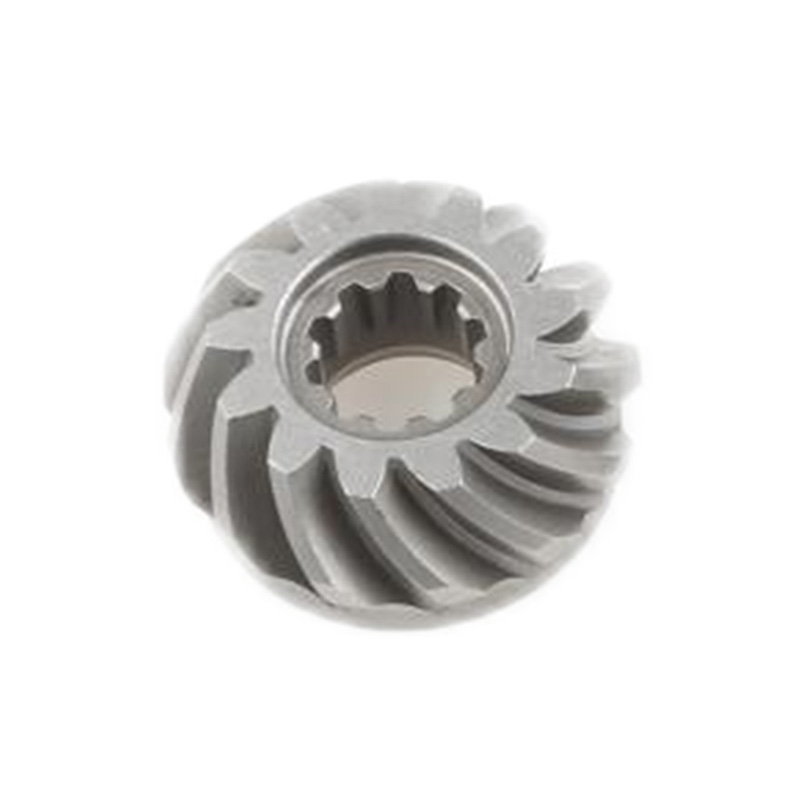
To help engineers and buyers quickly validate a design, use the following practical checklist:
1. Define performance
- Gear ratio, torque, speed, and duty cycle specified.
2. Select basic geometry
- Module, pressure angle, and helix angle (if helical) chosen for marine torque and noise requirements.
3. Choose tooth numbers
- Ratio met, undercut avoided, and hunting tooth combinations considered.
4. Calculate key diameters
- Pitch, outside, and root diameters calculated and compatible with housing.
5. Set center distance and backlash
- Nominal and adjusted center distances defined, backlash established for thermal and misalignment effects.
6. Check strength and safety factors
- Bending and contact stresses verified for worst‑case marine loads.
7. Design for lubrication and sealing
- Adequate space for oil flow, seal lips, and inspection/maintenance.
If a design fails at any step above, revise the gear dimensions before committing to tooling.
Consider a typical case from the outboard gear industry:
- A small outboard engine exhibits whine at mid‑range RPM.
- Initial investigation finds marginal contact ratio and minimal backlash.
- The original design followed standard formulas but did not account for casing deformation under load.
By recalculating gear dimensions—slightly modifying center distance, increasing backlash, and adjusting tooth tip relief—the engineering team was able to:
- Reduce transmitted gear whine.
- Improve load distribution across tooth flanks.
- Extend bearing and gear life in endurance tests.
While every project is unique, this scenario shows why gear dimension calculation is not just an academic exercise; it directly affects customer perception, warranty rates, and brand reputation in the marine market.
Gear dimensions are not only an engineering issue—they drive production cost and after‑sales reliability.
- Larger modules require heavier, more expensive raw stock and more powerful machine tools.
- Very small modules increase machining time and inspection complexity.
- Tight tolerances on center distance and runout demand higher‑precision machining and QC, increasing unit cost.
- Proper root and tip clearance make gears more tolerant of slight misassembly or wear, which is common in field servicing of outboard drives.
- Standardized modules and pitch diameters simplify spare part management for distributors and repair shops.
A well‑balanced gear dimension design can thus reduce total lifecycle cost, not just initial manufacturing cost.
For better communication and UX, technical buyers and design engineers appreciate clear tables summarizing critical gear dimensions. Inspired by the structure of traditional gear technical references, a sample table layout is shown below. [khkchilun]
| Parameter | Symbol | Typical relation / note |
|---|---|---|
| Module | m | Defined by load and space |
| Number of teeth | z | Chosen to meet ratio and avoid undercut |
| Pitch circle diameter | d | d=m×zd=m×z (spur, metric) |
| Addendum | h_a | ≈ m (standard full‑depth) |
| Dedendum | h_f | ≈ 1.25 m (standard) |
| Outside diameter | d_a | d+2ha |
| Root diameter | d_f | d−2hf |
| Center distance (pair) | a | (d1+d2)/2 |
| Backlash | – | Set based on tolerance, temperature, misalignment |
Such tables not only help with design but also facilitate comparison between suppliers.
From an E‑E‑A‑T perspective, Google and real users both want to know who is giving the advice and why they should be trusted. For marine gear design, that means choosing partners with proven experience in outboard gears and marine transmission parts. [roirevolution]
As a company dedicated to R&D, production, and sales of outboard gears and related marine components, Ningbo Gill Transmission Parts Co., LTD. offers:
- Application‑driven gear dimension design optimized for marine environments.
- Close collaboration with OEM engineering teams from concept to validation.
- Process control from raw material selection to heat treatment and final inspection.
By combining standard gear calculation methods with field‑tested marine expertise, we help our customers reduce development risk and bring reliable marine drive systems to market faster. [industrialstrengthmarketing]
If you are:
- Designing a new outboard propulsion system
- Re‑engineering an existing marine gearbox for higher torque
- Experiencing noise, vibration, or premature tooth failure in current designs
…our engineering team can support you from gear dimension calculation and simulation through prototype manufacturing and testing.
Contact Ningbo Gill Transmission Parts Co., LTD. to discuss your application data (power, speed, ratio, space constraints) and receive a tailored gear dimension proposal for your marine or outboard project.
1. What is the most important starting parameter when calculating gear dimensions for marine applications?
For most marine and outboard projects, the starting point is the required gear ratio and torque, since these define the minimum module, tooth count, and pitch diameter needed to safely transmit power. [html.rhhz]
2. Can I directly use textbook gear dimension tables for an outboard gearbox?
Textbook or catalog tables are a good baseline, but they usually assume clean industrial environments and do not account for marine factors such as shock loads, corrosion, and casing deformation. Always adapt them to your specific outboard conditions. [html.rhhz]
3. How does center distance affect outboard gear performance?
Center distance determines how deeply teeth mesh; a small shift can significantly change backlash, noise, and load distribution. In compact marine housings, designers sometimes use intentional center distance modifications plus careful finishing to optimize performance. [khkchilun]
4. Why is backlash important in marine gear dimension design?
Backlash provides room for lubrication, thermal expansion, and manufacturing tolerances. In marine systems, slightly increased backlash can help prevent scuffing under misalignment, but too much leads to rattle and impact loads, especially at low speed. [khkchilun]
5. When should I involve a specialized marine gear manufacturer in the design process?
Ideally, involve your gear supplier at the concept and dimension calculation stage, before finalizing housing and shaft layouts. This allows optimization of module, tooth count, and diameters for both performance and manufacturability, avoiding costly re‑design after testing.
1. KHK Gears – Gear Technical Reference: *齿轮的种类及术语 / Calculation of Gear Dimensions* (accessed for structure and formula concepts)
https://khkgears.net/new/gear_knowledge/gear_technical_reference/calculation_gear_dimensions.html [khkchilun]
2. Varn – *How to write and review E‑E‑A‑T SEO content* (used for E‑E‑A‑T and UX best‑practice guidance)
https://varn.co.uk/insights/how-to-write-eeat-content/ [varn.co]
3. Boostability – *Google E‑E‑A‑T (2024 Ultimate Guide)* (used for practical E‑E‑A‑T implementation ideas)
https://www.boostability.com/resources/google-e-e-a-t-guide/ [boostability]
4. ROI Revolution – *Optimizing Your Site for Google E‑E‑A‑T* (used for citation and trust‑signal recommendations)
https://roirevolution.com/blog/google-e-e-a-t-how-to-optimize-your-site-to-align-with-the-search-quality-rater-guidelines/ [roirevolution]
5. GenAlpha / Industrial SEO resources – *SEO strategies for equipment manufacturers* (used for manufacturing‑sector SEO context)
https://blog.genalpha.com/5-ecommerce-website-seo-strategies-for-equipment-manufacturers/ [blog.genalpha]
6. Digital Deckhand – *Technical SEO for Marine Websites* (used for marine‑specific SEO and UX considerations)
https://digitaldeckhand.com/technical-seo-for-marine-websites/ [digitaldeckhand]
7. Industrial Strength Marketing – *Effective SEO for Manufacturers* (used for content depth and B2B manufacturing SEO insights)
https://industrialstrengthmarketing.com/insights/articles/7-ways-to-support-effective-seo-for-manufacturers/ [industrialstrengthmarketing]
8. Representative marine gear design literature (deep‑sea electro‑cylinder gear transmission design and simulation, consulted for loading characteristics)
https://html.rhhz.net/jckxjsgw/html/75518.htm [html.rhhz]


