


close
Choose Your Site
Global
Social Media
Views: 222 Author: Gill Transmission Publish Time: 2026-04-23 Origin: Site


Metal gear rules do not directly transfer to plastics. Plastic gears: [files.engineering]
- Are lighter and quieter than metal gears. [intechpower]
- Offer inherent lubricity, especially when self-lubricating grades or PTFE-filled resins are used. [files.engineering]
- Are corrosion-resistant, a major advantage for marine equipment exposed to seawater and humidity. [manufacturer.hzpt]
- Are more sensitive to temperature, moisture uptake, and creep over time. [winzelergear]
Because of this, you must design plastic gears with a systems mindset: material, geometry, processing, environment, and load profile are tightly coupled. [chamfr]
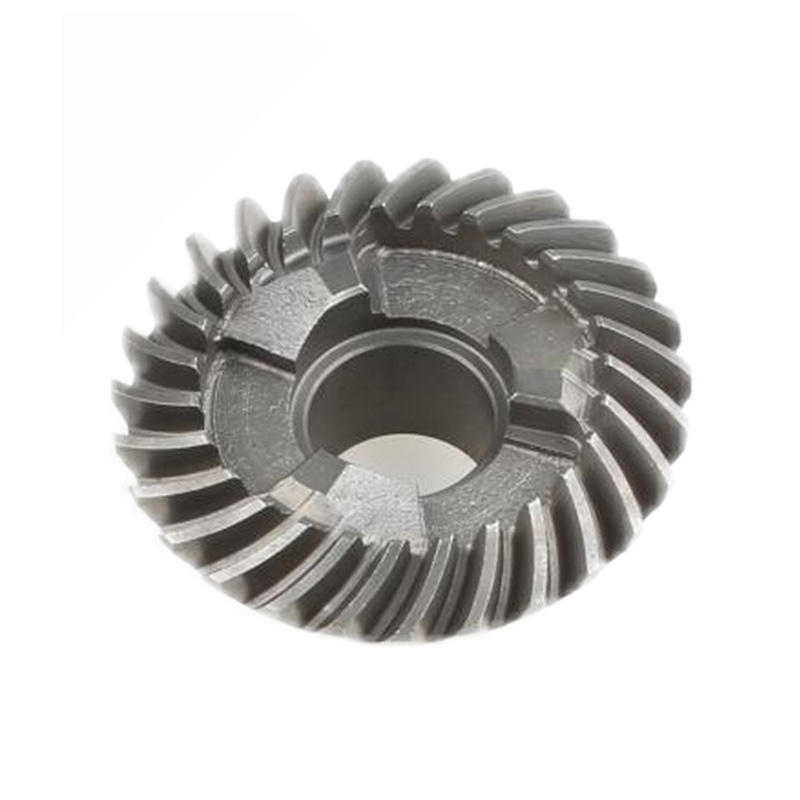
In many industrial and marine applications, two families dominate plastic gear design: MC nylon and acetal (POM), often referred to by trade names such as DURACON. [khkchilun]
MC nylon (mono-cast nylon 6) is a cast polyamide resin widely used for gears subjected to higher loads. [khkchilun]
Key characteristics: [millerplastics]
- High mechanical strength and good fatigue resistance
- Good wear resistance under well-aligned conditions
- Moderate self-lubricating behavior, especially with oil-filled or MoS₂-filled grades
- High moisture absorption, which can cause dimensional change and reduce modulus
- Better suited to lower to medium speeds where intermittent lubrication is possible
For outboard gears, MC nylon may be considered in auxiliary drives, steering actuators, and non-primary power paths where loads are substantial but still compatible with nylon creep limits. [intechpower]
Acetal (POM) is a crystalline engineering thermoplastic favored for precision plastic gears, and DURACON is a well-known registered trade name for acetal resins. [winzelergear]
Key characteristics: [chamfr]
- Low moisture absorption, providing excellent dimensional stability
- Good chemical resistance, important in oily or mildly corrosive environments
- Low friction and good wear resistance, especially with internal lubricants
- Excellent for fine-toothed, high-precision gears and compact housings
In marine outboard applications, acetal is often a strong candidate for gears in trim systems, throttle bodies, pumps, and auxiliary transmission elements where quietness and stable backlash are critical. [manufacturer.hzpt]
To create a robust plastic gear, you must work backward from real operating conditions. The following properties determine whether a material can survive your application: [millerplastics]
- Allowable bending stress
- Allowable contact (Hertzian) stress
- Elastic modulus (short-term and long-term)
- Heat deflection temperature and continuous use temperature
- Creep behavior at operating stress and temperature
- Moisture absorption and swelling
As a rule of thumb, you should treat catalog mechanical data as screening values, then adjust with sufficient safety factors and validate through practical load tests under representative temperature, humidity, and lubrication conditions. [files.engineering]
The load-carrying capability of a plastic gear is usually limited by tooth bending fatigue or surface pitting. Traditional metal gear formulas (for example, bending stress at the tooth root) can be used as a starting point, but several plastic-specific corrections are essential: [ik.imagekit]
- Reduce allowable stress to reflect long-term creep and elevated temperatures.
- Introduce service factors for humidity, intermittent shock loads, and start–stop cycles.
- Consider time-dependent deformation: plastic gears operating under steady torque for long durations must be checked against creep, not just short-term strength. [ik.imagekit]
In practice, many successful projects use a multi-step design loop: [khkchilun]
1. Preliminary design using conservative bending and contact stress limits.
2. Prototype testing at 1.2–1.5× nominal torque and temperature.
3. Redesign with adjusted tooth thickness, profile modification, or material changes.
Surface fatigue and wear are highly sensitive to counterpart material and surface finish. [gearsolutions]
- When combining steel and plastic, the plastic gear face should be slightly narrower than the steel gear face, to ensure favorable load distribution and reduce edge contact. [gearsolutions]
- Recommended steel tooth surface roughness is often in the range of Rᵗ ≈ 8–10 µm for both dry and lubricated applications. [gearsolutions]
- When using plastic–plastic pairs, at least one gear should incorporate PTFE or a solid lubricant to reduce friction and wear. [intechpower]
In outboard systems, these considerations are critical because noise, vibration, and corrosion all interact with surface condition and lubrication quality. [manufacturer.hzpt]
Plastic gear design must treat the operating environment as a first-class input. [chamfr]
Temperature
- Elevated temperature reduces modulus and strength and accelerates creep. [winzelergear]
- Continuous use temperature should be compared against the maximum bulk temperature expected in the gearbox, not just ambient. [files.engineering]
Moisture and humidity
- Nylon materials absorb moisture, leading to swelling and strength changes. [millerplastics]
- Acetal shows much lower water uptake, making it more dimensionally stable in humid or marine environments. [khkchilun]
Chemicals and lubricants
- Check compatibility with gear oils, marine greases, fuel vapors, and cleaning agents. [chamfr]
- Avoid lubricants that attack the polymer backbone or extract plasticizers. [winzelergear]
For outboard engine gears, the environment combines saltwater, high humidity, vibration, and thermal cycling, so environmental testing is indispensable. [intechpower]
Even when the material is properly chosen, geometry will determine whether the gear survives real-world use. Below are practical rules used in industry and validated in plastic gear references. [millerplastics]
- Avoid extremely small modules with sharp root fillets in high-load applications; this increases root stress. [files.engineering]
- Use generous fillet radii at the tooth root to reduce stress concentrations. [ik.imagekit]
- Consider profile modification (tip relief, lead crowning) to minimize edge loading and misalignment sensitivity. [ik.imagekit]
- Increase face width moderately to lower contact stress, but avoid excessive width which amplifies misalignment issues. [millerplastics]
- Ensure stiff mounting and housing design; plastic gears are more forgiving than metals in noise but more sensitive to shaft deflection and housing creep. [chamfr]
- Provide larger backlash than in equivalent metal gear pairs to accommodate thermal expansion and moisture swelling. [khkchilun]
- Tolerances should be matched to the actual manufacturing process (injection molding vs machining) and expected shrinkage. [winzelergear]
From a user's perspective, one of the biggest value drivers is your ability to hold precision at scale. Different manufacturing routes impose different constraints: [chamfr]
- Injection molding enables complex shapes, internal features, and high-volume production with good repeatability, but requires careful tool design and gating to control warpage and shrinkage. [winzelergear]
- Mono-cast nylon (MC nylon) is typically cast into blanks then machined, making it practical for large-diameter gears or lower-volume runs. [khkchilun]
- Machining acetal offers tight tolerances for prototypes or medium runs but may be less cost-effective at very high volume. [chamfr]
For marine outboard systems, manufacturers often combine molded precision gears for control systems with machined MC nylon or POM components for larger, slower-speed drives or one-off customizations. [manufacturer.hzpt]
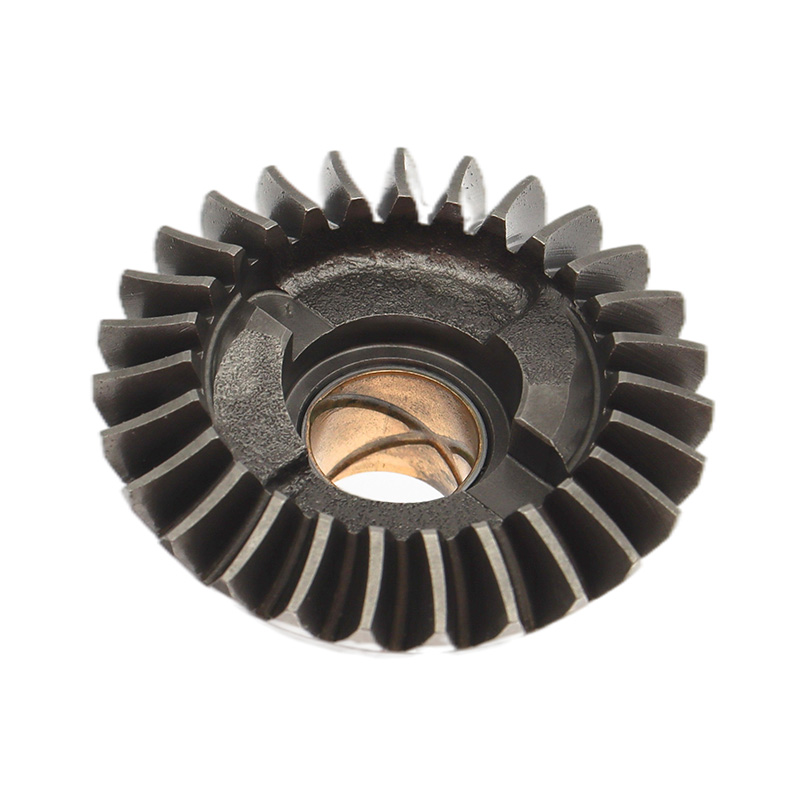
Plastic gears today are used in a wide range of critical and semi-critical applications, not just in office automation. In the marine sector, they frequently appear in: [intechpower]
- Steering systems and helm controls
- Trim and tilt mechanisms
- Fuel and oil pumps
- Sensor and actuator drives (throttle bodies, flap controls)
- Auxiliary transmission and positioning systems
Their advantages – low noise, corrosion resistance, and inherent lubricity – align well with marine requirements, provided the design respects load and environment limits. [manufacturer.hzpt]
You can use the following practical checklist during design reviews or supplier discussions: [files.engineering]
1. Define application and environment
- Max/min torque and speed
- Duty cycle and lifetime target
- Temperature range and humidity/splash exposure
2. Select candidate materials
- Start with MC nylon for higher loads, POM (e.g., DURACON) for high precision and dimensional stability. [khkchilun]
- Check chemical compatibility with oils and greases.
3. Preliminary gear sizing
- Use conservative allowable bending and contact stresses.
- Choose module and tooth count to avoid very small teeth.
4. Geometry refinement
- Add root fillet radius and check stress concentrations. [ik.imagekit]
- Set face width and backlash with temperature and moisture in mind. [millerplastics]
5. Surface and counterpart design
- Specify steel surface roughness (target Rᵗ ≈ 8–10 µm where applicable). [gearsolutions]
- Decide on lubricant type and delivery method.
6. Prototype validation
- Run endurance tests near max torque and temperature.
- Monitor wear, tooth deformation, and noise.
7. Production optimization
- Align gear tolerances with actual molding or machining capability. [winzelergear]
- Implement statistical quality control on key dimensions and material properties.
| Design aspect | MC nylon (mono-cast) (millerplastics) | Acetal / DURACON (POM) (millerplastics) |
|---|---|---|
| Strength and load capacity | High, good for heavier duty | Moderate to high, excellent for precision |
| Moisture absorption | High, dimensional change in humidity | Low, very stable in humid/marine environments |
| Dimensional precision | Lower, more variation over time | High, suited to fine teeth and tight backlash |
| Typical manufacturing route | Casting + machining | Injection molding or machining |
| Marine suitability | Good with environmental compensation | Excellent for precision marine components |
From the standpoint of a marine transmission parts manufacturer, the design of plastic gears is not just an academic exercise; it is a daily source of competitive advantage. By combining gear design theory with long-term field feedback from outboard engines and other marine systems, a specialized supplier can: [intechpower]
- Recommend the right plastic material for your exact marine environment (fresh water vs salt water, open hull vs sealed housing).
- Co-design gear and housing to minimize misalignment, vibration, and premature wear.
- Optimize tolerance, tooth modifications, and lubrication based on real-world failure modes observed in similar applications.
- Provide validation testing under simulated marine operating conditions, including salt-fog, temperature cycling, and shock loading.
If you are developing or upgrading an outboard gear system, involving a specialist early typically shortens time-to-market and reduces costly redesigns after field failures.
If you are planning a new plastic gear project – especially for outboard engines or other marine transmission systems – this is the right moment to move from theory to implementation.
- Use the checklist above to review your current design.
- Identify where material choice, geometry, or environment assumptions may be weak.
- Then, collaborate with a gear specialist capable of delivering design support, rapid prototyping, and validation testing tailored to marine conditions. [manufacturer.hzpt]
A carefully engineered plastic gear can dramatically improve noise, weight, corrosion resistance, and life-cycle cost of your marine equipment.
Q1. Are plastic gears strong enough for outboard engines?
Well-designed plastic gears, using suitable materials like MC nylon or acetal and proper safety factors, can handle significant loads in auxiliary and control systems of outboard engines, though main power transmission still typically relies on metals. [intechpower]
Q2. How do I choose between MC nylon and acetal (DURACON)?
Choose MC nylon when higher load capacity is needed and dimensional change can be managed, and acetal when dimensional stability, precision, and low moisture absorption are critical, especially in humid or marine environments. [millerplastics]
Q3. Do plastic gears need lubrication?
Many plastic gears benefit from lubrication, especially in high-load or high-speed applications; even self-lubricating or PTFE-filled materials often perform better and last longer with a compatible grease or oil. [files.engineering]
Q4. Why is backlash larger in plastic gears?
Backlash in plastic gears is intentionally increased to compensate for thermal expansion, moisture absorption, and elastic deformation, ensuring that gears do not bind under worst-case conditions. [khkchilun]
Q5. How do I validate a new plastic gear design?
Combine analytical stress calculations with prototype testing under representative loads, speeds, temperature, humidity, and lubrication conditions, then refine geometry and material selection based on observed wear and deformation. [ik.imagekit]
1. Miller Plastics – "12 Things To Consider When Designing Plastic Gears."
https://www.millerplastics.com/12-things-to-consider-when-designing-plastic-gears/ [millerplastics]
2. Gear Solutions – "Engineering Principles for Plastic Gears."
https://gearsolutions.com/features/engineering-principles-for-plastic-gears/ [gearsolutions]
3. HZPT – "What are the advantages of using plastic bevel gears?"
https://manufacturer.hzpt.com/what-are-the-advantages-of-using-plastic-bevel-gears/ [manufacturer.hzpt]
4. KHK – "Design of Plastic Gears / Design of Plastic Gears (Japanese site and related technical notes)."
https://khkchilun.com/gearknowledge/gear_technical_reference/design-of-plastic-gears.html [khkchilun]
5. GE / Engineering.com – "A Guide to Plastic Gearing."
http://files.engineering.com/files/2d909bef-8c74-4690-a047-287a175b0639/GE_plastic_Gears.pdf [files.engineering]
6. Chamfr – "Plastic Gears: Benefits & Design Considerations."
https://chamfr.com/blog/plastic-gears-benefits-design-considerations/ [chamfr]
7. Intech Power Core – "Typical Plastic Gear Applications."
https://www.intechpower.com/products/gears/typical-gear-applications [intechpower]
8. Winzeler Gear – "Gears 101: The Ultimate Guide to Plastic Gear Molding."
https://www.winzelergear.com/gears-101-the-ultimate-guide-to-gears/ [winzelergear]
9. ImageKit (AGMA-related) – "Plastic Gear Standards."
https://ik.imagekit.io/agmamedia/gt/issues/0307x/voices.pdf [ik.imagekit]


