


close
Choose Your Site
Global
Social Media
Views: 222 Author: Gill Transmission Publish Time: 2026-05-19 Origin: Site


Designing spur gears for outboard drives and other marine transmissions is not just a theoretical exercise—it is the difference between reliable propulsion and costly, dangerous failures at sea. As a manufacturer specializing in outboard gears and marine power‑train components, we have seen how small miscalculations in gear strength can lead to noise, pitting, tooth breakage, and unexpected downtime for boat owners and commercial operators. [khkgears]
In this guide, I will walk through a practical, step‑by‑step approach to checking spur gear strength, blending classical gear design theory with field experience from marine applications. You will learn how to evaluate bending and surface durability, what safety factors to apply on the water, and how to avoid the most common design mistakes that shorten gear life. [khkgears]
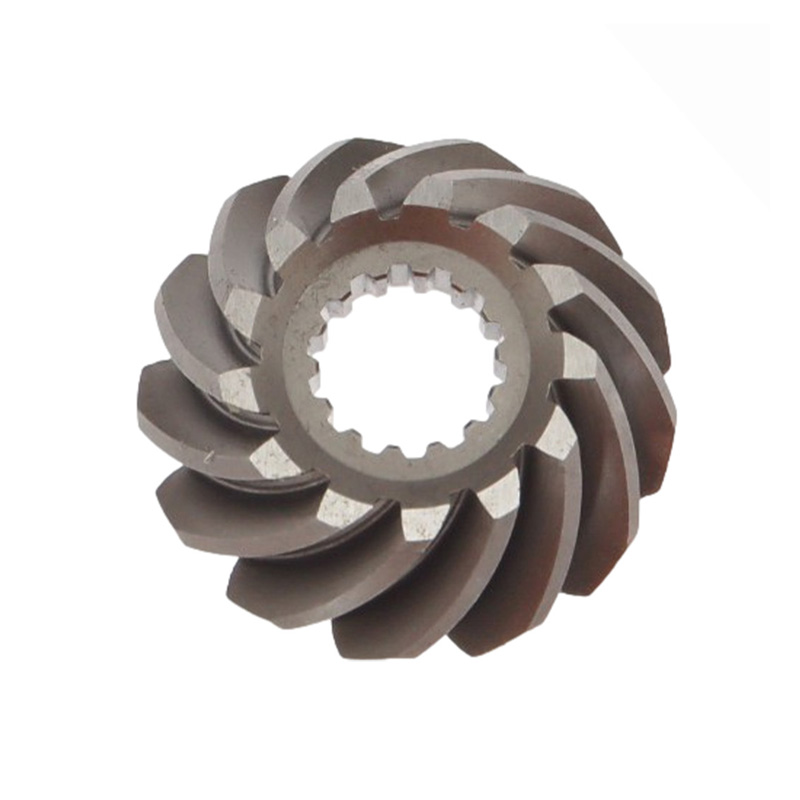
When gear designers talk about "checking gear strength," they are usually verifying two things. [khkgears]
- Tooth bending strength – the ability of each tooth to resist cracking or breaking at the root under load. [khkgears]
- Surface durability (pitting resistance) – the ability of the tooth flanks to resist contact fatigue and surface damage under repeated meshing. [khkgears]
Both are critical in marine transmissions, where gears operate under variable torque, shock loads from waves, and frequently changing speeds. [4cm.co]
In real projects, checking spur gear strength always starts with a precise understanding of operating conditions. [khkgears]
Key parameters you must define:
- Rated engine power and maximum torque at the pinion.
- Input and output speeds across the operating envelope.
- Service type: leisure craft, commercial fishing, patrol vessel, workboat, etc.
- Duty cycle: hours per day, days per year, typical throttle usage.
- Shock levels: smooth inland waters vs. offshore, frequent acceleration and deceleration, gear shifts under load.
In outboard gearcases, we pay special attention to transient torque spikes caused by propeller ventilation, cavitation, and sudden throttle changes. These spikes may be 1.5–2.5 times the nominal torque and must be considered in your design safety factors. [4cm.co]
Gear strength is strongly influenced by material choice and heat treatment. For marine spur gears, common options include: [khkgears]
- Carburized and hardened alloy steels for high‑load outboard gears.
- Through‑hardened steels for moderate loads and simpler manufacturing.
- Stainless or corrosion‑resistant steels where seawater exposure is a concern and the gear is not fully sealed. [4cm.co]
Important considerations:
- Specify core toughness for bending strength so the tooth root does not become brittle.
- Use surface hardening (carburizing, nitriding, induction hardening) to improve pitting resistance. [khkgears]
- Balance hardness with corrosion protection—marine environments demand both mechanical and environmental durability. [4cm.co]
Bending strength checks whether the tooth can safely withstand the applied tangential force at the pitch circle without cracking at the root. Industry standards often use formulations similar to the Lewis or AGMA bending stress equations. [khkgears]
In practice, you will:
1. Compute the transmitted tangential load from torque and pitch diameter.
2. Apply geometry factors that account for tooth form, face width, and load distribution.
3. Adjust for dynamic effects (speed, manufacturing accuracy) and load sharing between teeth.
4. Compare the resulting bending stress with the allowable stress of your chosen material, including safety factors. [khkgears]
In outboard transmissions, we frequently increase the bending safety factor to account for:
- Shock loads from impact with floating debris.
- Misalignment caused by thermal expansion and housing deflection.
- Tolerances in die‑cast or machined gear housings. [4cm.co]
If the calculated bending stress exceeds the allowable value, you may need to increase module, adjust face width, refine tooth profile, or upgrade material and heat treatment.
Surface durability determines how long gear teeth can survive repeated contact cycles without developing pitting, spalling, or surface flaking. [khkgears]
The typical process:
1. Determine the contact stress based on Hertzian theory or relevant gear design standards.
2. Apply factors for gear geometry, material hardness, lubrication quality, and surface finish.
3. Consider the number of load cycles expected over the gear's life (marine engines often run at medium‑high speed for many hours).
4. Compare calculated contact stress with material‑specific allowable contact stress. [khkgears]
For outboard gears, lubrication is a crucial real‑world variable. Gear oil contamination by seawater, aeration, or foaming will reduce the effective film thickness and accelerate pitting. That is why we design with a generous margin on surface durability for high‑speed pinion–gear pairs and propeller shafts. [4cm.co]
Unlike many industrial installations with stable loading, marine gearboxes live in a harsh, variable environment. This reality must be reflected in your design safety factors. [4cm.co]
Common influences on safety factor selection:
- Type of vessel and mission profile.
- Quality of maintenance and lubrication.
- Expected lifetime (hours) before overhaul or replacement.
- Regulatory rules or classification society requirements where applicable.
For example, high‑performance outboard gears used in commercial duty may require higher safety factors than recreational units because they operate closer to maximum load for long periods. [4cm.co]
When in doubt, we recommend conservative design choices: slightly larger module, better material, improved surface hardness, and higher safety factors on both bending and contact stress.
Even if calculations look perfect, poor manufacturing or assembly can ruin gear reliability. [khkgears]
Critical checks include:
- Tooth profile accuracy and proper involute form.
- Lead and helix alignment (for spur gears, lead accuracy and squareness of faces).
- Backlash set according to lubrication, temperature, and load.
- Center distance machining accuracy and housing rigidity.
In an outboard gearcase, misalignment can come from casting distortion, uneven bolt torques, or assembly errors. These issues concentrate load on a small portion of the tooth and dramatically reduce both bending and surface strength in practice, even if the theoretical calculations are correct. [4cm.co]
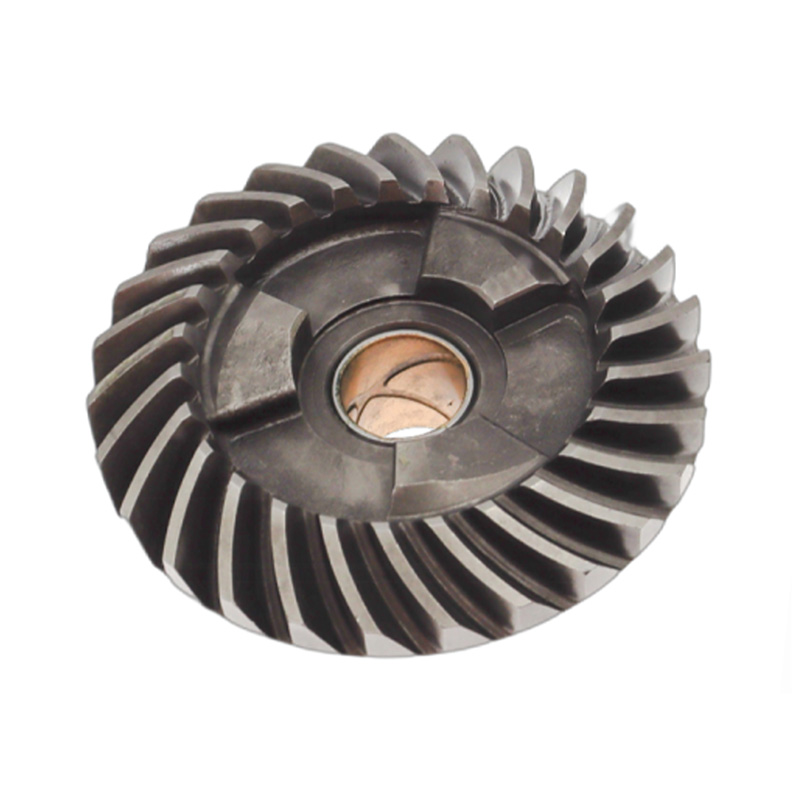
Over years of supplying outboard gears and related marine components, we have seen recurring failure patterns that are directly tied to insufficient or incorrect strength checks. [4cm.co]
Typical real‑world issues include:
- Edge pitting on gear flanks due to misalignment and poor load distribution.
- Tooth root cracking starting at the fillet radius where bending stresses peak.
- Scuffing and micro‑pitting from inadequate lubricant film under high‑speed, high‑load conditions.
- Noise and vibration from improper tooth contact or excessive backlash.
In most investigations, the root causes relate to a combination of:
- Underestimated torque peaks.
- Inadequate safety factors for marine duty.
- Material or heat treatment not matched to the application.
- Assembly and alignment problems within the gear housing. [4cm.co]
By integrating these lessons into the design phase—rather than treating them as after‑sales issues—you can dramatically improve spur gear strength and extend service life.
To translate theory into daily engineering work, use this quick checklist during design reviews:
1. Define loading
- Verify rated and peak torque.
- Document duty cycle and vessel type.
2. Confirm materials
- Select marine‑suitable alloys and treatments.
- Check hardness, toughness, and corrosion resistance.
3. Run strength calculations
- Bending stress vs. allowable stress.
- Contact stress vs. surface durability limits.
4. Set safety factors
- Adjust for shock, misalignment, and lubrication risk.
- Align with internal or regulatory standards.
5. Check geometry and tolerances
- Validate tooth profile and alignment.
- Ensure housing stiffness and precise center distance.
6. Plan for verification
- Define inspection points (gear measurement, hardness tests).
- Schedule early prototype testing under real marine conditions. [4cm.co]
While calculations happen in the office, gear strength is judged on the water by owners, captains, and service technicians. [lsdigital]
From their perspective, strong, well‑designed spur gears show up as:
- Smooth, quiet shifting and operation at all speeds.
- Stable oil condition with minimal metallic particles in routine inspections.
- Rare or zero catastrophic failures during normal use.
- Long service intervals between overhauls.
When users complain about whining noise, vibration, frequent oil changes, or metal shavings in the gear oil, they are indirectly reporting weaknesses in gear strength, alignment, or lubrication strategy. Listening carefully to these field signals and feeding them back into your design process is a powerful way to reinforce E‑E‑A‑T: you are not just applying formulas—you are continuously learning from real experience. [lsdigital]
To support both engineers and buyers, we recommend presenting gear strength data in a clear, visual way on your product pages.
You can use a table like this to summarize key spur gear strength attributes for different outboard gear models:
| Gear model | Rated torque (Nm) | Max peak torque (Nm) | Material & treatment | Intended duty profile |
|---|---|---|---|---|
| OG‑150 | 150 | 300 | Carburized alloy steel | Recreational outboard |
| OG‑250 | 250 | 500 | Carburized alloy steel, shot‑peened | Light commercial |
| OG‑350 | 350 | 700 | High‑grade alloy, optimized surface hardness | Heavy commercial |
These are example values only; replace them with your actual product specifications and test results. [4cm.co]
If you are designing or upgrading a marine transmission and want reliable spur gear strength verified by real‑world experience, you should not rely on generic formulas alone. Our engineering team at Ningbo Gill Transmission Parts Co., LTD specializes in outboard gears and marine power‑train components, combining robust calculation methods with hands‑on testing in demanding conditions.
- Get support on gear strength calculation and verification for your project.
- Collaborate on custom outboard gear design optimized for your vessel type and duty profile.
- Discuss failure analysis and redesign for existing gear systems that are not meeting expectations.
Contact our technical team to review your current design and get practical recommendations for improving spur gear strength in your marine application.
1. Why is spur gear strength so critical in outboard applications?
Because outboards experience rapid load changes, propeller impacts, and long running hours, spur gears must withstand high bending and contact stresses without cracking or pitting. [khkgears]
2. What is the main difference between bending strength and surface durability?
Bending strength focuses on preventing tooth root fractures, while surface durability ensures the tooth flanks resist pitting and wear under repeated contact cycles. [khkgears]
3. How do I choose the right material for marine spur gears?
Select an alloy steel that provides a good balance of core toughness and surface hardness, and consider corrosion resistance and compatibility with your gear oil in a marine environment. [4cm.co]
4. Do I really need higher safety factors for marine gearboxes?
Yes. Marine installations face shock loads, misalignment, and lubrication challenges that justify more conservative safety factors than many stable industrial applications. [4cm.co]
5. How can field feedback improve my gear strength design?
User reports about noise, vibration, or oil contamination can reveal hidden issues with alignment, lubrication, or loading assumptions, allowing you to refine your spur gear strength calculations and design choices. [lsdigital]
1. KHK Gears – "Check Spur Gear's Strength (Gear Design Procedure)" – original reference article on bending and surface strength calculations for spur gears. [https://khkgears.net/new/gear_knowledge/gear-design-procedure-in-practical-design/check-spur-gears-strength.html] [khkgears]
2. 4CM – "SEO for Manufacturers: Technical SEO Tips that Drive Organic Traffic" – insights on structuring content and product information for manufacturing websites. [https://4cm.co.uk/seo-for-manufacturers-technical-seo-tips-that-drive-organic-traffic/] [4cm.co]
3. LSDigital – "E‑E‑A‑T Guidelines 2025: How to Build Google‑Friendly Content" – guidance on experience, expertise, authoritativeness, and trust in modern SEO content. [https://www.lsdigital.com/blog/e-e-a-t-guidelines-2025/] [lsdigital]
4. Windmill Strategy – "SEO for Industrial Companies: An SEO/Content Creation Guide" – best practices for industrial and B2B technical content strategy. [https://www.windmillstrategy.com/seo-for-industrial-companies-comprehensive-guide/] [windmillstrategy]
5. Roberts Siegers – "SEO for Manufacturers: Strategies to Dominate Search in 2025" – additional reference for keyword usage and content structure on manufacturing sites. [https://robertsiegers.com/en/seo-for-manufacturers] [robertsiegers]


