


close
Choose Your Site
Global
Social Media
Views: 264 Author: Gill Transmission Parts Publish Time: 2026-11-21 Origin: Site


Content Menu
● Marine Grade Materials vs Industrial Grade Materials: Key Differences
● What Are Marine Grade Materials?
>> Marine Grade Stainless Steel: Why 316 Is Not a Universal Answer
>> Marine Aluminum: Alloy and Temper Both Matter
● What Are Industrial Grade Materials?
>> Alloy Steels for High-Load Gears
>> Industrial Materials Can Also Be Marine Materials
● Corrosion Resistance vs Mechanical Performance
>> Corrosion Resistance Does Not Guarantee Gear Durability
>> Galvanic Compatibility Can Override Individual Alloy Performance
● Best Materials for Outboard Gears: Start Inside the Gearcase
>> Internal Gears Need a Controlled Lubricated Environment
>> Exposed Components Need a Different Selection Logic
● Practical Scenario: Corroded Gears After Water Ingress
● How to Compare Marine Material Test Reports
>> Salt Spray Hours Are Not Service-Life Predictions
>> Verify Chemistry, Processing, and Finished-Part Performance
● A Six-Step Material Selection Checklist for Buyers
● Cost Comparison: Purchase Price vs Lifetime Value
● Specify the Right Material for Your Outboard Gear Project
>> 1. Are marine grade materials always better than industrial grade materials?
>> 2. Is 316 stainless steel completely seawater-proof?
>> 3. Can industrial alloy steel be used for outboard gears?
>> 4. Does higher hardness always mean a better gear?
>> 5. Does a longer salt spray test prove longer marine service life?
>> 6. What should buyers include in a material inquiry?
Marine grade materials vs industrial grade materials is not simply a comparison between corrosion resistance and strength. For outboard gears and other marine transmission parts, the right choice depends on where the component operates, how it carries load, and what protects it from seawater.
A material suitable for an exposed bracket may be unsuitable for a heavily loaded gear tooth. Equally, a high-performance industrial gear steel may work well inside a sealed marine gearbox when lubrication, sealing, and maintenance are properly controlled.
At Ningbo Gill Transmission Parts Co., LTD., our focus is the research, development, production, and sale of outboard gears and related marine components, backed by 29 years of professional experience. Our engineering viewpoint is straightforward: select materials around the component's actual failure risks, not its marketing label.
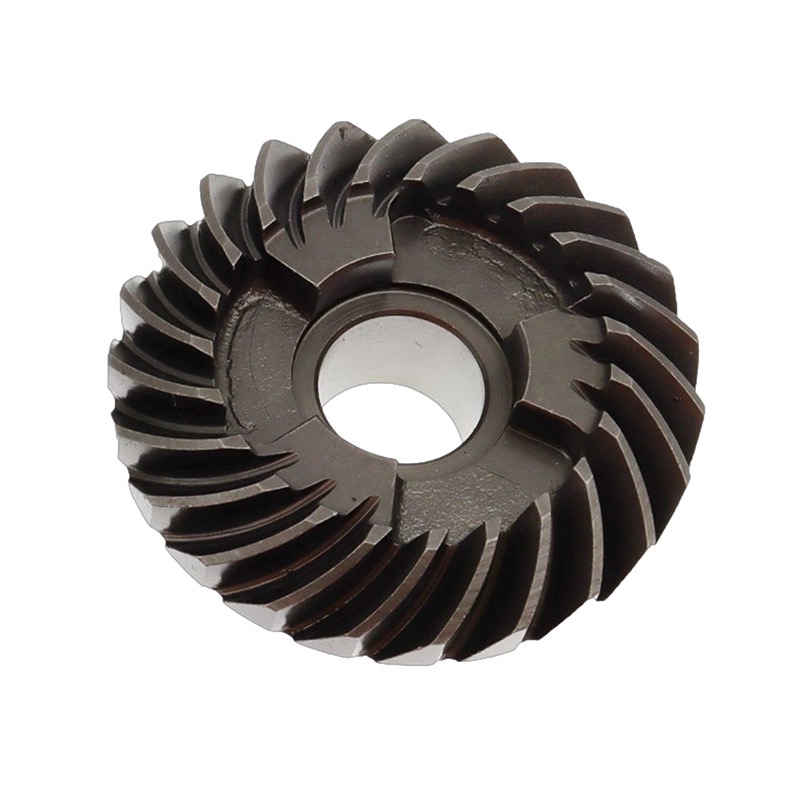
Neither term identifies one universally defined alloy or performance level. Buyers should request a specific material designation, delivery condition, processing requirements, and acceptance criteria.
| Comparison factor | Marine grade materials | Industrial grade materials |
|---|---|---|
| Typical selection priority | Suitability for salt exposure and the intended marine environment | Suitability for a defined manufacturing or operating duty |
| Common examples | Selected stainless steels, aluminum alloys, and other corrosion-resistant materials | Carbon steels, alloy steels, stainless steels, and aluminum alloys |
| Corrosion protection | May combine alloy resistance with coatings and protective design | May depend heavily on coatings, enclosure, or lubrication |
| Mechanical performance | Varies substantially by alloy and condition | Varies substantially by alloy and condition |
| Typical applications | Exposed hardware, marine structures, selected shafts and fittings | Machinery, gears, tooling, shafts, and structural components |
| Main purchasing risk | Assuming "marine grade" means seawater-proof | Assuming industrial materials cannot serve marine applications |
The categories overlap. Application suitability matters more than either label.
Marine grade materials are selected for a particular combination of salt exposure, moisture, mechanical loading, and service conditions.
However, coastal air, occasional seawater splashing, and continuous immersion are different environments. A material that performs adequately above deck may fail in a warm, stagnant underwater crevice.
Type 316 stainless steel is widely associated with marine service. Its molybdenum content improves resistance to chloride-related localized corrosion compared with Type 304.
Nevertheless, 316 can develop pitting or crevice corrosion in seawater. Surface condition, deposits, temperature, drainage, and restricted oxygen access all influence performance.
Type 316L has lower carbon than 316 and is commonly relevant where welding-related sensitization is a concern. The "L" does not automatically mean substantially better seawater resistance.
For more demanding chloride exposure, duplex or higher-alloy stainless steels may be candidates. Selection still requires an assessment of the actual environment.
Selected aluminum alloys offer useful combinations of low weight, corrosion resistance, and fabrication capability.
In published seawater exposure research, 5083-O and 5086-O showed little change in tensile properties after five years under the reported test conditions. That evidence supports their relevance to marine material selection, but it does not establish identical performance for every temper, component, or location.
Buyers should specify the complete alloy-and-temper designation rather than request "marine aluminum" alone.
Industrial grade materials serve machinery, processing equipment, structural assemblies, and many other applications.
The term does not mean low quality. Industrial service can involve severe fatigue, abrasion, pressure, temperature, and chemical exposure.
Low-carbon alloy steels such as SCM415 and SCM420 are established candidates for carburized gears. Carburizing introduces carbon into the surface before hardening, creating a wear-resistant case while retaining a comparatively tough core.
This combination addresses two different needs:
- Resistance to tooth-surface wear and contact fatigue.
- Resistance to tooth-root fracture and shock loading.
Published gear catalogs show different hardness ranges for different carburized products. Those values illustrate why buyers should specify validated requirements rather than copy a generic hardness target.
An alloy steel does not become unsuitable simply because the finished assembly operates on a boat.
For protected transmission components, the decisive questions include gear loading, heat treatment, lubricant condition, sealing reliability, and dimensional accuracy. Marine suitability belongs to the complete engineered system, not the alloy name alone.
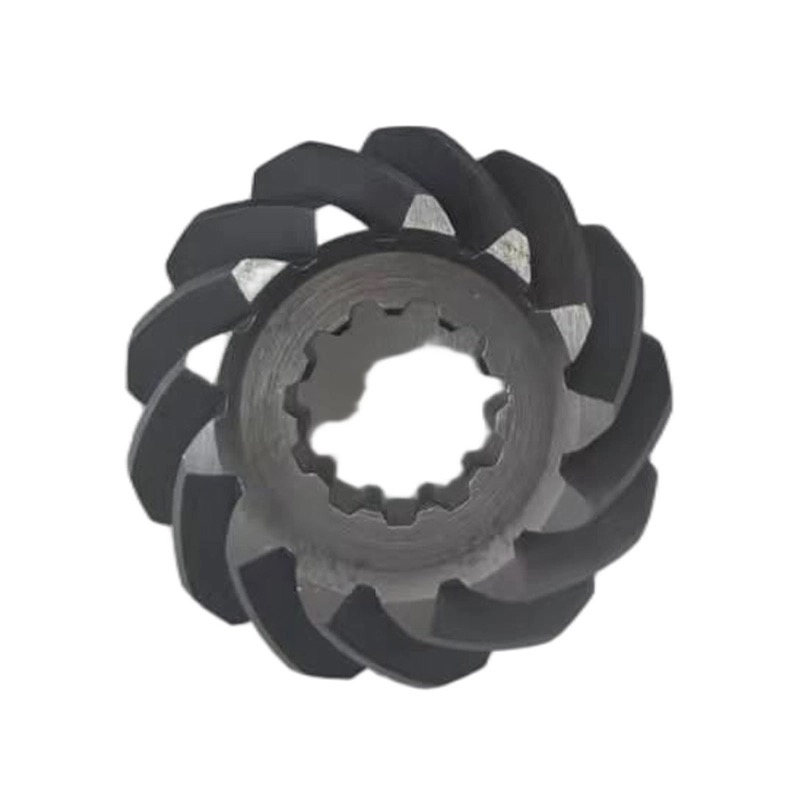
The most important comparison is not "Which material resists rust best?" It is "Which material prevents the most consequential failure in this component?"
A corrosion-resistant material may still lack the required tooth hardness, fatigue performance, or resistance to deformation.
Conversely, a properly processed gear steel may provide excellent mechanical performance but require reliable exclusion of water.
Substituting ordinary 316 stainless steel for carburized alloy steel is therefore not a like-for-like upgrade. It changes the material's mechanical behavior and requires a new engineering assessment.
When dissimilar metals are electrically connected in a conductive electrolyte such as seawater, galvanic corrosion can occur.
A corrosion-resistant fastener can contribute to attack on an adjacent, less noble component. The relative exposed areas, electrical connection, and electrolyte conditions influence severity.
Evaluate the assembled joint, including:
- Contacting metals.
- Insulating washers or sleeves.
- Coating continuity.
- Water retention and drainage.
- Compatibility with the assembly's corrosion-protection system.
Assessing each part independently can miss the real failure mechanism.
Outboard gear material selection deserves separate treatment because an internal gear and an exposed fitting face fundamentally different operating conditions.
For a sealed, oil-lubricated gearcase, normal operation should not involve seawater contacting the gear teeth.
Material selection must therefore prioritize mechanical duty while accounting for foreseeable contamination and seal failure. Key considerations include:
- Tooth contact and bending loads.
- Starting, shifting, and transient loads.
- Surface hardness and effective case depth.
- Core properties and heat-treatment consistency.
- Tooth geometry, finish, and contact pattern.
- Lubrication and sealing.
Changing the alloy without addressing these factors may leave the principal failure cause untouched.
External fasteners, brackets, and water-exposed shaft regions require closer attention to chloride resistance and galvanic compatibility.
Even within one component, different surfaces may face different conditions. A shaft can include an exposed section, a seal-running surface, and a torque-transmitting region.
A useful material review separates these functions before deciding whether one material and treatment can satisfy them all.
Consider a hypothetical outboard lower unit with corroded teeth and discolored lubricant. This is an engineering illustration, not a documented customer case.
A purchasing team might immediately request "marine stainless steel gears." That response could address the visible corrosion while overlooking the initiating failure.
A more useful investigation would:
1. Check lubricant condition and evidence of contamination.
2. Inspect seals, sealing surfaces, and possible leak paths.
3. Examine tooth damage for corrosion, wear, and fatigue features.
4. Verify the original material and heat-treatment requirements.
5. Review assembly condition, loading, and maintenance history.
If water entered because of a sealing defect, an alloy substitution alone would not correct the defect. The replacement material would also need its own strength, wear, manufacturing, and compatibility validation.
The lesson is to distinguish the initiating cause from the resulting damage.
A test report is useful only when its method and acceptance criteria match the purchasing question.
Salt spray testing provides a controlled environment for comparing specimens or coating systems under specified conditions.
However, a result such as "1,000 hours passed" does not establish a corresponding number of years at sea. Natural exposure introduces variables that a single chamber test does not reproduce.
Request the test method, specimen preparation, coating condition, evaluation criteria, and observed failure mode. Avoid comparing headline hour counts from different procedures.
A material certificate confirms only part of the specification.
For critical outboard gears, a purchasing review should consider:
- Material designation and batch traceability.
- Heat-treatment records.
- Surface and core hardness requirements.
- Effective case-depth verification, where applicable.
- Dimensional inspection and tooth geometry.
- Suitable crack inspection requirements.
- Pairing, assembly, and functional acceptance criteria.
Traceability connects the purchased component to the evidence supporting its suitability.
Use this process when comparing marine grade materials vs industrial grade materials for a new project or replacement order.
1. Define exposure. Separate coastal atmosphere, splash, immersion, and sealed lubrication.
2. Define duty. Record torque, speed, load cycles, transient loads, and expected service conditions.
3. Identify failure risks. Rank corrosion, wear, fatigue, fracture, and deformation.
4. Specify the material condition. Include alloy, temper or heat treatment, finish, and protection.
5. Review the assembly. Check seals, adjacent metals, lubrication, drainage, and maintenance access.
6. Set acceptance criteria. Agree on documentation, inspection methods, and measurable requirements before production.
This approach produces a clearer quotation request than asking suppliers to offer their "best marine material."
There is no universal price premium for marine grade materials. Alloy availability, product form, machining difficulty, processing, inspection, and order volume all affect cost.
A more corrosion-resistant alloy may reduce maintenance in an exposed application. Inside a protected gearbox, however, the greater value may come from the correct gear steel, controlled heat treatment, precise finishing, and reliable sealing.
Compare total ownership cost across:
- Initial component and processing costs.
- Inspection and installation.
- Maintenance and replacement frequency.
- Downtime and associated operational disruption.
Do not assign a service-life advantage without evidence from comparable operating conditions.
The best material is not automatically the most corrosion-resistant or the hardest. It is the material-and-process combination that meets the component's mechanical and environmental requirements.
Ningbo Gill Transmission Parts Co., LTD. brings 29 years of professional experience in outboard gears and related marine components to these discussions.
For a focused project review, send your component drawing, engine application, operating conditions, current material specification, and any available failure photographs. Ask our team to discuss material selection, heat-treatment requirements, inspection priorities, and manufacturing feasibility for your next order.
No. The terms describe broad application expectations, not a universal quality ranking. A protected, heavily loaded gear may require a different material from an exposed marine bracket.
No. It can suffer pitting and crevice corrosion, particularly where seawater stagnates or deposits accumulate. Exposure, temperature, surface condition, and geometry affect suitability.
Yes, when its mechanical properties, heat treatment, lubrication, sealing, and finished-part quality meet the application requirements. Direct seawater exposure requires separate consideration.
No. Surface hardness must work with suitable case depth, core properties, geometry, and processing quality. A hardness number alone cannot establish gear durability.
No. Salt spray results support defined comparisons, but they should not be converted directly into years of field service without corroborating evidence.
Provide the drawing, application, exposure conditions, operating loads, material and processing requirements, inspection criteria, and relevant failure history. These details help suppliers compare technically meaningful options.
- World Stainless / Atlas Steels. "Stainless Steel Grade Datasheets." Supports the discussion of 316, 316L, seawater limitations, and grade-specific properties. [worldstainless]
- World Stainless. "Corrosion Resistance of Stainless Steels." Educational guidance on pitting, crevice corrosion, environmental factors, and preventive design. [worldstainless]
- World Stainless. "Duplex Stainless Steels." Supports the discussion of duplex grades and chloride-related corrosion resistance. [worldstainless]
- Euro Inox / World Stainless. "Stainless Steel in Contact with Other Metallic Materials." Supports the discussion of galvanic corrosion and marine assemblies. [worldstainless]
- KHK. "Gear Materials and Heat Treatments." Technical guidance on gear steels and carburizing. [khkgears]
- KHK. "Bevel Gears." Product specifications illustrating carburized SCM415 gears and product-dependent hardness requirements. [khkgears]
- ASTM International. "Aluminum Alloys After Five Years in Seawater." Exposure-study findings for specific aluminum alloys and tempers. [store.astm]
- ASTM International. "ASTM B117-19: Standard Practice for Operating Salt Spray (Fog) Apparatus." Explains the purpose and limitations of salt spray testing. [store.astm]


