


close
Choose Your Site
Global
Social Media
Views: 288 Author: Gill Transmission Parts Publish Time: 2026-10-22 Origin: Site


Content Menu
● Marine Parts Manufacturer vs Marine Parts Trading Company: Key Differences
● What a Marine Parts Manufacturer Offers
>> Direct Technical Communication
>> Production and Process Visibility
● What a Marine Parts Trading Company Offers
>> Flexible Inventory and Order Consolidation
● Comparing Quality Control for Outboard Gears and Marine Shafts
>> Outboard Gears: Evaluate the Mating System
>> Crankshafts, Drive Shafts, and Propeller Shafts
>> Certificates and Traceability
● Price Comparison: Calculate Total Purchasing Cost
● Three Practical Ways to Evaluate Marine Parts Suppliers
>> 1. Build a Technical Evidence Pack
>> 2. Separate Sample Approval from Production Approval
>> 3. Test the Supplier's Response to a Problem
● Which Supplier Model Fits Your Business?
>> Choose a Marine Parts Manufacturer When
>> Choose a Marine Parts Trading Company When
>> Consider a Hybrid Sourcing Strategy
● Working with Ningbo Gill Transmission Parts Co., LTD.
>> 1. Is a marine parts manufacturer always cheaper than a trading company?
>> 2. Can a marine parts trading company supply custom gears or shafts?
>> 3. How can I verify that a supplier is a manufacturer?
>> 4. What information is needed for an outboard shaft quotation?
>> 5. Does ISO 9001 certification guarantee marine parts quality?
>> 6. Should distributors buy all marine spare parts from one supplier?
Choosing between a marine parts manufacturer and a marine parts trading company comes down to one question: does your business need deeper production control or broader purchasing convenience? For buyers sourcing outboard gears, crankshafts, drive shafts, and propeller shafts, the answer affects technical communication, inventory, quality verification, and long-term costs.
At Ningbo Gill Transmission Parts Co., LTD., our perspective comes from 29 years of specialization in marine transmission components. We believe buyers should evaluate accountability, not simply whether a supplier describes itself as a factory or trader.
A manufacturer can be a strong partner for repeat production and technical development. A trading company can be valuable for mixed-product purchasing and stock availability. Neither business model replaces proper supplier qualification.
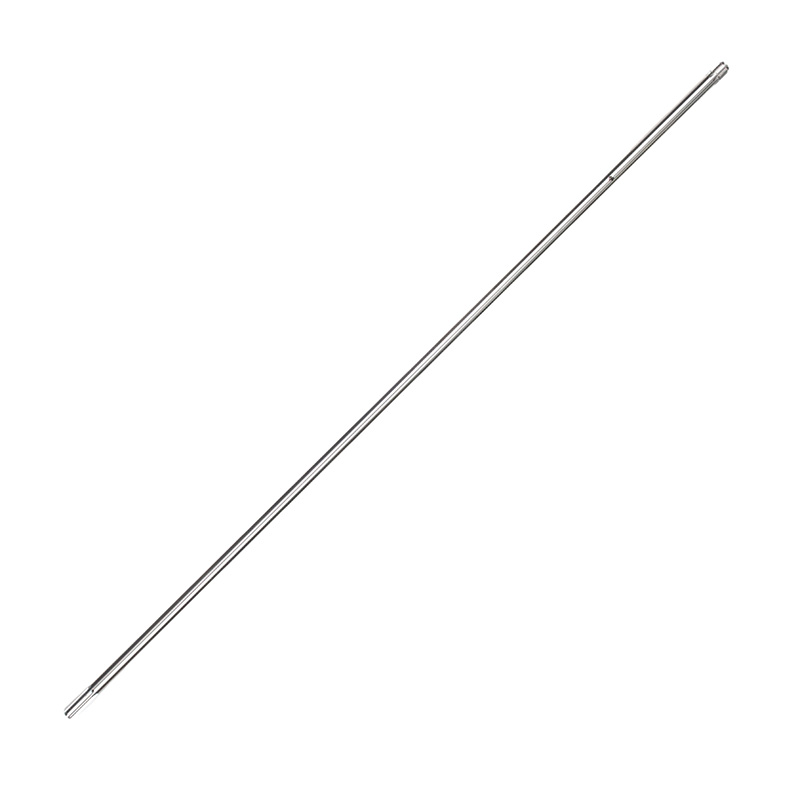
A marine parts manufacturer produces components through its own operations, sometimes using qualified subcontractors for particular processes. A marine parts trading company primarily purchases products from manufacturers and resells them, potentially adding sourcing, inspection, warehousing, and export services.
| Purchasing factor | Marine parts manufacturer | Marine parts trading company |
|---|---|---|
| Primary role | Produces specified components | Sources and resells components |
| Product range | Often concentrated in particular product families | Often covers multiple factories and categories |
| Technical access | Potentially direct access to production engineers | Depends on access to underlying manufacturers |
| Customization | Often suitable for drawing-based development | Possible through manufacturing partners |
| Pricing | May favor repeat, production-scale orders | May favor consolidated or stocked purchases |
| Minimum order quantity | Often influenced by setup and batch economics | May combine stock or orders across customers |
| Lead time | Depends on capacity, materials, and processing | Depends on inventory and factory coordination |
| Traceability | Potentially closer to original production records | Depends on continuity of supplier records |
| Best fit | Technical projects and recurring component demand | Broad assortments and purchasing convenience |
These are typical tendencies, not guarantees. A disciplined trading company may provide better documentation than a poorly managed factory.
Marine transmission components require more than a matching photograph or approximate dimensions.
A drive shaft drawing may specify spline geometry, bearing fits, straightness, and seal-running surfaces. A crankshaft may require careful control of journal dimensions, surface finish, and runout.
Working directly with a manufacturer can shorten the communication path between purchasing staff and the people responsible for those features.
For buyers, the practical benefit is clearer answers: which requirement is difficult, how it will be measured, and whether a proposed change affects mating components.
A manufacturer should be able to explain the production route for your particular component.
Useful questions include:
- Which operations occur at the quoted factory?
- Which processes are subcontracted?
- Who approves external processors?
- How are parts identified between operations?
- What happens when inspection finds a nonconformity?
Owning machinery does not automatically establish process control. The stronger evidence is a documented connection between the drawing, manufacturing instructions, inspection results, and delivered batch.
For recurring purchases, a manufacturing relationship can support consistent drawing revisions, retained inspection criteria, and planned production schedules.
However, buyers should confirm how repeatability is maintained. A previously accepted sample does not authorize unapproved changes to materials, tooling, subcontractors, or manufacturing methods.
A trading company can combine products from several specialist factories.
This can suit a marine spare parts distributor purchasing gears, seals, bearings, impellers, and service accessories together. Instead of managing separate suppliers, the buyer coordinates through one commercial contact.
Export intermediaries can also support documentation, shipping arrangements, market knowledge, and other cross-border activities. Their value depends on which services they actually provide.
A trader holding verified stock may supply a small replacement order faster than a factory scheduling a new batch.
The distinction is important: stock availability is not the same as production speed.
Ask whether inventory is physically available, where it is stored, how it is identified, and whether the quoted delivery date includes inspection and export preparation.
A capable trading company can manage factory communication and inspection on the buyer's behalf.
Nevertheless, an additional communication layer can become a weakness when technical questions are repeatedly paraphrased. For critical components, establish whether the buyer can obtain original reports and communicate with the responsible technical team.
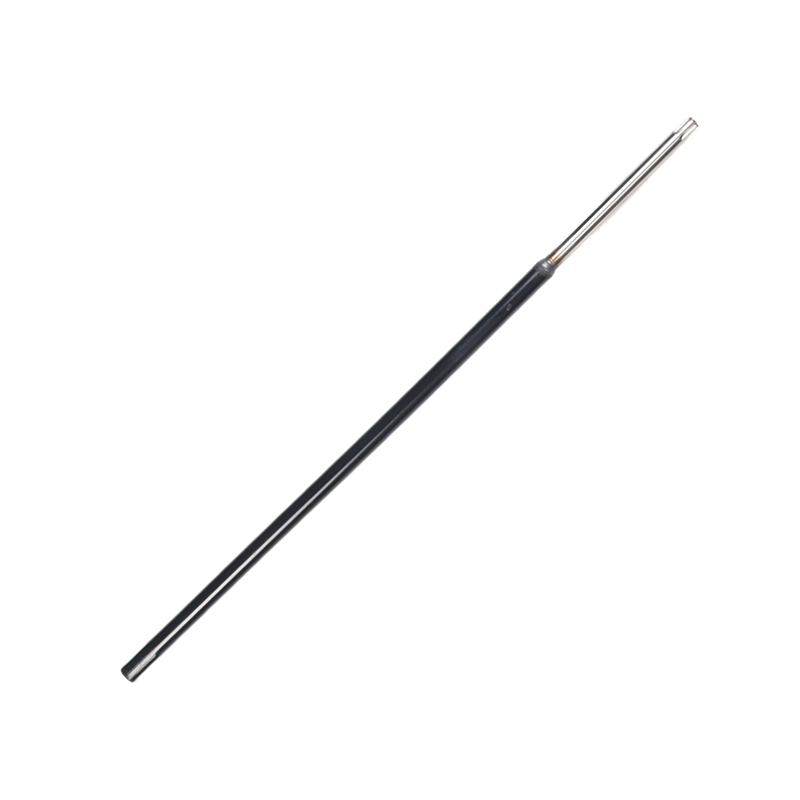
For outboard gears, buyers should define acceptance requirements around the intended assembly—not appearance alone.
An effective specification may address tooth geometry, material condition, mounting dimensions, contact pattern, and backlash under defined assembly conditions.
Be cautious with generic claims such as "high-precision gears." Ask which features were measured, against which specification, and using what equipment.
Also check the scope of any cited standard. ISO 1328-1 concerns cylindrical involute gear tooth flanks; it should not automatically be treated as the acceptance standard for a bevel gear application.
Each component requires its own inspection priorities.
| Component | Examples of requirements to define |
|---|---|
| Crankshaft | Journal dimensions, runout, surface condition, and specified material treatment |
| Drive shaft | Spline geometry, straightness, bearing seats, and seal interfaces |
| Propeller shaft | Bearing and seal fits, spline details, threads, and corrosion protection |
| Outboard gear | Tooth geometry, mating dimensions, and agreed assembly checks |
These are specification prompts, not universal tolerances. Numerical limits should come from an approved drawing and application requirements.
Marine machinery guidance also identifies shaft misalignment as a contributor to wear and equipment problems. A replacement shaft therefore needs to work within the complete assembly, not merely pass an isolated diameter check.
A quality management certificate is useful evidence about a supplier's management system. It does not establish that a particular batch meets your drawing.
Check the certificate's validity, site, scope, and issuing organization. Then request product-specific evidence where required:
- Material certificates connected to the production lot.
- Inspection reports identifying the part and revision.
- Relevant treatment or testing records.
- Batch identification linking records to shipment.
The same expectations should apply whether you buy directly or through an intermediary.
A factory quotation is not automatically the lowest-cost option. A trading-company quotation is not automatically poor value.
Compare equivalent specifications, quantities, delivery terms, and documentation.
Your evaluation should include:
1. Component price.
2. Tooling and development charges.
3. Inspection and sample approval costs.
4. Freight, duties, and handling.
5. Inventory financing and storage.
6. Rework, replacement, and disruption exposure.
Consider two hypothetical quotations for the same approved component:
| Cost item | Manufacturer | Trading company |
|---|---|---|
| Price per component | $40 | $44 |
| Quantity | 500 | 500 |
| Product subtotal | $20,000 | $22,000 |
| Additional buyer coordination and logistics | $3,000 | $1,500 |
| Comparison subtotal | $23,000 | $23,500 |
The apparent $2,000 product-price difference becomes $500 after the assumed additional costs.
This is an illustration, not market pricing or a Gill customer result. Its purpose is to show why quotations need a common cost basis. Quality and delivery risks still require separate assessment.
Before awarding a production order, agree on the evidence required for approval.
A practical pack includes:
- Controlled drawing and revision.
- Material and treatment requirements.
- Identification of critical characteristics.
- Measurement methods and acceptance limits.
- Sample inspection results.
- Batch identification and packaging requirements.
- A procedure for approving changes.
This turns "good quality" into requirements both parties can verify.
One acceptable sample is a useful starting point, not proof of stable production.
Use a staged qualification process:
1. Review drawings and application information.
2. Approve the inspection plan.
3. Evaluate initial samples.
4. Check assembly compatibility where applicable.
5. Place a controlled pilot order.
6. Review production-batch records.
7. Increase order volume after satisfactory results.
For a trading company, confirm how these requirements reach the actual factory. For a manufacturer, confirm that production orders follow the same approved requirements as the samples.
Ask a realistic question before placing an order:
"What happens if incoming inspection finds shaft runout outside the agreed limit?"
A credible answer should cover containment, identification of affected batches, investigation, corrective action, and commercial resolution.
"Send photos and we will replace it" may address an immediate complaint. It does not explain how recurrence will be prevented.
Direct manufacturing relationships are often worth evaluating when you need:
- Drawing-based marine transmission components.
- Recurring demand within a focused product range.
- Detailed technical discussions.
- Controlled revisions and production changes.
- Close coordination on inspection and corrective action.
The strongest reason to buy directly is not simply removing a margin. It is improving the connection between technical requirements and production responsibility.
A trading company may be appropriate when you need:
- Multiple unrelated product categories.
- Small quantities of verified stock.
- Consolidated shipments.
- Local commercial support.
- Fewer supplier relationships to administer.
Its additional margin can be justified when it provides measurable sourcing, logistics, inventory, or service value.
The choice does not need to be exclusive.
A distributor might source recurring gears and shafts directly while purchasing low-volume accessories through a trading partner.
Keep qualification standards consistent across both channels. Convenience should not weaken requirements for identification, compatibility, or inspection evidence.
Gill specializes in the research, development, production, and sale of outboard gears, crankshafts, drive shafts, and propeller shafts.
Our recommendation is straightforward: start with the technical requirements, then compare the proposed supply arrangements.
For a meaningful quotation, provide the part number or drawing, engine application, required quantity, forecast demand, and inspection expectations. Include photographs or an existing sample when drawing information is incomplete, while recognizing that additional verification may still be necessary.
Contact Ningbo Gill Transmission Parts Co., LTD. with your next marine transmission component requirement. Ask our team to review manufacturability, inspection requirements, sample arrangements, and delivery options before you commit to a production order.
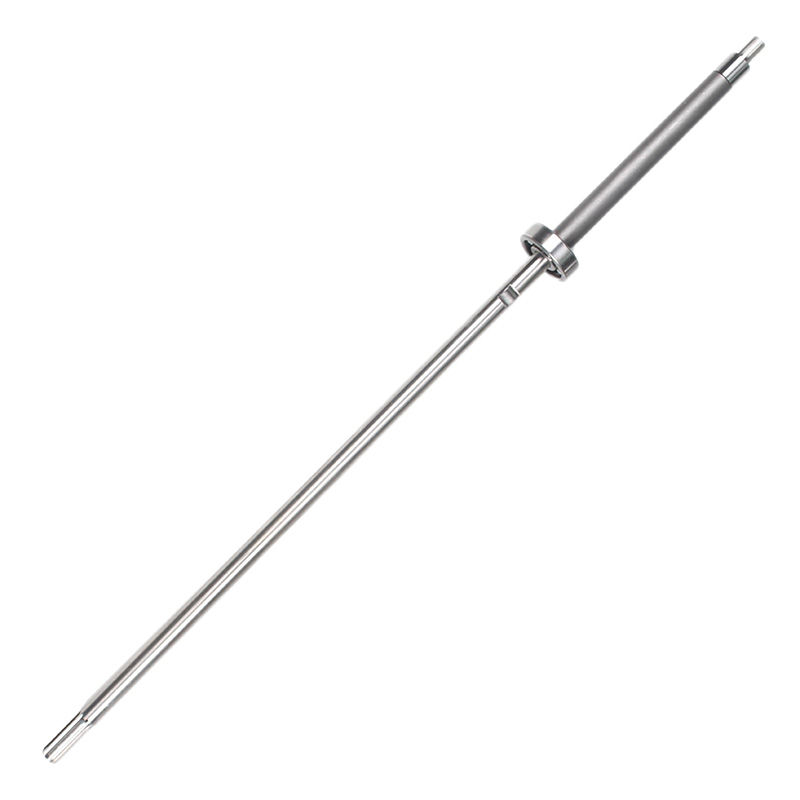
No. Direct purchasing may reduce intermediary costs, but order quantity, setup charges, freight, and inventory requirements affect the result. Compare total purchasing cost on an equivalent basis.
Yes, through manufacturing partners. Confirm who approves drawings, controls revisions, retains inspection records, and handles technical problems.
Request a site visit or live production walkthrough. Check whether the equipment, production records, and inspection capabilities relate to your actual component. Also identify subcontracted operations.
Provide the drawing or reference number, engine application, dimensions, spline details, material requirements, quantity, and inspection criteria. Clearly identify missing information rather than leaving the supplier to assume it.
No. It addresses a quality management system. Individual components still require agreed specifications, appropriate inspection, and evidence of conformity.
Not necessarily. A single supplier can simplify purchasing, but specialist sourcing may be more suitable for technically demanding components. Evaluate convenience alongside capability and supply continuity.
- Ningbo Gill Transmission Parts Co., LTD., "About Us." First-party source for company history and stated product specialization; not an independent factory audit. [gilltransmission]
- International Trade Administration, "Sales Channels." Source for intermediary roles, distribution support, logistics, and international sales coordination. [trade]
- International Organization for Standardization, "ISO 9001 Explained." Source for the purpose and scope of quality management systems. [iso]
- International Organization for Standardization, "ISO 1328-1:2013—Cylindrical Gears: ISO System of Flank Tolerance Classification." Source for the standard's cylindrical-gear scope. [iso]
- SKF, "Alignment Services." Source for the relationship between shaft alignment, wear, bearing and seal life, and machinery reliability. [skf]
- M&R Engineering, "Supplier Purchase Order Quality Clauses." Published example of material certification, lot identification, inspection records, and traceability requirements; not a universal marine industry mandate. [m-reng]


