


close
Choose Your Site
Global
Social Media
Views: 238 Author: Gill Transmission Parts Publish Time: 2026-09-17 Origin: Site


Content Menu
● What Is a Single-Piece Propeller Shaft?
● What Is a Multi-Piece Shaft System?
● Single-Piece vs Multi-Piece Shaft Systems at a Glance
● Advantages of Single-Piece Propeller Shafts
>> Potentially More Direct Power Transmission
>> Practical for High-Volume Component Manufacturing
● Limitations of Single-Piece Propeller Shafts
>> Difficult Handling for Long Shafts
>> Removal Can Be Time-Consuming
>> Less Flexibility for Complex Vessel Layouts
● Advantages of Multi-Piece Shaft Systems
>> Better for Long Propulsion Lines
>> Easier Installation in Restricted Spaces
>> Section-by-Section Replacement
>> More Flexible Bearing Arrangement
● Limitations of Multi-Piece Shaft Systems
● Shaft Alignment: The Decisive Factor in Both Designs
● Material Selection and Manufacturing Quality
>> Important Manufacturing Controls
● How to Choose the Right Shaft Configuration
>> 1. Define the Vessel Layout
>> 3. Consider Maintenance Access
>> 4. Review Vibration and Alignment Risk
>> 5. Select a Manufacturer That Understands the Whole System
● Expert Perspective: Avoid the "Lowest Unit Price" Decision
● FAQ
>> 1. Is a single-piece propeller shaft stronger than a multi-piece shaft system?
>> 2. When should a boat use a multi-piece shaft system?
>> 3. Can shaft misalignment cause vibration?
>> 4. What information should I provide to a propeller shaft manufacturer?
>> 5. How do intermediate bearings affect a multi-piece shaft system?
>> 6. Which shaft design is easier to maintain?
>> 7. Can Ningbo Gill manufacture custom propeller shafts?
Choosing between single-piece propeller shafts and multi-piece shaft systems is not simply a matter of shaft length. The right configuration affects propulsion efficiency, vibration behavior, installation complexity, maintenance planning, replacement cost, and long-term vessel reliability.
For nearly three decades, Ningbo Gill Transmission Parts Co., Ltd. has focused on the development, production, and supply of marine transmission components, including propeller shafts, drive shafts, gears, clutch dogs, and related parts. This practical manufacturing background shows that a propeller shaft is never an isolated component: its design must match the propeller, gearbox output, bearing arrangement, hull structure, engine alignment, torque load, and operating environment.
A single-piece propeller shaft uses one continuous shaft between the transmission connection and the propeller. A multi-piece shaft system divides the drivetrain into two or more shaft sections, normally joined by flanges, couplings, intermediate bearings, or other connecting components. Neither design is universally better. The best choice depends on vessel layout, shaft length, maintenance access, speed, loading conditions, and production requirements.
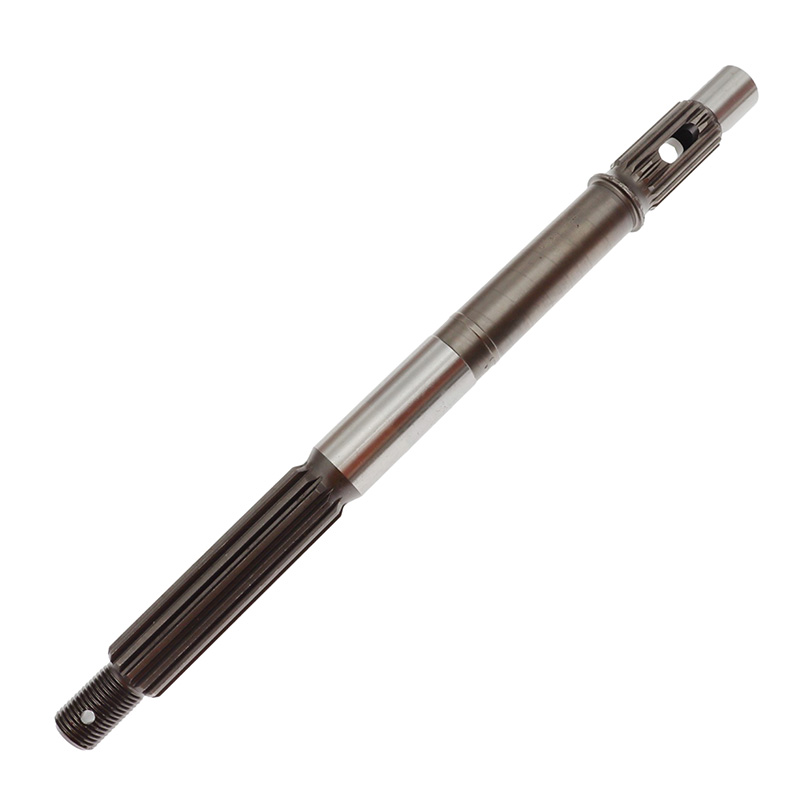
A single-piece propeller shaft is a one-piece marine shaft manufactured as a continuous component. It commonly connects the engine or gearbox output to the propeller through a coupling, stern tube, bearings, seals, and propeller hub connection.
In a typical marine propulsion arrangement, the shaft may include:
- A machined coupling end for gearbox connection
- Bearing journal surfaces
- A tapered propeller seat
- A keyway or spline connection
- Threads for a propeller nut
- Seal-running surfaces
- Precision-machined shoulders and diameter transitions
The main advantage is straightforward: fewer mechanical connections exist between the power source and the propeller.
For compact vessels, outboard lower units, small workboats, recreational boats, and applications with a relatively direct engine-to-propeller layout, a single-piece propeller shaft can offer an efficient and practical solution.
However, "simple" does not mean "easy to manufacture." A long, one-piece shaft requires strict control of straightness, concentricity, surface finish, runout, material quality, heat treatment, and final inspection. Even a small deviation can contribute to vibration, uneven bearing loading, seal wear, or reduced drivetrain life.
A multi-piece shaft system uses multiple shaft sections rather than one continuous propeller shaft. These sections are connected through couplings or flanges and supported by intermediate bearings where required.
This configuration is widely used when the propulsion line is long, the engine room arrangement is complex, access is limited, or a single shaft would be difficult to manufacture, transport, install, or remove.
A multi-piece arrangement may include:
- Gearbox output coupling
- Intermediate shaft
- Intermediate bearing or line shaft bearing
- Flange coupling
- Tail shaft or propeller shaft
- Stern tube bearings
- Propeller connection
- Flexible coupling, depending on the drivetrain design
The defining benefit is modularity. Instead of handling one very long shaft, shipbuilders and maintenance teams can install, align, inspect, and replace individual shaft sections.
For larger vessels, longer shaft lines, commercial workboats, inland vessels, fishing vessels, ferries, and certain specialized marine applications, multi-piece shaft systems may provide better installation flexibility and serviceability.
| Comparison Factor | Single-Piece Propeller Shaft | Multi-Piece Shaft System |
|---|---|---|
| Basic structure | One continuous shaft | Two or more connected shaft sections |
| Number of couplings | Usually fewer | Usually more |
| Installation | Easier in short, open drivetrain layouts | Better for long or restricted installation paths |
| Alignment requirement | Critical across the full shaft length | Critical at each coupling and bearing position |
| Maintenance access | Shaft removal may require more disassembly | Individual sections may be removed separately |
| Vibration behavior | Fewer interfaces can reduce coupling-related issues | Can work well when engineered and aligned correctly |
| Shaft length suitability | Best for short to moderate lengths | Better for long shaft lines |
| Replacement flexibility | Entire shaft may need replacement | Damaged section may sometimes be replaced independently |
| Manufacturing challenge | High straightness control for long shafts | More components and precision interfaces required |
| Cost structure | Often lower component count | More bearings, couplings, machining, and assembly work |
| Typical use | Compact boats, direct-drive systems, lower-unit applications | Larger vessels, long engine-room layouts, complex propulsion lines |
The correct choice is not based on the number of pieces alone. It should be based on the total drivetrain design.
A one-piece shaft has fewer coupling interfaces. This can reduce the number of parts that require bolt torque checks, flange-face inspection, coupling alignment verification, and periodic service.
Each mechanical connection creates another location where installation accuracy matters. When a continuous shaft is correctly machined and aligned, the drivetrain layout can be more direct.
Single-piece systems may use fewer intermediate parts. This can reduce the total number of flanges, bolts, coupling faces, and bearing supports required in the shaft line.
For builders working with compact vessels, this can simplify procurement and assembly. It can also reduce the amount of space needed for intermediate support structures.
A continuous shaft offers a direct mechanical path from the transmission to the propeller. When the shaft is properly sized and supported, it can provide stable torque transmission with minimal mechanical interfaces.
This is particularly valuable in applications where installation space is limited and the shaft route is relatively straight.
For outboard motor components and compact marine transmission assemblies, one-piece propeller shafts can be well suited to repeatable manufacturing processes. CNC turning, milling, grinding, heat treatment, spline machining, and inspection can be standardized when shaft geometry is consistent across production batches.
For an OEM buyer, repeatability matters. A shaft should not only fit the first assembly. It should maintain dimensional consistency across large-volume orders.
As shaft length increases, handling becomes more challenging. A long shaft may require special equipment for machining, straightening, transport, storage, and installation.
The longer the shaft, the more carefully manufacturers must control:
- Straightness
- Deflection
- Diameter consistency
- Journal concentricity
- Taper accuracy
- Heat-treatment distortion
- Surface finish at bearing and seal locations
A shaft that appears acceptable visually may still have excessive runout. That is why dimensional inspection and rotating checks are important before installation.
When a one-piece shaft needs to be replaced, the maintenance team may need to remove surrounding components, including the propeller, coupling, seals, bearings, or gearbox-side connections.
In a restricted engine room or narrow vessel structure, withdrawing one long shaft can be difficult. The practical cost is not only the replacement part. It is also the labor time, vessel downtime, lifting arrangement, and access preparation.
Some vessels cannot accommodate a straight, uninterrupted shaft route. Bulkheads, machinery placement, hull geometry, and internal structures may make a single-piece arrangement impractical.
In these cases, a multi-piece shaft system can make installation more realistic and serviceable.
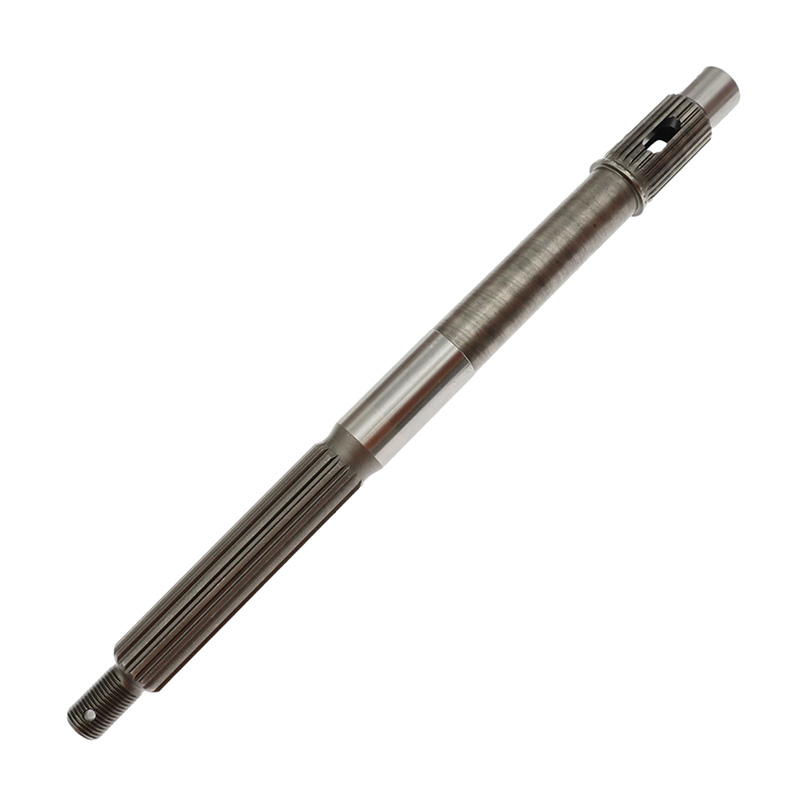
Multi-piece shaft systems are often the practical choice when the distance between the engine or gearbox and the propeller is substantial.
Breaking the shaft line into sections can make it easier to manufacture and manage shafts within available machine capacity, transport limitations, and onboard installation conditions.
A long continuous shaft may not physically pass through the vessel structure during assembly or repair. Multi-piece systems solve this issue by allowing sections to be installed separately and connected inside the vessel.
This can be especially useful when the vessel includes:
- Multiple watertight compartments
- Complex machinery rooms
- Limited hatch openings
- Structural bulkheads
- Narrow access routes
- Large engine or gearbox assemblies
If a specific intermediate shaft or tail shaft section is damaged, a multi-piece design may allow replacement of that section rather than the complete shaft line.
This does not always mean lower total repair cost. Couplings, bearings, alignment labor, and inspection work still matter. But modular replacement can reduce disruption where spare sections are available.
Intermediate bearings can support long shaft lines and help manage deflection. Properly positioned bearings distribute load and help keep the rotating shaft line within acceptable operating conditions.
However, this benefit depends on correct design and installation. Additional bearings are not automatically better. Poor bearing positioning or misalignment can introduce unwanted loads and vibration.
Every coupling and intermediate bearing introduces another alignment requirement. A multi-piece shaft line must be carefully aligned as a complete rotating system.
Misalignment can contribute to:
- Elevated vibration
- Coupling wear
- Bolt loosening
- Bearing overheating
- Uneven journal wear
- Seal damage
- Noise during operation
- Reduced component life
In real service conditions, alignment can change after hull deformation, machinery movement, bearing wear, grounding events, or major temperature changes. Periodic inspection is therefore important.
A multi-piece arrangement includes more flanges, bolts, coupling faces, bearing housings, and shaft interfaces. This increases the number of service points.
Maintenance teams should inspect coupling bolt condition, flange-face cleanliness, bearing temperature, lubricant condition, shaft runout, vibration levels, and signs of fretting or corrosion at interfaces.
The shaft itself may be shorter, but the complete system is more complex. Engineering decisions must consider coupling rigidity, flange design, bolt preload, bearing loads, critical speed behavior, torsional vibration, and service access.
For this reason, multi-piece systems should be specified as an integrated shafting solution rather than as a collection of individual components.
Whether a vessel uses a single-piece propeller shaft or a multi-piece shaft system, alignment is one of the most important determinants of performance and service life.
A correctly sized shaft can still fail early if it operates under misalignment. Likewise, a well-designed multi-piece system can perform reliably when coupling faces, bearing centers, engine mounts, and shaft offsets are set correctly.
From a manufacturing and service perspective, alignment should consider more than the initial cold condition. Vessel structures can change position after launch, loading, fuel consumption, thermal expansion, or long-term operation.
1. Verify gearbox output position and engine mounting condition.
2. Measure shaft runout before final assembly.
3. Inspect coupling face contact and flange condition.
4. Confirm bearing centerline positions.
5. Check stern tube bearing clearance and lubrication condition.
6. Tighten coupling bolts to the specified procedure.
7. Measure vibration and bearing temperature during commissioning.
8. Recheck alignment after initial operating hours where appropriate.
A practical rule is simple: do not diagnose a shaft problem only by looking at the shaft. Inspect the complete drivetrain, including engine mounts, gearbox output, bearings, stern tube components, coupling faces, and propeller condition.
The durability of a marine propeller shaft depends on material selection, machining quality, heat treatment, corrosion protection, and application-specific design.
Common marine shaft materials may include carbon steel, alloy steel, stainless steel, or other corrosion-resistant grades selected according to torque demand, operating environment, lubrication method, and customer specification.
The correct material depends on the application. A shaft used in a compact outboard lower unit faces different requirements from a large inboard vessel tail shaft operating in saltwater for extended periods.
For both single-piece and multi-piece marine shaft systems, buyers should evaluate:
- Raw material traceability
- Chemical composition verification
- Heat-treatment process control
- Shaft straightness
- Journal diameter tolerance
- Surface roughness at bearing and seal areas
- Spline, keyway, or taper accuracy
- Thread quality
- Hardness testing where required
- Runout inspection
- Corrosion-protection requirements
- Final packing protection for export transport
Ningbo Gill Transmission Parts Co., Ltd. states that it has operated since 1997 and supplies propeller shafts, drive shafts, gears, and other transmission components, with OEM and custom manufacturing services. Its production facilities cover more than 25,000 square meters in Ningbo, Zhejiang Province. For buyers, factory capability should be verified through drawings, samples, inspection criteria, process review, and production communication before placing volume orders.
The best procurement decision starts with application data. Avoid choosing a shaft layout only because it is familiar or appears less expensive at the quotation stage.
Use the following decision process.
Measure the available shaft route from gearbox to propeller. Identify obstructions, access openings, bulkheads, bearing support locations, and shaft removal paths.
If a long shaft cannot be installed or removed as one part, a multi-piece design may be more suitable.
Collect data on engine power, transmission ratio, operating RPM, propeller size, expected torque, vessel duty cycle, and operating environment.
A shaft system for a lightly used recreational boat should not be specified the same way as one for a commercial fishing vessel or high-duty workboat.
Ask a practical question: if the shaft, coupling, or bearing needs service after several years, can technicians access it safely and efficiently?
A multi-piece arrangement may offer better repair access. A single-piece shaft may offer lower routine complexity. The right balance depends on the vessel.
Long shaft lines, flexible hulls, high-speed vessels, and complex machinery arrangements require careful alignment planning.
Where multiple shaft sections are used, specify the coupling design, bearing positions, installation tolerances, and inspection process clearly.
A reliable propeller shaft supplier should not only produce a part to a drawing. The supplier should understand the functional relationship between shaft geometry, material, bearing surfaces, spline or taper features, heat treatment, and assembly requirements.
For custom projects, provide the supplier with detailed drawings, material requirements, hardness range, dimensional tolerances, surface finish requirements, quantity forecast, and quality documentation expectations.
In marine transmission sourcing, the lowest shaft price can become the highest lifecycle cost if the part causes fitting problems, excessive runout, poor spline engagement, premature bearing wear, or repeated service downtime.
When evaluating propeller shaft suppliers, assess the total value of the component:
- Can the supplier control critical dimensions consistently?
- Are inspection methods agreed before mass production?
- Is the material grade clearly identified?
- Can the supplier support OEM drawings and custom modifications?
- Are samples available for validation?
- Is packaging strong enough to prevent corrosion and impact damage during shipment?
- Can the manufacturer communicate clearly about tolerances and quality expectations?
For buyers sourcing marine components internationally, communication quality is a technical issue as well as a commercial issue. A misunderstanding about spline dimensions, taper ratio, heat treatment, or bearing journal finish can delay an entire assembly program.
Choose a single-piece propeller shaft when your vessel has a relatively short and direct shaft route, limited need for intermediate support, and sufficient space for installation and removal. Its lower component count and direct structure can make it an efficient solution for many compact marine applications.
Choose a multi-piece shaft system when the vessel has a long propulsion line, restricted installation access, structural obstacles, or a need for section-by-section serviceability. Its modular construction can provide important practical advantages, but it requires disciplined alignment, coupling control, and bearing management.
The most reliable propulsion system is not necessarily the simplest or the most complex. It is the system that is correctly engineered for the vessel, manufactured with stable quality, installed with precision, and maintained according to actual operating conditions.
If you are developing an OEM marine transmission project or sourcing custom propeller shafts, contact Ningbo Gill Transmission Parts Co., Ltd. with your drawings, material requirements, dimensions, sample needs, and annual volume forecast. A clear technical review before production can help reduce fitting risk, improve consistency, and support dependable long-term supply.
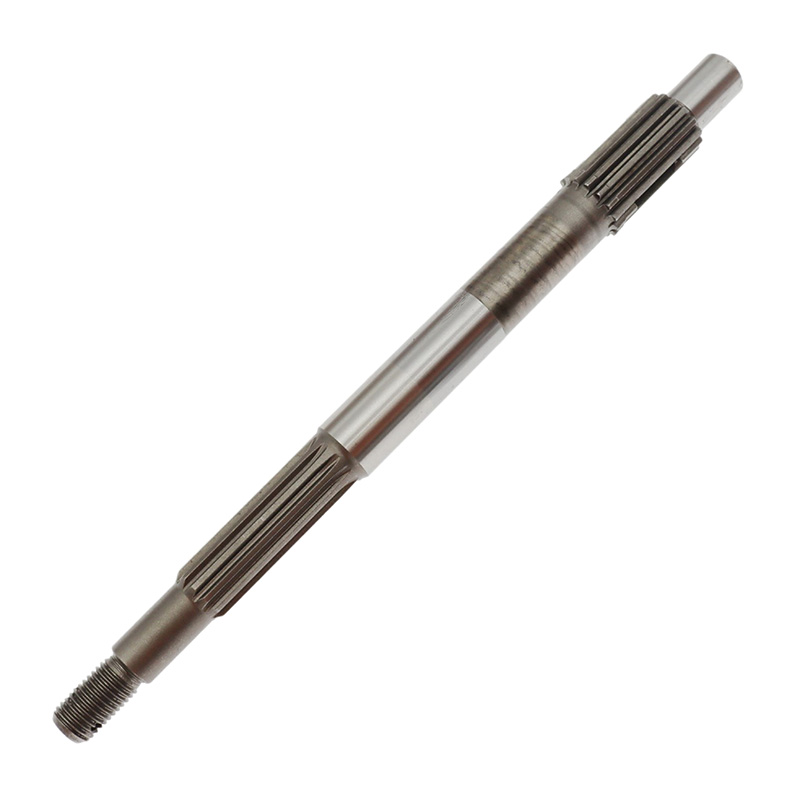
Not automatically. A single-piece shaft has fewer mechanical connections, but strength depends on material grade, diameter, heat treatment, geometry, torque demand, bearing support, and alignment. A properly engineered multi-piece shaft system can be highly reliable for long marine propulsion lines.
A boat should consider a multi-piece shaft system when the shaft line is long, access is restricted, bulkheads or machinery prevent installation of one continuous shaft, or maintenance planning requires section-by-section replacement capability.
Yes. Shaft misalignment is a common cause of drivetrain vibration, bearing heat, coupling wear, seal damage, and premature component failure. Alignment should be checked during installation and reviewed after initial operating conditions stabilize.
Provide drawings, shaft length, diameters, material requirements, heat-treatment requirements, spline or keyway details, taper dimensions, thread specifications, surface-finish requirements, required tolerances, application details, sample requirements, and expected order quantity.
Intermediate bearings support long shaft sections and help control shaft deflection. Their position, centerline accuracy, lubrication, clearance, and housing rigidity must be carefully managed. Incorrect bearing alignment can create additional load rather than solving it.
A multi-piece shaft system can be easier to repair in confined vessels because individual sections may be removed separately. However, it has more couplings and bearings to inspect. A single-piece shaft has fewer interfaces but may be harder to remove when space is limited.
Ningbo Gill Transmission Parts Co., Ltd. states that it provides OEM and custom manufacturing services for propeller shafts, drive shafts, gears, and related transmission parts. Buyers should submit detailed technical drawings and specifications for project evaluation.
1. [Ningbo Gill Transmission Parts Co., Ltd. — Company Introduction]
2. [Gill Transmission — Gear, Drive Shaft and Propeller Shaft Manufacturer]
3. [Gill Transmission — Products and Production Facility Information]
4. [BT Marine Propellers — Propeller Shaft Information]
5. [International Association of Classification Societies — Unified Requirements]
6. [American Bureau of Shipping — Rules and Guides for Marine Vessels]


