


close
Choose Your Site
Global
Social Media
Views: 269 Author: Gill Transmission Parts Publish Time: 2026-09-18 Origin: Site


Content Menu
● What Does "Extending a Boat Motor Shaft" Mean?
>> The Drive Shaft's Critical Role
● Standard Outboard Shaft Lengths and Boat Transom Height
● Can an Outboard Motor Be Converted to a Longer Shaft?
>> Why a Longer Drive Shaft Alone Is Not Enough
● How to Measure Your Boat and Motor Correctly
>> Step 1: Measure the Transom Height
>> Step 2: Identify the Existing Shaft Configuration
>> Step 3: Inspect the Running Height
● Signs Your Outboard Shaft Length Is Wrong
● Three Ways to Solve a Shaft-Length Mismatch
>> Option 1: Use a Manufacturer-Approved Conversion Kit
>> Option 2: Modify the Boat's Mounting Height
>> Option 3: Replace the Engine With the Correct Shaft Length
● Expert Checklist Before Extending a Boat Motor Shaft
>> Welding a Drive Shaft Extension
>> Using an Unverified Used Shaft
>> Ignoring Water-Pump Alignment
>> Treating a Mounting Problem as a Shaft Problem
● A Practical Example: Short Shaft Motor on a Tall Transom
● Choose Precision Over Improvisation
>> Can you extend a 15-inch outboard shaft to 20 inches?
>> Can I weld an extension onto an outboard drive shaft?
>> What happens if my outboard shaft is too short?
>> What happens if an outboard shaft is too long?
>> How do I know whether I need a short-shaft or long-shaft outboard?
>> Can a jack plate replace a shaft extension?
>> Does changing shaft length affect the water pump?
>> What information should I provide when ordering a replacement outboard drive shaft?
Yes, you can extend the shaft on some boat motors—but it is not a universal or simple modification. For an outboard motor, the correct approach depends on the engine brand, model, horsepower, existing shaft length, transom height, lower-unit design, and the availability of a purpose-built conversion kit.
A boat motor shaft extension may solve a mismatch between a boat's transom and an outboard engine. However, a poorly planned conversion can lead to ventilation, overheating, shift problems, driveline misalignment, water-pump issues, vibration, or premature failure of internal parts. Before changing any component, boat owners, repair shops, and marine distributors should confirm whether the engine manufacturer supports the conversion and whether the final propeller position will be correct for the hull.
At Ningbo Gill Transmission Parts Co., LTD., we have focused on the research, production, and supply of drive shafts and marine transmission components since 1997. With 29 years of practical manufacturing experience, we understand that a shaft is not simply a long metal rod. It is a precision transmission component that must work with splines, couplings, gears, seals, bearings, and the entire lower-unit assembly.
This guide explains when extending a boat motor shaft is possible, what parts may need to be changed, how to measure the correct setup, and when replacing the outboard may be the safer and more economical decision.
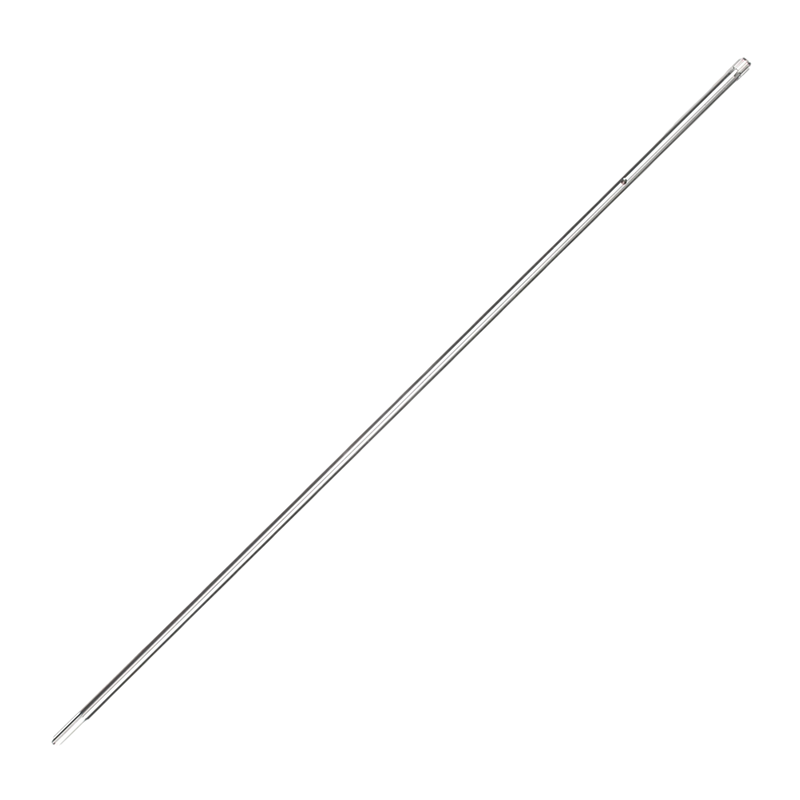
When people ask, "Can you extend shaft on a boat motor?", they may mean one of several different modifications. It is important to identify the exact component before ordering parts or starting disassembly.
In most cases, the question refers to converting an outboard motor from a shorter shaft configuration to a longer one. For example:
- Converting a 15-inch short-shaft outboard to a 20-inch long-shaft configuration
- Converting a 20-inch long-shaft outboard to a 25-inch extra-long-shaft configuration
- Adding height to the boat's transom instead of modifying the engine
- Replacing an internal outboard drive shaft after corrosion, spline wear, twisting, or breakage
- Installing a jack plate, setback bracket, or motor-lift system to change mounting height
These are very different jobs. A simple external mounting adjustment is not the same as extending the internal drive shaft inside the outboard leg.
The outboard drive shaft transfers rotational power from the engine crankshaft down to the gearcase. In the lower unit, the drive shaft works with the pinion gear, forward and reverse gears, bearings, seals, water-pump components, and propeller shaft assembly.
Because the drive shaft operates at high speed, its dimensions and finishing requirements are critical. The component must have:
- Accurate overall length
- Correct spline dimensions and tooth profile
- Reliable concentricity and straightness
- Suitable material strength and heat treatment
- Proper corrosion resistance for marine environments
- Compatibility with the engine's water pump and lower-unit components
- Precise engagement with the crankshaft and pinion gear
A shaft that is only "close enough" in length or spline fit can create serious mechanical damage. That is why a custom shaft extension should never be treated as a casual welding or machining job.
Most combustion outboards are commonly supplied in standard shaft categories. The most frequently used lengths are approximately 15 inches, 20 inches, 25 inches, and 30 inches. Actual dimensions and naming conventions can vary by manufacturer and engine family, so the owner's manual and official model specifications should always take priority.
| Outboard shaft type | Typical shaft length | Common boat application |
|---|---|---|
| Short shaft | About 15 inches / 38 cm | Small dinghies, jon boats, compact utility boats |
| Long shaft | About 20 inches / 51 cm | Many recreational fishing boats and runabouts |
| Extra-long shaft | About 25 inches / 64 cm | Offshore boats, deeper transoms, some pontoons |
| Ultra-long shaft | About 30 inches / 76 cm | Heavy-duty applications, high-transom vessels, special installations |
The general goal is to position the anti-ventilation plate—often called the cavitation plate—near the bottom line of the hull. On many planing boats, it is often close to flush with the hull bottom or slightly above it. On slower displacement boats, workboats, and vessels that operate in rough water, a deeper propeller position may sometimes be needed to maintain water flow and reduce air ingestion.
The final engine height should be determined by the boat, not by a generic rule alone. Hull shape, transom angle, load distribution, propeller design, trim range, and operating conditions all affect the correct setup.
In some engine families, yes. Manufacturers may offer a factory conversion kit that changes a short-shaft model into a long-shaft model, or a long-shaft model into an extra-long-shaft model.
A proper conversion usually requires more than one part. Depending on the engine design, the kit may include:
- A longer drive shaft
- A longer shift shaft or shift rod
- A longer water tube
- An extension housing or spacer section
- New gaskets and seals
- Fasteners designed for the extension housing
- Water-pump-related components
- Updated shift linkage parts
- Model-specific installation instructions
The exact requirements vary significantly among brands, power ranges, and production generations. Two engines with similar horsepower may use completely different gearcase castings, spline counts, shaft diameters, water-pump arrangements, and shift systems.
The drive shaft is only one part of a complete vertical transmission and cooling system. If the motor leg is extended but the water tube, shift linkage, housing, or seals are not correctly changed, the engine may not cool properly or shift reliably.
For example, installing a longer drive shaft without a correctly matched water tube can interrupt the water supply from the gearcase to the engine. This can cause an overheat alarm, reduced engine protection, impeller damage, cylinder-head damage, or severe engine failure.
Likewise, an incorrectly matched shift rod can prevent the gearcase from fully engaging forward or reverse gear. That may cause gear jumping, clutch-dog wear, unstable shifting, or loss of propulsion.
A safe conversion is a system conversion, not just a shaft-length conversion.
Before deciding whether to extend the shaft, take accurate measurements. Do not guess based on the boat's advertised model name or a previous owner's description.
Park the boat on level ground and keep the hull as level as practical. Measure vertically from the top of the transom mounting area down to the lowest relevant hull point near the centerline.
For boats with angled transoms, stepped hulls, tunnels, brackets, pods, or modified mounting surfaces, measurement becomes more complex. The result should be evaluated together with the engine manufacturer's installation guidance.
Record:
- Transom height
- Hull-bottom shape near the engine
- Transom angle
- Existing mounting-hole position
- Engine make, model, serial number, and horsepower
- Current shaft length
- Distance from the anti-ventilation plate to the hull bottom
Look for the shaft-length code in the engine's identification information, operator's manual, or parts catalog. Do not rely only on a tape measurement from the outside of the motor.
Some engines have different mounting brackets, gearcases, midsections, and lower-unit configurations that affect how the published shaft length is defined. Manufacturer documentation is the most reliable source for identifying the original configuration.
If the boat is already operating, note the performance symptoms:
- Does the propeller ventilate during turns or acceleration?
- Does the engine over-rev when the boat crosses waves?
- Is the anti-ventilation plate excessively submerged?
- Does the boat create unnecessary spray or drag?
- Is cooling-water discharge stable?
- Does the boat struggle to plane?
- Does the engine trim normally through its full range?
These observations help distinguish between an incorrect shaft length and other issues, such as propeller damage, excessive load, poor trim, worn engine mounts, a damaged water pump, or hull modifications.
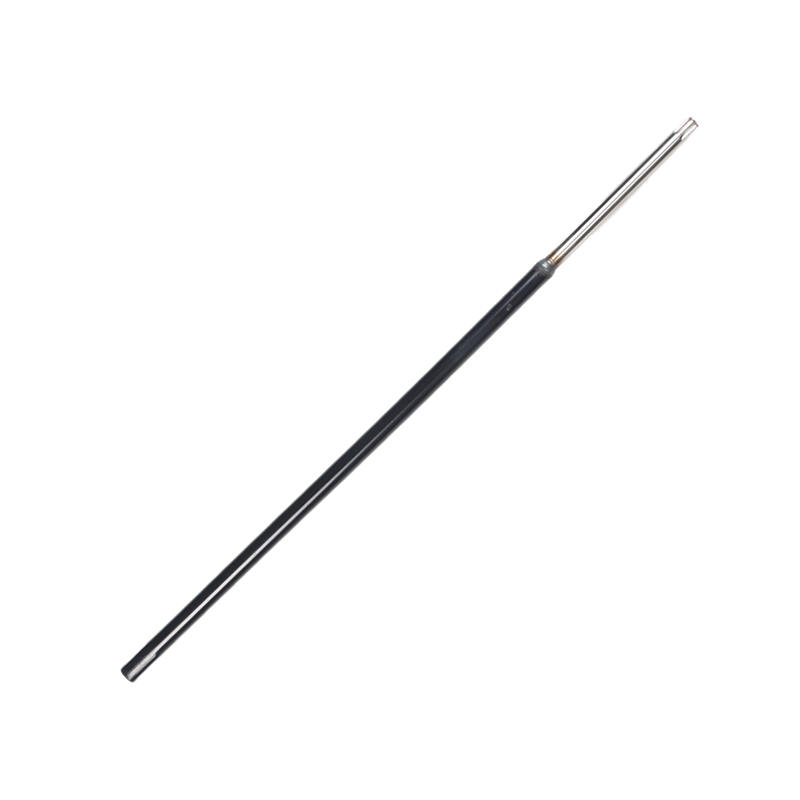
An outboard that is mounted too high or equipped with a shaft that is too short may leave the propeller too close to the water surface. Air can be drawn into the propeller, causing ventilation and poor grip.
Common signs include:
- Engine RPM rises suddenly while boat speed drops
- Propeller loses bite in turns, waves, or wake
- Boat struggles to accelerate onto plane
- Cooling-water flow becomes inconsistent
- Propeller repeatedly breaks free in rough water
- High-pitched engine sound during acceleration
- Reduced carrying ability with passengers or cargo
An engine that sits too low can also create problems. The gearcase may produce additional drag, spray may increase, fuel use may rise, and the boat may lose top-end efficiency.
Common signs of an overly long shaft or low mounting position include:
- Heavy steering feel
- Excessive water spray behind the transom
- Reduced speed at similar RPM
- More drag from the lower unit
- Difficulty finding an efficient trim angle
- Poorer fuel economy than expected
Do not assume every handling problem is caused by shaft length. Propeller pitch, trim angle, engine height, hull loading, and mechanical condition should be checked together.
Boat owners generally have three practical options. The right choice depends on engine availability, cost, safety, and the long-term use of the boat.
| Solution | Best for | Advantages | Limitations |
|---|---|---|---|
| Factory shaft conversion kit | Supported engine models with a clear 5-inch mismatch | Keeps the existing motor; can provide an original-equipment-style result | Requires correct parts, skilled installation, and compatibility confirmation |
| Transom modification or fixed riser | Boats being rebuilt or permanently reconfigured | Can match the boat to the engine; may be cost-effective during restoration | Structural work must be strong, sealed, and properly engineered |
| Jack plate or adjustable bracket | Boats needing fine engine-height adjustment | Allows testing and adjustment; useful for some performance setups | Does not replace a true shaft-length conversion when the mismatch is large |
| Replace the outboard | Unsupported, obsolete, badly worn, or expensive-to-convert engines | Often provides the cleanest long-term solution | Higher upfront cost; may require new controls or rigging |
This is usually the preferred route when available. A complete kit is designed around the engine's internal geometry and can include the matched parts needed to preserve water flow, shifting, sealing, and power transmission.
Before purchasing a kit, confirm:
1. The exact engine model and serial-number range
2. The current shaft length and target shaft length
3. Whether the gearcase and midsection support the conversion
4. The complete kit contents
5. Any required changes to controls, wiring, steering, or rigging
6. The installation torque specifications and gasket requirements
7. Whether the installation should be performed by an authorized technician
If the outboard is mechanically correct but the boat's transom was changed, repaired, or incorrectly built, changing the boat's mounting surface can be more practical than altering the engine.
A transom riser may be suitable for a short-shaft engine mounted on a taller transom. However, it must be structurally sound and sealed against water intrusion. A weak riser can crack, loosen, flex under thrust, or damage the transom.
A properly designed solution should consider:
- Engine weight and thrust load
- Steering and trim loads
- Fastener size and backing plates
- Corrosion-resistant materials
- Drainage and water sealing
- Access for maintenance and tilting
- Local safety requirements
For older engines, unavailable conversion parts, severe corrosion, or expensive labor requirements, replacement may be more cost-effective. This is especially true when the engine already needs major work on the gearcase, cooling system, ignition, controls, or mounting bracket.
A replacement outboard with the correct shaft length can reduce uncertainty and protect resale value. It can also avoid the risks associated with mixing used components from different models or production years.
From a transmission-parts perspective, the most important step is verifying compatibility before manufacturing, sourcing, or installing a replacement drive shaft.
Use this checklist before proceeding:
- Confirm the engine's full model and serial number
- Identify the original shaft length
- Measure actual transom height
- Check the engine manufacturer's parts catalog
- Verify drive-shaft spline count and spline profile
- Confirm upper and lower shaft engagement dimensions
- Check shaft diameter, shoulder positions, and seal-contact areas
- Confirm shift-shaft and water-tube requirements
- Inspect the gearcase for corrosion, wear, and prior repairs
- Review the condition of the water pump and impeller
- Check propeller condition and pitch
- Inspect engine mounts and transom structure
- Use new gaskets, seals, and specified fasteners during assembly
- Perform a cooling-water and shift-function test before launching
- Conduct a controlled sea trial under normal load
For replacement drive shafts, material selection and heat treatment matter. The shaft must withstand torsional load, repeated starts, shifting loads, vibration, and long-term moisture exposure. Precision machining is equally important because spline wear, runout, poor surface finish, or incorrect hardness can affect both performance and service life.
Welding a drive shaft to make it longer is generally a poor solution for an outboard motor. Heat can change the material properties, distort the shaft, affect straightness, and weaken critical areas near splines or bearing surfaces.
A welded shaft may also introduce imbalance. At engine operating speed, even a small runout problem can increase vibration and accelerate wear in bearings, seals, gears, and couplings.
Used parts can be economical, but only when the part number, spline design, length, and engine compatibility are confirmed. A shaft that looks similar may still differ in important dimensions.
Before reuse, inspect for:
- Twisting near splines
- Corrosion pitting
- Bent shaft condition
- Damaged water-pump contact areas
- Worn spline teeth
- Cracks or stress marks
- Improper previous machining
A shaft conversion often requires attention to the water pump, impeller, water tube, housing, and seals. If the cooling system is not assembled correctly, the engine may overheat even if it appears to run normally at low speed.
Sometimes the engine shaft length is correct, but the motor is simply bolted in the wrong mounting-hole position. Before converting the engine, test whether raising or lowering the outboard within the manufacturer's permitted mounting range solves the problem.
Imagine a 15-inch short-shaft outboard installed on a boat with a transom close to 20 inches high. The propeller and gearcase may sit too high, particularly when the boat accelerates, turns, or encounters waves.
The owner has several choices:
- Install a manufacturer-approved 20-inch conversion kit, if available
- Use a properly engineered lower mounting arrangement, if the boat design permits it
- Rebuild or modify the transom mounting area
- Sell or repurpose the short-shaft outboard and purchase a long-shaft version
The correct decision depends on the engine's condition, parts availability, expected operating environment, and total conversion cost. For a commercial workboat or export-market service operation, reliability and serviceability often matter more than the lowest immediate cost.
Extending the shaft on a boat motor can be practical when the engine manufacturer supports the conversion and all associated components are correctly matched. But it should be approached as a full driveline, cooling-system, and mounting-height project—not as a simple metal-extension task.
For marine workshops, distributors, boat builders, and replacement-parts buyers, accurate technical information is the foundation of a dependable repair. A properly manufactured drive shaft must match the required length, spline geometry, material specification, heat treatment, and fitment requirements of the outboard system.
Ningbo Gill Transmission Parts Co., LTD. supplies marine transmission components with a focus on dependable fitment, precision manufacturing, and long-term service needs. If you are sourcing outboard drive shafts, lower-unit transmission parts, or customized marine shaft solutions, send us your engine model, OEM part number, drawings, samples, and required quantity. Our team can help evaluate the relevant shaft specifications before production begins.
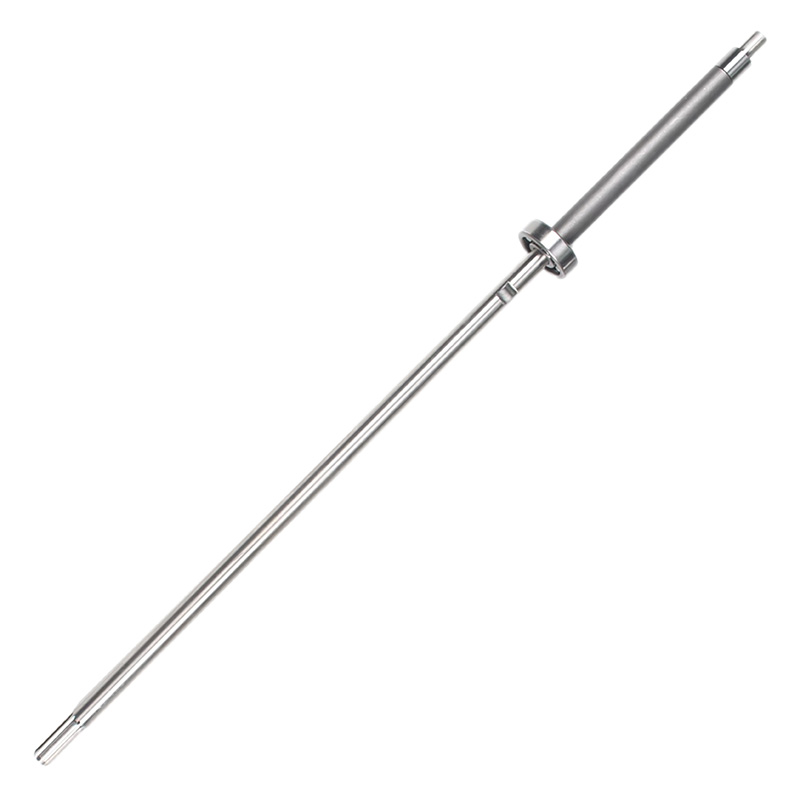
Yes, some outboard models can be converted from a 15-inch short shaft to a 20-inch long shaft. The conversion usually requires more than a longer drive shaft. It may also need an extension housing, water tube, shift components, gaskets, seals, and model-specific hardware. Confirm availability through the engine manufacturer's parts information before starting.
It is generally not recommended. Welding can affect shaft straightness, balance, material strength, and spline-area durability. A purpose-made shaft or approved conversion kit is a safer solution for a marine power-transmission system.
A short shaft on a tall transom can place the propeller too close to the water surface. This can cause ventilation, poor acceleration, unstable handling, reduced cooling-water pickup, and loss of propulsion in turns or rough water.
An overly long shaft can place the gearcase too deep in the water. The result may include increased drag, excess spray, lower speed, reduced fuel efficiency, and more difficulty trimming the boat efficiently.
Measure the boat's transom height and compare it with the engine manufacturer's shaft-length guidance. Common combustion outboard categories are approximately 15 inches for short shaft, 20 inches for long shaft, and 25 inches for extra-long shaft, but exact requirements vary by model and hull design.
A jack plate can adjust engine height and may solve minor mounting-height issues. However, it does not always replace a true shaft-length conversion. If the engine is significantly too short for the transom, the propeller may still lose water flow when the boat accelerates or operates in waves.
Yes. A proper shaft-length conversion can require changes to the drive shaft, water tube, water-pump assembly, seals, and housing components. Incorrect cooling-system assembly can lead to overheating and serious engine damage.
Provide the engine brand, model, serial number, horsepower, production year if known, OEM part number, shaft length, spline count, photos, drawings, and a physical sample where possible. This information helps confirm fitment and reduce the risk of ordering an incompatible component.
1. [Ningbo Gill Transmission Parts Co., LTD. – Company Profile]
2. [Ningbo Gill Transmission Parts Co., LTD. – Product Overview]
3. [Honda Marine BF4A, BF5D and BF6A Owner's Manual]
4. [Epropulsion – Outboard Motor Height Guide]
5. [Epropulsion – Long Shaft Outboard Motor Guide]
6. [Boat Builder Central – Outboard Shaft Lengths and Transoms]
7. [Suzuki Marine South Africa – Shaft Lengths and Mounting Methods]


