


close
Choose Your Site
Global
Social Media
Views: 222 Author: Gill Transmission Parts Publish Time: 2026-06-20 Origin: Site


Content Menu
● Understanding Marine Gears for Saltwater Use
● What Do We Mean by Stainless vs Alloy Steel Gears?
>> Stainless steel marine gears
● Core Performance Comparison in Saltwater
>> Key performance factors in saltwater
● Real‑World Corrosion Behavior in Saltwater Environments
● Strength, Hardness, and Load Capacity: Where Alloy Steel Still Wins
● Lifecycle Cost and Total Cost of Ownership
● Practical Selection Guide for Saltwater Applications
● Expert Insight: How an Outboard Gear Manufacturer Approaches Material Choice
● Practical Maintenance Tips to Extend Gear Life in Saltwater
● When to Choose Stainless Steel Marine Gears vs Alloy Steel Gears
● FAQs about Stainless vs Alloy Steel Marine Gears
Stainless steel marine gears and alloy steel gears can both work in saltwater, but they perform very differently in terms of corrosion resistance, load capacity, lifecycle cost, and maintenance demands. From a practical manufacturing and end‑user standpoint, stainless steel gears are the safer choice for long‑term saltwater exposure, while alloy steel gears remain attractive when you prioritize peak load capacity and cost, provided you manage corrosion aggressively. [alibaba]
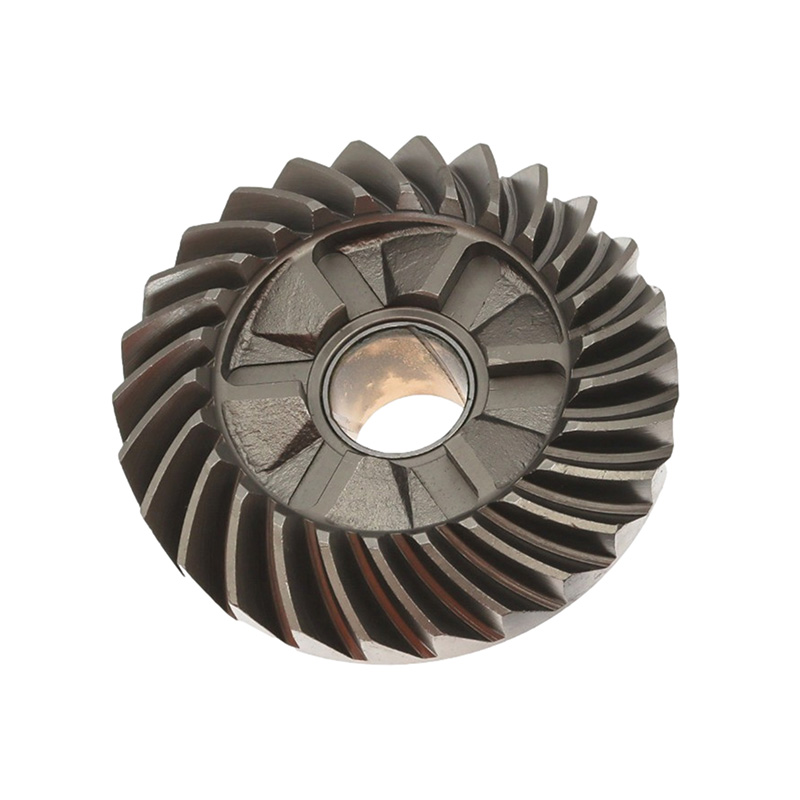
Marine gears in outboard lower units, stern drives, and small marine transmissions operate in a uniquely harsh environment: high loads, shock impacts, continuous vibration, and constant exposure to saltwater and moist air. For a company like Ningbo Gill Transmission Parts Co., LTD., which has focused on outboard gears and marine driveline components for nearly three decades, material selection is one of the core levers used to balance performance, durability, and cost for different use cases. [alibaba]
In saltwater conditions, corrosion is not a secondary issue; it is often the primary failure driver, even ahead of classical tooth bending fatigue or pitting. That is why the debate of stainless steel marine gears vs alloy steel gears for saltwater use is not just academic—it directly shapes total cost of ownership, warranty risk, and customer satisfaction over the life of an outboard system. [alibaba]
"Stainless steel" covers a family of steels with at least ~10.5% chromium, typically in the austenitic (e.g., 316/316L) or martensitic (e.g., 17‑4PH) categories for marine applications. For precision marine gears, martensitic and precipitation‑hardening stainless grades are more relevant because they can be heat‑treated to higher hardness, delivering sufficient load‑carrying capacity while still maintaining superior corrosion resistance in seawater. [alibaba]
In practical outboard gear design, stainless steel is often used for components with high corrosion risk but moderate mechanical load, or for premium saltwater series where manufacturers want to minimize rust‑related callbacks and enhance perceived quality in harsh coastal markets. [alibaba]
"Alloy steel" refers to medium‑ or high‑carbon steels with added elements like nickel, chromium, molybdenum, and vanadium specifically tailored for strength, hardenability, and fatigue resistance. Common gear steels in the marine and power transmission world include carburizing grades or through‑hardening grades that achieve very high surface hardness (for wear) and tough cores (for impact loads) after appropriate heat treatment. [alibaba]
In outboard and inboard marine gearboxes, these alloy steel gears are still the dominant choice globally because they are cost‑efficient, easy to machine and heat‑treat, and proven in millions of units—but they do demand robust surface protection and lubrication management when used in saltwater. [alibaba]
The table below summarizes how stainless steel gears vs alloy steel gears compare on key engineering and business‑critical criteria for saltwater use.
| Factor | Stainless Steel Marine Gears | Alloy Steel Gears |
|---|---|---|
| Corrosion resistance in seawater | Excellent to very good when using marine‑grade stainless (e.g., 316/17‑4PH), strongly resists pitting and crevice corrosion in splash zones. (alibaba) | Poor to moderate; bare alloy steel will rust quickly, especially in splash and standby conditions, requiring coatings, paint, or tight sealing. (alibaba) |
| Load capacity and hardness | Good but typically slightly lower hardness than top carburized alloy steels at equivalent cost; suitable for most outboard and leisure applications. (alibaba) | Excellent; high‑end alloy steels deliver superior bending strength and pitting resistance under heavy, shock‑load conditions. (alibaba) |
| Wear and pitting resistance (with correct lubrication) | Good, especially for hardened martensitic stainless; may show slightly higher wear in extreme torque applications. (alibaba) | Excellent when carburized or induction hardened, widely used in heavy‑duty industrial and marine gearboxes. (alibaba) |
| Sensitivity to surface damage | More forgiving to minor surface corrosion; less likely to develop deep rust pits that act as crack initiators. (alibaba) | Highly sensitive to unattended corrosion; small pits can quickly evolve into fatigue cracks under cyclic load. (alibaba) |
| Manufacturing and heat‑treatment complexity | Stainless is harder to machine, requires precise heat treatment to balance corrosion resistance and hardness; production cost per gear is higher. (alibaba) | Mature, well‑understood processes; machining, carburizing, and grinding are highly optimized and cost‑efficient at scale. (alibaba) |
| Lifecycle maintenance in saltwater | Lower maintenance burden; better suited for customers who cannot rinse or service equipment frequently. (alibaba) | Higher maintenance burden; needs strict rinsing, storage, and lubricant checks to avoid corrosion‑driven failure. (alibaba) |
| Unit cost and price positioning | Higher part cost but can reduce warranty claims and increase perceived quality in premium saltwater product lines. (alibaba) | Lower part cost; attractive for price‑sensitive markets and freshwater‑focused models, even when used in coastal regions under careful maintenance. (alibaba) |
From an engineering and user‑experience standpoint, stainless steel gears are like an "insurance policy" against saltwater neglect, whereas alloy steel gears are the "workhorse" choice when you know the operator will follow strict maintenance routines. [alibaba]
In real coastal usage, gear materials are exposed to more than just submerged seawater: there are wet‑dry cycles, oxygen‑rich spray, biofouling, and long idle periods in humid air. These conditions are particularly aggressive towards standard alloy steels because corrosion cells can initiate at microscopic scratches, machining marks, or coating defects, and then propagate under cyclic loads. [alibaba]
From our experience serving OEMs and aftermarket customers, two patterns are common:
- Alloy steel gears often come back with localized rust pits near the root or inactive flanks, especially on units stored outdoors without proper flushing and drying after saltwater operation. Once these pits are established, the effective fatigue strength of the gear tooth drops sharply. [alibaba]
- Stainless steel gears, under the same usage patterns, typically show cosmetic discoloration or very shallow surface attack, but rarely the deep penetrating rust that leads to early tooth failure. [alibaba]
This is why offshore anglers, charter boats, and heavy saltwater users increasingly specify stainless or hybrid solutions in their RFQs, even when this raises the initial purchase price. [alibaba]
It is important not to over‑simplify stainless steel as "always better." For peak mechanical performance—especially extremely high torque, shock loads, and continuous duty—high‑grade alloy steels remain the benchmark. [alibaba]
With controlled carburizing or nitriding, alloy steel gears can reach very high surface hardness with a tough, ductile core that resists tooth breakage when the propeller hits debris or when the drivetrain is subjected to repeated high‑load starts. This combination of properties is more challenging (and more expensive) to reproduce in stainless steels. [alibaba]
In industrial gearboxes and high‑power marine transmissions, the default material for critical gears is still specialized alloy steel, and this design choice trickles down into many mid‑ to high‑power outboard and sterndrive platforms where customers accept higher maintenance in exchange for higher power density. [alibaba]
For engineers and purchasing managers, the key question is not "which material is better?" but "which failure mode is less acceptable—corrosion‑driven failures or overload‑driven failures?" For heavy‑duty fleets with strong maintenance culture, alloy steel can still be the preferred option. [alibaba]
From a buyer's perspective, what really matters is total cost of ownership (TCO) over the life of the outboard or drive unit, not just the initial cost of the gear set.
Stainless steel gears typically:
- Cost more per unit, due to material cost, machining difficulty, and specialized heat treatment. [alibaba]
- Require less emergency downtime, because corrosion‑related failures are much less frequent in saltwater environments, especially in under‑maintained fleets. [alibaba]
- Increase resale value of the equipment in coastal markets, as customers actively look for "saltwater series" or "stainless package" wording in specifications. [alibaba]
Alloy steel gears typically:
- Offer lower initial cost, which is attractive for OEMs competing in price‑sensitive segments and for freshwater‑focused boats occasionally used in saltwater. [alibaba]
- Require strict maintenance discipline—regular freshwater flushing, correct storage, and prompt lubricant changes—to avoid corrosion damage between uses. [alibaba]
- May lead to higher long‑term costs if the end‑user ignores maintenance guidelines, because corrosion‑initiated failures can necessitate full gear set replacement. [alibaba]
For coastal and offshore customers who do not have dedicated maintenance staff, stainless steel often wins on lifecycle cost, even when the invoice price is higher. [alibaba]
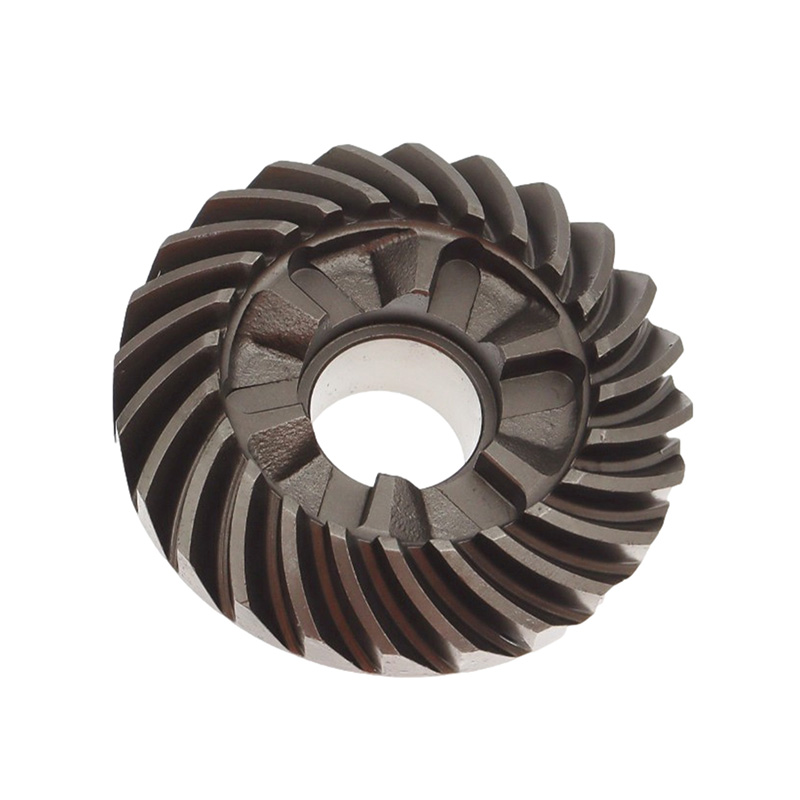
To simplify the decision for engineers, distributors, and boat owners, these practical rules of thumb are useful when choosing between stainless steel marine gears and alloy steel gears for saltwater use:
1. Duty cycle and load profile
- For medium‑duty recreational use (weekend fishing, coastal cruising) with occasional high loads, stainless steel gears offer a strong balance of strength and corrosion resistance. [alibaba]
- For heavy‑duty commercial use (workboats, continuous‑duty charters) at high power, hardened alloy steel still has an edge in pure load capacity, provided corrosion is tightly controlled. [alibaba]
2. Maintenance culture
- If maintenance is irregular or user‑driven (private boat owners, rental fleets), corrosion is the main risk, and stainless steel gears are the safer choice. [alibaba]
- If maintenance is professionally managed with strict routines, alloy steel gears can be used reliably even in saltwater, with appropriate coatings and lubricant management. [alibaba]
3. Environment
- Tropical and warm saltwater accelerates corrosion and encourages biofouling, tilting the decision toward stainless. [alibaba]
- Predominantly freshwater operators that occasionally visit coastal water can successfully use alloy steel gears, if they flush and store correctly after each saltwater trip. [alibaba]
4. Budget and brand positioning
- For premium or flagship models, stainless gears support a "saltwater‑ready" positioning with lower warranty risk. [alibaba]
- For entry‑level models, alloy steel remains competitive, especially when the manufacturer provides clear, user‑friendly maintenance guidance. [alibaba]
From an outboard gear manufacturer's perspective, material choice is never made in isolation; it is always tied to customer segment, target markets, and expected usage patterns. When working with global OEMs and distributors, discussions typically start with questions like: [alibaba]
- What power range and torque levels must the gear set handle?
- Is the product targeted mainly at saltwater coastal markets or mixed freshwater/saltwater usage?
- What are the warranty expectations and acceptable field failure rates?
- How mature is the end‑user maintenance culture in the destination market?
In practice, a manufacturer may design two parallel gear configurations:
- A stainless steel gear option for saltwater‑focused models or premium trim levels.
- A high‑strength alloy steel gear option for standard or inland‑water models, emphasizing performance and cost‑efficiency. [alibaba]
This modular strategy allows OEMs and distributors to align material choice with market positioning, while keeping core geometry and tooling consistent to control costs. [alibaba]
Regardless of whether you choose stainless or alloy steel marine gears, maintenance practices make a measurable difference in real‑world service life. [alibaba]
For alloy steel gears in saltwater, the following steps are critical:
- Flush with freshwater after every saltwater run, focusing on the lower unit and areas where salt spray accumulates. [alibaba]
- Inspect and change gear oil on schedule, watching closely for water contamination or metallic particles. [alibaba]
- Avoid long idle periods with saltwater trapped around the propeller hub or gear housing; dry and protect exposed surfaces before storage. [alibaba]
For stainless steel gears, these same practices are still beneficial, but they provide a wider margin of safety if the user occasionally misses a maintenance cycle, which is precisely why stainless is often recommended for high‑salt, high‑humidity environments. [alibaba]
Pulling all these factors together, here is a simple decision framework:
- Choose stainless steel marine gears if you:
- Operate primarily in saltwater or high‑humidity coastal climates. [alibaba]
- Cannot guarantee perfect maintenance discipline across all users and vessels. [alibaba]
- Want to minimize corrosion risks, warranty claims, and unplanned downtime. [alibaba]
- Position your brand or product line as premium, saltwater‑ready, and low‑maintenance. [alibaba]
- Choose alloy steel gears if you:
- Need maximum load capacity and robustness at a given unit cost. [alibaba]
- Have a strong maintenance culture and can ensure regular flushing, inspection, and lubricant changes. [alibaba]
- Serve markets that are largely freshwater with only occasional saltwater exposure. [alibaba]
- Target cost‑sensitive segments where initial purchase price is a primary decision factor. [alibaba]
For many OEMs, the most robust strategy is to offer both options, tailoring the gear material to the application while leveraging common engineering platforms and quality systems. [alibaba]
Q1: Are stainless steel marine gears completely immune to corrosion in saltwater?
No. Stainless steel is highly corrosion‑resistant but not corrosion‑proof, especially in low‑oxygen crevices or stagnant seawater, where pitting can occur over time. Proper design, surface finish, and lubrication are still essential. [alibaba]
Q2: Can I upgrade from alloy steel gears to stainless gears without changing other components?
In many cases, yes, as long as the gear geometry, mounting interfaces, and heat treatment profiles are matched to the original design, but you should always consult the manufacturer or a qualified marine transmission specialist before mixing materials in a drivetrain. [alibaba]
Q3: Do stainless steel gears run quieter than alloy steel gears?
Noise is driven more by gear geometry, surface finish, and alignment than by the choice between stainless and alloy steel, although stainless can sometimes help maintain smoother surfaces over time by resisting corrosion pitting on the tooth flanks. [alibaba]
Q4: Are alloy steel gears acceptable for full‑time saltwater use?
Yes, but only with strict maintenance, proper sealing, and high‑quality lubricants; without these, corrosion can rapidly shorten service life, particularly if the boat is stored outdoors in a marine environment. [alibaba]
Q5: How should buyers compare quotes from suppliers offering different gear materials?
Do not compare only unit price; evaluate expected service life, maintenance requirements, warranty terms, and total cost of ownership for your specific operating profile, especially if most of your hours are in saltwater. [alibaba]
1. Alibaba.com Product Insights – "An Overview of Ningbo Marine Gear Box: Standards, Grades, and Mechanical Performance" (covers material choices and mechanical performance trends for Ningbo‑area marine gearbox and gear manufacturers). [https://www.alibaba.com/product-insights/ningbo-marine-gear-box.html]


