


close
Choose Your Site
Global
Social Media
Views: 222 Author: Gill Transmission Publish Time: 2026-05-12 Origin: Site


Surface durability represents one of the most critical design considerations for spur and helical gears, particularly in marine propulsion systems where pitting failure and contact fatigue can lead to catastrophic equipment failure. As a marine gear manufacturer specializing in outboard transmission components at Ningbo Gill Transmission Parts Co., LTD., understanding the theoretical foundations and practical applications of gear surface durability calculations has proven essential for delivering reliable, high-performance products to the global marine industry. [khkgears]
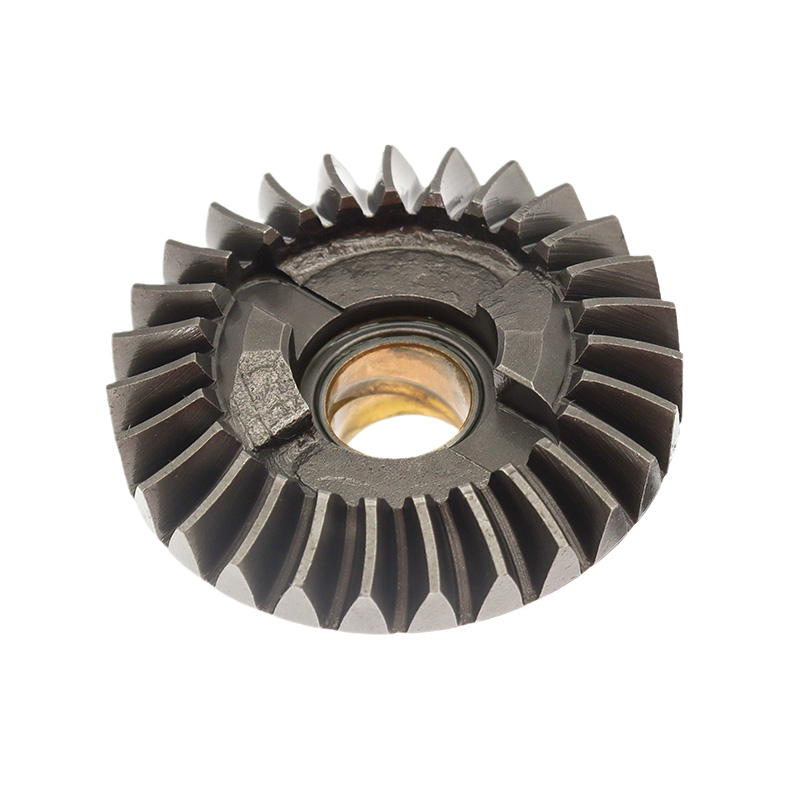
Surface durability in gears refers to the ability of tooth flanks to resist surface fatigue failures, primarily manifesting as pitting or spalling under repeated contact stress cycles. When two gear teeth mesh, they experience Hertzian contact stress at the pitch line and along the entire contact path, creating subsurface shear stresses that can initiate microscopic cracks. [asmedigitalcollection.asme]
The transmitted tangential force at the reference pitch circle (Ft) must not exceed the allowable tangential force to satisfy surface durability requirements. This fundamental principle governs all gear rating calculations, whether for industrial machinery, automotive applications, or marine propulsion systems where environmental factors add additional complexity. [blog.ansi]
Hertzian contact theory forms the foundation for calculating gear tooth surface stresses. When two curved surfaces come into contact under load, they deform elastically, creating a contact area rather than a theoretical point or line contact. For spur gears, this creates a rectangular contact patch, while helical gears develop an elliptical contact zone due to their angular tooth geometry. [wm.pollub]
The maximum contact stress (σH) at the pitch point can be calculated using the fundamental equation derived from Hertz theory, accounting for factors including:
- Elastic modulus of both gear materials
- Poisson's ratio for material deformation characteristics
- Radii of curvature at the contact point
- Transmitted load and load distribution across face width
- Pressure angle and helix angle (for helical gears) [wp.kntu.ac]
Modern calculation methods extend beyond simple Hertzian formulas by incorporating load distribution factors, dynamic loads, and geometry factors specific to gear tooth profiles. [asmedigitalcollection.asme]
Pitting represents the most common surface durability failure in marine gears. This fatigue phenomenon occurs when subsurface cracks propagate to the surface, removing small pieces of material and creating characteristic crater-like defects. Initial pitting often begins at the pitch line where sliding velocities are lowest and contact stresses reach maximum values. [id.scribd]
Micro-pitting, a more insidious failure mode, involves very small surface cracks (typically less than 50 micrometers) that can rapidly deteriorate surface finish and accuracy. In marine applications, the combination of high loads, corrosive seawater environments, and contaminated lubricants accelerates micro-pitting development. [sciencedirect]
Recent research by Kongsberg Marine and ATA Gears has identified subsurface fatigue or Tooth Flank Fracture (TFF) as an emerging concern in high-power-density marine applications. Unlike surface pitting, TFF initiates below the surface hardened layer and can propagate catastrophically without visible warning signs. [atagears]
Current DNV (Det Norske Veritas) classification standards may not adequately account for Very High Cycle Fatigue (VHCF) degradation under the variable loading conditions typical in marine service. This represents a critical knowledge gap that marine gear manufacturers must address through improved material selection and heat treatment processes. [atagears]
The ANSI/AGMA 6032-B13 standard specifically addresses marine gear units for spur and helical gear teeth in propulsion applications. This standard applies to: [blog.ansi]
- Marine propulsion reduction gears (1,500-20,000 HP for engine-driven systems)
- Steam or gas turbine drives (1,500-30,000 HP)
- Power take-off (PTO) gearing integral to propulsion units
- Auxiliary propulsion systems [blog.ansi]
The fundamental rating formulas evaluate pitting resistance and bending strength as influenced by major factors affecting both tooth pitting and fracture. These calculations must account for marine-specific conditions including shock loading, variable duty cycles, and the corrosive operating environment. [blog.ansi]
For general industrial applications, ANSI/AGMA 2001-D04 provides comprehensive methods for rating pitting resistance and bending strength of involute spur and helical gears. The standard specifies calculation procedures accounting for: [wp.kntu.ac]
1. Geometry factors (ZI, ZE for contact stress; YJ for bending)
2. Load distribution factors (KH, Kβ)
3. Dynamic factors (Kv) for velocity-induced loads
4. Size factors and reliability factors [wp.kntu.ac]
ISO 1328-1:2013 establishes accuracy classification systems for cylindrical gears, defining tolerance grades from A2 (highest precision) to A11 (lower precision). Higher accuracy grades directly correlate with improved load distribution and extended surface durability life. [scribd]
Helical gears demonstrate superior surface durability characteristics compared to spur gears due to their higher contact ratio and gradual tooth engagement. The overlap created by the helix angle means multiple teeth share the load simultaneously, reducing peak contact stresses by 15-25% compared to equivalent spur gear designs. [archive.nptel.ac]
Key helical gear advantages include:
- Smoother load transfer reducing vibration and dynamic loads
- Lower noise levels from gradual tooth engagement
- Higher load capacity for equivalent size
- Reduced stress concentrations at tooth flanks [wm.pollub]
While helical gears offer surface durability benefits, they introduce axial thrust forces that require thrust bearings and more robust housing designs. The helix angle (typically 15-30 degrees) must be optimized to balance load capacity improvements against increased friction losses and axial loads. [wm.pollub]
For marine outboard gears, where compact size and high torque density are essential, helical configurations provide significant advantages despite the additional thrust bearing requirements. The improved surface durability directly translates to extended service life in harsh saltwater environments. [gilltransmission]
Step 1: Determine Transmitted Tangential Force
Calculate the tangential force (Ft) at the reference pitch diameter based on transmitted power, rotational speed, and pitch diameter. [khkgears]
Step 2: Calculate Geometry Factors
Evaluate the zone factor (ZI) and elastic coefficient (ZE) based on material properties and tooth geometry. For helical gears, include helix angle corrections to account for the elliptical contact pattern. [asmedigitalcollection.asme]
Step 3: Apply Load Modification Factors
Incorporate dynamic factor (Kv), load distribution factor (KH), and size factor (Ks) to account for real operating conditions beyond ideal static loading. [wp.kntu.ac]
Step 4: Calculate Contact Stress
Compute the maximum Hertzian contact stress (σH) using the modified tangential force and geometry factors. [journals2.ums.ac]
Step 5: Compare to Allowable Stress
Determine allowable contact stress (σHP) based on material properties, surface hardness, required life cycles, and safety factors. The design is adequate when σH ≤ σHP with appropriate safety margin (typically 1.1-1.5 for surface fatigue). [archive.nptel.ac]
Marine gear calculations should incorporate additional factors beyond standard industrial ratings:
- Corrosion allowance for seawater exposure reducing effective case depth
- Contamination factors for abrasive particle effects on surface finish
- Temperature corrections for tropical operating environments
- Load spectrum analysis reflecting actual duty cycles versus continuous rating [atagears]
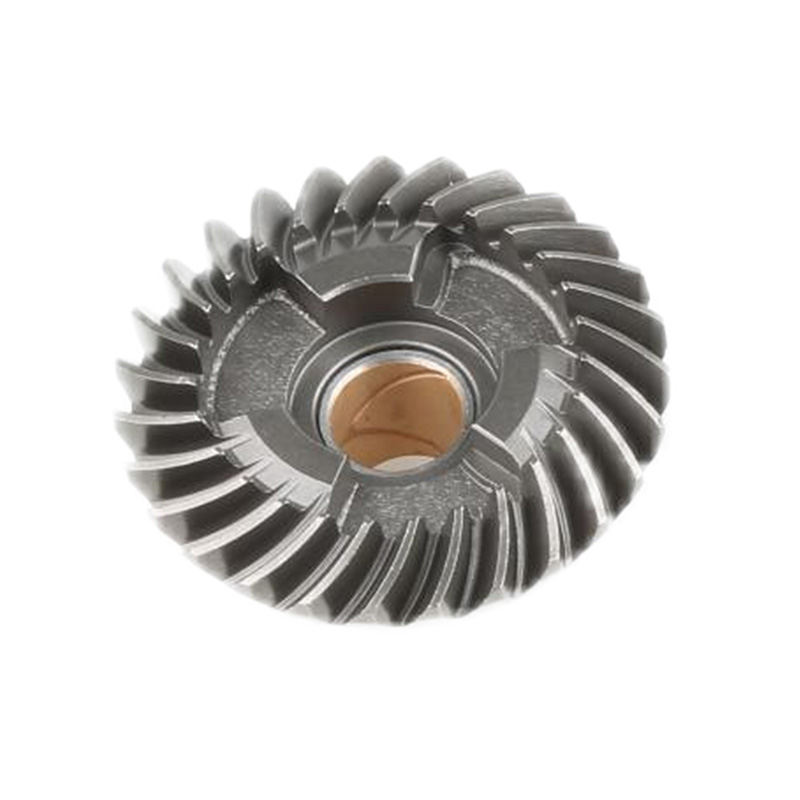
Case-hardened steels (typically 20MnCr5, 16MnCr5, or equivalent) provide optimal surface durability through high surface hardness (58-62 HRC) combined with tough core properties. The hardened case depth must extend below the maximum shear stress zone to prevent subsurface-initiated failures. [archive.nptel.ac]
For marine applications, stainless steel alloys or nickel-based alloys may be specified for superior corrosion resistance despite lower hardness limits. The trade-off between corrosion resistance and contact stress capacity must be carefully evaluated based on service requirements. [journals.nasspublishing]
Surface roughness directly impacts pitting resistance and lubricant film formation. Ground or honed tooth surfaces (Ra < 0.8 μm) demonstrate 20-40% longer pitting life compared to hobbed finishes under identical loading conditions. [diva-portal]
Anti-corrosion coatings including phosphate conversion layers, DLC (diamond-like carbon), and advanced PVD coatings enhance both wear resistance and corrosion protection. However, coating thickness must be controlled to avoid adverse effects on gear accuracy and contact patterns. [sciencedirect]
Based on our 27-year experience manufacturing marine transmission components, properly designed and manufactured outboard gears typically achieve 5,000-8,000 operating hours before initial pitting appears under normal recreational use. Commercial applications with heavier duty cycles may require inspection intervals of 2,000-3,000 hours. [gilltransmission]
Ultrasonic inspection techniques now enable subsurface crack detection before catastrophic failures occur. This predictive maintenance approach has significantly reduced unexpected gear failures in commercial marine fleets, though it requires specialized equipment and trained technicians. [atagears]
The transition from reactive maintenance (replacing failed gears) to predictive strategies (monitoring subsurface degradation) represents a major advancement in marine gear reliability. [atagears]
Profile modification including tip relief and crowning optimizes load distribution across the tooth face, reducing edge loading and stress concentrations. Finite element analysis (FEA) enables precise optimization of these microgeometry features for specific operating conditions. [ijcs]
Contact ratio optimization through careful selection of pressure angle, tooth count, and helix angle can increase load sharing and reduce individual tooth stresses. Modern gear design software incorporates these parameters into multi-objective optimization routines. [asmedigitalcollection.asme]
Synthetic lubricants formulated for marine environments provide superior film strength and corrosion inhibition compared to mineral oils. Proper lubricant viscosity selection based on operating temperature and speed directly impacts surface durability through effects on lambda ratio (lubricant film thickness divided by composite surface roughness). [diva-portal]
Regular oil analysis monitoring wear metals, moisture contamination, and viscosity breakdown enables early detection of developing problems before significant gear damage occurs.
Q1: What is the primary difference between pitting and micro-pitting in gears?
Pitting involves visible surface fatigue craters (typically 1-5mm diameter) that develop after millions of load cycles, while micro-pitting consists of much smaller surface cracks (less than 50 micrometers) that can rapidly deteriorate surface finish and may progress to destructive pitting if not addressed. [id.scribd]
Q2: How do AGMA and ISO standards differ for marine gear applications?
ANSI/AGMA 6032-B13 specifically addresses marine propulsion gears with formulas tailored to marine duty cycles, shock loading, and power ranges (1,500-30,000 HP), while general ISO standards provide broader industrial gear rating methods that require marine-specific modifications for factors like corrosion and contamination. [blog.ansi]
Q3: Why do helical gears typically have better surface durability than spur gears?
Helical gears achieve higher contact ratios (typically 1.8-2.5 vs. 1.4-1.7 for spur gears) due to their angled teeth, distributing loads across multiple tooth pairs simultaneously and reducing peak contact stresses by 15-25% for equivalent designs. [archive.nptel.ac]
Q4: What surface hardness is optimal for marine gear tooth flanks?
Case-hardened marine gears typically require surface hardness of 58-62 HRC with case depth extending 0.3-0.5mm below the maximum shear stress zone to prevent subsurface fatigue failures, though corrosion-resistant materials may accept lower hardness (45-52 HRC) with appropriate safety factors. [archive.nptel.ac]
Q5: How does surface roughness affect gear pitting resistance?
Finer surface finishes (Ra < 0.8 μm) improve pitting life by 20-40% compared to coarser hobbed surfaces by promoting better lubricant film formation and reducing stress concentration points where micro-cracks can initiate. [diva-portal]
1. KHK Gears. "Surface Durability of Spur and Helical Gears - Technical Reference." https://khkgears.net/new/gear_knowledge/gear_technical_reference/surface-durability-of-spur-and-helical-gears.html
2. American Society of Mechanical Engineers. "Calculation of Tooth Bending Strength and Surface Durability." ASME Digital Collection. https://asmedigitalcollection.asme.org/mechanicaldesign/article/129/1/69/474771/Calculation-of-Tooth-Bending-Strength-and-Surface
3. Scribd. "Chapter 14: Spur and Helical Gear Design Analysis." https://id.scribd.com/document/946122941/chapter14-spur-and-helical-esam-revise-part1
4. NPTEL. "Helical Gears - Surface Fatigue Strength." https://archive.nptel.ac.in/content/storage2/courses/112106137/pdf/2_12.pdf
5. Ningbo Gill Transmission Parts Co., Ltd. "Marine Gear Manufacturing Excellence." https://www.gilltransmission.com
6. ScienceDirect. "Research Progress of Marine Anti-Corrosion and Wear-Resistant Coating." https://www.sciencedirect.com/science/article/abs/pii/S0301679X24006169
7. Wrocław University of Science and Technology. "Spur and Helical Gears Design Manual." https://wm.pollub.pl/fcp/6PREgARcJNScXKxEMUA9DAmltVyVUFDFqUVJWa3VBeQN0fWRfMR0fQWpmExhaRFBAElI5HhwxF0l2Aw0HTWB1CA/_users/code_JKh
8. ATA Gears. "Cutting-Edge Research on Tooth Flank Fracture." https://atagears.fi/research/cutting-edge-research-by-kongsberg-and-ata-gears-makes-new-discoveries-about-tff/
9. ASME Journal of Tribology. "Pitting Life Optimization for Helical Gears." https://asmedigitalcollection.asme.org/tribology/article/148/2/024602/1219354/Pitting-Life-Optimization-for-Helical-Gears-Based
10. ANSI Blog. "ANSI/AGMA 6032 Standard for Marine Gear Units." https://blog.ansi.org/ansi/ansi-agma-6032-standard-for-marine-gear/
11. International Journal of Current Science. "Contact Stress Analysis Using Lewis and Hertzian Methods." https://www.ijcs.net/ijcs/index.php/ijcs/article/view/5121
12. American Gear Manufacturers Association. "ANSI/AGMA 2001-D04 Fundamental Rating Factors." https://wp.kntu.ac.ir/asgari/AGMA%202001-D04.pdf
13. AGMA Standards. "ISO 1328 Gear Quality Standards Evolution." https://www.scribd.com/document/890311162/Article-on-Evolution-of-AGMA-Gear-Standards
14. NASA Technical Reports. "Advanced Contact Stress Analysis Procedure for Gears." https://ntrs.nasa.gov/api/citations/19910013249/downloads/19910013249.pdf
15. University of Arizona. "Tutorial on Hertz Contact Stress Theory." https://wp.optics.arizona.edu/optomech/wp-content/uploads/sites/53/2016/10/OPTI-521-Tutorial-on-Hertz-contact-stress-Xiaoyin-Zhu
16. Diva Portal. "Influence of Gear Surface Roughness and Lubricant Viscosity on Durability." https://www.diva-portal.org/smash/get/diva2:489751/FULLTEXT01.p
17. International Journal of Scientific Engineering and Applied Science. "Review of Research on Gear Fatigue Life." https://ijsea.com/archive/volume14/issue10/IJSEA14101021.pdf
18. NASS Publishing. "Corrosion-Resistant Materials for Ocean Structures." https://journals.nasspublishing.com/index.php/sms/article/view/2335


