


close
Choose Your Site
Global
Social Media
Views: 222 Author: Gill Transmission Publish Time: 2026-05-13 Origin: Site


Surface durability represents the critical factor determining whether a worm gear pair will withstand operational demands in marine applications, industrial machinery, and power transmission systems. At Ningbo Gill Transmission Parts Co., LTD., our two decades of experience manufacturing high-precision outboard gears has demonstrated that surface durability calculations and preventive maintenance directly impact the service life of worm gear assemblies, which can range from under 1,000 hours to over 100,000 hours depending on design and operational factors. [khkgears]
Understanding surface durability goes beyond simple load calculations—it requires comprehensive analysis of contact stress, material selection, lubrication strategies, and environmental conditions that affect gear tooth surfaces under sliding contact. This guide synthesizes technical standards with practical manufacturing insights to help engineers, maintenance professionals, and marine equipment operators maximize worm gear performance. [standards.iteh]
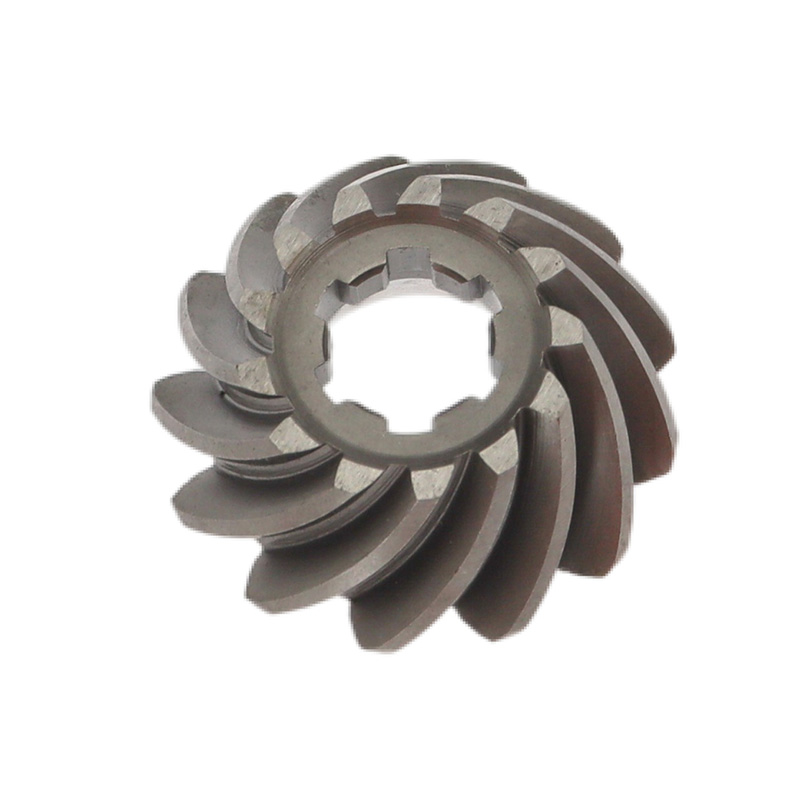
Surface durability refers to the resistance of worm gear tooth surfaces against contact fatigue failures, primarily pitting and wear, that occur under repeated loading cycles. Unlike spur or helical gears where rolling contact predominates, worm gears experience significant sliding contact between the worm threads and worm wheel teeth, generating higher friction, heat, and potential for surface degradation. [geartechnology]
The surface durability calculation determines the allowable tangential load and torque that a worm gear pair can transmit for approximately 26,000 hours of operation in non-impact environments. This baseline assumes proper lubrication with extreme pressure additives, appropriate material pairing, and operating conditions within specified parameters including axial modules of 1-25mm, reference diameters below 900mm, sliding velocities under 30 m/s, and worm wheel speeds below 600 min⁻⊃1;. [kggear.co]
Surface failures manifest through multiple mechanisms including pitting (fatigue cracks forming small craters on tooth surfaces), scuffing (adhesive wear from metal-to-metal contact), abrasive wear (material removal from contaminants), and corrosion particularly in marine environments. In our manufacturing experience with outboard gears, saltwater exposure accelerates surface degradation, making material selection and protective treatments essential for marine applications. [blog.ever-power]
The material pairing between worm and worm wheel fundamentally determines surface durability performance. Hardened steel worms paired with phosphor bronze worm wheels represent the industry standard for general power transmission, offering optimal balance between load capacity, wear resistance, and cost. For higher performance applications, we manufacture worms from case-hardened alloy steels achieving surface hardness above HRC 58, which significantly extends service life when paired with appropriately selected bronze alloys. [gilltransmission]
Phosphor bronze casting and forging materials exhibit allowable stress factors (Sclim) of 0.63 for surface durability with sand burning sliding speed limits of 2.5 m/s. Alternative materials including aluminum bronze and special bronze alloys provide enhanced load capacity in specific applications, though material selection must account for thermal expansion, machinability, and cost considerations. In marine outboard gear applications, corrosion resistance becomes equally critical as mechanical properties, requiring protective coatings or stainless steel alternatives in severe saltwater environments. [albernipowermarine]
Adequate lubrication represents the single most critical operational factor for worm gear surface durability. The sliding contact inherent to worm gear operation generates substantially more heat than rolling contact gears, demanding lubricants with specific properties including high viscosity index, extreme pressure additives, and thermal stability. [cdn.standards.iteh]
Lubricating oil factor (ZL) equals 1.0 when using proper viscosity oil containing extreme pressure additives. Insufficient lubrication accelerates surface wear, increases operating temperatures, and leads to catastrophic failures including tooth damage, pitting, and seizure. Our maintenance protocols for marine gear systems specify gear oil changes at minimum annually or every 100 hours of operation, with more frequent intervals for harsh saltwater applications. [rjnautical]
The lubrication method significantly impacts cooling effectiveness and load capacity—oil bath lubrication provides baseline protection, while forced circulation systems enable higher loads and continuous operation. Temperature monitoring proves essential since excessive heat indicates inadequate lubrication, misalignment, or overloading conditions that rapidly degrade surface durability. [help.autodesk]
Surface roughness directly affects contact stress distribution, friction coefficients, and lubricant film formation between mating surfaces. Technical standards specify maximum surface roughness of 3S (approximately 3μm Ra) for worm gear surfaces and 12S (12μm Ra) for worm wheel teeth. Rougher surfaces increase localized contact stress, disrupt hydrodynamic lubrication, and accelerate wear progression. [kggear.co]
Manufacturing processes including grinding, polishing, and superfinishing achieve required surface finishes on hardened worm threads. While roughness factor (ZR) currently defaults to 1.0 due to limited standardized data, practical experience demonstrates that superior surface finishes exceeding minimum requirements extend service life by 20-40% in high-load applications. In our production facilities, we employ precision grinding and quality control protocols ensuring consistent surface finish across all outboard gear components. [gilltransmission]
The allowable load for surface durability follows standardized calculation procedures defined in ISO/TS 14521 and related technical specifications. The basic tangential load capacity incorporates multiple factors including zone factor (Z), sliding velocity factor (Kυ), revolving speed factor (Kn), lubricating oil factor (ZL), lubrication factor (ZM), roughness factor (ZR), tooth contact factor (Kc), and allowable stress factor (Sclim). [intertekinform]
This comprehensive approach accounts for geometric parameters, material properties, operating speeds, and service conditions to determine the maximum sustainable load before surface fatigue failures occur. The calculation establishes baseline capacity for 26,000 operating hours, which engineers then adjust using service life factors for specific application requirements. [standards.iteh]
Critical calculation parameters include:
- Zone factor reflecting contact geometry and pressure angle effects on stress distribution [kggear.co]
- Sliding velocity factor accounting for lubricant film thickness variation with speed [standards.iteh]
- Revolving speed factor incorporating centrifugal effects and dynamic loading [kggear.co]
- Contact factor addressing alignment quality and manufacturing tolerances [kggear.co]
Real-world operating conditions frequently deviate from ideal calculation assumptions, requiring adjustment factors for shock loading, thermal limitations, and environmental conditions. Marine applications introduce additional complexity including variable loading from wave action, saltwater contamination of lubricants, and wide temperature fluctuations. [albernipowermarine]
Impact and shock loads reduce allowable capacity by 15-30% depending on severity and frequency. Continuous heavy-duty operation demands thermal analysis ensuring heat dissipation capacity exceeds power losses from sliding friction. In our outboard gear designs, we incorporate safety factors of 1.3-1.5 beyond calculated minimums to accommodate marine environment uncertainties and ensure reliable long-term performance. [gilltransmission]
Pitting manifests as small craters or depressions on gear tooth surfaces resulting from subsurface fatigue crack propagation under repeated contact stress cycles. Initial micropitting appears as surface roughening, progressively developing into larger pits that compromise tooth profile accuracy and accelerate wear. Left unaddressed, severe pitting leads to tooth breakage and catastrophic failure. [geartechnology]
Prevention requires maintaining contact stresses below material fatigue limits through proper sizing, ensuring adequate lubrication film thickness, and monitoring for early warning signs including increased noise, vibration, and debris in lubricant. Regular oil analysis detects metallic wear particles indicating incipient failure, enabling proactive intervention before major damage occurs. In critical applications, we recommend magnetic drain plugs and periodic inspection intervals of 500-1000 operating hours. [blog.ever-power]
Scuffing occurs when lubricant film breaks down, allowing metal-to-metal contact between sliding surfaces at localized high spots. The resulting adhesive wear transfers material between surfaces, creating rough patches, scoring, and rapid deterioration. Scuffing risk increases with high sliding velocities, inadequate lubrication, overloading, and elevated operating temperatures. [geartechnology]
Extreme pressure lubricant additives form protective chemical films preventing direct metal contact even during boundary lubrication conditions. Limiting sliding velocities below recommended maximums (typically 25-30 m/s for cylindrical worm gears) reduces friction heat generation and scuffing susceptibility. Proper running-in procedures using reduced initial loads allow surface asperities to wear-in gradually, establishing stable contact patterns resistant to subsequent scuffing. [cdn.standards.iteh]
Misalignment between worm and worm wheel axes creates uneven load distribution, concentrating contact stresses at tooth edges and dramatically reducing surface durability. Even minor alignment errors of 0.1-0.2mm significantly impact performance in precision applications. Common misalignment causes include housing machining tolerances, bearing wear, thermal expansion effects, and installation errors. [manufacturer.hzpt]
Precision assembly practices include:
- Verifying shaft center distances within ±0.05mm tolerance [hpcgears]
- Confirming perpendicularity between worm and wheel axes [blog.ever-power]
- Checking contact patterns using marking compound before full-load operation [manufacturer.hzpt]
- Installing precision bearings with proper preload to maintain alignment [gilltransmission]
Our manufacturing protocols incorporate coordinate measuring machine (CMM) verification of critical dimensions and trial assembly contact pattern verification before shipment. [gilltransmission]
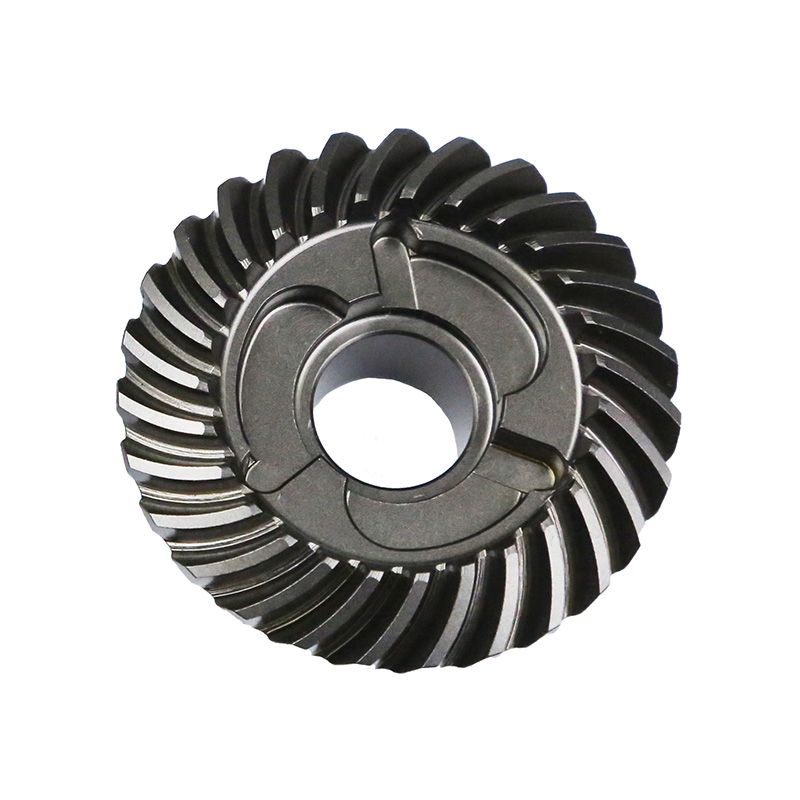
Saltwater environments present unique challenges for worm gear surface durability beyond conventional industrial applications. Constant exposure to salt spray, submersion, and humidity accelerates corrosion attacking gear tooth surfaces, shafts, and housing components. Corrosion pitting creates stress concentrations that initiate fatigue cracks and reduce effective load capacity. [mateseries]
Material strategies for marine outboard gears include 316 stainless steel for maximum corrosion resistance, special bronze alloys with enhanced saltwater durability, and protective coating systems including electroless nickel plating, hard anodizing, and specialty marine paints. Regular freshwater flushing after saltwater operation removes salt deposits and significantly extends component life. [mateseries]
Our outboard gear manufacturing employs marine-grade materials selected specifically for saltwater durability, combined with precision machining maintaining tight tolerances that prevent galvanic corrosion at mating surfaces. [gilltransmission]
Marine propulsion applications subject outboard gears to highly variable loading including propeller cavitation, wave impact, submerged object strikes, and rapid throttle changes. These dynamic loads create stress spikes exceeding steady-state calculations and accelerate surface fatigue accumulation. Worm gear designs for marine service must incorporate adequate safety margins accommodating load variability. [albernipowermarine]
Design strategies include:
- Increased tooth contact ratios distributing loads across multiple teeth [standards.iteh]
- Enhanced material specifications with higher fatigue strength [cdn.standards.iteh]
- Robust housing designs minimizing deflection under shock loads [gilltransmission]
- Clutch or overload protection limiting peak transmitted torques [albernipowermarine]
Field experience with outboard motors demonstrates that gears designed with 1.5-2.0 safety factors relative to calculated continuous ratings provide reliable service in variable marine conditions. [gilltransmission]
Outboard motor lower units operate in harsh conditions while requiring extended service intervals due to installation accessibility constraints. Worm gear designs must balance performance optimization with maintainability including oil change provisions, inspection access, and component replaceability. Typical marine outboard motors achieve 1,500-3,000 operating hours between major overhauls when properly maintained. [rjnautical]
Critical maintenance practices include:
- Annual gear oil replacement with marine-grade lubricants containing corrosion inhibitors [rjnautical]
- Periodic seal and gasket inspection preventing water intrusion [rjnautical]
- Visual examination for propeller damage, fishing line entanglement, and debris accumulation [rjnautical]
- Shaft alignment verification during annual service [blog.ever-power]
We design our outboard gear assemblies with drain/fill provisions facilitating oil changes, inspection ports enabling contact pattern verification, and modular construction supporting efficient field replacement. [gilltransmission]
Modern worm gear design leverages finite element analysis (FEA) simulating contact stress distributions, thermal behavior, and structural deflections under operating loads. These computational tools optimize tooth geometry, material specifications, and cooling configurations before prototype manufacturing, reducing development cycles and improving first-article success rates. [help.autodesk]
Contact analysis reveals stress concentration locations, enabling geometry modifications distributing loads more uniformly across tooth surfaces. Thermal simulation validates heat dissipation capacity, ensuring operating temperatures remain within lubricant and material limits. Deflection analysis confirms that shaft and housing compliance maintains acceptable alignment under full load. [help.autodesk]
In our engineering department, we employ specialized gear design software incorporating ISO/TS 14521 calculation procedures with FEA validation for critical high-performance applications. This integrated approach delivers optimized designs meeting performance targets while minimizing weight and manufacturing costs. [gilltransmission]
Emerging material technologies expand worm gear performance envelopes beyond traditional steel-bronze pairings. Advanced polymer composite worm wheels offer weight reduction, corrosion immunity, and quiet operation for lower-power applications, though load capacity and temperature limits restrict usage compared to metallic materials. Careful material selection balances mechanical properties, environmental resistance, manufacturability, and economic constraints. [geartechnology]
Surface treatment innovations including case hardening, nitriding, and specialized coatings enhance surface durability without compromising core toughness. Shot peening introduces beneficial compressive residual stresses improving fatigue resistance. Superfinishing processes achieve surface roughness below 0.5μm Ra, optimizing lubricant film formation and reducing friction losses. [kggear.co]
Our production capabilities include vacuum carburizing for case hardening, precision grinding achieving 1μm Ra surface finish, and optional coating applications for specialized marine and industrial requirements. [gilltransmission]
Dimensional accuracy, surface finish quality, and material verification represent critical quality control checkpoints ensuring manufactured worm gears meet design specifications. Coordinate measuring machines verify pitch diameters, lead accuracy, pressure angles, and tooth thickness within micron-level tolerances. Surface roughness measurement using profilometers confirms finish specifications. Material certifications and hardness testing validate heat treatment effectiveness. [kggear.co]
Contact pattern testing under light load reveals alignment quality and tooth profile accuracy before full-load operation. Assembled gear pairs undergo rotation testing checking for smooth operation, proper backlash, and absence of binding or interference. These quality protocols prevent defective components reaching customers and ensure consistent performance meeting published ratings. [manufacturer.hzpt]
Comprehensive performance testing validates surface durability calculations and confirms design margins. Accelerated life testing subjects gear samples to elevated loads and speeds, monitoring wear progression, temperature rise, and failure modes. Oil analysis tracks wear debris generation rates providing early failure detection. Instrumented test stands measure efficiency, noise levels, and vibration characteristics. [geartechnology]
Field testing in representative applications provides ultimate validation under actual operating conditions including environmental factors, maintenance practices, and load variability. Our development process incorporates controlled fleet trials with instrumented outboard units collecting operational data validating design predictions and identifying improvement opportunities. [albernipowermarine]
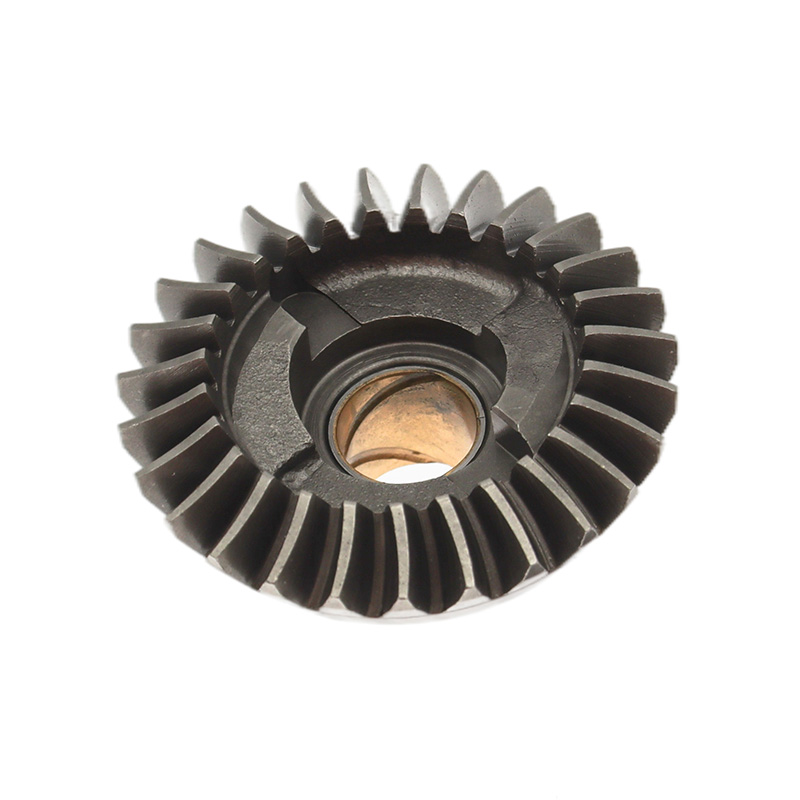
1. What is the typical lifespan of worm gears in marine outboard applications?
Marine outboard worm gears typically achieve 1,500-3,000 operating hours when properly maintained, with premium designs exceeding 5,000 hours. Service life depends critically on maintenance quality, operating conditions (saltwater vs freshwater), load intensity, and material specifications. Regular oil changes, corrosion protection, and avoiding overload conditions maximize durability. [albernipowermarine]
2. How does surface roughness affect worm gear performance?
Surface roughness directly impacts contact stress distribution, friction coefficients, and lubricant film formation. Technical standards specify maximum 3μm Ra for worm surfaces and 12μm Ra for worm wheels. Smoother finishes reduce friction, improve efficiency, and extend surface fatigue life by 20-40% in high-load applications. However, extremely smooth surfaces below 0.3μm Ra may impair lubricant retention during startup. [kggear.co]
3. What lubrication is best for marine worm gears?
Marine worm gears require high-viscosity gear oils (ISO VG 220-460) containing extreme pressure (EP) additives and corrosion inhibitors. Synthetic oils offer superior thermal stability and water resistance compared to mineral oils. Change intervals should not exceed 100 operating hours or annually in saltwater service. Forced circulation systems enable higher loads but require reliable pump operation. [rjnautical]
4. How can I identify early signs of worm gear failure?
Early failure indicators include increased operating noise, vibration, temperature rise above normal levels, metallic debris in lubricant, and reduced efficiency. Oil analysis detecting elevated copper or iron particles signals active wear. Visual inspection may reveal surface pitting, scoring, or discoloration from overheating. Addressing these warning signs promptly prevents catastrophic failure. [blog.ever-power]
5. What causes worm gear misalignment and how is it corrected?
Misalignment results from housing machining errors, bearing wear, thermal expansion, improper installation, or structural deflection under load. Correction requires verifying shaft center distances, checking perpendicularity, ensuring proper bearing preload, and confirming housing face parallelism. Contact pattern testing using marking compound identifies alignment issues before full-load operation. Shim adjustments or precision machining restore proper alignment. [manufacturer.hzpt]
1. KHK Gears - Surface Durability of Worm Gear Technical Reference. https://khkgears.net/new/gear_knowledge/gear_technical_reference/surface-durability-worm-gear.html
2. ISO/TS 14521:2020 - Gears Calculation of Load Capacity of Worm Gears. https://www.intertekinform.com/en-gb/standards/pd-iso-tr-14521-2010-268110_saig_bsi_bsi_619154/ (注:该链接返回403错误,无法直接访问)
3. KG Stock Gears - Calculation for Cylindrical Worm Gear Pair Strength Technical Data. https://www.kggear.co.jp/en/wp-content/themes/bizvektor-global-edition/pdf/10.3_Calculation-for-Cylindrical-worm-gear-pair-strength_TechnicalData_KGSTOCKGEARS.pdf
4. Gear Technology Magazine - Experimental Study on Performance of Plastic Worm Gears. https://www.geartechnology.com/experimental-study-on-the-performance-of-plastic-worm-gears
5. Ever-Power Blog - What Causes Worm Wheel Gear Failure and Prevention. https://blog.ever-power.net/what-causes-worm-wheel-gear-failure-and-how-to-prevent-it/
6. Alberni Power Marine - Factors that Influence Outboard Durability. https://www.albernipowermarine.com/blog/how-to-maximize-outboard-s-performance-and-durability
7. ISO/TC 60/SC 1/WG 7 - Worm Gears Standards Working Group. https://standards.iteh.ai/catalog/tc/iso/213b28f1-a355-4050-9b43-a021188556f8/iso-tc-60-sc-1-wg-7
8. Ningbo Gill Transmission Parts Co., Ltd. - Company Profile. https://www.gilltransmission.com
9. RJ Nautical - Why Lower Unit Maintenance on Marine Engine is Essential. https://www.rjnautical.com/blog/why-is-lower-unit-maintenance-on-a-marine-engine-essential/
10. Mate Series - Key Features to Look for in Durable Marine Gear. https://mateseries.com/key-features-to-look-for-in-durable-marine-gear/


