


close
Choose Your Site
Global
Social Media
Views: 219 Author: Gill Transmission Parts Publish Time: 2026-10-23 Origin: Site


Content Menu
● Why Source Boat Driveshafts from China?
>> A substantial marine manufacturing ecosystem
>> Different manufacturing regions serve different requirements
● Selection Criteria: How to Evaluate a Qualified Supplier
>> Define "boat driveshaft" before requesting quotations
● Comparison Table: Capacity, MOQ, and Certification
● The Top 10 Boat Driveshaft Manufacturing and Supply Candidates
>> 1. Ningbo Gill Transmission Parts Co., LTD.
>> 2. Zhoushan East Ocean Propeller-Making Co., Ltd.
>> 3. Taizhou Sanyang Heavy Machinery Co., Ltd.
>> 4. Jiyuan Tianhe Heavy Industry Petroleum Drilling Tools Co., Ltd.
>> 5. Zhangjiagang Guangda Special Material Co., Ltd.
>> 6. Suzhou Parsun Power Machine Co., Ltd.
>> 7. Hangzhou Hidea Power Machinery Co., Ltd.
>> 8. Zhenjiang Supersoar Marine Propulsion Co., Ltd.
>> 9. Zhenjiang Normanship Co., Ltd.
>> 10. Yuehai Marine Fittings Factory, Dongtai City
● Technical Buying Guide: Specify the Shaft Before Comparing Prices
>> Material grade alone is not a complete specification
>> Define critical geometry and inspection methods
>> Treat certificates according to their actual purpose
● Common Purchasing Traps—and How to Reduce Them
>> Material substitution hidden behind a polished surface
>> Capacity figures that include unrelated products
>> A good sample produced through a different route
>> The overlooked insider check: inspect the shaft in its functional context
● A Practical Qualification, Sampling, and Shipping Workflow
>> Step 1: Verify the contracting entity
>> Step 2: Issue a controlled technical package
>> Step 3: Approve samples with evidence
>> Step 5: Control transport and receipt inspection
● Conclusion: Select the Supplier That Matches the Failure Risk
● FAQ
>> 1. How can I verify whether a supplier's ISO certificate has expired?
>> 2. Is an EN 10204 3.1 document the same as third-party marine-class approval?
>> 3. Can a stronger stainless steel replace the original shaft material?
>> 4. Why can a shaft pass factory inspection but cause vibration or bearing damage after installation?
>> 5. How should a smaller buyer negotiate MOQ without losing process consistency?
Choosing a boat driveshaft manufacturer requires more than comparing prices and delivery promises. A shaft can match the drawing's basic dimensions yet fail prematurely because of unsuitable material, inconsistent heat treatment, poor spline geometry, or an incorrectly finished seal journal.
For professional buyers, the most important selection principle is traceability: the ability to connect each delivered shaft to its material heat, manufacturing route, inspection results, and approved drawing revision.
China offers several distinct sourcing options, from specialist outboard transmission-parts factories to heavy-forging manufacturers and complete marine shafting suppliers. However, these businesses are not interchangeable. A factory producing replacement outboard drive shafts serves a different purchasing requirement from a manufacturer supplying a forged stern shaft for a commercial vessel.
This guide presents ten China-based manufacturing and supply candidates, explains their application differences, and identifies the evidence buyers should request before qualification.

According to Ministry of Industry and Information Technology data published in February 2026, China completed 53.69 million deadweight tonnes of shipbuilding output in 2025, an increase of 11.4% year on year and 56.1% of the global total. New orders reached 107.82 million deadweight tonnes, representing 69% of the global market.
These figures describe shipbuilding—not the market size or export value of boat driveshafts. Nevertheless, they provide relevant context for China's extensive network of marine equipment manufacturers, machining businesses, forging suppliers, and supporting services.
The companies reviewed illustrate several sourcing concentrations:
- Ningbo, Hangzhou, and Zhoushan in Zhejiang offer outboard components, outboard engines, propellers, and associated shaft products.
- Suzhou, Taizhou, Zhenjiang, and Zhangjiagang in Jiangsu offer outboard manufacturing, marine shafting, dredging equipment, and heavy-material processing.
- Jiyuan in Henan provides an inland heavy-forging option for larger marine shaft applications.
The practical advantage is supplier choice. Buyers can approach a specialist component factory for repeat aftermarket orders or a larger engineering manufacturer for drawing-based shafting projects.
A credible supplier assessment should separate documented capability from promotional claims.
The following framework is a recommended purchasing scorecard, not a claim that every company below has completed an independent audit.
| Evaluation area | Suggested weighting | Evidence to request |
|---|---|---|
| Application and engineering fit | 25% | Comparable shaft drawings, operating conditions, spline or coupling expertise |
| Manufacturing and process control | 25% | Process flow, equipment list, heat-treatment controls, subcontractor management |
| Inspection and traceability | 20% | Material records, dimensional reports, hardness results, batch identification |
| Delivery and available capacity | 15% | Product-specific output, bottleneck loading, recent delivery performance |
| Certification and compliance | 10% | Current certificates, relevant scope, issuing-body verification |
| Communication and change control | 5% | Technical response quality, drawing approval process, deviation procedures |
A smaller factory with a well-controlled process may be a better fit for a specialist replacement shaft than a much larger supplier whose equipment and scheduling are designed for heavy industrial projects.
In this article, the term covers two related but different product groups:
1. Outboard drive shafts and propeller shafts used within an outboard transmission system.
2. Inboard propulsion shafts, including stern shafts, intermediate shafts, and associated shafting components.
State the required category at the beginning of every inquiry. Otherwise, quotations may cover fundamentally different products, inspection requirements, and manufacturing routes.
The table distinguishes published information from missing data. "Not disclosed" does not mean a supplier lacks capability; it means a reliable figure was not established from the reviewed material.
| Company | Primary purchasing fit | Published capacity or scale indicator | MOQ | Certification evidence and limitations |
|---|---|---|---|---|
| Ningbo Gill Transmission Parts | Outboard drive shafts, propeller shafts, gears, and related transmission parts | Reports over 3.6 million components annually across its product range; facility over 25,000 m² | Not disclosed; request by part number | Reports ISO 9001 certification obtained in 2024; verify current certificate and scope |
| Zhoushan East Ocean Propeller-Making | Propellers and matched tail-shaft systems | Reports a 28,500 m² site and dedicated shaft-processing equipment | Not disclosed; project quotation required | Current certificate details not established from the reviewed company page |
| Taizhou Sanyang Heavy Machinery | Dredging-vessel shafting and rudder-system packages | Reports shafting and rudder-system work for more than 200 ships; historical project count, not annual output | Not disclosed | Public directory references include an older ISO 9001:2000 claim; not evidence of current certification |
| Jiyuan Tianhe Heavy Industry Petroleum Drilling Tools | Forged propeller, stern, intermediate, and thrust shafts | Annual marine-shaft capacity not disclosed in reviewed material | Not disclosed | Request project-specific material, testing, and approval documents |
| Zhangjiagang Guangda Special Material | Integrated material production and heavy shaft forgings | Integrated smelting, forging, machining, and heat treatment; shaft-specific output not disclosed | Not disclosed | Verify certificates against the manufacturing site and proposed product |
| Suzhou Parsun Power Machine | Original-engine-platform parts and outboard programs | Current website reports over 70 product models; not shaft capacity | Standalone shaft MOQ not established | Engine certification must not be treated as standalone shaft certification |
| Hangzhou Hidea Power Machinery | Platform-matched outboard engines and parts | Reports designed annual capacity of 100,000 outboard engines; not shafts | Standalone shaft MOQ not established | Verify the exact company, product, and certificate scope |
| Zhenjiang Supersoar Marine Propulsion | Drawing-based stern shafts and shafting packages | Advertises shafts up to 16,000 mm long and 500 mm diameter; these are stated size limits, not output | Not disclosed | References EN 10204 3.1 documentation; this is not a management-system certificate |
| Zhenjiang Normanship | Propeller shafts and broader propulsion procurement | Shaft-specific annual capacity not disclosed | Not disclosed | Current product and factory certificates require verification |
| Yuehai Marine Fittings Factory, Dongtai City | Marine shafting and sealing-device inquiries | Reliable current annual capacity not established | Not disclosed | Directory mentions ISO 9000; obtain the actual standard, certificate, scope, and status |
Sources for the comparison: company pages and public supplier profiles. All capacities and capability limits remain supplier-stated unless otherwise identified.
- Manufacturing origins: 1997; current company formally established in 2016.
- Location: Ningbo, Zhejiang.
- Reported markets: North America, Europe, Asia, and South America.
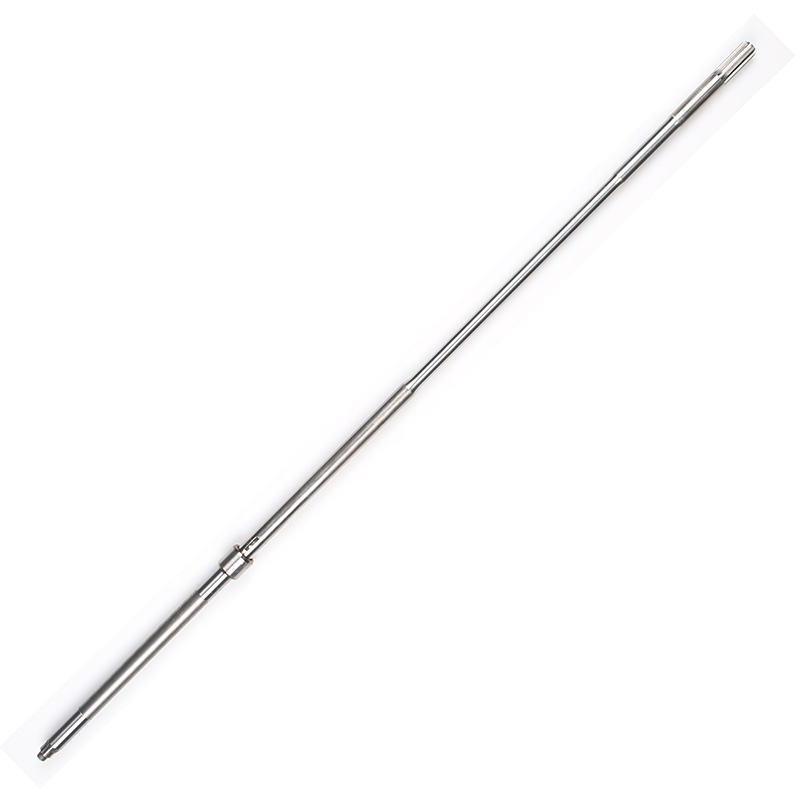
- Core products: Outboard gears, crankshafts, drive shafts, and propeller shafts.
Gill is particularly relevant to buyers sourcing outboard transmission components rather than large commercial-vessel shaft lines.
Its company profile reports more than 100 employees, a facility exceeding 25,000 square meters, automated machining centers, grinding equipment, bevel-gear equipment, and precision inspection systems. Its stated annual capacity of more than 3.6 million units covers multiple component categories and should not be presented as driveshaft-only capacity.
For smaller brands and aftermarket distributors, Gill merits consideration as a value-oriented candidate for sample-based development and coordinated sourcing of gears and shafts. Its stated capabilities include sample mapping, product development, and custom solutions. The commercial benefit is potentially fewer technical handovers when several interacting transmission components require development together.
Buyers should test flexibility and communication during qualification: submit a controlled drawing, request a manufacturing review, and assess how clearly the team addresses materials, tolerances, tooling, and sample revisions. Low MOQ, response time, and price competitiveness should be confirmed through an actual quotation rather than assumed.
- Founded: 1983.
- Location: Zhoushan, Zhejiang.
- Reported markets: Coastal China, Germany, the United States, and Peru.
- Core products: Marine propellers, tail-shaft systems, rudder-shaft systems, and related underwater components.
East Ocean is a relevant candidate when the purchasing requirement includes a propeller and associated shaft components rather than an isolated outboard replacement part.
The company describes dedicated tail-shaft production equipment and the ability to match shaft-related products with propellers before dispatch. This provides a useful basis for discussing responsibility for mating interfaces.
Its OEM inquiry scope should focus on drawing-based shaft systems, propeller interfaces, and matched underwater components. Buyers should request current inspection capabilities and dimensional envelopes because some narrative information on the reviewed page appears historical.
- Founded: 2006.
- Location: Taizhou, Jiangsu.
- Reported markets: Domestic waterway organizations, dredging companies, shipyards, and international dredging customers.
- Core products: Dredging components, marine shafting, propellers, and complete rudder systems.
Sanyang is more relevant to dredgers and working vessels than to small outboard aftermarket programs.
Its public company profile reports that marine shafting and rudder systems have been designed, manufactured, and installed for more than 200 ships. This is a cumulative experience claim, not an annual production figure.
Potential customization scope includes shafting packages and interfaces with rudder or dredging-vessel equipment. Buyers should clarify whether the supplier assumes design responsibility, manufactures to approved drawings, or combines both roles.
Older directory references to certification should trigger document verification, not automatic acceptance.
- Founded: 2006.
- Location: Jiyuan, Henan.
- Market focus: Industrial customers across drilling, heavy equipment, and marine applications; marine export-market breakdown not established.
- Core marine products: Propeller shafts, stern shafts, intermediate shafts, and thrust shafts.
Tianhe is a heavy-forging candidate rather than a direct equivalent to an outboard-parts specialist.
Its official marine-forgings page explicitly identifies several propulsion-shaft categories. Buyers requiring substantial forged sections can therefore assess it for a drawing-based manufacturing route.
The inquiry should define whether delivery is required as a forging blank, rough-machined component, or finished shaft. Ask the supplier to identify which machining, heat-treatment, and inspection operations will occur at the contracting facility.
ODM-level engineering responsibility is not established by the product listing and should be negotiated separately.
- Founded: 2006.
- Location: Zhangjiagang, Jiangsu.
- Market focus: Multiple industrial sectors, including vessels; marine customer geography not disclosed in the reviewed profile.
- Core capabilities: Smelting, forging, machining, heat treatment, and material-related development.
Guangda offers a different purchasing proposition: an integrated material-processing route.
Its official profile describes capabilities extending from steelmaking through forging and machining, while its product listings include marine propeller shafts. This makes it relevant to buyers whose main concern is control of material and forging stages.
Suitable inquiries include custom shaft forgings and machining to approved drawings. Buyers should establish the exact delivery condition, inspection plan, and responsibility for final journal or coupling dimensions.
An integrated equipment list is useful evidence, but it does not replace project-specific process qualification.
- Establishment reference: Current official website states "Since 2004"; older company literature refers to 2001 origins.
- Location: Suzhou, Jiangsu.
- Reported reach: More than 160 countries and regions.
- Core business: Outboard engines and associated platform parts.
Parsun belongs on a broader sourcing shortlist because some buyers need an original-platform drive shaft rather than a custom aftermarket component. A public product listing identifies a Parsun drive-shaft assembly.
However, an engine manufacturer should not automatically be described as an open-market contract shaft factory.
The most appropriate inquiry concerns platform-matched replacement parts, engine supply programs, and any available OEM arrangements. Buyers must confirm whether standalone shafts are sold, whether custom drawings are accepted, and which production operations are performed internally.
This distinction helps prevent wasted quotation cycles.
- Founded: 2008, according to public company profiles.
- Location: Hangzhou, Zhejiang.
- Reported markets: More than 80 countries or regions across five continents.
- Core business: Outboard engine development, manufacturing, and service.
Hidea is another platform-oriented candidate. Its official materials describe a designed annual production capacity of 100,000 outboard engines. That figure must not be converted into a shaft-production claim.
Buyers considering Hidea should focus on engine-platform compatibility and the availability of original replacement components.
Standalone shaft manufacturing, third-party drawings, private-label terms, and ODM engineering scope were not established in the reviewed material. Confirm these points before treating the company as a substitute for a dedicated shaft manufacturer.
- Founded: Not established from the reviewed product page.
- Location: Zhenjiang, Jiangsu.
- Market focus: Marine shafting and propulsion projects; named geographic markets not established.
- Product scope: Stern shafts, intermediate shafts, stern tubes, bearings, and couplings.
Supersoar is relevant to project-based shafting inquiries and coordinated procurement of associated components.
Its product page advertises propeller shafts up to 16 meters long, 500 millimeters in diameter, and 16 tonnes per piece. Buyers should treat these as claimed capability limits that require confirmation against the actual drawing.
The page also references EN 10204 3.1 material documentation. Request a sample document and confirm how its heat number will remain connected to the finished shaft.
Factory ownership, subcontracting arrangements, and engineering responsibility should be established before qualification.
- Founded: Not established from the reviewed material.
- Location: Zhenjiang, Jiangsu.
- Market focus: Marine equipment procurement; named geographic markets not established.
- Product scope: Propeller shafts, forged alloy-steel shafts, stern tubes, and broader marine equipment.
Normanship provides a shaft-focused product range within a broader marine equipment portfolio.
Its published descriptions discuss forging, heat treatment, machining, keyways, threads, and coupling features. This supports a drawing-based inquiry, but does not independently establish which processes are performed at its own facility.
The company may suit buyers seeking a coordinated package of shafts and associated marine products. Before approval, request the manufacturing-site address, process ownership matrix, inspection arrangements, and the legal identity of any producing subcontractor.
- Reported establishment: December 2008, according to a supplier directory.
- Location: Dongtai, Jiangsu.
- Market focus: Marine transmission equipment; export destinations not established.
- Listed products: Complete marine shafting, shaft-sealing devices, and mechanical fittings.
Yuehai is a preliminary candidate for buyers seeking shafting and sealing components from a specialized supplier.
The reviewed directory lists OEM services and a combined manufacturer/trading-company role. However, sufficient primary-source evidence was not available to confirm its current factory scale, certificate status, or manufacturing scope.
Consequently, qualification should begin with company-registration checks and a live factory review—not a production deposit. Its inclusion identifies a potentially relevant lead, not an independently verified manufacturing endorsement.
Avoid purchase descriptions such as "marine stainless shaft" or "high-strength steel."
For precipitation-hardening stainless steel such as 17-4 PH, the heat-treatment condition materially affects properties. The material producer's technical data describes a range of strength and toughness outcomes obtained through different aging treatments.
A purchasing specification should therefore identify:
- Material designation and governing material standard.
- Required delivery and heat-treatment condition.
- Mechanical properties and hardness limits.
- Material-document requirements.
- Corrosion exposure and lubrication conditions.
- Permitted deviations and approval procedures.
Do not approve a material substitution solely because its nominal tensile strength is similar. Marine shaft evaluation also involves fatigue behavior and torsional loading, as reflected in DNV's shaft-fatigue assessment methods.
For an outboard drive shaft, request inspection criteria for splines, bearing seats, shoulders, seal journals, straightness, and runout.
For a larger inboard shaft, add the applicable coupling, taper, keyway, forging-quality, nondestructive-testing, and installation requirements.
Avoid inserting a generic tolerance into every drawing. The correct requirement depends on shaft geometry, bearing arrangement, operating conditions, and assembly interfaces.
DNV specifically identifies the interaction among shaft alignment, bearing behavior, propeller loads, and hull deflection as important to propulsion reliability.
Three document categories should remain separate:
1. Management-system certification, such as ISO 9001.
2. Material and inspection documentation.
3. Product or project approvals, including applicable classification requirements.
CE marking is not a universal environmental certificate and does not apply automatically to every mechanical product. RoHS concerns restrictions on hazardous substances in electrical and electronic equipment; it should not be imposed indiscriminately on a standalone mechanical shaft. Determine the applicable legal requirements for the actual product and destination.
A finished shaft's appearance does not establish alloy identity or heat-treatment condition.
Require an approved material route, batch identification, and a document trail connecting raw material to finished parts. For risk-sensitive orders, agree on independent material verification and testing before production begins.
Annual engine output, total component output, and maximum shaft length measure different things.
Ask every supplier the same question:
> "What monthly quantity can you commit for this drawing, with this inspection plan, using the approved production route?"
Then identify the actual bottleneck: forging, heat treatment, spline processing, grinding, or inspection.
A sample can demonstrate technical feasibility without proving repeatable production.
Require suppliers to identify the equipment, subcontractors, fixtures, and inspection methods used for samples. Approve changes before the production route differs.
A less visible purchasing risk is accepting a shaft because individual dimensions pass while its relationship with the mating assembly remains unproven.
For outboard programs, request a controlled functional-fit check using approved mating components where feasible. For larger shafting, review alignment and bearing requirements rather than treating the shaft as an isolated machined bar.
DNV warns that inadequate propeller-shaft alignment can contribute to stern-tube bearing damage, operational downtime, and delayed vessel delivery. A geometrically acceptable component does not, by itself, validate the installed propulsion system.
Match the quotation, business registration, factory address, bank beneficiary, and certification holder.
If the seller uses subcontractors, identify which organization controls material procurement, heat treatment, final machining, and inspection.
Include:
- Drawing revision and part-number cross-reference.
- Application, operating environment, and mating interfaces.
- Material and heat-treatment requirements.
- Inspection characteristics and acceptance rules.
- Forecast quantity and requested order releases.
- Packaging, marking, and document requirements.
Request a first-article inspection report rather than a simple "QC passed" statement.
Define fit, dimensional, material, and functional acceptance criteria before samples are manufactured. Retain approved reference samples where practical.
A pilot order should test repeatability, packaging, document accuracy, and delivery coordination—not only machining capability.
Record defects and corrective actions before increasing the order volume.
Specify supports and restraints that prevent shaft movement, protect finished surfaces, and avoid loading delicate splines or journals.
Agree on corrosion protection, storage conditions, arrival inspection, and the process for reporting transport damage. For long shafts, define how straightness or runout will be checked after receipt.
These are proposed purchasing controls, not assurances that every supplier already follows them.
The right boat driveshaft partner depends on the product category and the controls your application requires.
An outboard-parts program needs repeatable component geometry, reliable fit, and practical replenishment. A commercial-vessel shafting project needs a different combination of forging capability, engineering review, inspection, and installation coordination.
For buyers seeking outboard drive shafts, propeller shafts, gears, and related transmission components, Ningbo Gill Transmission Parts Co., LTD. is a relevant starting point. Its published manufacturing background and sample-development capabilities justify a technical discussion, while current certification, part-specific capacity, delivery commitments, and commercial terms should be confirmed during qualification.
Send Gill your drawing or reference sample, engine application, annual demand, and inspection requirements. Request a manufacturing review and sample plan before committing to production.
Search the company name or certificate number through IAF CertSearch and review the status, scope, site, issuing certification body, and accreditation details. Do not rely only on the expiry date printed on a PDF, because a certificate can also be suspended or withdrawn.
If the record cannot be resolved, contact the issuing body directly before accepting the certificate.
No. Do not treat a supplier's reference to 3.1 material documentation as proof that the finished shaft has received the classification approval required by your project.
Specify the required material documentation and any separate survey, testing, witnessing, or class requirements in the purchase order. Supersoar's material-document claim, for example, should be assessed separately from project approval.
Not automatically. A change in material or heat-treatment condition can alter toughness, corrosion behavior, fatigue performance, and manufacturing requirements.
For 17-4 PH, different aging treatments produce different property combinations. Obtain engineering approval for the complete substitution rather than accepting a higher strength figure as sufficient justification.
Factory inspection may establish component dimensions without validating the complete shaft line.
Alignment, bearing positions, propeller loads, and hull deflection can affect installed behavior. DNV's guidance explicitly addresses these interactions and the resulting bearing risks.
Define whether the supplier's responsibility stops at component conformity or extends to system design and installation support.
Ask the supplier to separate tooling charges, material purchasing constraints, processing batch requirements, and finished-part order quantities.
Then discuss a pilot order followed by scheduled releases against an agreed forecast. Do not exchange traceability, inspection, or approved material requirements for a lower MOQ.
This is a negotiation framework—not evidence that every shortlisted supplier accepts small orders.
- China's State Council: 2025 shipbuilding output, orders, and global market shares, published February 1, 2026. These are shipbuilding indicators, not boat-driveshaft market or export statistics. [english.www.gov]
- Ningbo Gill Transmission Parts: Company history, facility, equipment, capacity, markets, and stated certification. [gilltransmission]
- Zhoushan East Ocean: Company history, products, processing equipment, and export-market statements. [east-ocean-lifa-propeller]
- Taizhou Sanyang: Company profile, shafting experience, and customer focus; older certification claims require fresh verification. [linkedin]
- Jiyuan Tianhe: Establishment information and marine-forging product range. [en.jythzg]
- Zhangjiagang Guangda: Integrated production capabilities and marine-shaft product listing. [en.zjggdtc]
- Parsun: Current company website, historical company literature, and drive-shaft assembly listing. [parsunpower]
- Hidea: Company profile, international distribution, and stated engine capacity. [hideapower]
- Supersoar: Marine shafting products and advertised dimensional capabilities. [supersoarmarine]
- Normanship: Propeller-shaft products and manufacturing descriptions. [normanship]
- Yuehai Marine Fittings Factory: Directory-level company information; primary verification remains necessary. [sourceready]
- DNV: Propulsion shaft alignment, bearing performance, and fatigue-assessment guidance. [dnv]
- IAF CertSearch: Certificate-status, scope, and accreditation verification. [iafcertsearch]
- European Commission: RoHS scope and hazardous-substance restrictions. [environment.ec.europa]
- Czech Ministry of Industry and Trade: Explanation of CE marking and its applicability. [mpo.gov]
- ARMCO 17-4 PH technical data: Heat-treatment conditions and material-property considerations. [aksteel]


