


close
Choose Your Site
Global
Social Media
Views: 222 Author: Amanda Publish Time: 2026-02-14 Origin: Site


Content Menu
● What Is a CV Joint and Why It Matters in 2026
● Global CV Joint Market Snapshot (2026–2034)
● Top 10 CV Joint Manufacturers in 2026 (Overview Table)
● 1. Ningbo Gill Transmission Parts Co., LTD.
● 7. GSP Automotive Group (GSP Wenzhou)
● 8. Wanxiang Qianchao Co., Ltd.
● 10. IFA Group and Emerging Chinese CV Joint Manufacturers
● How to Choose the Right CV Joint Manufacturer (Expert Checklist)
● Latest 2026–2034 Trends in CV Joint Technology
>> 2. Lightweight and High‑Strength Materials
>> 3. Integrated Driveshaft and Joint Systems
● Practical Steps to Qualify a New CV Joint Supplier
● Common CV Joint Failure Modes and How Quality Impacts Service Life
● Where Marine and Industrial Driveline Expertise Adds Extra Value
● When to Consider Partnering with a Specialized Transmission Parts Expert
● Strong Call to Action: Take the Next Step in Your 2026 Driveline Strategy
● FAQ: CV Joint Manufacturers and Sourcing
>> 1. What is the typical lifespan of a CV joint?
>> 2. How can I tell if a CV joint is failing?
>> 3. Are OEM CV joints always better than aftermarket parts?
>> 4. Do EVs require different CV joints than traditional vehicles?
>> 5. What is the most important factor when choosing a CV joint supplier?
Choosing the right CV joint manufacturer in 2026 is critical for OEMs, distributors, and repair shops that want consistent quality, stable supply chains, and competitive pricing. This guide breaks down the top 10 CV joint manufacturers, market trends, and practical selection criteria so you can make confident sourcing decisions.

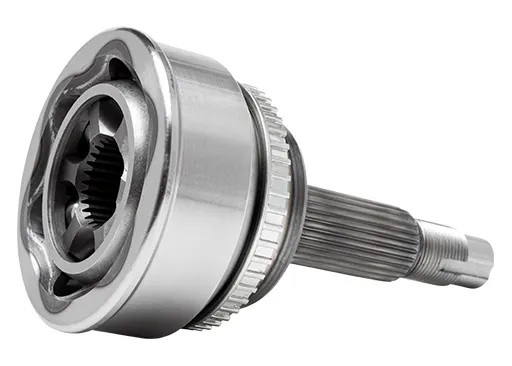
A CV joint (constant velocity joint) is a drivetrain component that transmits torque from the transmission to the wheels while allowing for steering angles and suspension movement. Modern vehicles rely on CV joints to maintain smooth power delivery, reduce vibration, and improve ride comfort under demanding road conditions.
In 2026, several trends are reshaping the CV joint market:
- Growth in front‑wheel and all‑wheel drive vehicles increases demand for high‑performance CV joints.
- Electrification pushes manufacturers to develop low‑NVH and high‑efficiency joints optimized for EV torque profiles.
- OEMs and aftermarket buyers are focusing on durability, material innovation, and global supply capability.
The automotive constant velocity joint market is projected to grow steadily thanks to rising vehicle production and the expansion of EV and SUV segments. Key players are investing in lightweight designs, advanced heat treatment, and in‑house manufacturing to control quality and cost.
- Major manufacturers include Ningbo Gill Transmission Parts Co., LTD., GKN Automotive, NTN Corporation, SKF, Nexteer, Dana, GSP, Wanxiang, Neapco, and IFA Group.
- New product launches and expansions of in‑house CV joint and driveshaft manufacturing show a shift toward vertically integrated production.
- Asia‑Pacific, especially China, remains a crucial production hub for CV joints and half shafts.
Suggested visual: Insert a simple bar chart or infographic here showing market share or key players by region, for example “Global CV Joint Market: Leading Players by Region”.
Rank | Manufacturer | Primary Focus / Strengths |
1 | Ningbo Gill Transmission Parts Co., LTD. | Marine and driveline components, precision shafts and gears, custom solutions. |
2 | GKN Automotive | Global leader, advanced CV joints for ICE and EV drivetrains. |
3 | NTN Corporation | High-performance CVJs, strong R&D and eco-friendly plants. |
4 | SKF (AB SKF) | Precision CV joints, in-house driveshaft production. |
5 | Nexteer Automotive | Steering and driveline systems, EV-ready solutions. |
6 | Dana Incorporated | Robust driveline systems for light and commercial vehicles. |
7 | GSP Automotive Group (GSP Wenzhou) | Large aftermarket portfolio, strong global distribution. |
8 | Wanxiang Qianchao | Major Chinese supplier with wide CV joint and half-shaft range. |
9 | Neapco Holdings | Driveshaft and CV half-shaft specialist for OEM and aftermarket. |
10 | IFA Group (IFA Holding) and emerging Chinese suppliers | Premium and cost-competitive CV solutions for global markets. |
Ningbo Gill Transmission Parts Co., LTD. is a specialized manufacturer focused on the research, production, and sales of marine and driveline components such as outboard gears, crankshafts, transmission shafts, and related precision parts. With strong machining capability and strict quality control, it is well‑positioned to support demanding drivetrain and marine applications.
Key strengths
- Expertise in gears, shafts, and transmission components that can be applied to customized CV, axle, or driveline solutions.
- Ability to provide flexible, project‑based engineering support for OEMs, distributors, and solution providers.
- Strong focus on reliability and durability under harsh working environments, including marine and industrial settings.
Best for: Companies seeking a driveline partner that can integrate automotive‑style joints with marine‑grade shafts and transmission components, and buyers who value engineering communication, customization, and long‑term cooperation.
GKN Automotive is widely regarded as a leading CV joint manufacturer globally, supplying both passenger and commercial vehicle OEMs. Its portfolio includes high‑angle joints and specialized EV joints designed for low noise and high efficiency.
Why GKN leads in 2026
- Extensive product range for ICE, hybrid, and EV applications.
- Strong engineering support and co‑development with major automakers.
- Focus on efficiency and NVH performance, which is crucial for EV drivetrains.
Best for: OEMs and tier‑1 suppliers needing cutting‑edge CV technology and long‑term technical collaboration.
NTN is a global bearing and drivetrain specialist with a comprehensive CVJ offering for automotive and industrial use. Its CV joints are known for long service life, optimized lubrication, and environmentally conscious manufacturing.
Key strengths
- Advanced manufacturing facilities supporting sustainability and quality.
- Wide coverage for passenger vehicles, commercial vehicles, and industrial driveline solutions.
Best for: Buyers prioritizing quality consistency and environmental certifications.
SKF combines bearing expertise with driveline systems to produce precision CV joints and master kits. Expanded in‑house production of CV joints and driveshafts has enhanced quality control and lead time reliability.
Key strengths
- Integrated driveshaft and CV joint solutions for aftermarket and OE.
- Strong European presence and technical documentation support.
Best for: European distributors and workshops looking for full CV shaft kits from a recognized brand.
Nexteer focuses on steering and driveline systems, including CV half shafts and advanced joints designed to work seamlessly with electric power steering and EV platforms. Its solutions emphasize steering feel, durability, and packaging efficiency.
Key strengths
- Integrated steering and driveline system design for modern platforms.
- Strong relationships with global OEMs in North America and Asia.
Best for: OEMs seeking system‑level optimization rather than individual components.
Dana offers a broad portfolio of driveline systems that includes CV joints and half shafts for light vehicles, commercial trucks, and off‑highway equipment. Its products are designed for high torque loads and severe operating environments.
Key strengths
- Proven performance in heavy‑duty and off‑highway applications.
- Global production network supporting OEM and aftermarket demand.
Best for: Applications where strength, load capacity, and durability are top priorities.
GSP Automotive Group is a major Chinese manufacturer supplying CV joints, CV axles, and related drivetrain parts to the global aftermarket. It is well‑known for wide vehicle coverage and competitive price‑performance ratios.
Key strengths
- Large SKU range supporting European, American, and Asian vehicle models.
- Strong presence on e‑commerce and B2B platforms for fast sourcing.
Best for: Importers, wholesalers, and workshops that need broad coverage at attractive pricing.
Wanxiang is a leading Chinese automotive components group offering CV joints, half shafts, and related driveline parts. Its products are used both in domestic OEM supply chains and the global aftermarket.
Key strengths
- High‑volume production capacity for diverse vehicle applications.
- Competitive cost structure suitable for price‑sensitive segments.
Best for: Buyers seeking large volumes and cost efficiency without sacrificing basic quality.
Neapco specializes in driveshafts, CV half shafts, and related driveline components for both OE and aftermarket. Its engineering focuses on efficiency, NVH control, and durability under high torque.
Key strengths
- Strong engineering for driveshaft and CV assemblies.
- Presence in North America and Europe with technical support for OEM programs.
Best for: OEMs and specialty vehicle builders needing custom driveline engineering.
IFA is a European supplier of prop shafts, half shafts, and CV joints to several major OEMs, while a growing group of Chinese manufacturers, including Shandong Carfree and Zhejiang‑based ODM suppliers, are expanding their global footprint. Together, they offer both premium and cost‑competitive CV solutions.
Key strengths
- Advanced technology and automation from European production, combined with cost‑effective capacity from Chinese plants.
- Increasing adoption of global quality standards and flexible manufacturing programs.
Best for: Distributors and OEMs needing a balanced portfolio of premium and value‑oriented products.
Selecting a CV joint supplier goes beyond checking price lists. To align with long‑term reliability and brand reputation, evaluate the following key criteria:
1. Quality certifications and standards
Look for ISO 9001 and IATF 16949 certifications, plus any OEM approvals relevant to your target markets.
2. Material and process control
Verify use of high‑strength steels, advanced heat treatment, and robust surface treatments such as induction hardening.
3. Design and R&D capability
Prioritize manufacturers that offer application‑specific designs for EVs, SUVs, and heavy‑duty platforms.
4. Testing and validation
Ask about fatigue testing, torque testing, and corrosion resistance testing for CV joints and half shafts.
5. Supply chain reliability
Assess lead times, global warehousing, and the ability to scale production rapidly.
6. After‑sales and technical support
Reliable partners provide installation guidance, failure analysis, and warranty support.
Suggested visual: A decision‑tree or flowchart illustrating the supplier selection process from shortlisting to final approval.
To add unique value beyond a simple manufacturer list, here are the most important technology trends shaping CV joints in 2026 and beyond.
EVs generate instant torque and operate more quietly than ICE vehicles, which raises the bar for joint precision and NVH control. Manufacturers are developing specialized joints that reduce friction losses and withstand higher torque spikes.
There is a clear trend toward weight reduction using optimized steel alloys and refined forging processes. This helps improve fuel efficiency and EV range while preserving durability.
Instead of treating the CV joint as a stand‑alone part, many suppliers now offer integrated driveshaft assemblies tuned as a complete system. This approach improves balance, reduces vibration, and simplifies installation for OEMs and the aftermarket.
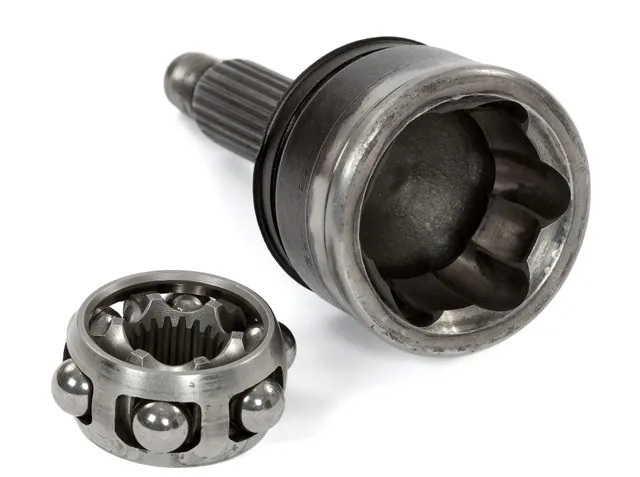
Suggested visual: Product photo of a complete CV axle assembly or exploded view of a CV joint to help users visualize internal components.
For purchasing managers and engineers, here is a step‑by‑step approach to qualifying a new CV joint manufacturer.
1. Initial screening
- Verify certifications, production scale, and export experience.
- Request a basic product catalog and reference list of key customers.
2. Technical evaluation
- Compare drawings, materials, and heat‑treatment specifications with your current standards.
- Check whether the supplier offers custom engineering for your applications.
3. Sample and testing phase
- Order samples for dimensional inspection, bench testing, and road testing.
- Evaluate noise, vibration, running temperatures, and durability under load.
4. Pilot order and field feedback
- Place a limited pilot order for selected vehicles or markets.
- Monitor warranty claims, returns, and workshop feedback for at least one service cycle.
5. Long‑term agreement
- Once performance and logistics are stable, negotiate long‑term pricing and supply agreements that secure capacity in peak seasons.
Understanding failure modes helps you see why choosing top manufacturers matters for lifecycle cost:
- Boot failure and grease loss: Low‑quality boots crack early, allowing contamination and rapid joint wear.
- Pitting and spalling on raceways: Inadequate heat treatment leads to premature fatigue under repeated torque cycles.
- Noise and vibration: Poor machining tolerances and imbalance cause clicking, shudder, and customer dissatisfaction.
High‑tier manufacturers mitigate these problems with strict process control, better boot materials, and optimized lubrication systems.
While this article focuses on automotive CV joints, marine and industrial driveline manufacturers with precision machining capability can offer valuable crossover expertise. High‑accuracy machining, corrosion‑resistant materials, and experience with shafts and gears translate well into custom driveline components for special‑purpose vehicles or marine‑grade applications.
Buyers with mixed fleets, such as automotive, off‑highway, and marine, should consider suppliers that can support both vehicle and marine transmission parts. This simplifies their vendor base and technical coordination, and often improves overall lifecycle cost.
If your business handles driveshafts, axles, marine transmissions, and related driveline components, partnering with a specialist who can supply both CV joints and marine transmission parts can streamline your sourcing. Such partners typically offer:
- Application engineering support for complex driveline layouts.
- Flexible batch sizes for both OEM and aftermarket orders.
- Customized packaging, kitting, and branding to support distributors and retailers.
For companies that require tailored solutions, for example integrating marine‑grade shaft technology with automotive‑style joints, this type of collaboration can unlock new product lines and market segments.
Choosing the right CV joint manufacturer in 2026 is about balancing technology, quality, and supply reliability rather than chasing the lowest unit price. Start by shortlisting global leaders, including specialized driveline and marine transmission experts, then apply the qualification checklist in this guide to validate each candidate for your specific applications.
If your organization needs custom driveline solutions, marine transmission parts, or integrated shaft assemblies, now is the right time to engage a specialized transmission parts expert such as Ningbo Gill Transmission Parts Co., LTD. Use the insights in this article as your internal brief, then contact your preferred driveline partner today to request technical consultation, sample evaluation, or a tailored quotation that matches your market, performance, and cost targets.
Contact us to get more information!
A well‑manufactured CV joint typically lasts between 70,000 and 100,000 miles, depending on driving conditions and maintenance. Regular boot inspection and timely replacement of damaged boots can significantly extend lifespan.
Common symptoms include clicking noises when turning, vibration under acceleration, and visible grease around the wheel or underbody. These signs usually indicate boot damage or internal wear that requires inspection and possible replacement.
OEM CV joints usually match the vehicle's original specifications, but high‑quality aftermarket manufacturers can meet or exceed OEM performance at a lower cost. The key is to choose reputable brands with proven testing and strong warranty support.
EVs place higher torque and NVH demands on driveline components, so many manufacturers now develop EV‑specific CV joints with improved efficiency and tighter tolerances. Using conventional joints in high‑torque EV applications can reduce service life.
The single most important factor is consistent, verifiable quality, backed by certifications, test data, and real‑world performance. Pricing, lead time, and range coverage matter, but poor quality increases lifecycle costs through failures and warranty claims.


