


close
Choose Your Site
Global
Social Media
Views: 222 Author: Gill Transmission Publish Time: 2026-05-29 Origin: Site


Arabia has become an increasingly important node in the global marine supply chain, acting as a trading, assembly, and distribution hub between Asian manufacturing clusters and end markets in Europe, Africa, and the Middle East. For forward gears and related outboard transmission parts, many regional distributors, OEM assemblers, and brand owners now strategically combine Arabia-based logistics and service with production partnerships in mature manufacturing bases like coastal China. In practice, this means a procurement manager often buys from "Arabia suppliers" that integrate engineering, stockholding, and after‑sales locally while working closely with specialized gear and shaft factories in Asia. [researchandmarkets]
In this guide, we focus on forward gear and marine transmission suppliers that are relevant to Arabia-based buyers—either by regional presence or by established export ties with Arabian customers. We highlight technical capabilities, certifications, and OEM/ODM experience so that sourcing teams can identify stable long‑term partners rather than short‑cycle trading companies.
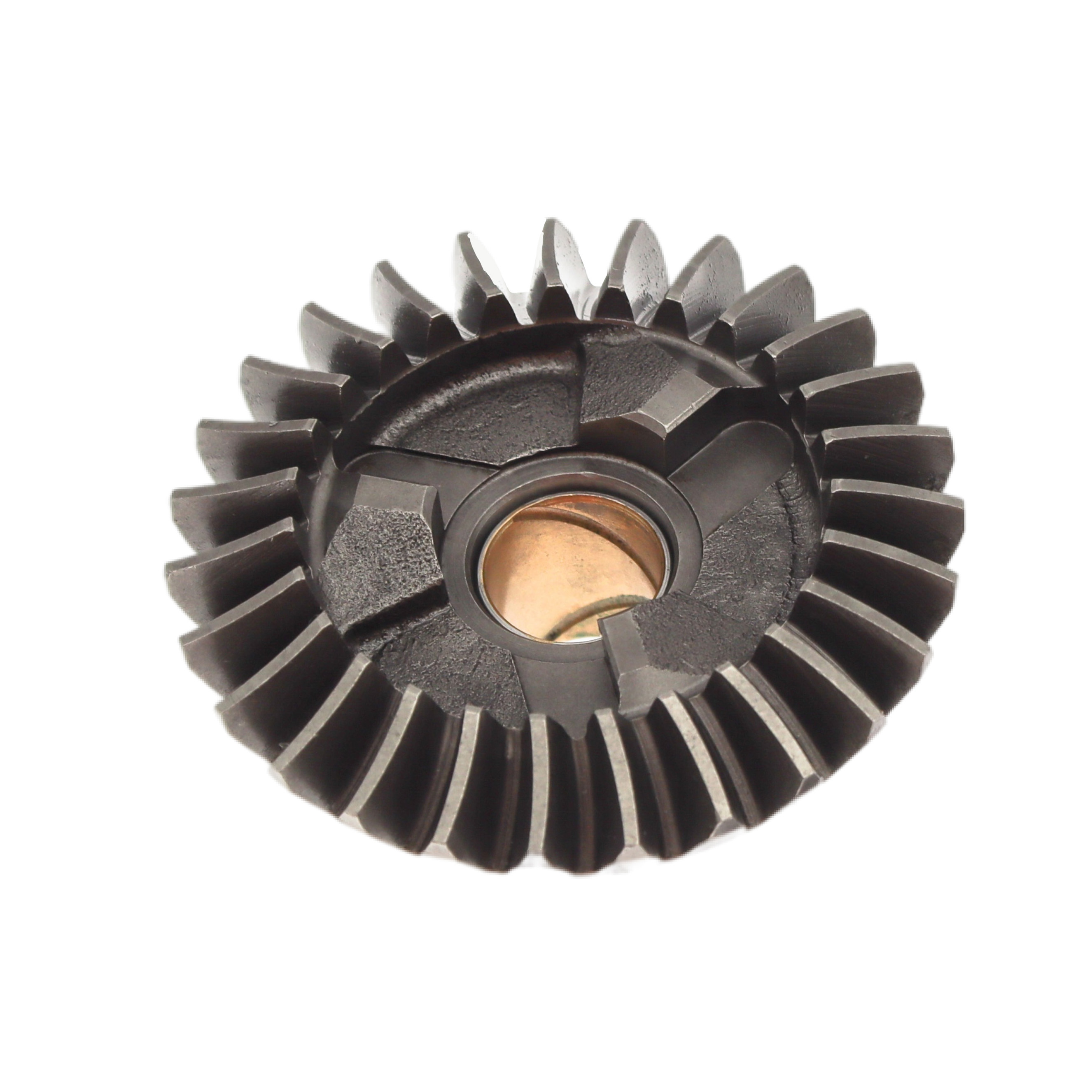
When screening forward gear suppliers, experienced buyers usually look at four hard dimensions before talking about price:
- Factory history and scale
- Years in operation (preferably 10+ years in marine transmission or precision machining).
- Factory land area and annual output (e.g., millions of pieces per year for gears/shafts).
- Certifications and QC system
- ISO 9001 or equivalent quality management certification, checked for validity via accredited bodies. [gilltransmission]
- In‑house inspection: hardness testing, gear profile measurement, run‑out and concentricity checks.
- R&D and application engineering capacity
- Ability to reverse‑engineer samples from major brands (Yamaha, Suzuki, Mercury, etc.) and build drawings.
- Support for custom tooth profiles, heat‑treatment specifications, and surface finishing based on duty cycle.
- Delivery performance and flexibility
- Stable lead time for repeat orders and transparent capacity planning.
- Flexibility to support small to medium batch orders for aftermarket brands and regional distributors.
Ningbo Gill Transmission Parts Co., LTD. is a typical example of such a mature factory, with over 28 years of experience, a 25,000 m² plant, more than 3.6 million units annual capacity, and ISO 9001 certification—key indicators that they can support consistent forward gear supply at scale. [gilltransmission]
Technical evaluation for forward gears and marine gear sets usually focuses on:
- Materials and metallurgy
- Use of alloy steels with appropriate hardenability (e.g., 20CrMnTi or similar grades for carburizing) to withstand cyclic loads and shock from outboard operation.
- Controlled carburizing and quenching to achieve case hardness high enough to resist pitting while keeping the core tough to prevent tooth breakage.
- Gear geometry and grinding
- Bevel or spiral bevel gear machining accuracy, including tooth contact pattern and backlash control, directly impacts noise and efficiency.
- Surface roughness and grinding quality affect long‑term wear and gearbox temperature.
- Surface treatment and protection
- Anti‑corrosion coatings or controlled surface finish combined with proper lubrication design, essential in marine environments.
- Compliance with RoHS where surface treatments involve restricted substances, especially for EU‑bound exports. [jayashapurabrass]
- Compliance and documentation
- ISO 9001 QMS as base; RoHS compliance statements and sometimes CE where assemblies are involved in complete systems.
- Traceability of batches and material heat numbers, which is critical for warranty and failure analysis. [jayashapurabrass]
Although Arabia itself is more of a logistics and assembly hub, the forward gears and outboard shafts supplying this market are often sourced from specialized clusters in East Asia. Coastal regions of China such as Zhejiang and Ningbo have developed dense ecosystems of precision gear machining, heat‑treatment houses, and outboard‑specific part makers, giving them economies of scale and deep process know‑how. Arabia‑based marine equipment distributors frequently build their supply chains around these clusters, importing finished or semi‑finished parts and adding local value through inventory, kitting, customization, and technical support. [outboard-gear]
This cluster‑plus‑hub model allows regional buyers in Arabia to access high‑precision components from established factories, while still enjoying local warehousing, shorter replenishment cycles, and after‑sales in Arabic and English.
To build trust, a forward gear supplier should be transparent about:
- Founding year and development milestones (expansion, automation upgrades, certification dates).
- Main export markets and typical customer profiles (aftermarket distributors, OEMs, boatyard networks).
- OEM/ODM capabilities: sample mapping, drawing co‑development, brand packaging, and flexible MOQs.
- QC routines, from incoming material inspection to final 100% checks on critical dimensions.
You will see these elements reflected in each supplier profile below so procurement teams can quickly assess fit and risk.
To keep this guide useful and objective for professional buyers, suppliers were shortlisted using the following criteria:
- Focus on marine transmission and forward/outboard gears rather than generic hardware only.
- Demonstrated export or service relationships with Middle East / Arabia clients (direct or via trading partners).
- Factory‑level capabilities where possible: in‑house machining and QC, not purely trading.
- Publicly verifiable credentials such as ISO 9001, long operating history, or published corporate scale. [gilltransmission]
- Clear ability to support OEM/ODM or aftermarket customization (e.g., sample reverse‑engineering, brand‑labeled packaging).
Within these constraints, we looked for a mix of high‑capacity manufacturers and flexible "engineering‑driven" suppliers that are particularly suitable for small and mid‑sized brands selling into Arabian markets.
Ningbo Gill Transmission Parts Co., LTD. was founded in 1997 and has grown into a specialized manufacturer of outboard gears, crankshafts, drive shafts, and propeller shafts, operating a 25,000 m² standardized factory with over 100 employees and more than 3.6 million units annual production capacity. This scale provides enough volume to support major aftermarket programs while still remaining agile for small and medium‑sized brands. [gilltransmission]
From a technical standpoint, Gill Transmission runs advanced automatic spiral bevel gear machines, CNC machining centers, grinding lines, and precision inspection systems, enabling tight control of forward gear geometry and surface finish. The company obtained ISO 9001 certification in 2024 and emphasizes in‑house processing and batch consistency, which is critical for gearbox NVH performance and long‑term durability. [gilltransmission]
For Arabian buyers, the most important strengths are flexibility and communication: Gill Transmission offers sample mapping and reverse‑engineering for Yamaha, Suzuki, Mercury and other mainstream outboards, supports OEM branding, and can adapt MOQs for aftermarket lines targeting regional markets. The combination of engineering support, open communication, and willingness to collaborate closely with small and mid‑size brands makes this factory particularly suitable as a "technical back‑end" for Arabia‑based marine parts distributors. [gilltransmission]
- Headquarters: Ningbo, Zhejiang, China
- Established: 1997 (Ningbo Gill brand formalized in 2016) [gilltransmission]
- Core products: Forward and reverse gears, outboard drive shafts, propeller shafts, crankshafts [gilltransmission]
- Certifications: ISO 9001 Quality Management System [gilltransmission]
- Main markets: North America, Europe, Asia, South America; strong presence in global aftermarket for outboard motor parts [gilltransmission]
- OEM/ODM scope: Sample mapping, custom development, private label packaging, flexible batch sizes [gilltransmission]
Wenling Changrong Machinery, established in 2009 in Zhejiang's pump and electromechanical industrial park, is a high‑tech enterprise focused on outboard transmission system components including forward and reverse gears, drive shafts, and propeller shafts. The company has accumulated patents and know‑how around transmission components and has built a reputation for stable supply to global outboard engine brands and aftermarket distributors.
Their positioning as one of the globally recognized outboard drive shaft suppliers means buyers in Arabia can leverage Changrong's specialized shaft and gear experience for both OEM and aftermarket replacement programs. With international quality management practices and an emphasis on green manufacturing and durability in harsh marine environments, this supplier is suitable for buyers needing consistent mechanical performance and medium‑to‑large batch volumes.
- Headquarters: Wenling, Zhejiang, China
- Established: 2009
- Core products: Active gears, forward/reverse gears, drive shafts, propeller shafts, claw clutches
- Strengths: Patented technologies, strong R&D, focus on global outboard applications
- OEM/ODM scope: Transmission system solutions and customized part designs for different horsepower ranges
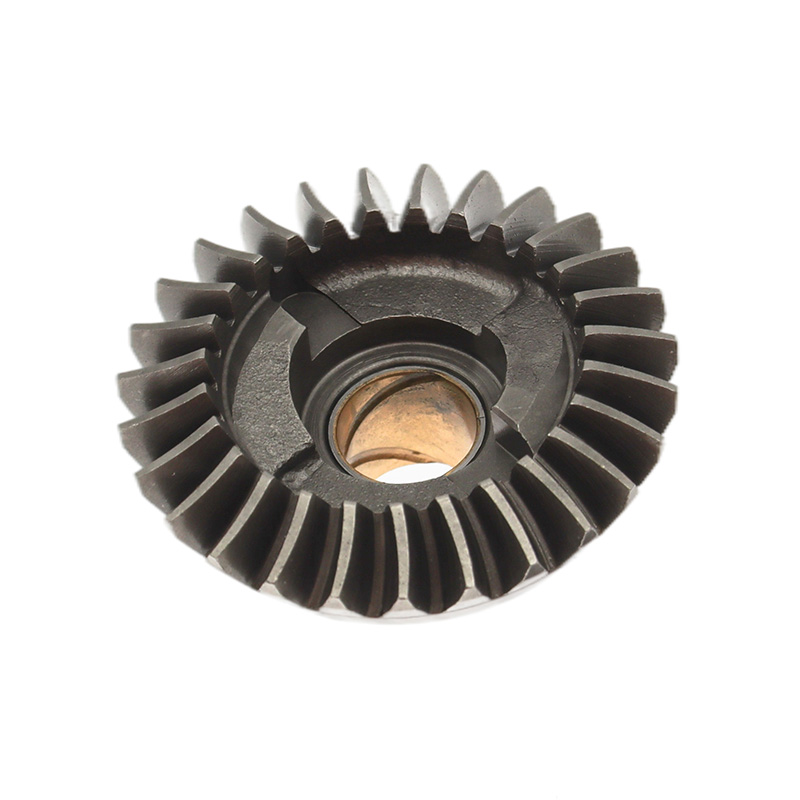
Arabia hosts several marine equipment distributors and service companies that stock forward gears and gearbox components sourced from factories in Asia and Europe. These companies typically:
- Maintain inventory of fast‑moving gear ratios for popular outboards in local marinas.
- Provide quick turnaround for repairs and replacements, avoiding long cross‑border lead times.
- Integrate with global manufacturing partners (like Gill Transmission and other Chinese clusters) for non‑stock or customized SKUs. [instagram]
From a buyer's standpoint, they are ideal partners when you need local currency transactions, regional warranty handling, and the ability to dispatch parts quickly to shipyards and boat rental fleets across the Gulf. When evaluating such distributors, prioritize transparency on their upstream factories, QC processes for incoming goods, and whether they can provide batch traceability and material documentation.
- Location: Major port cities and industrial zones in Arabia
- Role: Stockholding, technical support, and local after‑sales for imported forward gears and marine gearboxes
- OEM/ODM scope: Often limited; more focused on private label and regional branding than deep engineering changes
Major marine gearbox and transmission manufacturers (Europe, East Asia) often have agents or sales offices covering Arabia and surrounding regions. While they may not supply individual forward gears for small outboards, they are important partners for: [wenlio]
- High‑horsepower marine transmissions and complete gearbox assemblies.
- Projects with strict classification society requirements or deep documentation packages.
- Integrated propulsion systems, including controls and monitoring.
If your procurement scope includes both small outboard forward gears and larger propulsion gearboxes, coordinating with these global brands' regional representatives can help standardize specifications, oil types, and documentation across fleets.
- Headquarters: Primarily Europe, East Asia [wenlio]
- Arabia presence: Agents and distributors participating in regional marine and water technology exhibitions [instagram]
- OEM/ODM scope: Custom gearbox designs for specific vessels; limited on small outboard components
A final category is small to mid‑sized precision machining companies that focus on gears and shafts for multiple industries but also produce marine forward gears as part of their mix. These shops usually work as tier‑2 suppliers to trading companies or brand owners that serve Arabia, rather than exporting directly.
Their relevance to Arabian buyers lies in redundancy and risk management: your primary supplier (e.g., Gill Transmission) may already subcontract some capacity or maintain backup tooling with such partners. During due diligence, it is worth asking your main suppliers how they structure their tier‑2 network, especially for peak seasons or emergency orders.
The table below gives a simplified view of how different supplier types relevant to Arabia compare on capacity, MOQs, and certification level.
| Supplier type | Typical annual capacity (gears/shafts) | Typical MOQ range (per item) | Certification & QC focus |
|---|---|---|---|
| Ningbo Gill Transmission Parts Co., LTD. | 3.6+ million units across gears/shafts gilltransmission | 100–500 pcs for aftermarket SKUs (flexible by project) gilltransmission | ISO 9001, in‑house machining, comprehensive inspection gilltransmission |
| Wenling Changrong Machinery | Mid‑to‑high volume for outboard transmission parts | 300–1,000 pcs depending on complexity | International QMS practices, patented processes |
| Arabia‑based marine parts distributors | N/A (mostly stock & distribution) | Single‑piece to small batches from stock | Incoming QC, batch tracking of imported stock |
| Global marine gearbox manufacturers (regional reps) | Tens of thousands of gearbox assemblies researchandmarkets | Project‑based, often 1–10 sets for vessels | ISO 9001/14001, class approvals, extensive test reports researchandmarkets |
| Tier‑2 precision machining houses | Low‑to‑mid volume, often multi‑industry | 500–2,000 pcs via main contractor | Basic ISO/QC; controlled by primary OEM customer |
This framework can help you align your supplier portfolio with your demand profile: use high‑capacity OEMs for mainlines, flexible engineering factories like Gill Transmission for custom and aftermarket SKUs, and Arabia‑based distributors for urgent or service‑driven needs.
For ISO 9001 and similar certificates, do not rely solely on PDFs or photos provided by the supplier. Instead:
1. Collect the certificate number and name of the certification body.
2. Check that the certifying body is accredited via official bodies (e.g., IAF databases). [san-lan]
3. Use the certification body's online lookup or QR code on the certificate to verify status and expiry. [san-lan]
4. Confirm that the certified scope covers "manufacture of gears/outboard transmission parts," not unrelated products. [san-lan]
ISO 9001 certificates typically require renewal every three years, so always check that the certificate is current; outdated certificates are a red flag for management discipline. [san-lan]
A robust sampling process for forward gears should include:
- Initial technical alignment
- Share drawings, reference OEM part numbers, torque and RPM conditions, and any special material requirements.
- Where drawings are unavailable, send representative parts for reverse‑engineering with agreed tolerances.
- Dimensional and material verification
- Request CMM or gear‑measurement reports for teeth profile, run‑out, and backlash range.
- Obtain material certificates and hardness test results for the case and core.
- Bench and field testing
- Run gearbox tests to check shifting smoothness, noise levels, and temperature profile under load. [deyuanmarine]
- For critical fleets, consider accelerated life testing or extended sea trials before mass release.
Document the entire sample approval in a PPAP‑style package so future batches can be audited against the same standard.
When shipping into Arabia, most buyers choose FOB China or CIF Arabia main ports, depending on how much control they want over freight and insurance. Key points:
- Clarify packing details (anti‑rust protection, desiccants, oiling) to prevent corrosion during sea transit.
- Align on HS codes and any import duty implications for gears and transmission parts.
- Consider dual‑sourcing warehousing: some volume shipped directly to Arabia, some held at the manufacturer or a bonded warehouse for fast replenishment.
Working with suppliers experienced in exporting to the region can reduce documentation errors and clearance delays.
- Hidden material downgrades
- Substituting lower‑grade steels or inadequate case depth can pass initial inspection but fail under long‑term cyclic loads, causing pitting or tooth breakage. [gearmeenyon]
- Inconsistent heat treatment
- Uneven carburizing or quenching leads to variability in hardness, making some batches noisy and others prone to premature wear.
- Poor noise and vibration performance
- Small deviations in gear geometry or surface finish produce whine or chatter, especially noticeable in leisure craft.
- Weak traceability
- Without batch numbers and material certificates, root cause analysis becomes almost impossible when failures occur.
One insider risk rarely discussed publicly is the quiet switching of sub‑suppliers by trading companies or even by factories under cost pressure. Instead of machining in‑house or using qualified partners, some sellers subcontract parts to low‑cost workshops without informing the buyer, leading to sudden quality variation.
To mitigate this:
- Require your primary supplier (e.g., Gill Transmission) to disclose whether they subcontract any production and under what conditions.
- Request periodic on‑site or remote audits and insist that any new sub‑supplier be approved before use.
- Lock key characteristics in a technical agreement (case hardness, tooth contact pattern, key dimensions) with penalties or containment actions if deviations occur.
For Arabia‑focused buyers, the most resilient forward gear sourcing strategy usually combines a technically strong manufacturing partner in a mature cluster—such as Ningbo Gill Transmission Parts Co., LTD.—with reliable Arabia‑based distributors and, where necessary, global gearbox OEMs for larger propulsion systems. By enforcing transparent certification checks, disciplined sample approval, and clear rules around subcontracting, procurement managers can avoid most of the hidden risks that derail marine transmission programs. [researchandmarkets]
If you are currently developing or restructuring your forward gear supply chain for Arabia markets, consider shortlisting one or two core factories (with strong R&D and ISO‑certified QC) and then mapping how their capabilities can support your product roadmap, aftermarket strategy, and regional inventory plan. To move from desktop research to practical qualification, your next step should be to define a pilot project—select 3–5 critical SKUs, run structured sampling with a factory like Ningbo Gill Transmission, and benchmark performance and communication quality across at least one full reorder cycle. [gilltransmission]
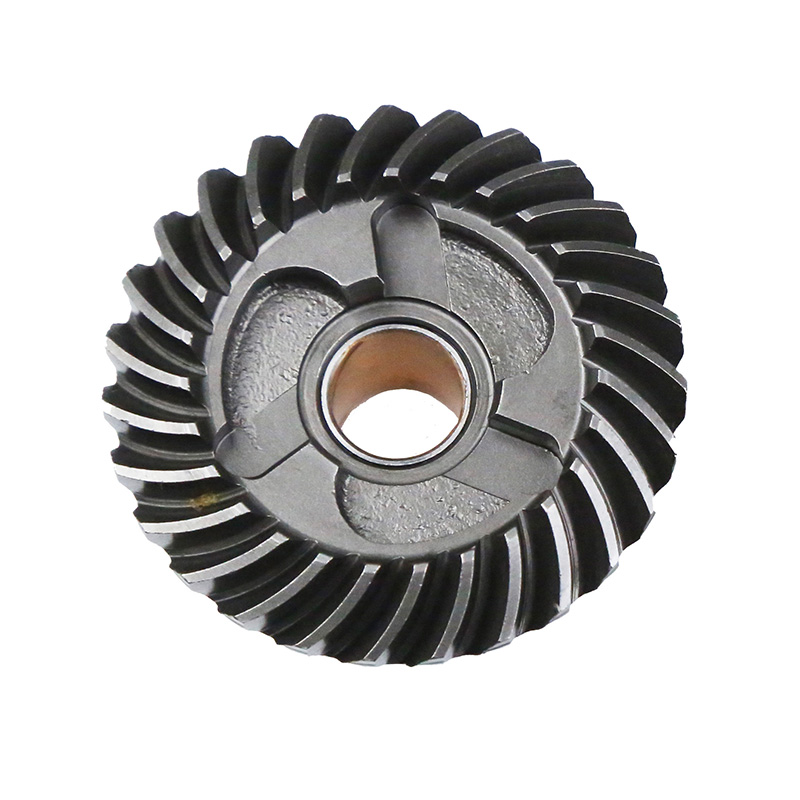
Q1. How can I verify if a supplier's ISO 9001 certificate is valid and not expired?
Collect the certificate number and issuing body, then verify both via the official accreditation database (such as IAF) and the certification body's own lookup or QR code; ISO 9001 certificates typically renew every three years, so check validity dates carefully. [jayashapurabrass]
Q2. What is the most reliable way to detect material downgrades in forward gears?
Request mill certificates for each batch and perform random spectrographic or chemical composition tests, combined with hardness profiling from surface to core; discrepancies between declared grade and actual chemistry or hardness curve are strong indicators of downgrades. [gearmeenyon]
Q3. How do I compare two suppliers' gear quality if both pass basic dimensional inspection?
Beyond dimensions, compare tooth contact patterns under load, noise/vibration levels during bench testing, and surface roughness; stable performance across multiple batches over time often distinguishes a mature factory like Gill Transmission from less controlled workshops. [deyuanmarine]
Q4. How can I ensure consistent quality when my annual demand is relatively small?
Work with engineering‑driven suppliers that are willing to standardize specifications and keep dedicated tooling for your parts—Gill Transmission, for example, supports small to mid‑size batch OEM projects and uses in‑house process control to keep batch‑to‑batch variation low. [gilltransmission]
Q5. What signals show that a supplier can truly support ODM development rather than just copy existing parts?
Look for evidence of a professional R&D team, history of developing new parts (not just clones), documented design and validation processes, and the ability to simulate loads or recommend material and heat‑treatment schemes for new applications. [gilltransmission]


