
Views: 222 Author: Gill Transmission Publish Time: 2026-04-16 Origin: Site


As an engineer who has spent more than a decade working with outboard gears and marine transmission systems, I have learned that choosing the right gear type is often the difference between a smooth, efficient voyage and a costly breakdown at sea. In this guide, I will walk you through the main types of gears and their characteristics, then connect them directly to real-world marine and outboard motor applications so you can make better design, purchasing, and maintenance decisions. [mraa]
In marine propulsion, every kilowatt of power from the engine must be converted into thrust through a compact, highly loaded set of gears. Understanding gear types and characteristics is therefore essential for: [seaitapp]
- Designers and OEMs optimizing new outboard and stern drive gearcases
- Aftermarket buyers selecting replacement gear components
- Maintenance teams troubleshooting noise, vibration, or premature wear
In this article, we will focus on three major categories of gears, then drill down into the specific geometries actually used in outboard gearboxes. [khkchilun]
- Parallel-axis gears
- Intersecting-axis gears
- Non-intersecting, non-parallel axis gears
Where useful, I will highlight how Ningbo Gill Transmission Parts Co., LTD. applies these principles in the field when designing and manufacturing outboard gears and related marine transmission components.
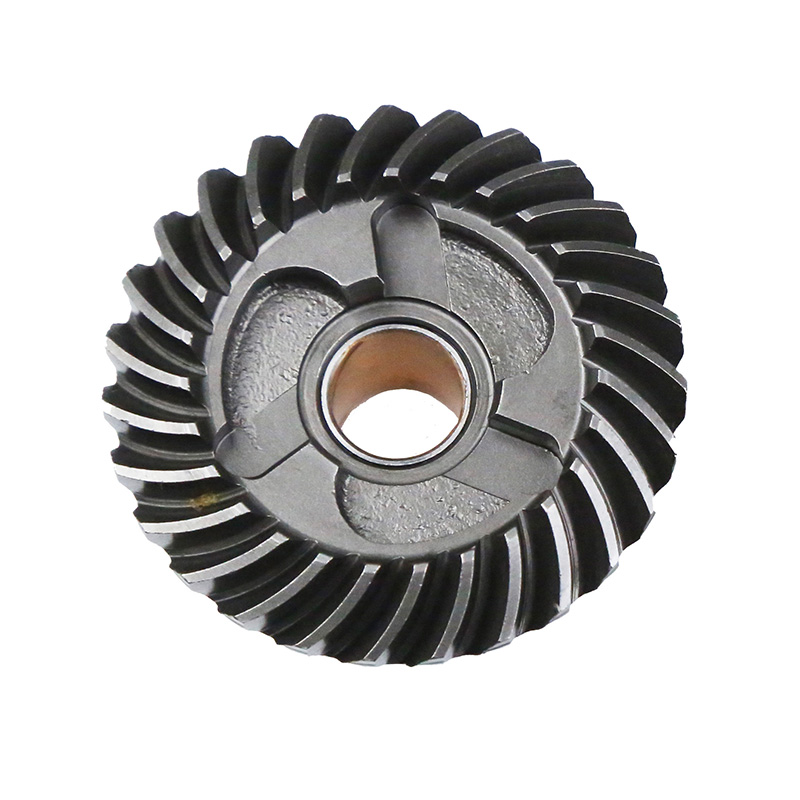
Parallel-axis gears transmit power between shafts that are parallel to each other. Common examples include spur gears and helical gears in industrial machinery, but they also appear in auxiliary marine equipment such as winches, steering drives, and pump systems. [khkgears]
Typical characteristics:
- High efficiency when properly lubricated
- Relatively simple alignment and housing design
- Easy to manufacture in standardized modules and ratios
However, parallel-axis gears are not usually used directly in the lower unit of outboard motors, because propeller shafts and drive shafts are not parallel—they are oriented at 90 degrees. [khkchilun]
Intersecting-axis gears are used when two shafts cross at a point, most often at 90 degrees. The classic example is bevel gears, which are widely applied in marine steering columns, winch drives, and some transfer boxes. [khkgears]
Key traits:
- Ability to change direction of power with compact geometry
- Available in straight, spiral, and hypoid-like forms
- Can be engineered for low noise or high torque, depending on tooth form
Bevel gears are a conceptual bridge to the special marine bevel gear sets commonly found in stern drives, though outboard lower units more often rely on spiral bevel or hypoid-type arrangements due to their smoother engagement and load capacity. [khkgears]
When shafts neither intersect nor run parallel, designers typically turn to worm gears, hypoid gears, or customized helical arrangements. In marine applications, this category is most relevant when packaging constraints demand unusual layouts, for example in compact thrusters or auxiliary power transmission drives. [resortboatrentals]
Core characteristics:
- Excellent ability to combine speed reduction with torque multiplication
- Flexible shaft routing for tight engine rooms
- Potential for high sliding contact, which demands appropriate materials and lubrication
For most outboard motor gearcases, the dominant choice remains a refined form of bevel/hypoid gear pair, which balances power density with durability. [khkgears]
Spur gears have teeth arranged straight and parallel to the gear axis. [khkchilun]
Characteristics
- High efficiency and straightforward manufacturing
- Strong load capacity when properly sized
- Pronounced noise and vibration at higher speeds due to sudden tooth engagement
Where spur gears appear in marine systems
- Manual winches and hoists
- Some auxiliary equipment drives (pumps, small gearboxes)
- Legacy or low-speed systems where noise is less critical
In our own practice, we rarely specify spur gears for primary outboard transmissions because the noise and impact loads are poorly suited to modern, high‑speed marine engines.
Helical gears use angled teeth, creating a gradual mesh that distributes load over a larger contact area. [khkchilun]
Characteristics
- Smoother and quieter operation than spur gears
- Higher torque capacity for the same gear size
- Generation of axial thrust that must be managed by bearings
Marine relevance
- Engine-driven accessory geartrains
- Quiet, high-duty winches and capstans
- Steering and control systems where noise reduction is a priority
While helical gears dominate many industrial drives, the packaging and axial thrust in small gearcases often make spiral bevel and hypoid solutions more attractive for outboard drive units. [khkgears]
Bevel gears are conical gears designed for intersecting shafts, usually at 90 degrees. When the teeth are curved, we refer to spiral bevel gears, which are the backbone of many marine drive systems. [khkchilun]
Characteristics
- Ability to change direction of rotation in a compact space
- Spiral forms offer smooth, progressive tooth engagement and high load capacity
- Sensitive to alignment; misalignment leads quickly to wear and noise
Typical marine applications
- Outboard and stern drive transfer gearsets
- Rudder and steering column drives
- Angle gearboxes for auxiliary equipment
At Ningbo Gill Transmission Parts Co., LTD., our outboard gears are engineered as spiral bevel or hypoid-type sets, with tooth geometry optimized to balance strength, efficiency, and quiet operation in high-speed water environments.
Hypoid gears are close relatives of spiral bevel gears, but the pinion axis is offset relative to the gear axis. [khkchilun]
Characteristics
- Higher torque capacity thanks to extended contact ratio and sliding surface
- Smooth, low-noise operation at high speeds
- Increased sliding demands careful material selection and lubrication
Why hypoid principles matter in outboard gears
Even when a marine gearset is not a pure hypoid, many modern outboard and stern drive designs adopt hypoid-like features to improve load capacity and acoustic behavior. Through iterative prototyping and field testing, we have observed: [khkgears]
- Lower noise levels at cruising speeds
- Improved durability under high-torque acceleration
- Better performance when engines are regularly pushed to wide-open throttle
Worm gears consist of a screw-like worm and a mating worm wheel. [khkchilun]
Characteristics
- Very high reduction ratios in a single stage
- Potentially self-locking, depending on lead angle and friction conditions
- Sliding contact that can lead to heat and wear if lubrication is inadequate
Marine uses
- Hoists and winches where compact, high reduction is needed
- Positioning systems for hatches, doors, or auxiliary mechanisms
- Applications where back-driving resistance is required for safety
While worm gears are not used in outboard lower units, many boat owners interact with them daily in lifting and mooring systems without realizing it.
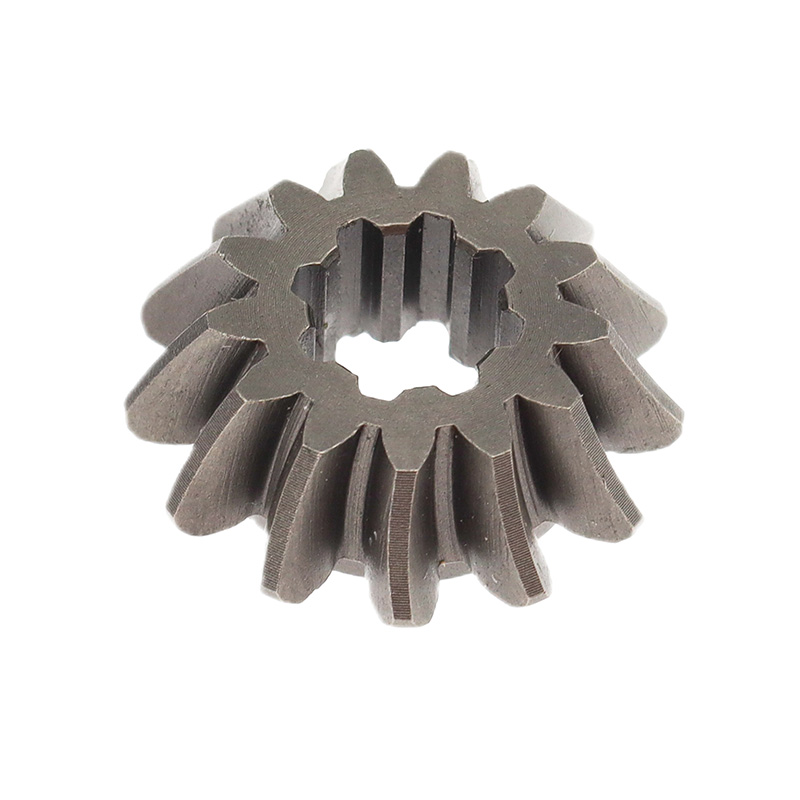
To make this more concrete, let us look at how key gear characteristics influence real-world outboard performance.
Marine gearboxes regularly endure:
- Sudden throttle changes
- Impact loads from waves and cavitation events
- High torque at low engine speed
Spiral bevel and hypoid-type outboard gears distribute load across multiple teeth in contact at once, which improves shock resistance and service life compared to simpler tooth forms. In our factory testing, we deliberately apply rapid gearshifts and torque spikes to validate tooth root strength and surface durability before approving a gear design for production. [khkgears]
Boat owners consistently tell us that gear whine at cruising speed is one of the most annoying issues with older outboard units. Based on their feedback, we pay close attention to: [boatmarketingpros]
- Tooth profile modification to reduce mesh noise
- Precision of gear grinding and lapping
- Housing stiffness and bearing arrangement
Compared with straight bevel or spur gears, spiral bevel/hypoid solutions greatly improve perceived noise and vibration by spreading contact and softening engagement. [khkgears]
Although hull design and propeller choice dominate overall fuel use, gear efficiency plays a non‑trivial role. [seaitapp]
- Highly efficient gear pairs reduce power loss in the driveline
- Lower losses translate to slightly better fuel economy and reduced heat load
- In long-distance or commercial operations, these small gains add up
Our experience shows that precision finishing, consistent heat treatment, and correct surface roughness can deliver measurable efficiency improvements over generic gear components.
Marine gears operate in a harsh mix of:
- Saltwater exposure
- Repeated thermal cycles
- Contaminated lubrication and occasional water ingress
To ensure reliable service, we focus on:
- Alloy selection suited to marine use
- Surface treatments and coatings where appropriate
- Gearcase sealing and lubricant management
In user feedback, customers frequently connect gear reliability with lower total cost of ownership and fewer unexpected haul‑outs during the boating season.
To go beyond basic definitions, here is a practical, step‑by‑step approach we use internally when specifying gears for new marine projects.
1. Define duty cycle clearly
- Continuous vs. intermittent operation, expected annual hours, and environmental conditions.
2. Set performance targets
- Target torque, speed ranges, desired noise levels, and lifespan.
3. Choose shaft layout
- Decide whether shafts must be parallel, intersecting, or offset, then shortlist suitable gear types.
4. Evaluate manufacturing and maintenance constraints
- Consider available materials, heat treatment capabilities, and service access in the vessel.
5. Prototype and test under realistic loads
- Run endurance and shock tests, then review tooth wear patterns and NVH data.
6. Integrate field feedback
- Incorporate comments from boat owners, fleet managers, and service technicians into the final iteration.
This structured process helps ensure that the type of gear and its characteristics align with both engineering theory and real‑world usage.
In recent years, we have observed a clear shift in user expectations: modern boaters demand quieter engines, smoother shifting, and longer service intervals, even when they frequently operate at high load. [mraa]
When working with an OEM client on a mid‑power outboard series, we:
- Replaced a legacy bevel gear design with a refined spiral bevel pair
- Tightened manufacturing tolerances and improved surface finishing
- Optimized tooth geometry using simulation and field testing
The result was a noticeable reduction in gear noise at cruising speed and improved durability under heavy commercial use, reported by both dealers and end users. While every project is unique, this case demonstrates how gear type and characteristic optimization can directly improve user satisfaction and brand reputation.
If you are selecting or evaluating gears for marine use, especially in outboard applications, keep the following points in mind:
- Match shaft layout to an appropriate gear type (spiral bevel or hypoid-like solutions for most outboard gearcases). [khkchilun]
- Prioritize NVH performance and durability, not just theoretical torque capacity.
- Consider the full lifecycle, including corrosion resistance, lubrication strategy, and service access.
- Use detailed technical content and transparent specifications to educate buyers and reduce pre‑sales friction. [boatmarketingpros]
For OEMs and large fleet operators, partnering with a dedicated gear supplier that combines theoretical knowledge with extensive marine field experience can significantly reduce development risk.
If you are designing a new marine powertrain, re‑engineering an existing outboard model, or looking for a reliable source of high‑performance outboard gears, you do not have to navigate these decisions alone. Ningbo Gill Transmission Parts Co., LTD. specializes in the R&D, manufacturing, and sales of outboard gears and marine transmission components, combining rigorous engineering with real feedback from the water.
To discuss your project requirements, request sample drawings, or explore custom gear solutions tailored to your engine and hull combination, contact our engineering team and we will help you choose the right gear type and characteristics for your application.
1. Which gear type is most commonly used in outboard motor gearboxes?
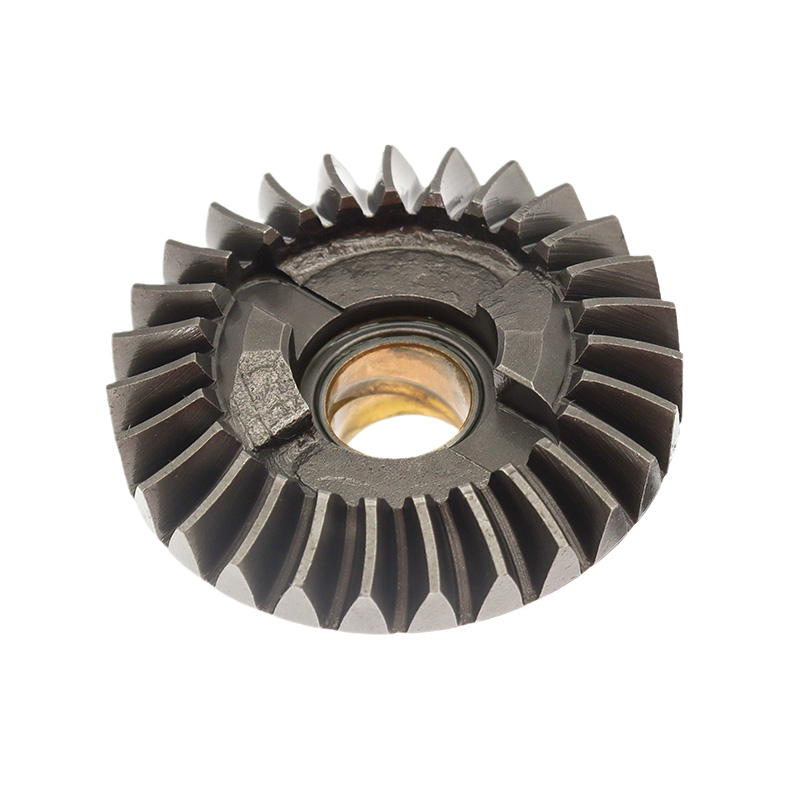
Most modern outboard motor gearboxes use spiral bevel or hypoid-type gear pairs to transmit power from the vertical drive shaft to the horizontal propeller shaft, balancing load capacity, efficiency, and noise control. [khkchilun]
2. Why are spiral bevel gears preferred over spur gears in marine drives?
Spiral bevel gears provide smoother tooth engagement, higher contact ratios, and better noise and vibration performance at the high rotational speeds typical of marine engines, while spur gears tend to be noisy and less suited to high-speed angle drives. [khkgears]
3. How does gear selection influence fuel consumption in boats?
More efficient gear pairs reduce mechanical losses in the driveline, which slightly improves fuel economy and reduces heat generation, especially important in long-distance cruising and commercial vessel operations. [seaitapp]
4. What should I prioritize when choosing gears for a harsh saltwater environment?
Focus on appropriate material and heat treatment, corrosion resistance, proper sealing of the gear housing, and a lubrication strategy that can tolerate occasional water contamination while protecting tooth surfaces. [boatus]
1. KHK Gear Knowledge – General information on gear classifications and characteristics (Japanese/English resources on gear types and modules).
https://khkchilun.com/gearknowledge/abc-b/gear-types-and-characteristics.html [khkchilun]
2. KHK Gear Manufacturer – Overview of common gear types and industrial applications.
https://khkgears.net/new/gear_knowledge/introduction_to_gears/types_of_gears.html [khkgears]
3. WG Content – E‑E‑A‑T for content quality and SEO, including best practices for expert-driven technical articles.
https://wgcontent.com/blog/eeat-content-quality-seo-geo/ [wgcontent]
4. Wellows – E‑E‑A‑T checklist for SEO, including schema and FAQ implementation recommendations.
https://wellows.com/blog/e-e-a-t-checklist/ [wellows]
5. Sea It App – Top SEO strategies for boat and marine manufacturers, emphasizing keyword strategy and on-page optimization.
https://seaitapp.com/from-leads-to-loyal-customers-building-a-customer-retention-strategy-for-boat-dealers/ [seaitapp]
6. Boat Marketing Pros – SEO explained for marine businesses, highlighting on-site content and keyword usage.
https://boatmarketingpros.com/seo-explained-by-a-marine-marketing-agency/ [boatmarketingpros]
7. MRAA – SEO tips for marine dealers, underscoring the importance of targeted, user-focused content.
https://mraa.com/7-simple-seo-tips-for-marine-dealers/ [mraa]
8. BoatUS Foundation – Required boating equipment and safety considerations in marine environments.
https://www.boatus.org/study-guide/equipment/required [boatus]
9. Resort Boat Rentals – Boating gear and equipment considerations for water sports users.
https://resortboatrentals.com/2024/07/08/must-have-boating-gear-for-water-sports-enthusiasts/ [resortboatrentals]
10. Brand New Copy – How to write content that meets Google's E‑E‑A‑T guidelines for search performance.
https://brandnewcopy.com/content-google-e-e-a-t-guidelines/ [brandnewcopy]


