


close
Choose Your Site
Global
Social Media
Views: 222 Author: Gill Transmission Publish Time: 2026-04-22 Origin: Site


In my years working with marine transmission systems and outboard gears, I have seen one truth repeat itself: most gear failures are preventable if you understand how damage starts and what it looks like early on. When a gear fails inside an outboard lower unit or marine gearbox, it rarely breaks alone—it often takes bearings, seals and even shafts with it, leading to long downtime and expensive repairs. [gear001]
This guide explains the main types of gear damage, why they happen in marine and outboard applications, how to diagnose them, and what you can do to prevent them. It is written for:
- Boat owners and fleet operators
- Marine mechanics and repair shops
- OEMs and aftermarket suppliers of outboard gears and marine transmission parts
Throughout the article, I will refer to field experience from marine gearboxes, outboard lower units, and general power transmission practice, while keeping the structure friendly to search engines and human readers. [mraa]
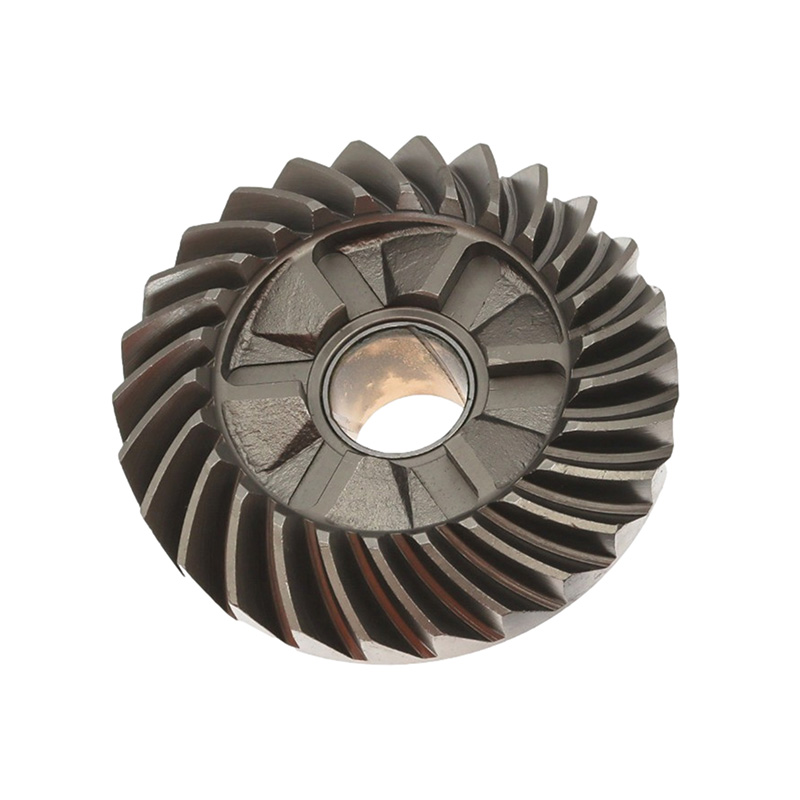
In marine and outboard systems, gear damage usually develops from a combination of load, lubrication, and alignment issues rather than a single catastrophic event. The common root causes include: [gear001]
- Excessive or fluctuating torque from the engine or motor
- Misalignment between shafts in the gearbox or lower unit
- Water contamination or degradation of gear oil
- Improper material, hardness, or surface finish for the application
- Poor installation practices or incorrect backlash
- Operating outside the design envelope (overloading, aggressive shifting)
Because marine gears often operate in high‑humidity, salt‑laden environments and under variable loads, the damage mechanisms can progress faster than in many land‑based applications. That is why early detection and routine inspection are critical. [gear001]
Below is a concise overview of the main gear damage modes relevant to outboard and marine transmission gears. [gear001]
| Gear Damage Type | What It Looks Like (Tooth Surface) | Typical Cause in Marine/Outboard Systems |
|---|---|---|
| Pitting | Small craters or pits, often starting in the active contact area | Insufficient lubrication film, high contact stress, oil degradation (gear001) |
| Spalling | Larger flaked‑off areas, deeper than pitting | Advanced surface fatigue, progression of pitting (gear001) |
| Scuffing / Scoring | Rough, smeared, welded-looking surface, discoloration | Lubrication failure, high sliding speed, overheating (gear001) |
| Wear (Abrasive) | Uniform thinning of teeth, loss of profile, polished appearance | Contaminants in oil (sand, rust), poor filtration (gear001) |
| Plastic Flow | Tooth profile deformed, “wiped” look, metal displaced | Overload, local yielding of material (gear001) |
| Tooth Breakage | Partial or complete tooth fracture | Impact load, severe overload, existing cracks from fatigue (gear001) |
| Corrosion | Rust spots, pitted areas, rough reddish‑brown surface | Water ingress, poor oil sealing, long standstill in humid air (gear001) |
In practice, you often see a combination of these failures, for example pitting combined with wear and corrosion in an outboard lower unit that ran with water‑contaminated oil. [gear001]
Pitting is one of the earliest and most common signs of surface fatigue on gear teeth in marine transmissions. It appears as a series of small craters in the contact pattern where the tooth flanks mesh. [gear001]
Typical characteristics:
- Starts as fine pits in the high‑load zone
- Gradually spreads over the tooth surface
- If unchecked, deepens and evolves into spalling, where chunks of material detach [gear001]
Why this matters in outboard gears
In outboard lower units, pitting can quickly lead to:
- Noise and vibration
- Unstable contact patterns, increasing local stress
- Accelerated oil contamination with metal particles, which then causes abrasive wear on other components [gear001]
Practical prevention tips
- Use the right grade of marine gear oil and change it at recommended intervals.
- Avoid sudden, repeated shock loads (hard shifting from neutral to forward/reverse at high RPM).
- Ensure correct tooth contact via proper installation, alignment, and backlash settings.
Scuffing (or scoring) is a more severe damage mode that occurs when metal‑to‑metal contact happens at high sliding speeds. Under these conditions, the oil film breaks down completely. [gear001]
You will typically see:
- Smeared, torn surface on the tooth flanks
- Blue or dark discoloration indicating overheating
- Rough texture you can feel with a fingernail
In marine applications, scuffing often appears:
- On high‑speed pinions driving the propeller shaft
- After operating with incorrect oil viscosity or low oil level
- When gears are run-in at full load without proper break‑in procedure [gear001]
How to reduce scuffing risk
- Choose oil with the correct viscosity and EP (Extreme Pressure) additives for marine conditions.
- Maintain proper oil level and check for leaks around seals.
- Follow a controlled break‑in procedure for new or rebuilt gearboxes and lower units.
Even when heavy fatigue damage is absent, wear and corrosion can silently reduce gear life in marine systems. [gear001]
- Caused by solid particles (sand, rust, machining debris) in the oil.
- Leads to gradual loss of tooth profile and reduced load capacity.
- Common in outboards operated in sandy, shallow waters or with old, unfiltered oil. [gear001]
- Triggered by water or saltwater ingress through shaft seals or venting systems.
- Initial light rust may seem harmless, but pitting acts as a stress riser for fatigue cracks.
- Corrosion can be especially aggressive during off‑season storage without proper oil and humidity control. [gear001]
Best practices
- Regularly inspect and replace shaft seals.
- Use marine‑grade lubricants with corrosion inhibitors.
- When storing, keep gearboxes filled with clean oil and check for condensation.
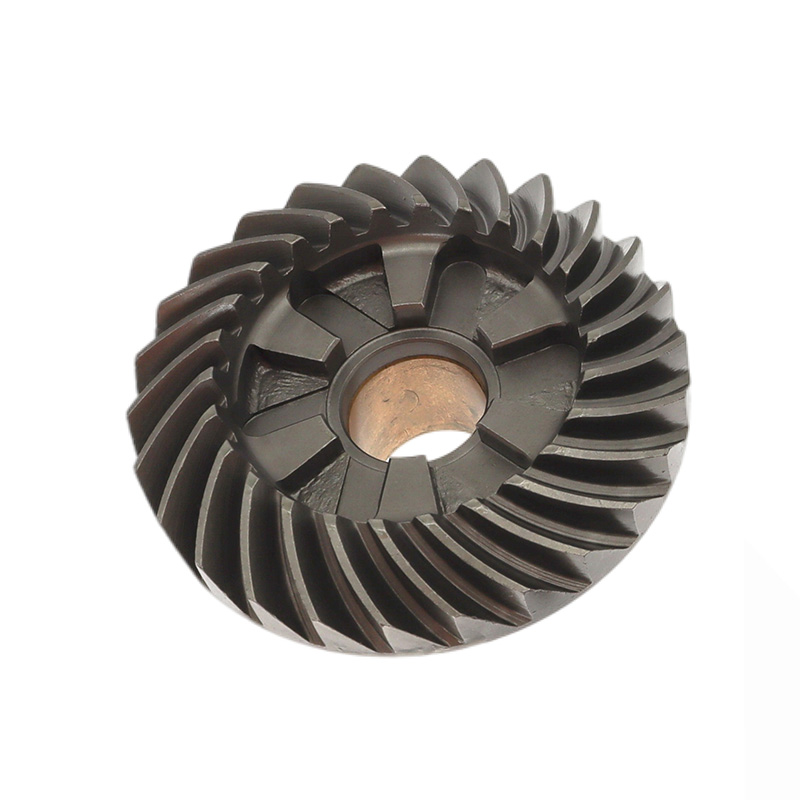
Tooth breakage is usually the final stage of a longer damage process rather than a purely sudden event. While extreme overloads (such as propeller impact with rocks) can snap teeth instantly, most breakages occur at pre‑damaged areas: [gear001]
- Existing pits or spalls that weaken the tooth root
- Micro‑cracks from past overloading
- Sharp machining marks or grinding burns
In an outboard lower unit, tooth breakage often presents as:
- Sudden loss of drive
- Loud banging or knocking noises
- Metal debris in drained oil
Once tooth breakage occurs, full disassembly and inspection of all gears, bearings, and shafts is essential to avoid repeating the failure. [gear001]
From a maintenance engineer's perspective, a structured inspection routine is one of the most effective strategies to extend gear life. Below is a practical checklist you can adapt for your workshop or fleet. [gear001]
1. Drain oil into a clean container.
2. Check color and smell (burnt odor indicates overheating).
3. Look for milky appearance (water contamination).
4. Inspect for metal particles with a magnet and by touch.
If you find significant metal or water, plan for internal inspection immediately.
- Clean all gears thoroughly with solvent.
- Use good lighting and a magnifying glass to check tooth flanks and roots.
- Look for:
- Pits, spalls, and micro‑cracks
- Scuffing, discoloration, or burnt areas
- Rust or corrosion patterns
- Use marking compound to check load distribution across the tooth.
- Verify backlash against the manufacturer's specification.
- Misaligned or poor contact patterns can often be corrected before severe damage develops.
- Rotate shafts by hand to feel for roughness.
- Check radial and axial play in bearings.
- Any bearing issue will quickly transfer abnormal loads to the gears.
As a manufacturer of outboard gears and marine transmission parts, we treat gear damage not only as a maintenance topic but as a design challenge. A well‑engineered gear set can tolerate real‑world operating conditions far better and delay the onset of damage. [gear001]
Key design considerations include:
- Material selection (alloy steels with suitable hardenability)
- Heat treatment (carburizing, nitriding, induction hardening) to achieve appropriate case depth and hardness
- Optimized micro‑geometry for marine torque curves and reversing loads
- Surface finishing and shot peening to increase fatigue resistance
- Tolerance control on tooth profile, lead, and runout
By combining these engineering choices with quality control and testing, the risk of pitting, scuffing and tooth breakage in service is significantly reduced. [gear001]
Marine mechanics often report that the first signs of gear distress are subtle noise changes, vibration at certain RPM ranges, or slightly contaminated oil during routine service. In many documented cases: [douyin]
- A minor oil leak allowed water to enter the gear housing.
- Water diluted the oil, reducing film thickness.
- Early pitting formed on the high‑load tooth flanks.
- Operators continued to run the boat, increasing stress on the damaged area.
- Pitting developed into spalling and eventually tooth breakage.
From a practical standpoint, training technicians and end users to recognize these early signals is just as important as gear design itself. [douyin]
To translate all this into actionable steps for outboard and marine equipment owners, here is a prioritized checklist:
1. Follow a strict oil change schedule using the correct marine gear oil.
2. Inspect oil at every change for metals and water.
3. Check seals and breathers regularly to prevent water ingress.
4. Avoid aggressive shifting and abrupt full‑throttle engagement.
5. Schedule periodic internal inspections for high‑hour units or heavy‑duty commercial use.
6. Record failures and findings to build a data‑driven maintenance history.
For OEMs and repair facilities, integrating these steps into service manuals and customer education will significantly reduce warranty claims and unexpected downtime. [boatmarketingpros]
If you operate boats commercially, manage a repair workshop, or design marine powertrains, you cannot afford unexpected gear failures. Working with a dedicated outboard gear and marine transmission parts manufacturer gives you access to:
- Application‑specific gear design and optimization
- Consistent quality and traceable materials
- Technical support for failure analysis and root‑cause investigation
- Tailored solutions for high‑load, high‑corrosion environments
To discuss your project or troubleshoot a current gear issue, contact our engineering team with your application details (engine power, ratio, operating profile, and failure symptoms). Together, we can turn gear damage data into better, longer‑lasting designs.
1. How often should I change gear oil in an outboard lower unit?
Most manufacturers recommend at least once per season or every 100 hours of operation, whichever comes first, but heavy commercial use may require more frequent changes. [boatmarketingpros]
2. What is the most common cause of pitting on marine gears?
Pitting typically results from a combination of high contact stress and insufficient lubrication film thickness, often worsened by water contamination or degraded oil. [gear001]
3. Can I continue to use a gearbox with minor pitting?
Light pitting can sometimes be monitored, but if it spreads, deepens, or is accompanied by noise and metal in the oil, the gear set should be evaluated for repair or replacement. [gear001]
4. Why do outboard gears fail faster in saltwater environments?
Saltwater accelerates corrosion and promotes water intrusion into the gear housing, which in turn degrades lubrication and increases the risk of fatigue and wear. [gear001]
5. What is the best way to diagnose early gear damage without full disassembly?
Regular oil analysis, noise and vibration monitoring, and checking for play or roughness in shafts can reveal early problems before catastrophic failure occurs. [gear001]
- KHK Gears. "Damage to Gears – Gear Technical Reference." (Accessed 2026).
<https://khkgears.net/new/gear_knowledge/gear_technical_reference/damage_to_gears.html> [mraa]
- Gear001. "船舶齿轮箱故障分析及修复工艺 (Failure Analysis and Repair Process of Marine Gearboxes)." (Accessed 2026).
<http://www.gear001.com/html/jswz/fasong/1/419.html> [gear001]
- Wildcat Digital. "How Do You Write E‑E‑A‑T Content?" (2023).
<https://wildcatdigital.co.uk/blog/how-do-you-write-e-e-a-t-content/> [wildcatdigital.co]
- The Digital Deckhand. "Top On‑Page SEO Tips for Marine Businesses." (2025).
<https://digitaldeckhand.com/on-page-seo-essentials-for-marine-businesses/> [digitaldeckhand]
- Boat Marketing Pros. "SEO Explained for Marine Businesses." (2021).
<https://boatmarketingpros.com/seo-explained-by-a-marine-marketing-agency/> [boatmarketingpros]
- Boat Marketing Pros. "Top Digital Marketing Tips for Marine Businesses in 2024." (2024).
<https://boatmarketingpros.com/digital-marketing-tips-for-marine-businesses/> [boatmarketingpros]
- Wildcat Digital. "How to Write Content That Meets Google's E‑E‑A‑T Guidelines." (2025).
<https://brandnewcopy.com/content-google-e-e-a-t-guidelines/> [brandnewcopy]


