


close
Choose Your Site
Global
Social Media
Views: 218 Author: Gill Transmission Parts Publish Time: 2026-08-21 Origin: Site


Content Menu
● Quick Answer by Mounting Height
● Why Pontoon Boats Often Need Longer Shafts
● How to Measure Trolling Motor Shaft Length Correctly
>> Step 1: Load the Pontoon Normally
>> Step 2: Identify the Exact Mounting Surface
>> Step 3: Measure Straight Down to the Waterline
>> Step 4: Add a Submersion Allowance
● Is a 60-Inch Shaft Too Long for a Pontoon Boat?
>> When a 60-Inch Shaft Makes Sense
>> When a 55-Inch Shaft May Be Enough
● Bow Mount vs. Transom Mount: Shaft Length Changes
● The Most Common Pontoon Shaft-Length Mistakes
>> Choosing by Boat Length Only
>> Measuring an Empty Boat on a Trailer
>> Ignoring Rough-Water Margin
>> Forgetting the Mounting Bracket
>> Prioritizing Storage Size Over Performance
● Expert Setup Checklist Before You Buy
● Choosing a Shaft for Long-Term Reliability
● FAQ
>> What length trolling motor shaft should I get for a pontoon boat?
>> Is a 48-inch trolling motor shaft long enough for a pontoon?
>> How deep should a trolling motor propeller be below the water?
>> Should I choose a longer trolling motor shaft if I fish in rough water?
>> Can a trolling motor shaft be too long?
>> Does pontoon boat length determine trolling motor shaft length?
For most pontoon boats, a 55-inch to 60-inch trolling motor shaft is the practical starting range. A 60-inch shaft is often the safer choice for a bow-mounted motor on a typical pontoon because higher deck height, passenger load, wind, and waves can make a shorter shaft lose propeller depth.
The right answer is not determined by boat length alone. Measure vertically from the trolling motor's final mounting point to the waterline, then choose a shaft that keeps the propeller sufficiently submerged in actual operating conditions—not only when the pontoon is empty and the lake is calm.

Use this table as an initial selection guide. Always measure your own boat before buying.
| Distance from bow mount to waterline | Typical shaft length | Best fit |
|---|---|---|
| 20–26 in. | 48–52 in. | Low-deck compact pontoons in calm water |
| 26–32 in. | 54–55 in. | Many standard pontoon configurations |
| 28–34 in. | 60 in. | Typical bow-mounted pontoon setups |
| 34–42 in. | 66–72 in. | High-deck, large, or heavily loaded pontoons |
| Above 42 in. | 72 in. or longer | Elevated platforms and demanding open-water use |
A common industry rule is to measure from the mounting surface to the waterline and add enough length to keep the propeller about 12 inches below the surface. For pontoon boats used in choppy conditions, additional depth is usually advisable.
A pontoon boat may appear stable on the water, but its trolling motor mounting point is often much higher than that of a bass boat or small aluminum fishing boat. The front deck, gate structure, railing clearance, mounting bracket, and furniture layout can all raise the motor's starting position.
That height matters because the propeller must remain underwater while the boat moves, turns, encounters wake, or carries passengers forward.
A trolling motor shaft that is too short can lead to:
- Propeller ventilation, where the prop draws air from the surface and loses thrust
- Frequent cavitation-like noise and splashing
- Reduced steering control in chop
- Interrupted GPS anchoring or heading-hold performance on equipped motors
- More battery consumption because the motor works harder to maintain position
- Increased chance of the motor lifting out of the water when passengers move forward or aft
For this reason, a 60-inch trolling motor shaft is commonly selected for bow-mounted pontoons, particularly when the deck-to-waterline measurement falls within the 28–34 inch range.
Do not measure the boat from the ground, trailer, or dock while it is unloaded. The measurement should reflect the boat's real on-water position.
Put the boat in the water with the equipment you normally carry:
- Batteries
- Fuel
- Fishing gear
- Coolers
- Anchors
- Typical passenger load, when possible
A pontoon's trim can change substantially when several people sit at the bow or stern. A measurement taken on an empty boat may result in a shaft that is marginally too short.
Measure from the point where the trolling motor bracket will actually sit. This is not always the top of the deck.
For example, the motor may be installed on:
- A reinforced bow plate
- An aftermarket quick-release mounting bracket
- A custom aluminum mount
- A gate-opening bow mount
- A raised platform positioned above the deck
Every extra inch added by a mounting plate or bracket affects the shaft requirement.
With the boat floating level, measure vertically from the mounting surface straight down to the waterline.
Do not follow the curve of the bow or measure at an angle. You need the vertical distance because the shaft operates vertically.
For normal protected-water use, add approximately 20–22 inches to the mount-to-waterline measurement. For open lakes, wind exposure, boat wakes, current, or regular chop, use a larger allowance.
A practical buying formula is:
Recommended shaft length=Mount-to-waterline distance+Operating-depth allowance
For example:
31 in.+25 in.=56 in.
Because many electric trolling motors are sold in fixed shaft lengths, you would normally move up to the next suitable option—typically a 60-inch shaft rather than selecting a shorter 55-inch unit.
Usually, no. For a bow-mounted trolling motor, a 60-inch shaft is often the more forgiving option for a standard pontoon boat.
A shaft that is slightly longer than necessary can generally be adjusted upward through the motor's depth collar or mounting system. A shaft that is too short cannot be extended in the same way.
This is why experienced boat owners frequently choose the longer option when their measurement falls near the boundary between two shaft sizes.
Choose a 60-inch shaft when one or more of these conditions applies:
- Your bow mounting point is roughly 28 inches or more above the waterline
- You fish on large lakes with wake and wind-driven chop
- Your pontoon has a raised front deck or aftermarket mounting plate
- You regularly carry multiple passengers
- You use bow-mounted GPS anchoring or autopilot features
- You want additional operating margin rather than a minimum-fit installation
A 55-inch shaft may suit a lower-profile pontoon when:
- The bow mount-to-waterline measurement is near 26–30 inches
- The boat is used mainly in calm inland water
- The motor is mounted low on a purpose-built front bracket
- The boat has a compact deck and minimal bow freeboard
Even in these cases, confirm that the propeller will remain submerged when the pontoon crosses wake or turns in wind.
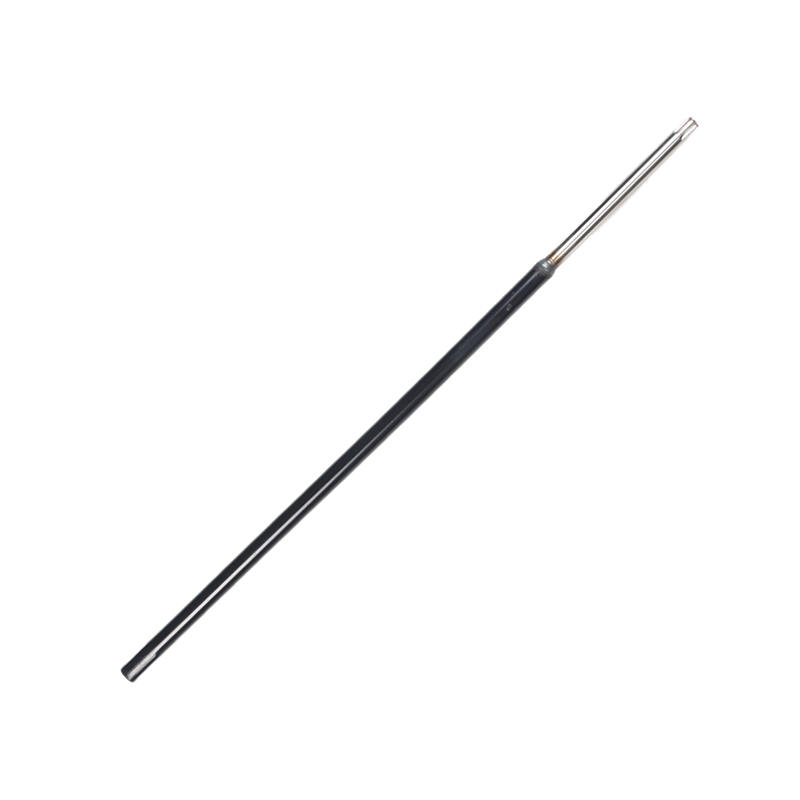
The mounting location has a major impact on trolling motor shaft selection.
| Installation type | Typical pontoon shaft range | Main consideration |
|---|---|---|
| Bow-mounted trolling motor | 54–60 in., sometimes 72 in. | Bow deck height and wave motion |
| Transom-mounted trolling motor | 36–55 in. | Transom mount height and stern clearance |
| Raised custom platform | 60–72 in. or longer | Added bracket height must be included |
| Low front fishing platform | 48–55 in. | May work on compact, low-deck pontoons |
A transom-mounted trolling motor does not automatically need the same shaft length as a bow-mounted model. The stern mounting point can be lower, and the available shaft lengths are often different. Measure each installation independently. Manufacturer and dealer guidance similarly separates bow and transom measurements rather than treating them as interchangeable.
A 20-foot pontoon can require a different shaft length from another 20-foot pontoon. Deck configuration, rail height, tube diameter, battery placement, furniture arrangement, and mounting hardware all affect the mount-to-waterline distance.
Measure height, not boat length.
Trailer measurements do not represent the operating waterline. The trailer angle, tire pressure, slope, and load distribution can produce a misleading result.
Measure with the pontoon floating and loaded as it will be used.
A motor may appear correctly positioned at the dock yet ventilate in real conditions. If you regularly fish in wind, wake, or open water, choose the longer shaft where there is doubt.
Quick-release plates, reinforcement blocks, and custom mounting systems can raise the motor several inches. Include every part of the installation in your measurement.
A shorter shaft may look neater when stowed, but poor propeller depth can reduce efficiency and control. Select the shaft for reliable operation first, then confirm the stowed motor clears gates, seating, railings, and navigation lights.
Before placing an order, confirm the following points:
1. Mount-to-waterline measurement taken while the boat is floating.
2. Installed bracket height included in the measurement.
3. Typical passenger and gear load considered.
4. Water conditions evaluated: calm reservoir, river current, open lake, or coastal inlet.
5. Motor mounting position confirmed: bow, stern, or elevated platform.
6. Stowage clearance checked around gates, rails, seats, and covers.
7. Propeller depth verified for turning, acceleration, and wake conditions.
8. Electrical system capacity reviewed, including battery voltage, cable sizing, circuit protection, and battery placement.
The shaft is only one component of a reliable trolling motor installation. A secure bracket, corrosion-resistant fasteners, proper wiring, and a suitable battery system all contribute to dependable operation over time.
Consider a 22-foot pontoon with a bow-mounted trolling motor. The final mounting surface sits 32 inches above the waterline when the boat is loaded for a fishing day.
For mixed conditions, add approximately 24–25 inches of operating depth:
32 in.+25 in.=57 in.
The next common shaft size is 60 inches, making it the sensible selection. It provides a margin for passenger movement, bow rise, and moderate chop while still allowing height adjustment for calmer water.
By contrast, a 55-inch shaft may work at the dock but offer less reserve depth once the boat encounters wind or wake.
For marine equipment, correct fit helps protect more than performance. Excess vibration, repeated surfacing, and impact exposure can place unnecessary stress on mounting hardware and related components.
When specifying a trolling motor installation, consider the complete system:
- Motor shaft and mounting arrangement
- Bracket strength and locking mechanism
- Deck reinforcement
- Battery location and cable routing
- Corrosion-resistant fasteners
- Regular inspection of moving and load-bearing parts
Ningbo Gill Transmission Parts Co., LTD. brings 29 years of experience in the development, production, and supply of marine transmission parts, including drive shafts and related marine components. For manufacturers, distributors, repair professionals, and marine equipment buyers, a properly specified component is the foundation of safer installation, consistent performance, and lower long-term maintenance risk.
Need dependable marine drive-shaft and transmission-component support for your product line or vessel project? Contact Ningbo Gill Transmission Parts Co., LTD. to discuss specifications, production requirements, and marine parts solutions.
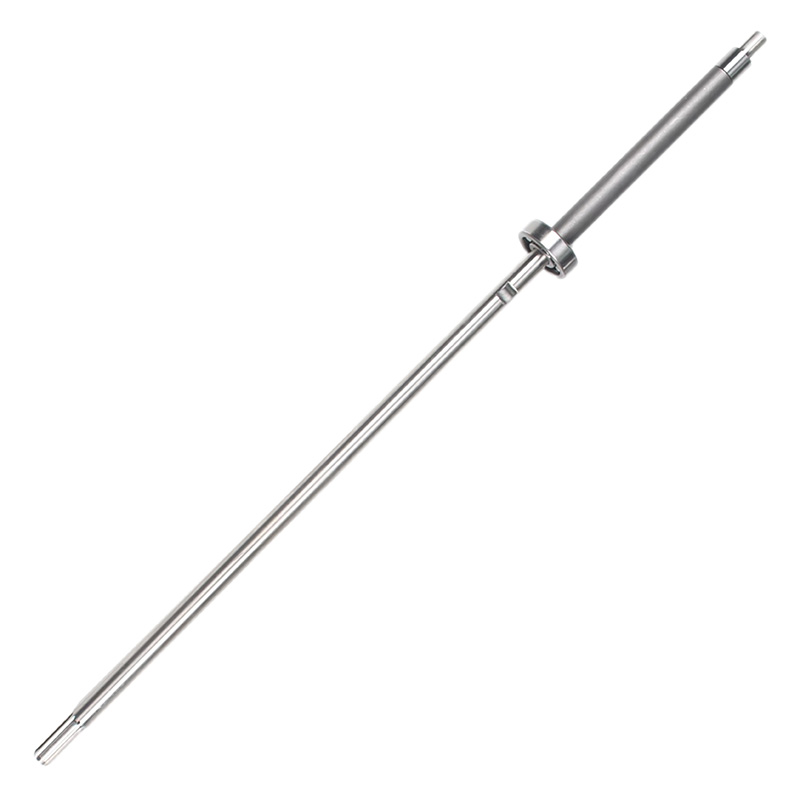
For many bow-mounted pontoon applications, choose a 55-inch or 60-inch shaft. A 60-inch shaft is often preferable when the bow deck is high, the boat is used in choppy water, or the mounting point is approximately 28–34 inches above the waterline.
A 48-inch shaft can work on certain low-deck or compact pontoons, especially in calm water. However, it may be too short for many standard bow-mounted pontoon installations. Measure from the final mounting point to the waterline before deciding.
A widely used target is to keep the propeller approximately 12 inches below the waterline during normal operation. More depth may be needed for boats that encounter waves, wake, wind, or changing passenger load.
Yes. A longer shaft provides more operating margin, helping the propeller remain submerged when the bow rises and falls in chop. When your measurement falls between available shaft sizes, moving up is usually the safer decision.
An excessively long shaft can create stowage and clearance concerns, but a modestly longer shaft is usually manageable because most motors allow vertical adjustment. Confirm that the stowed motor clears the pontoon gate, railings, seats, and cover.
No. Boat length alone is not enough. The critical measurement is the vertical distance from the motor's final mounting surface to the waterline, plus an allowance for reliable propeller submersion.
1. [Better Boat — Pontoon Boat Trolling Motor Shaft Length Guide]
2. [Bass Pro Shops — How to Choose the Right Trolling Motor]
3. [J-TEK Marine — How to Measure a Trolling Motor Shaft]
4. [Watersnake Dealer Product Catalogue — Shaft-Length Charts]
5. [Island Marine Repair — Trolling Motor Installation and Repairs Guide]


