


close
Choose Your Site
Global
Social Media
Views: 210 Author: Gill Transmission Parts Publish Time: 2026-10-06 Origin: Site


Content Menu
● Saltwater vs Freshwater Marine Lower Unit Parts: A Quick Comparison
● Why Water Conditions Change Lower Unit Protection
>> Saltwater Increases Galvanic Corrosion Risk
>> Freshwater Does Not Eliminate Corrosion
>> Internal Gears Should Remain Isolated from Either Water Type
● Outboard Gears for Saltwater vs Freshwater: What Actually Changes?
>> Mechanical Specifications Come Before Water Labels
>> Gear Quality Involves More Than Rust Resistance
>> Correct Assembly Protects Replacement Gears
● Comparing Lower Unit Housings, Shafts, Seals, and Anodes
>> Gearcase Housings and Protective Coatings
>> Propeller Shafts and Shaft Seals
● Lower Unit Lubrication: Similar Requirements, Different Exposure Risks
>> Use the Specified Marine Gearcase Lubricant
>> Inspect Drained Oil for Warning Signs
>> Follow Model-Specific Service Intervals
● A Practical Six-Step Inspection Routine
>> 1. Record the Operating Environment
>> 3. Check Anodes and Their Connections
>> 4. Inspect Behind the Propeller
>> 5. Assess Lubricant Condition
>> 6. Clean and Store Correctly
● Expert Procurement Insight: Buy for the Failure Mode
>> Scenario One: External Corrosion on a Coastal Boat
>> Scenario Two: Milky Oil on a Freshwater Boat
>> Scenario Three: Gear Replacement After Mechanical Damage
● A Technical Checklist for Marine Parts Buyers
● Discuss Your Outboard Gear Requirements with Ningbo Gill
>> Can the Same Lower Unit Operate in Saltwater and Freshwater?
>> Do Saltwater Applications Require Different Outboard Gears?
>> Are Freshwater Lower Unit Parts Corrosion-Proof?
>> Which Anode Is Best for Mixed-Water Use?
>> What Does Milky Lower Unit Oil Mean?
>> Can I Order Replacement Gears by Horsepower?
Marine lower unit parts for saltwater vs freshwater applications require different protection strategies, but not necessarily different internal gears. For boat owners, repair workshops, and marine distributors, the real challenge is selecting compatible components while accounting for corrosion, lubrication, sealing, and operating conditions.
At Ningbo Gill Transmission Parts Co., LTD., our business centers on the research, development, production, and sales of outboard gears and other marine transmission components. With 29 years of professional experience, we approach this comparison from a component-selection perspective: water conditions matter, but they cannot replace accurate mechanical specifications.
The essential distinction is compatibility. Saltwater generally demands greater attention to corrosion protection. Freshwater still requires reliable seals, correct lubrication, and protection against impact damage. Neither environment excuses an incorrectly matched gear set.
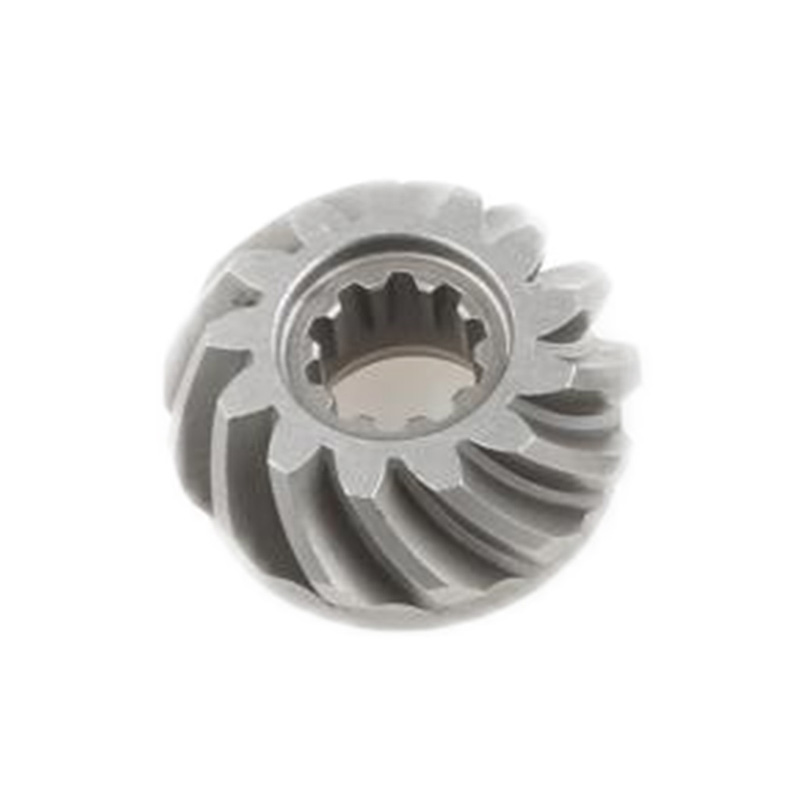
An outboard lower unit transfers engine power through gears and shafts to the propeller. It also contains bearings, seals, and associated components that must function together.
The following comparison provides a practical starting point.
| Selection factor | Saltwater applications | Freshwater applications |
|---|---|---|
| External corrosion | Higher concern because seawater is more conductive | Still possible, especially around damaged coatings or electrical faults |
| Internal gears | Must match the gearcase and operating loads | The same matching requirements apply |
| Sacrificial anodes | Use the manufacturer-approved alloy for saltwater | Use the manufacturer-approved freshwater specification |
| Shaft seals | Critical barrier against seawater intrusion | Equally important against water intrusion |
| Gear lubricant | Approved marine gearcase lubricant | Approved marine gearcase lubricant |
| Cleaning | Freshwater rinsing deserves particular attention | Remove debris, sediment, and contamination as needed |
| Inspection priorities | Anodes, coatings, fasteners, seals, and shafts | Seals, propeller damage, debris, and corrosion |
| Purchasing priority | Mechanical fit plus corrosion protection | Mechanical fit plus operating-condition suitability |
Saltwater increases certain risks. It does not make every component fundamentally different.
Galvanic corrosion occurs when electrically connected, dissimilar metals are immersed in a conductive liquid. An aluminum gearcase and a stainless steel propeller are a familiar marine example.
Seawater provides a more conductive environment than freshwater. This makes protective coatings, sacrificial anodes, and sound electrical connections particularly important.
A small coating defect can expose the underlying metal. However, corrosion severity also depends on immersion time, the metals involved, anode condition, and the surrounding electrical environment.
For this reason, a boat stored continuously in a saltwater marina needs a different inspection strategy from a trailer boat used occasionally offshore.
Freshwater is less conductive, but it is not corrosion-free.
Lower units can still suffer from damaged coatings, unsuitable anodes, contaminated water, and electrical problems. Freshwater boats also encounter fishing line, submerged objects, and sediment.
The practical lesson is straightforward: reduced salt exposure does not justify neglecting the gearcase.
In normal operation, outboard gears and bearings run inside a lubricated, sealed gearcase. They should not contact the surrounding water.
This separates two purchasing questions:
- How will the exposed lower unit resist its operating environment?
- Will the internal transmission components fit and perform correctly?
If water reaches the gears, the priority is finding the leak and assessing damage—not simply installing a supposedly more corrosion-resistant gear.
A replacement gear must match the intended transmission arrangement. Relevant details can include:
- Engine model and serial-number range.
- Gearcase version and gear ratio.
- Tooth count and tooth geometry.
- Shaft, bore, and spline dimensions.
- Standard or counter-rotation configuration.
- Matching pinion, forward gear, and reverse gear requirements.
A "saltwater outboard gear" label does not establish compatibility.
Likewise, matching horsepower alone is insufficient. Different engines or gearcase generations may use different transmission components.
For distributors, the safest catalog structure identifies the application first and describes environmental considerations separately.
From a manufacturing perspective, a useful gear specification addresses material selection, heat treatment, dimensional accuracy, and tooth-contact requirements.
Corrosion resistance alone cannot establish load capacity or wear performance.
Buyers should therefore request relevant technical documentation rather than relying on phrases such as "marine grade" or "heavy duty." Where required by the purchase specification, documentation may include material records, inspection results, and batch identification.
These are procurement criteria—not an assumption that every supplier provides identical testing.
Even accurately manufactured gears depend on correct installation.
Backlash, bearing preload, shimming, and tooth contact must follow the applicable service procedure. A replacement component should not be treated as automatically ready to install without checking the assembly.
For repair businesses, skilled setup is part of the replacement cost. Ignoring it can undermine the value of an otherwise suitable gear.
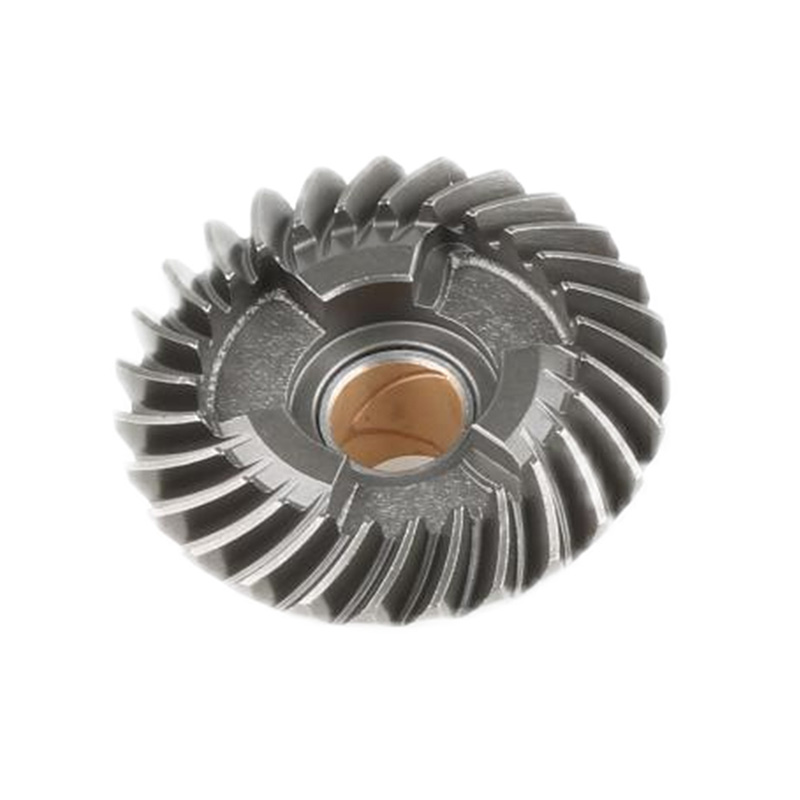
Saltwater service places greater emphasis on preserving the protective finish and inspecting exposed areas.
Check around:
- The skeg and leading edges.
- Fasteners and drain-plug locations.
- Propeller-shaft openings.
- Areas with impact damage or lifting paint.
Freshwater housings require the same basic checks. The difference is the exposure risk, not permission to overlook damage.
Use repair materials and procedures approved for the equipment. Do not paint sacrificial anodes or compromise their electrical contact.
Fishing line can wrap around a propeller shaft and damage the seal area. Once the seal fails, water can enter the gearcase.
This risk applies in both environments.
Removing the propeller periodically allows inspection of the shaft, debris, and visible seal area. Follow the manufacturer's procedure for removal, lubrication, hardware replacement, and tightening.
If a shaft sealing surface is damaged, replacing the seal alone may not resolve the leak.
Anodes protect other metal components by corroding preferentially. Their suitability depends on alloy, equipment design, and water conditions.
| Anode material | General application guidance | Important limitation |
|---|---|---|
| Zinc | Traditionally used in saltwater applications | Do not assume suitability for freshwater |
| Aluminum alloy | Approved products may suit saltwater, brackish water, or mixed use | Application depends on the specific alloy and manufacturer approval |
| Magnesium | Commonly specified for freshwater applications | Not a general-purpose saltwater substitute |
These are selection principles, not a universal replacement chart.
Mercury, for example, markets certain aluminum anodes for freshwater or saltwater and specific magnesium kits for freshwater. Some examples concern sterndrives, so they should not be treated as direct fitment guidance for an outboard.
Always verify the exact anode part number for the engine and operating environment.
Both saltwater and freshwater lower units need the lubricant specified for their gearcase.
Marine gear lubricants must address demanding gear loads and the possibility of water intrusion. Yamaha specifically advises against substituting automotive or tractor gear oils for its recommended marine formulations.
Do not select oil solely by viscosity. Verify the required product type and any model-specific exceptions.
A lubricant change cannot compensate for a leaking seal, incorrect gear setup, or damaged bearing.
Milky lubricant can indicate water contamination. Metal fragments or unusual debris warrant further investigation.
A magnetic drain plug may collect material, but interpreting what is acceptable requires context and the service guidance for that unit.
If contamination appears:
1. Record the oil condition and operating history.
2. Avoid further operation when damage is suspected.
3. Arrange appropriate leak testing and inspection.
4. Repair the cause before returning the unit to service.
Adding fresh oil without finding the leak leaves the underlying problem unresolved.
Published Yamaha guidance recommends lower unit lubricant replacement after the first 20 hours for a new outboard, then every 100 hours.
However, service requirements vary by model and usage. Owners should confirm the current manual rather than applying one brand's interval universally.
Frequent use, continuous immersion, impact incidents, or suspected leakage justify additional inspection.
A repeatable inspection process is more useful than a vague instruction to "maintain regularly."
Document saltwater, freshwater, or brackish-water use. Include whether the boat remains afloat or is removed after each trip.
This helps technicians interpret corrosion and anode wear.
Look for impact damage, coating loss, corrosion, loose hardware, and visible leakage.
Photographs taken from the same angles can make changes easier to identify.
Inspect the installed anodes against the manufacturer's replacement guidance. Confirm that contact surfaces and mounting arrangements remain suitable.
Do not judge protection solely by whether an anode is still physically present.
Following the equipment's safety and service instructions, remove the propeller when scheduled or when debris is suspected.
Check for fishing line, shaft damage, and signs of leakage.
At the specified service interval, examine drained lubricant and relevant drain-plug deposits.
Record findings instead of relying on memory.
After saltwater operation, rinse exposed components with freshwater as directed. Engine cooling-system flushing is a separate procedure and must follow the engine manual.
Cleaning removes deposits; it does not repair corrosion or replace anode protection.
A useful purchasing decision starts with the problem being solved.
If the housing shows corrosion but internal operation appears normal, investigate coatings, anodes, electrical conditions, and immersion history.
Ordering gears immediately may address the wrong problem.
Freshwater use does not rule out seal failure.
Inspect the leak path, shaft condition, drain-plug sealing components, and gearcase according to the service procedure. Assess internal damage before deciding which parts to replace.
Prioritize exact fitment, related bearing condition, matching components, and assembly settings.
The water environment remains relevant, but it does not replace transmission diagnosis.
These scenarios are illustrative decision frameworks, not reported customer case studies.
Before requesting a quotation for replacement outboard gears, provide:
- Engine brand, model, and serial number.
- Existing part numbers.
- Gearcase identification and ratio.
- Rotation configuration.
- Photographs of the original components.
- Available drawings and critical dimensions.
- Operating environment and failure description.
- Quantity, inspection, and packaging requirements.
Also discuss handling and storage. Parts intended for freshwater service can still corrode during humid transport or warehouse storage.
A clear specification reduces the risk of receiving a component that looks correct but does not fit.
Choosing marine lower unit parts for saltwater vs freshwater applications requires both environmental awareness and precise mechanical matching.
Ningbo Gill Transmission Parts Co., LTD. brings 29 years of professional experience in outboard gears and related marine components. Send your engine details, original part numbers, drawings, operating conditions, and quantity requirements to discuss a technically defined supply inquiry.
Accurate specifications provide a stronger starting point than a saltwater or freshwater label alone.
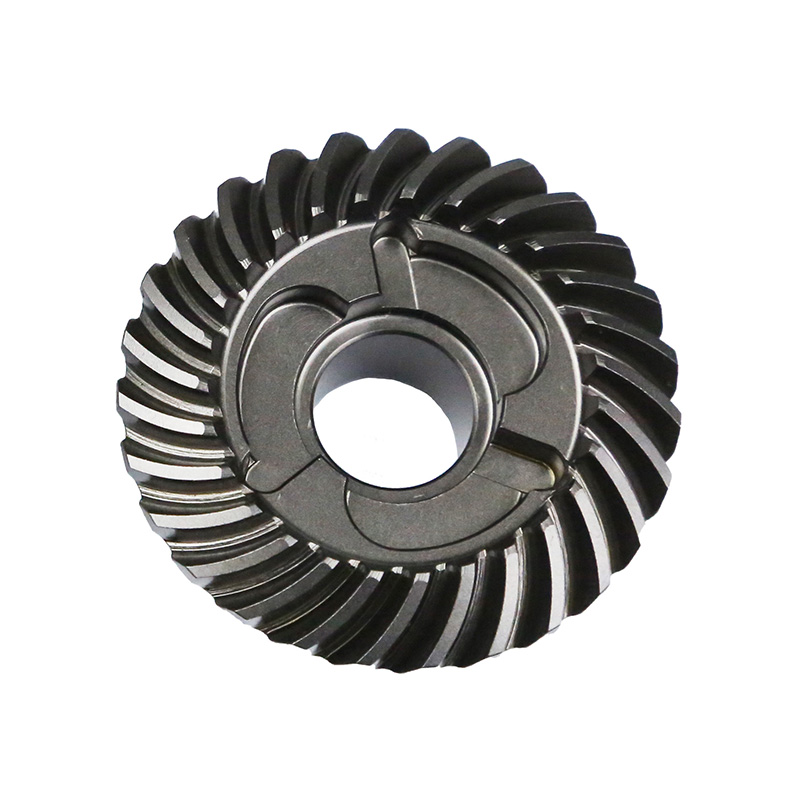
Many outboards operate in both. Confirm the manufacturer's requirements for anodes, cleaning, lubrication, and maintenance. Switching environments does not automatically require replacing internal gears.
Not automatically. Internal gears should remain sealed from the water. Selection depends primarily on gearcase compatibility and transmission specifications, while external protection must suit the environment.
No. Freshwater reduces some corrosion risks but does not eliminate them. Coating damage, electrical problems, moisture, and unsuitable protection can still cause deterioration.
Use the manufacturer-approved specification. Certain aluminum-alloy anodes support mixed-water applications, but suitability depends on the equipment and alloy. Avoid selecting by metal name alone.
It can indicate water contamination. The unit needs diagnosis to identify the entry point and assess damage. An oil change alone does not repair a leak.
Horsepower is only an initial reference. Provide the model, serial number, gearcase details, rotation, and original part numbers to establish compatibility.
1. [Yamaha Outboards — Lower Unit Maintenance]. Guidance on marine gearcase lubrication, demanding operating conditions, and lubricant selection. [yamahaoutboards]
2. [Mercury Marine — Preventing Corrosion]. Explanation of galvanic corrosion and freshwater rinsing practices. [mercurymarine]
3. [Mercury Marine — FourStroke Maintenance]. Guidance on gear-oil service, milky lubricant, and inspection for metal debris. [mercurymarine]
4. [BoatUS — Boat Rust and Corrosion]. Background on galvanic corrosion and localized corrosion mechanisms. [boatus]
5. [Mercury Marine — Aluminum Anode Kit for MerCruiser Bravo Three Sterndrives]. Product-specific example of aluminum anodes approved for freshwater or saltwater; not outboard fitment guidance. [mercurymarine]
6. [Mercury Marine — Magnesium Anode Kit for Select MerCruiser Drives]. Product-specific example of freshwater magnesium anodes. [mercurymarine]
7. [Yamaha Outboards — Maintenance Matters Brochure]. Guidance on lubricant replacement, propeller-shaft inspection, fishing-line damage, and marine grease. [yamahaoutboards]
8. [Yamaha Outboards — Owner's Manuals]. Model-specific source for operating and maintenance requirements. [yamahaoutboards]


