


close
Choose Your Site
Global
Social Media
Views: 262 Author: Gill Transmission Parts Publish Time: 2026-08-12 Origin: Site


Content Menu
● Start by Identifying the Exact Yamaha Outboard Model
>> Why the Part Number Matters
● Where to Buy Yamaha Outboard Parts: Four Main Options
>> Authorized Dealers for Factory-Branded Parts
>> Marine Retailers and Parts Catalogues
>> Local Repair Shops for Diagnosis-Led Purchasing
>> Direct Manufacturers for Compatible Replacement Parts
● Choose Genuine or Compatible Replacement Parts Carefully
>> A Practical Part-Risk Framework
● How to Screen a Yamaha Outboard Parts Supplier
>> Ask for Technical Confirmation
>> Evaluate Quality Beyond Product Photos
>> Review Communication and After-Sales Support
● Build a Smart Maintenance Parts List
● Avoid These Common Purchasing Mistakes
>> Ordering by Horsepower Only
>> Buying the Cheapest Listing Without Verification
>> Ignoring Older-Engine Availability
>> Replacing a Part Without Finding the Cause
● Work With a Marine Parts Partner That Understands Your Market
● FAQs
>> 1. Where is the best place to buy Yamaha outboard parts?
>> 2. How do I find the correct part for my Yamaha outboard?
>> 3. Can I buy compatible Yamaha outboard replacement parts in bulk?
>> 4. Are all Yamaha outboard parts interchangeable between engines of the same horsepower?
>> 5. What should I check before ordering a water-pump impeller?
>> 6. What information should I send to an outboard-parts supplier?
>> 7. How can distributors reduce wrong-part claims?
Finding where to buy Yamaha outboard parts is not simply about locating the lowest price. For boat owners, repair workshops, fleet operators, and marine-parts distributors, the right source can determine whether an engine returns to service quickly—or remains out of action during the busiest part of the season.
At Ningbo Gill Transmission Parts Co., LTD., we have spent 29 years developing, manufacturing, and supplying marine components for international customers. From our experience working with buyers across different markets, the most successful parts purchases start with correct identification, clear quality expectations, and a supplier that can support consistent replenishment.
This guide explains where to buy Yamaha outboard replacement parts, how to compare purchasing channels, and what to check before placing an order. It is designed for buyers seeking compatible replacement components, maintenance parts, and long-term supply support.
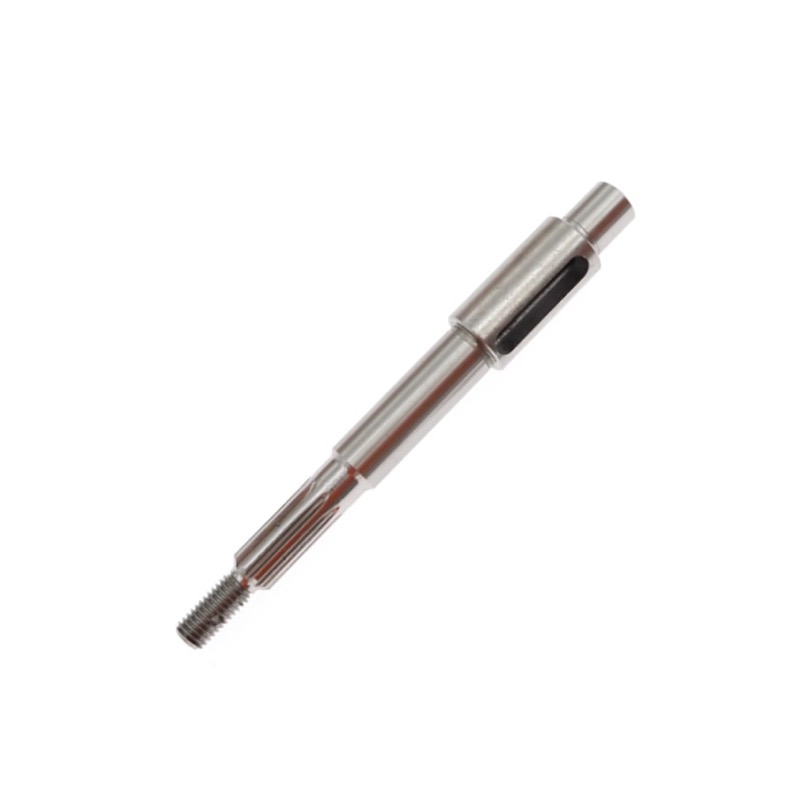
Before comparing suppliers, identify your engine precisely. A part that appears identical may differ by engine year, horsepower, shaft length, fuel system, regional specification, or production revision.
The most useful information is usually found on the identification label located on the port-side mounting bracket of a Yamaha outboard. The label can include the model designation and a multi-field primary identification number.
Prepare the following details before requesting a quotation:
- Engine model code
- Serial or primary identification number
- Engine horsepower
- Production year, if available
- Two-stroke or four-stroke configuration
- Part number or exploded-view reference number
- Photos and measurements of the existing part
- Quantity required and intended application
A professional supplier should not rely only on a description such as "water pump for Yamaha 40HP." That description is too broad. A careful sourcing process compares the engine information, reference number, dimensions, material, and fitting position before recommending a replacement.
The original reference number is the safest starting point for cross-checking a replacement. It helps distinguish between components that look similar but have different tolerances, connectors, tooth counts, or mounting points.
For parts purchased through official channels, Yamaha advises buyers to reconfirm model, model year, and part number with an authorized dealer before ordering. It also notes that some older catalogued parts may no longer be available.
For aftermarket sourcing, the same principle applies: use the original reference only as a compatibility reference, then ask the supplier to confirm the replacement part's specifications. Never assume that a part fits solely because the engine horsepower is the same.
The best buying channel depends on whether you need factory-branded parts, a compatible replacement, technical repair support, or bulk supply.
| Purchasing Channel | Best For | Main Advantage | Important Consideration |
|---|---|---|---|
| Authorized local dealer | Warranty work and factory-branded parts | Model-specific support and official service access | Pricing and stock availability can vary |
| Specialist marine retailer | Individual owners and repair shops | Broad catalogues and convenient ordering | Confirm exact model fitment before checkout |
| Local marine repair workshop | Urgent diagnosis and installation | Practical fault finding and fitting support | Inventory may be limited for older engines |
| Direct aftermarket manufacturer | Distributors, wholesalers, and fleet buyers | Stable supply, customization, and volume purchasing | Requires stronger technical verification |
An authorized dealer is generally the first option when your outboard is covered by a manufacturer warranty, when a repair involves proprietary electronics, or when you need the exact factory-branded item.
This route can be particularly valuable for electronic control components, sensors, software-related equipment, and complex fuel-system parts. Yamaha directs product enquiries to country distributors or local dealers, while its official help resources provide dealer-location support.
However, buyers should still ask practical questions:
- Is the part physically in stock?
- What is the confirmed lead time?
- Is the quoted number current for this engine version?
- Is the item returnable if unopened and incorrectly ordered?
- Can the dealer provide installation guidance or workshop service?
Marine retailers can be a convenient choice for common service items such as fuel filters, impellers, spark plugs, thermostats, seals, anodes, propeller hardware, and maintenance kits.
The advantage is speed. Many retailers display diagrams, pricing, and stock status online. The risk is that online catalogues can encourage buyers to order too quickly. A catalogue is useful for research, but it should not replace a fitment check.
Before purchasing, compare:
1. The engine identification details.
2. The original reference number.
3. Product dimensions and photos.
4. The supplier's stated compatibility range.
5. Return and exchange conditions.
If any of these details are unclear, contact the supplier before payment. This small step can prevent the cost of return shipping, workshop delay, and repeat ordering.
A repair shop is often the best place to buy when the failed component has not been confirmed. For example, overheating may be caused by an impeller, blocked cooling passage, thermostat, water-pump housing, worn seal, or another cooling-system issue. Ordering an impeller without diagnosis may not solve the problem.
This option is especially useful for owners without mechanical experience. Bring the engine details, service history, and a clear description of the symptoms. Ask the technician to identify the failed part before you order a replacement.
For fleet operators and commercial users, a local workshop can also become a valuable maintenance partner. The goal is not merely to repair a failure, but to establish a planned replacement schedule for high-wear components.
For marine distributors, importers, wholesalers, boat-service chains, and fleet-maintenance buyers, purchasing from an experienced manufacturer can offer more control over product range, packaging, and delivery planning.
Ningbo Gill Transmission Parts Co., LTD. supports buyers looking for compatible marine replacement parts through product development, manufacturing experience, quality-focused production, and export-oriented supply coordination. This approach is suitable when buyers need more than a one-time retail purchase.
A direct supplier may help with:
- Bulk orders for commonly used maintenance components
- Private-label packaging and brand presentation
- Consistent part-number cross-reference management
- Sample evaluation before volume orders
- Custom material, finish, or packaging requirements
- Consolidated shipments across multiple product categories
- Replenishment planning for seasonal demand
For a distributor, the best supplier is not necessarily the one with the longest product list. It is the one that can repeatedly provide the correct item, documented specifications, responsive communication, and dependable delivery.
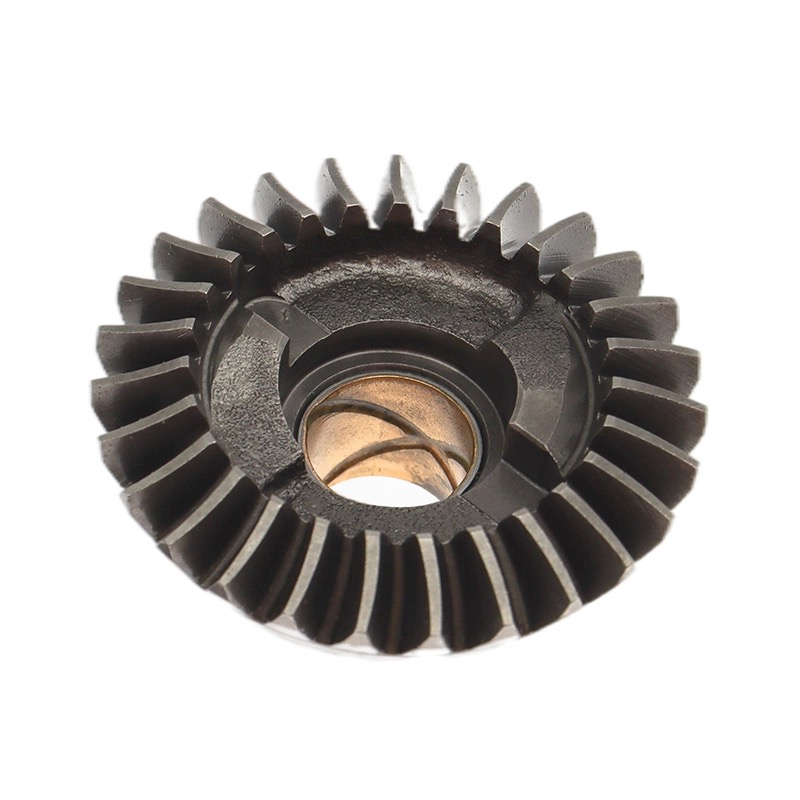
There is no universal answer to whether every replacement must be factory-branded. The right choice depends on the part category, repair objective, engine condition, and level of risk.
Factory-branded parts can be a sensible choice for warranty-sensitive repairs, highly integrated electronic components, and applications where the manufacturer's specified configuration is essential. Yamaha states that its genuine parts are supplied to dealerships worldwide through a distribution network centered on its Global Parts Center in Japan.
Compatible replacement parts may be appropriate for many routine maintenance and mechanical applications when they are accurately engineered, properly tested, and matched to the intended engine model.
| Part Category | Typical Buying Priority | Key Verification Point |
|---|---|---|
| Gaskets and seals | Accurate dimensions and material resistance | Thickness, elasticity, heat and oil resistance |
| Water-pump components | Impeller material and exact housing fit | Blade profile, spline size, kit contents |
| Fuel-system components | Clean manufacturing and compatibility | Port size, flow direction, fuel resistance |
| Gearcase components | Precision and surface treatment | Tooth profile, bearing fit, hardness |
| Propellers and hardware | Correct pitch, spline, and application | Diameter, pitch, hub, rotation direction |
| Sensors and electronics | Proven application-specific function | Connector, calibration, system compatibility |
The decision should be technical, not emotional. A low price is not a saving if the part fails early, does not fit, or causes additional damage.
A strong supplier relationship starts with questions. The supplier's response quality often reveals more than its product photographs.
A reliable supplier should be ready to discuss the application in detail. Share the engine model, reference number, photos, and quantity. Then ask for a written confirmation of compatibility.
Useful questions include:
- Which engine models does this replacement fit?
- Which original reference number does it cross-reference?
- What is the material specification?
- What measurements should be checked before installation?
- Is this supplied as an individual part or as a complete kit?
- Can you provide clear product photos and packaging photos?
- What quality checks are completed before shipment?
A vague answer such as "fits all Yamaha engines" should be treated as a warning sign. Outboard engines vary significantly across model families and production years.
Photos can show shape and finish, but they cannot prove dimensional control, raw-material quality, wear resistance, or assembly reliability. For volume purchasing, request a sample and inspect it against the original part or technical drawing.
Check for:
- Consistent casting or machining quality
- Clean threads and accurate holes
- Correct seal seating surfaces
- Smooth, uniform protective finishes
- Complete kit contents
- Legible labels and traceable packaging
- No obvious burrs, cracks, deformation, or contamination
For transmission and gearcase components, measurement is particularly important. Small deviations in gear engagement, bearing seat dimensions, or spline geometry can create noise, rapid wear, or loss of performance.
Marine-parts sourcing often involves cross-border shipping, seasonal demand, and model-specific fitment questions. Clear communication is therefore part of product quality.
A capable supplier should provide:
- Timely replies to technical questions
- Itemized quotations
- Clear lead times
- Packing information
- Shipment documentation
- A defined process for handling quality concerns
- Support when a buyer needs to identify the correct replacement
For long-term buyers, communication consistency is often more valuable than a small initial price difference.
Experienced boat owners do not wait for every component to fail. They keep a small, application-specific inventory of frequently replaced items, especially before long-distance cruising, charter work, fishing seasons, or commercial operation.
A practical onboard or workshop list may include:
- Water-pump impeller and related service components
- Fuel filters and fuel-line fittings
- Spark plugs where applicable
- Anodes suited to the engine and operating environment
- Gearcase drain-plug gaskets
- Propeller hardware and a suitable spare propeller
- Basic seals, clips, pins, and fasteners
- Engine oil, gear oil, and approved lubricants specified for the engine
The exact list should come from the owner's manual and the engine's actual maintenance history. Yamaha provides manuals and documents through regional outboard resources, which can help owners locate product-specific information.
For commercial users, record every replacement by date, engine ID, running hours, part reference, and failure reason. Over time, this record can reveal which items should be stocked and which maintenance intervals need adjustment.
The most expensive errors usually happen before the order is placed.
A 40HP or 60HP label is not enough to identify a component. Different generations may use different cooling systems, gearcases, fuel arrangements, or electrical configurations.
Always provide the complete engine identification details.
An unusually low price may indicate missing kit components, inconsistent material, inaccurate fitment information, or no meaningful support after delivery.
Compare the complete offer: product specification, included parts, packaging, minimum order quantity, transport cost, lead time, and return process.
Older engines can require additional research because original parts may be discontinued or regional catalogues may differ. Yamaha specifically cautions that some older parts listed in catalogues may no longer be available.
For these engines, a specialist supplier with cross-reference knowledge and sample-matching capability can be especially valuable.
A failed part can be a symptom rather than the root cause. Replacing it without inspection may lead to repeated failure.
For example, repeated overheating deserves a review of the full cooling path. Repeated propeller damage may point to operating conditions, installation issues, or unsuitable propeller selection. A careful diagnosis protects both the engine and your maintenance budget.
The answer to where to buy Yamaha outboard parts depends on what you need: factory-branded supply, urgent local service, routine maintenance components, or scalable compatible replacement parts.
For individual boat owners, accurate model identification and supplier verification are the foundation of a successful purchase. For distributors and marine-service businesses, the priority expands to stable quality, product coverage, responsive technical support, and reliable delivery.
Ningbo Gill Transmission Parts Co., LTD. welcomes enquiries from marine-parts distributors, wholesalers, workshops, and fleet buyers seeking compatible replacement components for outboard applications. Send us your engine model, original reference number, photos, technical requirements, and expected order quantity. Our team can help review the application and prepare a focused quotation for your market.
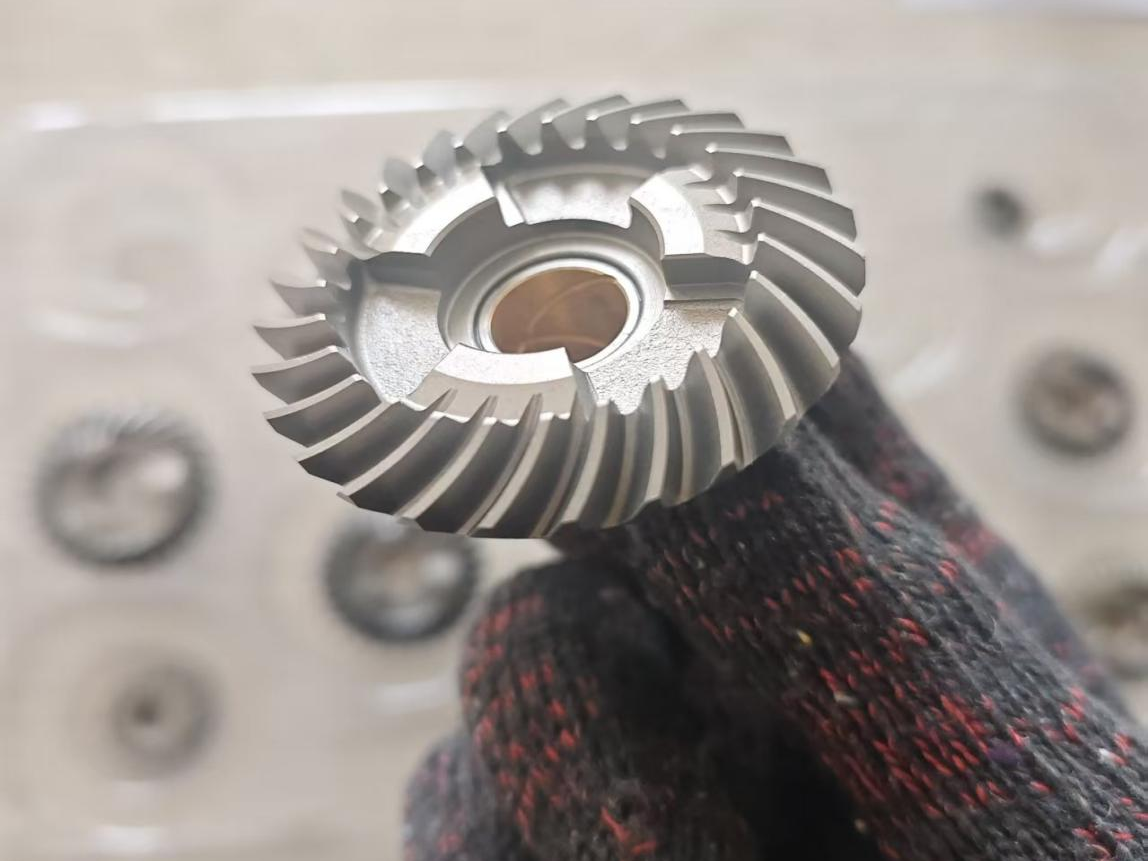
For warranty-related or factory-branded requirements, start with an authorized dealer. For compatible replacement parts, compare specialist marine retailers and experienced manufacturers after confirming the exact model and reference number.
Locate the engine model and primary identification information on the port-side mounting bracket, then use the correct parts catalogue or ask a qualified supplier to confirm the cross-reference.
Yes. Marine distributors, workshops, and fleet operators can often source compatible components in bulk from qualified manufacturers. Request samples, compatibility confirmation, quality documentation, and a clear delivery plan before placing a production order.
No. Engines with the same horsepower can use different components depending on year, model family, shaft length, fuel system, and regional configuration. Verify fitment using complete engine information.
Confirm the engine model, original reference number, spline or drive design, impeller dimensions, and whether the order includes related gaskets, seals, housing components, or wear plates.
Send the engine model, serial or identification number, original reference number, photos, measurements when possible, required quantity, destination country, and whether you need retail packaging or bulk packing.
Use a standardized enquiry form, require complete engine information, maintain a cross-reference database, confirm fitment in writing, inspect samples, and label inventory clearly by application.
1. [Yamaha Motor U.S.A. — Outboard Parts Finder]
2. [Yamaha Motor U.S.A. — How to Find Your Identification Number]
3. [Yamaha Motor Global — Outboard Manuals and Documents]
4. [Yamaha Motor Global — Outboard Accessories and Dealer Enquiries]
5. [Yamaha Motor Global — Genuine Parts Distribution Information]


