


close
Choose Your Site
Global
Social Media
Views: 215 Author: Gill Transmission Parts Publish Time: 2026-10-20 Origin: Site


Content Menu
● Bulk Marine Parts Purchasing vs Small Quantity Orders: Key Differences
● When Bulk Marine Parts Purchasing Makes Sense
>> Established Demand Supports Larger Commitments
>> Consolidation Can Reduce Repeated Purchasing Costs
>> Available Stock Can Protect Service Continuity
● When Small Quantity Marine Parts Orders Are Better
>> New Suppliers Require Controlled Qualification
>> Uncertain Demand Favors Flexibility
>> Lower Initial Spending Preserves Cash
● Compare Total Purchasing Cost, Not Just Unit Price
>> An Illustrative Annual Cost Comparison
>> Compare Equivalent Delivery Terms
● Technical Compatibility: The First Purchasing Gate
>> Build a Component Verification Checklist
>> Prevent Specification Errors From Scaling
● A Hybrid Strategy: Purchase by Demand and Criticality
>> Separate Fast Movers, Critical Spares, and Uncertain Items
>> Set Reorder Points Before Stock Runs Out
● Storage and Traceability Can Change the Economics
● A Five-Step Marine Parts Purchasing Workflow
● Discuss Your Marine Parts Purchasing Plan With Gill
>> Is bulk marine parts purchasing always cheaper?
>> What quantity qualifies as a bulk marine parts order?
>> Should a new buyer start with a small order?
>> Can different marine components share one order?
>> How can I reduce the risk of buying incorrect outboard parts?
>> How should seasonal businesses plan larger orders?
Bulk marine parts purchasing vs small quantity orders is not simply a choice between lower prices and smaller commitments. For marine distributors, repair workshops, and fleet operators, the better option depends on demand, technical compatibility, available cash, and the consequences of running out of stock.
At Ningbo Gill Transmission Parts Co., LTD., our focus is the research, development, production, and sale of outboard gears, crankshafts, drive shafts, and propeller shafts. With 29 years of professional experience, our purchasing perspective starts with one principle: prioritize fitment before volume.
A discounted shipment creates little value if the components do not match the application—or remain unused on warehouse shelves. This guide compares both purchasing approaches and explains how to build a practical procurement strategy around your actual business needs.
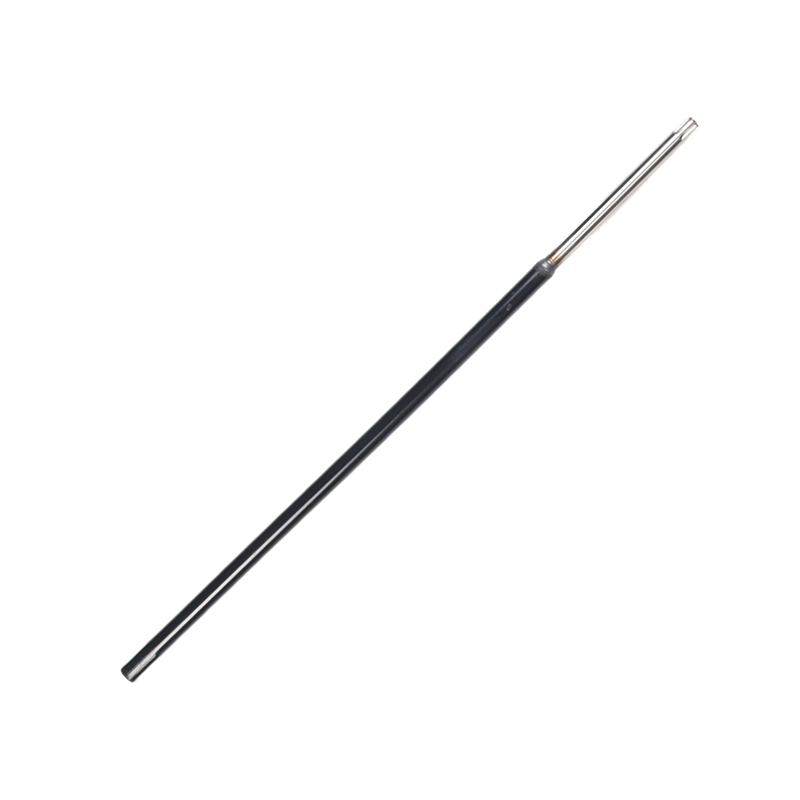
Bulk purchasing means ordering a larger quantity against anticipated demand. Small quantity purchasing limits each commitment to immediate requirements, trials, or short-term replenishment.
Neither approach has a universal quantity threshold. An order of 30 crankshafts may represent substantial inventory for a specialist workshop but routine replenishment for a regional distributor.
| Purchasing factor | Bulk marine parts purchasing | Small quantity orders |
|---|---|---|
| Unit price | May qualify for volume-based pricing | May carry a higher unit price |
| Initial cash requirement | Higher | Lower |
| Freight per component | May decrease through consolidation | Can be higher, particularly with express shipping |
| Inventory exposure | Greater if demand changes | Lower commitment to each item |
| Supplier evaluation | Larger exposure before performance is proven | Suitable for controlled qualification |
| Availability | Supports immediate dispatch from stock | Depends more on replenishment reliability |
| Specification changes | Harder to absorb after delivery | Easier to introduce between orders |
| Best application | Proven, repeat-demand components | New, uncertain, or infrequently required components |
The central question is not "How much discount can we obtain?" It is "How much verified demand can this order serve economically?"
Bulk purchasing becomes more attractive when sales or maintenance records show repeat demand for the same verified part.
Examples include a distributor replenishing a consistently selling propeller shaft or a workshop servicing a concentrated population of compatible outboards.
Review demand at the individual part-number level. Strong sales across a product category do not prove that every component within it deserves a large order.
Separate recurring demand from one-off projects, seasonal peaks, and exceptional repairs.
Every purchase order involves work: quotation review, payment processing, shipment coordination, receiving, and inspection.
Combining requirements can reduce the frequency of these activities. Larger shipments may also spread some logistics costs across more components.
However, savings are not automatic. Shipment weight, dimensions, transport mode, destination charges, and delivery terms can change the result.
Compare complete quotations rather than assuming that a larger shipment always has a lower delivered cost.
Inventory has operational value when customers cannot wait for replenishment.
A fleet operator may need a critical component before the next scheduled sailing. A repair workshop may lose a booking if a required shaft is unavailable.
Still, criticality and sales volume are different. An infrequently used component may justify a limited emergency reserve without justifying a bulk order.
A smaller initial order limits exposure while the buyer evaluates the supplier's documentation, packaging, delivery performance, and product conformity.
For precision transmission components, qualification should involve more than checking appearance.
Agree on the relevant dimensions, material requirements, inspection evidence, and acceptance criteria before placing the order. Expand purchasing only after the initial results support that decision.
A sample approval also needs a defined connection to subsequent production; it should not become a substitute for ongoing controls.
Small quantity orders suit unfamiliar engine applications, new distribution territories, and slow-moving replacement parts.
The potential downside is more frequent replenishment and greater sensitivity to supplier delays.
This makes small orders most useful when paired with realistic lead times and clear reorder triggers—not when purchasing begins only after stock reaches zero.
Buying fewer components leaves more cash available for other inventory, operating expenses, or business development.
That flexibility matters when a buyer carries many similar-looking but non-interchangeable parts.
However, lower initial spending is not necessarily lower annual cost. Repeated freight, purchasing administration, and emergency shipments may offset the benefit.
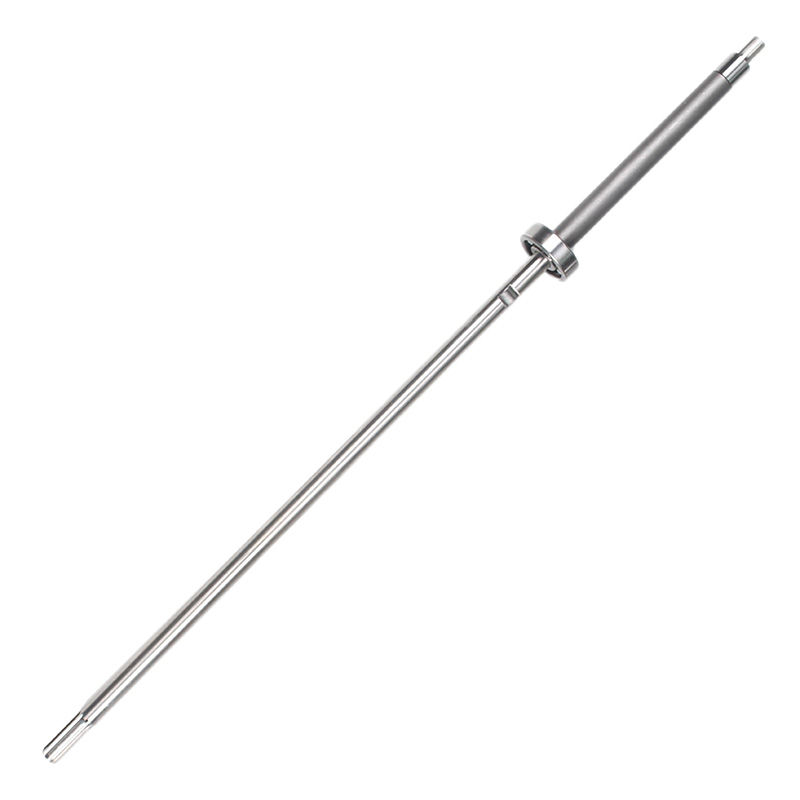
A useful comparison separates landed cost from the additional cost of holding and managing inventory.
Landed cost includes the product price and applicable freight, insurance, duties, taxes, and related charges. Inventory ownership adds storage, financing, handling, and potential obsolescence.
Consider hypothetical demand for 120 identical, approved propeller shafts per year.
The following figures are planning assumptions, not Gill quotations or industry benchmarks.
| Annual cost item | One order of 120 units | Six orders of 20 units |
|---|---|---|
| Unit purchase price | $90 | $100 |
| Annual product expenditure | $10,800 | $12,000 |
| Annual freight and order-processing costs | $900 | $1,800 |
| Assumed annual inventory holding cost | $1,200 | $300 |
| Total modeled annual cost | $12,900 | $14,100 |
Under these assumptions, bulk purchasing saves $1,200 annually.
But an additional $1,500 in unsold-stock write-downs would reverse that advantage. The model also excludes duties, taxes, quality losses, and emergency shipments, which must be added where applicable.
The lesson is straightforward: a volume discount should survive a realistic demand-and-risk calculation.
Request quotations using the same delivery basis and named location.
International commercial terms allocate responsibilities for transport, insurance, customs formalities, and associated costs. They do not make differently structured quotations directly comparable.
Ask what is included, what remains payable, and when responsibility transfers.
For outboard gears, crankshafts, drive shafts, and propeller shafts, quantity decisions should follow technical identification.
Mercury Marine's parts catalog, for example, supports identification using engine model or serial number. This illustrates why a generic horsepower description alone should not be the purchasing reference.
Use the applicable original part reference, drawing revision, and engine identification. Then agree on component-specific requirements.
| Component | Items to confirm where applicable |
|---|---|
| Outboard gears | Gear geometry, ratio, mating components, rotation, material, and heat-treatment requirements |
| Crankshafts | Journal dimensions, stroke, bearing interfaces, runout, and applicable balancing requirements |
| Drive shafts | Overall length, spline configuration, bearing seats, straightness, and connection details |
| Propeller shafts | Splines, threads, seal-running surfaces, bearing interfaces, and runout |
These are procurement checkpoints, not universal acceptance specifications. Numerical limits must come from approved drawings, applicable service information, or an agreed engineering specification.
A reference number can help identify a replacement application. It does not, by itself, prove original-manufacturer status or authorization.
Before approving a larger order:
1. Confirm the exact application and part reference.
2. Resolve drawing revisions and approved deviations.
3. Evaluate samples or first-production components.
4. Document acceptance criteria and inspection records.
5. Define batch identification and nonconformity handling.
The same disciplined process benefits small orders. Bulk purchasing simply makes an unresolved mistake more expensive.
Many businesses benefit from combining both approaches rather than applying one purchasing rule to every component.
Use a simple planning matrix:
- Predictable, frequently required parts: consider larger replenishment orders.
- Critical parts with low consumption: consider a targeted reserve.
- New or uncertain applications: begin with controlled small orders.
- Obsolete or declining applications: purchase cautiously against verified requirements.
Review these classifications regularly. A formerly popular component can become slow-moving as the installed engine population changes.
A basic planning relationship is:
Reorder point = expected demand during replenishment lead time + safety stock.
For example, assumed demand of four shafts per week and a five-week replenishment lead time creates expected lead-time demand of 20 shafts. Adding eight units of safety stock gives a reorder point of 28.
These are illustrative figures. Actual safety stock should reflect demand variability, lead-time uncertainty, and the service level the business needs.
Monitor inventory position—available stock plus confirmed incoming supply, less committed demand—to avoid placing duplicate replenishment orders.
Where commercially available, a framework order with scheduled releases may combine a longer-term purchasing commitment with smaller deliveries.
Clarify who owns reserved inventory, when payment becomes due, how forecasts can change, and what cancellation obligations apply.
Do not assume that scheduled deliveries eliminate financial exposure.
Longer holding periods create additional responsibilities for machined metal components.
Agree with the supplier on preservation methods, packaging integrity, storage conditions, inspection intervals, and handling protection.
SKF's published bearing guidance emphasizes intact packaging and suitable storage environments. Although bearing-specific storage periods cannot be transferred directly to gears or shafts, the underlying preservation principle is relevant: storage conditions affect whether stock remains serviceable.
Keep part numbers, drawing revisions, batch records, and inspection documents connected throughout receiving and storage.
For larger orders, traceability also helps isolate a reported issue instead of treating every component as potentially affected.
A practical procurement process should connect engineering, purchasing, and inventory planning.
1. Define the application. Gather engine identification, part references, drawings, and required quantities.
2. Analyze actual consumption. Separate recurring sales from unusual projects and seasonal effects.
3. Compare purchasing scenarios. Include landed cost, holding cost, cash exposure, and replenishment risk.
4. Qualify the supply arrangement. Confirm samples, documentation, packaging, lead times, and acceptance procedures.
5. Review performance. Track usable stock, delivery reliability, inspection outcomes, and forecast accuracy.
From a buyer's perspective, the strongest negotiation is not simply a request for a lower price. It is a clear specification and credible demand plan that allows both parties to quote and schedule responsibly.
Ningbo Gill Transmission Parts Co., LTD. brings 29 years of professional experience to outboard gears, crankshafts, drive shafts, and propeller shafts.
Send your part references or drawings, engine application details, estimated annual demand, preferred delivery schedule, and destination.
Ask Gill to assess applicable products, quotation quantities, sample requirements, inspection documentation, packaging, and delivery options. Use that information to compare a controlled initial order with a larger purchasing commitment on the same technical and commercial basis.
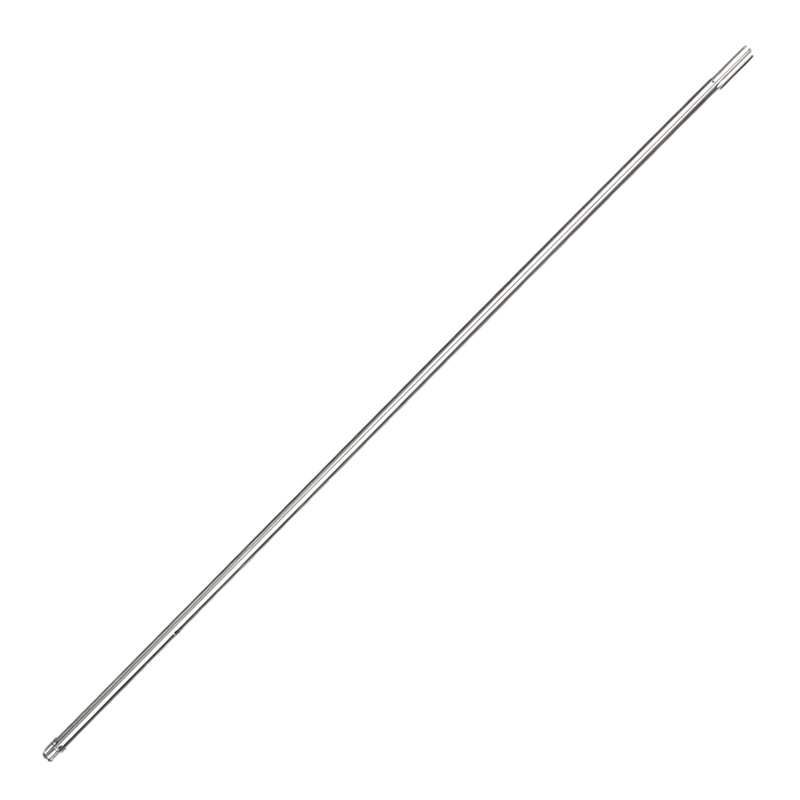
No. A lower unit price can be outweighed by storage costs, financing, unused inventory, or specification errors. Compare total cost over the same demand period.
There is no universal threshold. It depends on component value, manufacturing economics, supplier terms, and the buyer's normal consumption. Request pricing at several relevant quantities.
A controlled initial order is useful when supplier performance or compatibility remains unverified. Define acceptance criteria first, then increase volume according to documented results.
Potentially, but mixed-order availability, minimum quantities, packaging, and pricing require supplier confirmation. Consolidated shipping does not necessarily mean every item receives bulk pricing.
Provide engine identification, accurate part references, applicable drawings, and required technical details. Resolve uncertainty before production or shipment rather than relying on visual similarity.
Work backward from the required availability date using confirmed production and transport lead times. Base quantities on relevant seasonal demand and review remaining stock before committing again.
- Mercury Marine. "Parts Catalog." Supports the discussion of engine-model and serial-number-based parts identification. [mercurymarine]
- University of Kentucky. "Inventory Management." Explains ordering costs, holding costs, economic order quantities, and reorder-point principles. [uky]
- U.S. International Trade Administration. "Determine Total Export Price." Defines landed cost and its principal components, including freight, insurance, tariffs, and taxes. [trade]
- U.S. International Trade Administration. "Know Your Incoterms." Explains how international commercial terms allocate transaction responsibilities, costs, and risks. [trade]
- SKF. "Storage for Rolling Bearings." Supports the discussion of preservation, packaging integrity, and storage environments; its bearing-specific limits are not presented as shaft or gear specifications. [skf]


