


close
Choose Your Site
Global
Social Media
Views: 299 Author: Gill Transmission Parts Publish Time: 2026-11-03 Origin: Site


Content Menu
● What Does Outboard Gear Interchangeability Actually Mean?
>> Cross-Brand Gears vs. Aftermarket Replacement Gears
● Why Different Brand Outboard Gears Usually Cannot Be Swapped Directly
>> Horsepower Does Not Define the Gearcase
>> Gear Ratio Is Only One Compatibility Check
>> Similar Teeth Can Hide Different Geometry
● The Technical Requirements for Interchangeable Outboard Gears
>> Forward Gear, Reverse Gear, and Pinion Compatibility
>> Standard Rotation vs. Counter-Rotation
● Yamaha, Mercury, Suzuki, Honda, and Tohatsu: How Should Buyers Compare Them?
>> Same Brand, Different Models
>> Different Brands, Apparently Similar Engines
>> Original-Brand vs. Aftermarket Outboard Gears
● A Six-Step Process to Verify Outboard Gear Compatibility
>> 1. Record the Engine and Gearcase Identity
>> 2. Confirm the Part Number and Any Supersession
>> 3. Compare Drawings and Critical Dimensions
>> 4. Define Material and Quality Requirements
>> 5. Verify Assembly Settings
>> 6. Validate Before Wider Use
● Three Purchasing Situations That Reveal Hidden Risk
>> Scenario 1: Same Horsepower, Different Gearcase
>> Scenario 2: Matching Tooth Count, Different Engagement
>> Scenario 3: Correct Replacement, Incorrect Setup
● How to Compare the Real Cost of Replacement Outboard Gears
● What to Ask an Outboard Gear Manufacturer Before Ordering
● Get an Application-Specific Outboard Gear Review
>> Can Yamaha outboard gears fit a Mercury engine?
>> Are outboard gears universal across different brands?
>> Does the same tooth count mean two gears are interchangeable?
>> Can I replace only the damaged forward gear?
>> Do replacement outboard gears require shimming?
>> Can aftermarket outboard gears provide a suitable replacement?
Different brand outboard gears can sometimes be interchanged, but only when their compatibility is documented for the exact engine and gearcase. Matching horsepower, tooth count, or appearance is not enough. The practical answer is verification: confirm the application, gear geometry, shaft interfaces, material requirements, and assembly settings before approving a replacement.
At Ningbo Gill Transmission Parts Co., LTD., our perspective comes from 29 years of specialization in the research, development, production, and sale of marine components. For buyers comparing Yamaha, Mercury, Suzuki, Honda, or Tohatsu applications, we recommend starting with the required specification—not the brand printed on the packaging.
This guide explains the difference between cross-brand interchangeability and aftermarket replacement, the technical checks that matter, and a practical process for sourcing outboard gears with greater confidence.
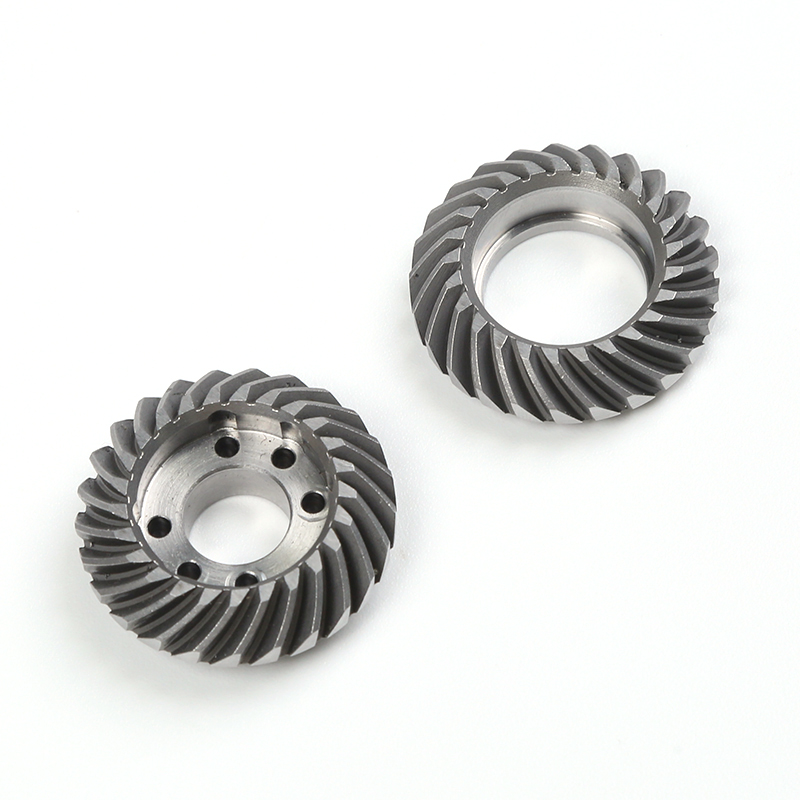
An interchangeable gear must work correctly within the intended lower-unit assembly. Simply sliding onto a shaft does not establish compatibility.
In a conventional mechanically shifted outboard lower unit, a pinion transfers power from the vertical drive shaft to the forward and reverse gears. A clutch dog engages the selected gear to transmit rotation to the propeller shaft.
These components operate as a system. Their geometry, supporting bearings, axial positions, and engagement surfaces must work together.
Two different purchasing decisions are often confused:
| Comparison | Cross-brand substitution | Application-specific aftermarket replacement |
|---|---|---|
| Typical example | Installing a gear intended for one engine brand into another brand's gearcase | Installing an independently manufactured gear specified for a particular engine |
| Main question | Do the two applications genuinely share compatible specifications? | Does the replacement meet the intended application's requirements? |
| Necessary evidence | Documented cross-reference and technical verification | Accurate application listing, drawings, and inspection evidence |
| Main risk | Assuming similar engines use identical internals | Trusting an incomplete or inaccurate compatibility claim |
An aftermarket manufacturer can supply separate gears for several engine brands without those gears being interchangeable with one another.
That distinction is especially important for distributors building multi-brand product ranges.
Two 115-horsepower engines do not necessarily use the same gears. Horsepower describes engine output, not the dimensions or internal architecture of the lower unit.
Even within one manufacturer's range, alternative gearcases can exist. Mercury, for example, offers its 115hp Pro XS with a Command Thrust gearcase option designed to turn a larger propeller.
Therefore, "fits 115hp" is an incomplete purchasing specification.
Identify the complete engine model, serial number, gearcase configuration, and applicable part number before comparing replacement outboard gears.
Gear ratio expresses the relationship between input and output rotational speeds. However, two assemblies can have the same ratio while using different tooth dimensions, shaft spacing, bearings, or housings.
Yamaha's published specifications illustrate that different outboard configurations use different ratios, including 2.15:1 in its 115–75hp range and 2.33:1 in a high-thrust configuration.
These figures are application examples—not interchangeability recommendations.
A matching ratio is necessary where the original specification requires it, but it is not proof that individual gears will mesh correctly.
Two gears may share a tooth count and outside diameter yet differ in:
- Tooth profile and pressure angle.
- Spiral angle and tooth hand, where applicable.
- Face width and mounting distance.
- Bore geometry and spline dimensions.
- Bearing seats and thrust surfaces.
Small differences can change where the teeth contact under load.
From a manufacturing perspective, visual similarity should trigger measurement—not approval.
The following comparison provides a practical screening framework. Final acceptance must follow the requirements for the specific application.
| Requirement | What must be checked | Why it matters |
|---|---|---|
| Application identity | Model, serial range, gearcase version, original part number | Prevents selection of the wrong variant |
| Gear geometry | Tooth count, profile, spiral geometry, mounting distance | Establishes correct meshing |
| Shaft interface | Spline form, bore, fit, axial location | Supports torque transfer and positioning |
| Bearing interface | Journal dimensions, shoulders, thrust arrangement | Maintains alignment and support |
| Shift engagement | Clutch-dog geometry and engagement position | Enables correct forward and reverse engagement |
| Material condition | Specified steel, heat treatment, hardness, case depth where applicable | Supports wear and fatigue performance |
| Assembly settings | Backlash, shims, clearances, preload where specified | Establishes operating geometry |
Do not evaluate a replacement pinion in isolation from the gears it drives.
Check the service documentation and parts listing to establish whether the application requires individual replacement, a designated gear set, or additional associated components.
Mixing gears without verifying their intended mating relationship creates uncertainty. Existing gears also require inspection for pitting, scoring, chipped teeth, and abnormal contact wear.
There is no reliable universal rule that every outboard requires all gears to be replaced together. The correct decision depends on the design, supplied replacement configuration, and component condition.
Standard-rotation and counter-rotation applications require separate identification.
Manufacturers offer counter-rotation configurations for selected engines, particularly for multi-engine installations. That does not make their internal components interchangeable with standard-rotation versions.
Do not assume that changing the propeller or shift linkage converts one gearcase into the other.
Confirm the complete rotation configuration and the exact parts specified for it.
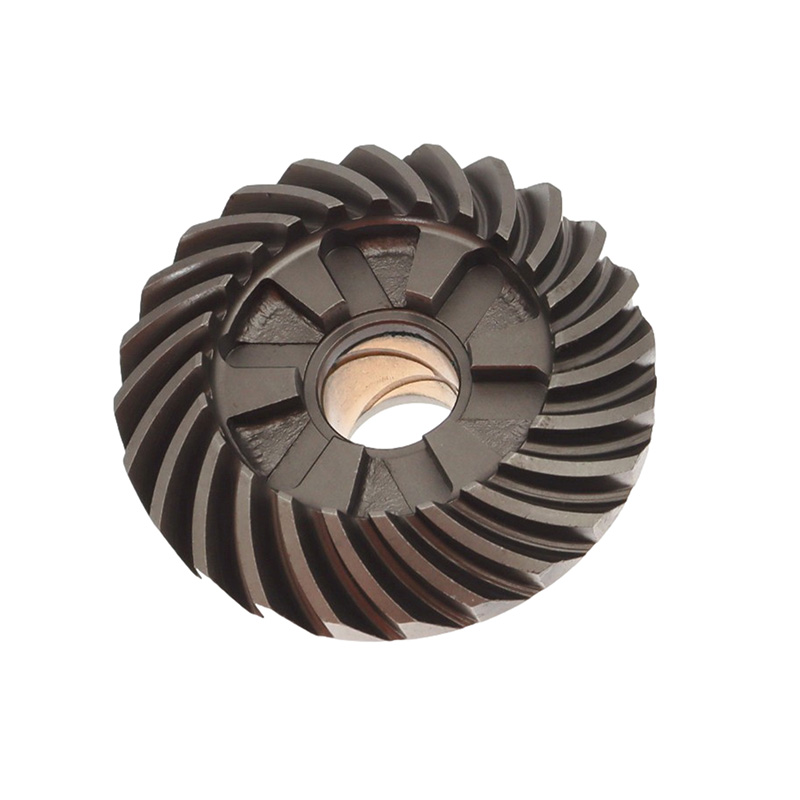
There is no defensible universal interchangeability chart covering these brands solely by horsepower.
The useful comparison is between identifiable applications—not entire manufacturers.
Shared branding does not guarantee shared gears.
A different production series, gearcase option, or serial-number range may require a different component. Start with the manufacturer's parts catalog rather than a broad marketplace description.
Mercury's official catalog specifically supports searches by engine model or serial number, followed by diagrams and part numbers.
A shared manufacturing relationship or similar engine layout is a reason to investigate, not proof of common lower-unit internals.
Approve a cross-brand substitution only when documentation establishes the relationship between the exact components and applications.
Without that evidence, describe the part as unverified—not interchangeable.
Original-brand parts offer an established application-identification route through the relevant catalog and dealer network.
Application-specific aftermarket gears provide another sourcing route, particularly for distributors and repair businesses. Their suitability depends on documented fitment, manufacturing control, and inspection—not simply a lower price.
Ask the supplier to explain precisely what its compatibility claim covers.
Collect:
- Engine brand and complete model designation.
- Engine serial number.
- Gearcase identification, where available.
- Standard-rotation or counter-rotation configuration.
- Original component and assembly part numbers.
Include production year when known, but do not use year alone to identify the application.
Check the current catalog or obtain confirmation from an authorized source.
A superseded number may identify a direct replacement, but it may also involve a revised assembly or associated parts. Establish what changed before placing an order.
Request a dimensioned drawing or an agreed inspection sheet.
Prioritize functional interfaces: splines, bearing seats, thrust faces, gear geometry, and clutch engagement features.
A sample is useful for comparison. However, a worn sample should not automatically become the manufacturing specification.
For a commercial order, agree on the required material and heat-treatment condition.
Depending on the design, supporting records may include hardness results, effective case-depth measurements, dimensional inspection, and batch traceability.
A general statement such as "high-quality marine steel" does not establish compliance with a particular gear specification.
Installation is not complete when the housing closes.
Use the model-specific procedure to check gear positioning, backlash, shimming, and other specified settings. Yamaha service documentation demonstrates that shim selection and backlash measurement are integral parts of lower-unit assembly.
Do not transfer a numerical setting from another engine merely because the gears look similar.
A qualified technician should complete the prescribed inspection and testing sequence.
For distributor programs, approve a representative sample before authorizing volume supply. Record the exact application and test conditions so the approval remains traceable.
A successful check on one gearcase does not automatically validate every model in a broad compatibility listing.
The following scenarios are illustrative purchasing examples, not customer case histories.
A repair shop needs a gear for a 115hp engine. A supplier offers a part described only as "115hp compatible."
The missing information is the problem. Before ordering, the shop must establish the engine series, serial range, gearcase version, and original part number.
The lesson: horsepower is a search filter, not an acceptance criterion.
A buyer finds a gear with the expected tooth count and a similar bore. However, the clutch-dog engagement features differ.
The gear has passed a superficial comparison but failed a functional one.
The lesson: compare both the power-transmission surfaces and the shifting interfaces.
A correctly specified replacement gear is installed using the original shim stack without checking the required measurements.
That leaves the final gear positioning unverified.
The lesson: component compatibility and installation correctness are separate requirements. One cannot compensate for the other.
Unit price is only part of the purchasing decision.
A more useful comparison includes:
> Component cost + inspection + associated parts + installation + testing + downtime exposure.
For repair shops, a cheaper gear can lose its advantage if fitment uncertainty causes repeated disassembly.
For distributors, incomplete compatibility descriptions can create returns, inventory confusion, and technical-support costs.
For boat operators, reliability and repair availability may matter more than a small difference in purchase price.
Compare suppliers using the same application details and acceptance requirements. Otherwise, quotations may cover materially different products.
A technically useful supplier discussion should answer five questions:
1. Which exact original part numbers and engine applications does this gear replace?
2. What dimensions and functional characteristics are inspected?
3. What material and heat-treatment requirements apply?
4. Which supporting components or installation checks are required?
5. What documentation accompanies sample approval and production batches?
At Ningbo Gill Transmission Parts Co., LTD., we specialize in outboard transmission components, including forward gears, reverse gears, pinion gears, clutch dogs, drive shafts, and propeller shafts.
Our 29-year manufacturing background provides context for technical discussions. Nevertheless, every compatibility claim should remain specific to the component and application under review.
Before ordering replacement outboard gears, send Ningbo Gill your engine model, serial number, original part number, rotation configuration, and clear component photographs.
For distributor or custom-manufacturing projects, include drawings, samples, expected quantities, and inspection requirements.
Request an application-specific quotation and compatibility review—not simply a price for a similar-looking gear.
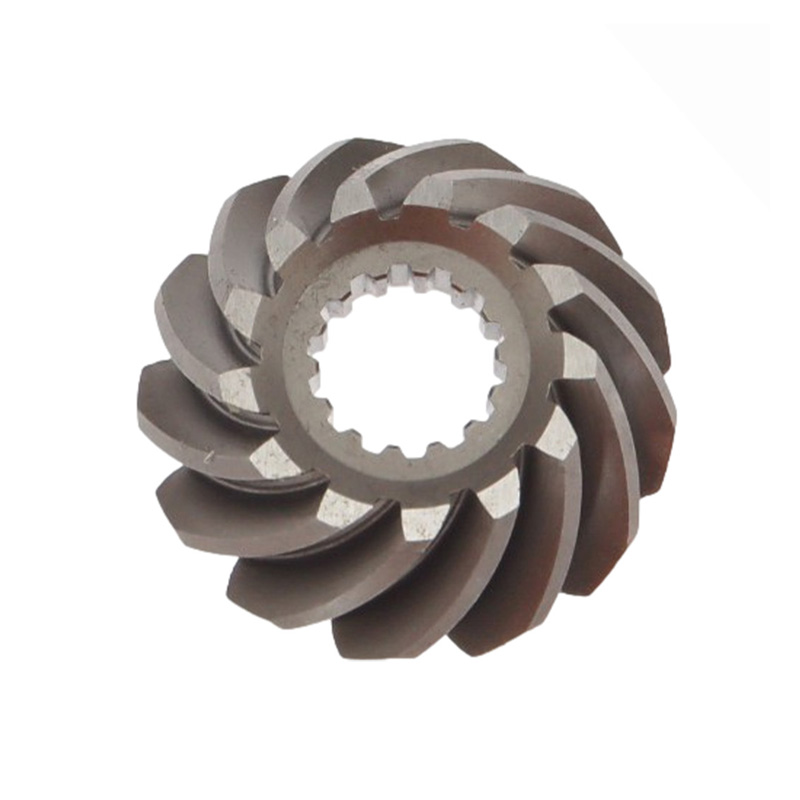
Not as a general rule. A substitution requires documented compatibility for the exact engine and gearcase. Matching horsepower or appearance does not establish fitment.
No. Gear geometry, shaft interfaces, bearing arrangements, shifting components, and assembly requirements vary. Universal compatibility should never be assumed.
No. Tooth profile, mounting distance, spiral geometry where applicable, material condition, and mating components also matter.
Possibly. Check the service instructions, replacement-parts configuration, and condition of the mating components. Some repairs may require additional gears or associated parts.
They may. Follow the exact service procedure. Existing shims should not be accepted without the checks required for the repaired assembly.
Yes, when they are correctly specified for the application and supported by appropriate manufacturing, inspection, and installation controls. Aftermarket does not mean universal.
1. [Ningbo Gill Transmission Parts Co., LTD. — About Us]. Company history, establishment in 1997, and specialization in marine transmission components. The 29-year experience statement also reflects the company background supplied for this article. [gilltransmission]
2. [Ningbo Gill — Advanced Factory for Outboard Lower Unit Parts]. Component range, application coverage, and custom-manufacturing background. These are manufacturer-published statements. [gilltransmission]
3. [Mercury Marine — Parts Catalog]. Official guidance on identifying parts using engine models, serial numbers, diagrams, and part numbers. [mercurymarine]
4. [Mercury Marine — Pro XS 115–150hp]. Official information on the optional Command Thrust gearcase for the 115hp engine. [mercurymarine]
5. [Yamaha Outboards — 115–75hp 1.8L I-4]. Manufacturer specifications, including the published 2.15:1 gear ratio. [yamahaoutboards]
6. [Yamaha Outboards — High Thrust Outboards]. Manufacturer specifications illustrating application-specific lower-unit and gear-ratio configurations. [yamahaoutboards]
7. [Yamaha 200A/L200A Service Manual — Hosted Copy].pdf). Model-specific procedures for shim selection, gear positioning, and backlash measurement. Its numerical settings must not be generalized to other models. [ptkba].pdf)
8. [Mercury Marine — SeaPro Outboard Brochure]. Official specifications distinguishing gearcase configurations, ratios, and counter-rotation availability. [mercurymarine]


