


close
Choose Your Site
Global
Social Media
Views: 243 Author: Gill Transmission Parts Publish Time: 2026-10-11 Origin: Site


Content Menu
● Why Can't I Buy Parts for My New Mercury Outboard?
>> "New" Does Not Fully Identify Your Engine
>> An Online Listing Is Not a Complete Availability Answer
● How to Find Mercury Outboard Parts by Serial Number
>> Step 1: Collect the Engine Identification Details
>> Step 2: Identify the Component in the Correct Diagram
>> Step 3: Confirm Revisions and Replacement Scope
● What to Do When Mercury Outboard Parts Are Backordered
>> Questions That Produce Better Answers
>> A Ready-to-Use Dealer Inquiry
● Check Warranty Before Buying Replacement Parts
● OEM, Aftermarket, or Custom Outboard Gears: Which Route Makes Sense?
>> Genuine Parts Provide a Clear Catalog Route
>> Aftermarket Compatibility Must Be Demonstrated
>> Custom Manufacturing Is Not an Instant Backorder Solution
● Why Mercury Lower Unit Gears Require Extra Care
>> Matching Appearance Does Not Establish Fitment
>> Installation Determines Whether a Correct Gear Works Correctly
● A Manufacturer's Checklist for Outboard Gear Sourcing
>> Prepare a Technical Inquiry Package
● Illustrative Scenario: A New Engine and an Unavailable Gear
● Request an Application-Specific Outboard Gear Review
>> 1. Why can't I find parts for my new Mercury outboard online?
>> 2. Can I buy Mercury outboard parts directly from the manufacturer?
>> 3. Does a backordered part mean it has been discontinued?
>> 4. Can aftermarket outboard gears replace genuine Mercury gears?
>> 5. Can I replace only one damaged lower unit gear?
>> 6. What should I send an outboard gear manufacturer?
"Why can't I buy parts for my new Mercury outboard?" If you have recently purchased an engine, discovering that a replacement component is unavailable can be frustrating. However, an unsuccessful online search does not necessarily mean the part is discontinued or impossible to obtain.
Start by confirming your engine's serial number, identifying the correct part number, and asking an authorized dealer to clarify availability. The obstacle may be a catalog mismatch, a replacement part number, a stock shortage, or a component supplied within a larger assembly.
At Ningbo Gill Transmission Parts Co., LTD., our focus is the research, development, production, and sale of outboard gears and other marine components. With 29 years of professional experience, we approach replacement decisions from a transmission-manufacturing perspective: identify the application first, establish compatibility second, and discuss purchasing options last.
This guide explains how to find Mercury outboard replacement parts without turning a sourcing problem into an expensive repair mistake.
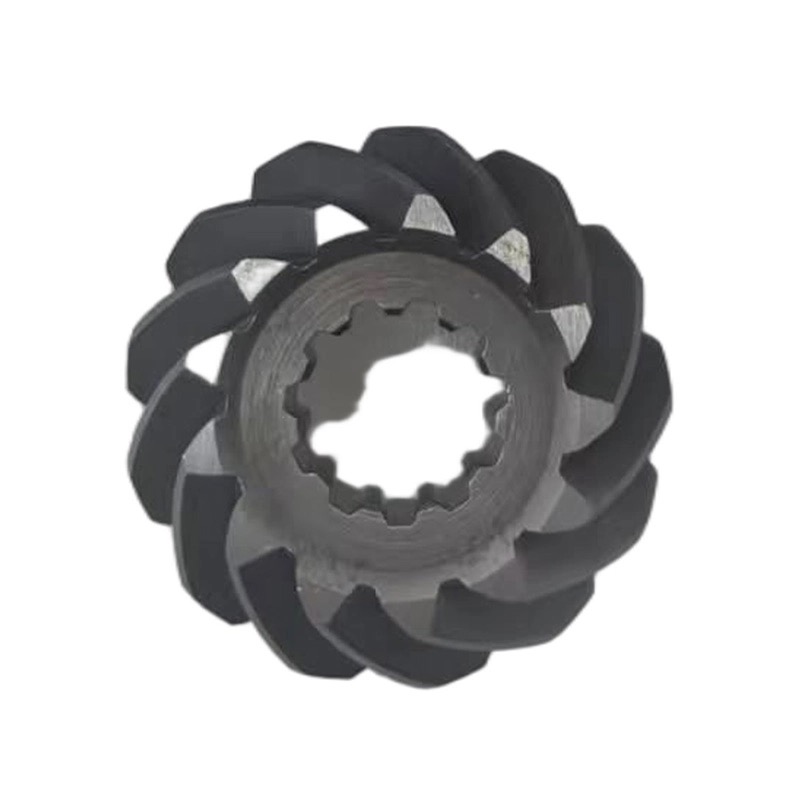
The phrase "parts unavailable" can describe several different situations. Before looking for another supplier, determine which situation actually applies.
| What you encounter | What it may mean | What to ask next |
|---|---|---|
| No online search results | Incorrect description or catalog selection | "Can you search using my engine serial number?" |
| An obsolete part number | The number may have been replaced | "Is there a superseding number?" |
| A backorder notice | The item is listed but unavailable through that supply route | "Is there a confirmed delivery estimate?" |
| No individual component listing | The component may be supplied as an assembly | "What is the approved replacement configuration?" |
| Different-looking replacement | A revision or application mismatch needs checking | "Can you confirm fitment in writing?" |
These are diagnostic possibilities, not evidence of a brand-wide shortage. Availability must be checked for the specific component and purchasing location.
A newly purchased outboard might be recently manufactured, older dealer inventory, or simply new to its current owner.
The purchase date alone does not identify every applicable replacement component. Likewise, horsepower and the general engine family may not provide enough detail for an internal transmission part.
For parts identification, use the actual engine information rather than the wording on a sales advertisement.
A retailer's website shows what that business lists and offers. It does not establish whether every authorized supply channel has exhausted its inventory.
Separate these questions:
- Does the correct part exist in the catalog?
- Is it sold individually?
- Does this seller have it?
- Can another supplier obtain it?
- Is the delivery date confirmed or only estimated?
This distinction prevents an empty shopping-cart result from becoming an unnecessary engine-replacement decision.
Mercury's parts catalog supports searches by engine model or serial number and provides diagrams and part numbers. Use that information to build a precise inquiry.
Before contacting a dealer, gather:
- Engine serial number.
- Model designation and horsepower.
- Purchase date and sales receipt.
- Photographs of the identification label.
- Description of the symptom or damaged component.
- Relevant service records.
Copy the serial number exactly. A transcription error can send the search into an unrelated application.
If the identification label is unclear, check your purchase and registration documents or ask the dealer to help establish the correct identity.
Find the relevant assembly, such as the gear housing, cooling system, or fuel system. Match the diagram item to the component required.
Record both the diagram description and the part number. Avoid ordering from a photograph alone, especially when internal gears, shafts, or bearing interfaces are involved.
A casting mark or stamped manufacturing code is not automatically an orderable service part number.
Ask whether the catalog number remains current.
Where a replacement number exists, request confirmation that it applies to your serial-number range. Also establish whether installation requires additional seals, bearings, hardware, or associated components.
A usable quotation should explain what you are buying, not merely provide a price.
Once the correct part is identified, investigate the supply situation methodically.
Contact your original selling dealer first, particularly if the engine may qualify for warranty assessment. Then ask another authorized dealer to check the same verified number.
Use a consistent checklist:
1. Is this the current part number?
2. Is the item physically in stock?
3. If not, where will it be sourced?
4. Is the delivery date confirmed?
5. Is an approved assembly available instead?
6. Are there application-specific replacement instructions?
7. What happens if delivery is delayed or fitment is incorrect?
Keep written records of quotations and availability statements. An estimated shipment date should not be treated as a guaranteed arrival date.
> I need help sourcing a replacement part for my Mercury outboard. My engine serial number is [number], and the catalog part number is [number]. Please confirm current fitment, any superseding number, whether the item is physically available, the expected delivery date, and whether additional components are required. The engine was purchased on [date]; please also advise whether warranty assessment is appropriate.
This format reduces repeated questions and makes competing quotations easier to compare.
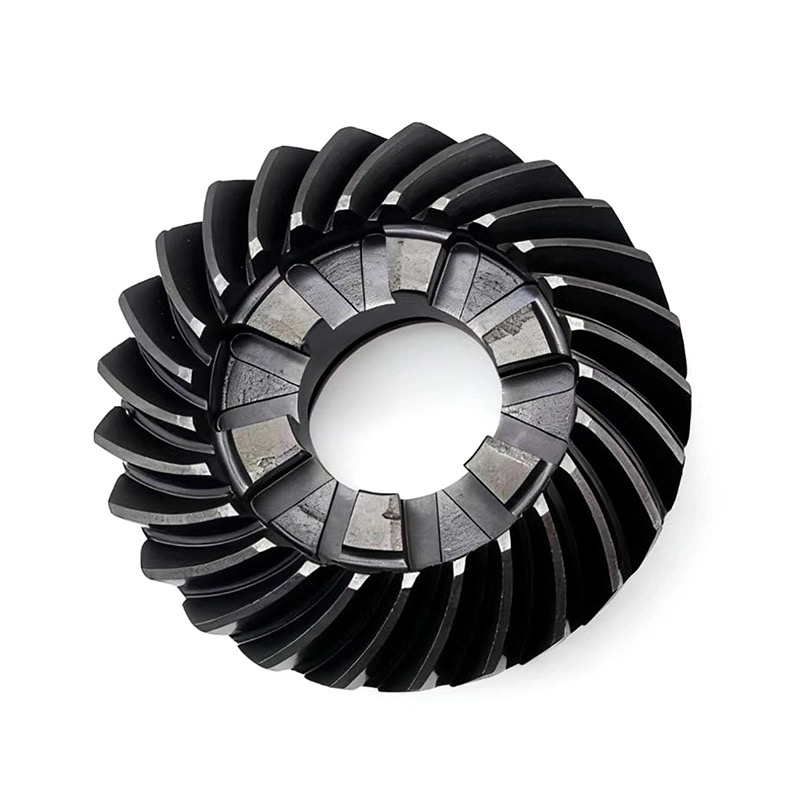
A new engine with a suspected defect deserves a warranty review before the owner pays for an internal repair.
Mercury states that product registration is required for warranty eligibility. Actual coverage must be assessed against the applicable warranty terms, market, engine use, and circumstances of the failure.
Do not assume that every problem is covered. Equally, do not assume that purchasing an aftermarket component automatically settles the warranty question.
Before authorizing work:
- Ask the dealer to assess the suspected failure.
- Preserve receipts, service records, and correspondence.
- Describe symptoms without presenting an unverified diagnosis as fact.
- Ask what disassembly or inspection is required.
- Confirm authorization before commissioning a paid repair.
For a newly purchased outboard, the immediate objective should be an accountable repair pathway—not simply the fastest available component.
Different sourcing options serve different purposes. Compare them only after confirming the application.
| Sourcing route | Appropriate starting point | Essential verification |
|---|---|---|
| Genuine Mercury service part | Catalog-based replacement or warranty-related discussion | Serial-number fitment and current part number |
| Documented aftermarket part | A separately evaluated replacement option | Application evidence, specifications, and seller support |
| Custom-manufactured gear | A defined engineering or specialist procurement project | Drawings, technical requirements, validation, and installation plan |
| Replacement gearcase assembly | A repair option proposed by the servicing technician | Complete configuration and installation requirements |
Genuine service parts offer a manufacturer-defined identification pathway. That can simplify sourcing discussions, especially when a dealer is handling diagnosis and installation.
Nevertheless, confirm the exact application and package contents. The word "genuine" does not make an incorrectly selected component suitable.
For Mercury-compatible outboard gears, a seller's description is only a starting point.
Request the exact reference application, technical documentation, traceability information, and return terms. Be cautious with broad claims such as "fits all engines of this horsepower."
Compatibility should be specific enough for the installing technician to evaluate.
Custom outboard gear production may suit distributors, repair specialists, and businesses with documented technical requirements. It should not be presented as an immediate shortcut for an unidentified component in a new engine.
Engineering review, manufacturing, inspection, and validation require planning. A sample alone may not establish every requirement necessary for a reliable replacement.
For conventional geared outboards, the lower unit contains components that transfer power to the propeller shaft. Internal gear replacement is therefore an assembly-level problem, not merely a dimensional shopping exercise.
Two gears can look similar while differing in tooth geometry, mounting dimensions, bearing interfaces, or engagement features.
For a replacement project, the technical review should address:
- Applicable engine and gearcase identification.
- Forward, reverse, or pinion function.
- Gear ratio and rotation configuration.
- Tooth geometry and mating-component requirements.
- Bore, spline, and bearing-seat dimensions.
- Material and heat-treatment requirements.
Not every gearcase follows the same design or assembly procedure. Use the service information for the actual unit.
Gearcase service instructions may require checks of gear depth, backlash, and related adjustments. Backlash is the clearance between mating gear teeth.
The correct procedure matters because a dimensionally suitable component can still operate poorly if assembled incorrectly.
Do not borrow adjustment values from a different engine or use generic internet tolerances. Where specialist tools or measurements are required, have a qualified technician complete the work.
From a transmission-manufacturing standpoint, the strongest inquiry defines both the component and the conditions under which it must work.
This is particularly valuable for distributors and repair businesses evaluating alternative suppliers.
Include the verified part number, engine application, available drawings, component photographs, quantity, destination, and required delivery window.
Where appropriate, add:
- Mating-part details.
- Required material specification.
- Heat-treatment and inspection requirements.
- Dimensional acceptance criteria.
- Packaging and traceability expectations.
- Sample evaluation requirements.
Not all buyers have this information. Missing specifications should trigger a technical discussion, rather than unsupported promises of interchangeability.
The cheapest gear is not necessarily the lowest-cost repair.
Compare the complete scope: components, diagnosis, removal, installation, required inspections, freight, and downtime. Ask each supplier what the quotation excludes.
For commercial operators, a reliable delivery commitment and a technically complete repair plan may matter more than a small difference in component price.
Consider an owner who requests "a reverse gear for my new Mercury outboard." The first retailer finds no matching listing.
The owner then provides the serial number and obtains the applicable catalog diagram. A dealer identifies the service number and checks whether the required repair involves an individual gear or a broader assembly.
Before purchasing, the owner requests warranty assessment and a complete repair quotation.
The improvement comes from better identification and a clearer repair process—not from assuming that a different supplier has a universally interchangeable gear.
This is an illustrative sourcing scenario, not a documented customer case or a promise about any particular engine.
Ningbo Gill Transmission Parts Co., LTD. specializes in outboard gears and other marine components, supported by 29 years of professional experience.
For distributors, repair specialists, and marine-component buyers, a useful first step is a documented technical inquiry.
Send the verified reference number, intended application, available drawings or photographs, required quantity, and delivery expectations. Request an application-specific review before proceeding with a quotation or sample order.
For a new Mercury engine with a suspected defect, contact an authorized dealer first. Any independent sourcing proposal should remain subject to compatibility verification and a suitable installation plan.
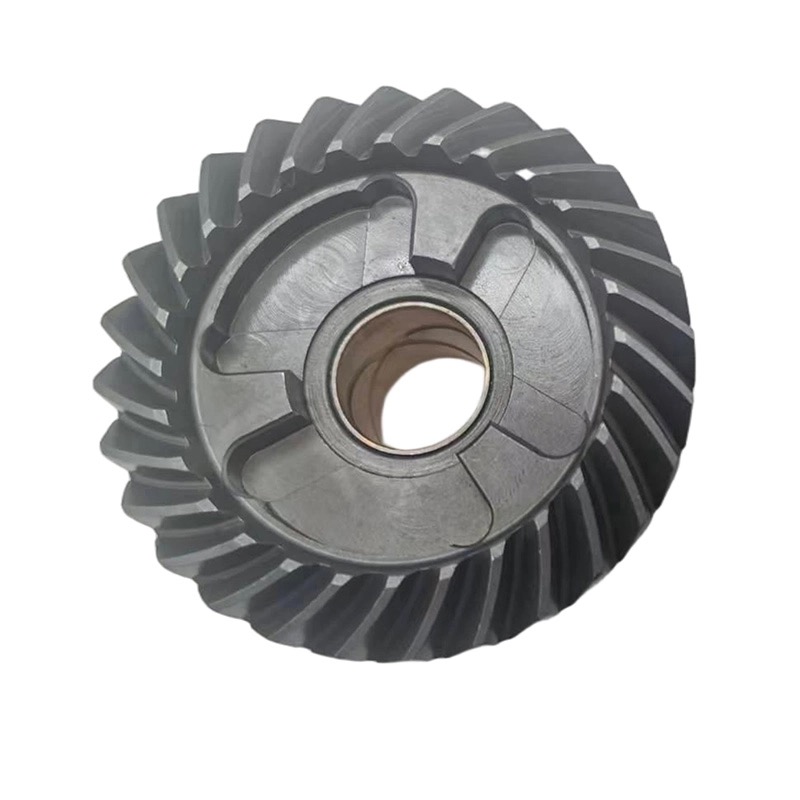
Your search may use an incomplete engine description, an outdated number, or a component name that differs from the catalog. The item may also be unavailable through that retailer. Begin with the engine serial number and verified catalog listing.
Mercury's catalog directs customers to an authorized dealer for assistance or ordering after identifying parts. Check the purchasing arrangements in your market rather than assuming the catalog itself offers direct checkout.
No. A backorder and a discontinued listing describe different situations. Ask the supplier to confirm the current number, availability status, and any replacement option.
Potentially, but suitability must be established for the exact application. Require documented compatibility and technical review. Do not rely solely on photographs, horsepower, or a broad compatibility statement.
That depends on the gearcase design, damage assessment, and applicable service procedure. The technician should inspect mating gears and related components before determining the repair scope.
Provide the verified reference number, intended engine or gearcase application, drawings if available, photographs, quantity, and delivery requirements. Include mating-component and inspection requirements when known.
1. [Mercury Marine — Parts Catalog]. Supports model and serial-number searches, component diagrams, part numbers, and dealer-assisted ordering. [mercurymarine]
2. [Mercury Marine — Parts & Maintenance]. Describes genuine parts and the manufacturer's engineering, testing, and manufacturing approach. [mercurymarine]
3. [Mercury Marine — Limited Warranty]. Supports the registration requirement and the need to consult applicable warranty provisions. It does not establish coverage for a particular repair. [mercurymarine]
4. [Mercury Marine — Owners Resources]. Provides access to owner resources and information about obtaining engine-specific service manuals. [mercurymarine]
5. [Mercury Marine — Owner's Manuals]. Provides access to engine operation, maintenance, and installation manuals. [mercurymarine]
6. [Mercury Outboard Gearcase Manual — Third-Party-Hosted Technical Document]. Supports the importance of model-specific gear depth, backlash, and assembly procedures. This document is not universal service guidance for current Mercury engines. [s6ca5bb3203b5f73d.jimcontent]


