


close
Choose Your Site
Global
Social Media
Views: 222 Author: Gill Transmission Publish Time: 2026-05-27 Origin: Site


Carburizing (also called case hardening) is a heat treatment process in which a low-carbon steel gear is heated in a carbon-rich environment so that carbon atoms diffuse into the surface, forming a high‑carbon, hard case while keeping a tough, low‑carbon core. The result is a gear tooth that combines excellent surface wear resistance and contact fatigue strength with a ductile interior that resists impact and shock loads. [pmc.ncbi.nlm.nih]
In practical terms, carburized gears are widely used in high‑load, high‑speed transmissions such as marine outboard gearboxes, automotive gearboxes, industrial reducers, and heavy machinery drives where long life and quiet operation are critical. For marine applications specifically, carburized steel gears help withstand cyclic torsional loads, gear tooth bending, and abrasive wear in harsh environments. [mdpi-res]
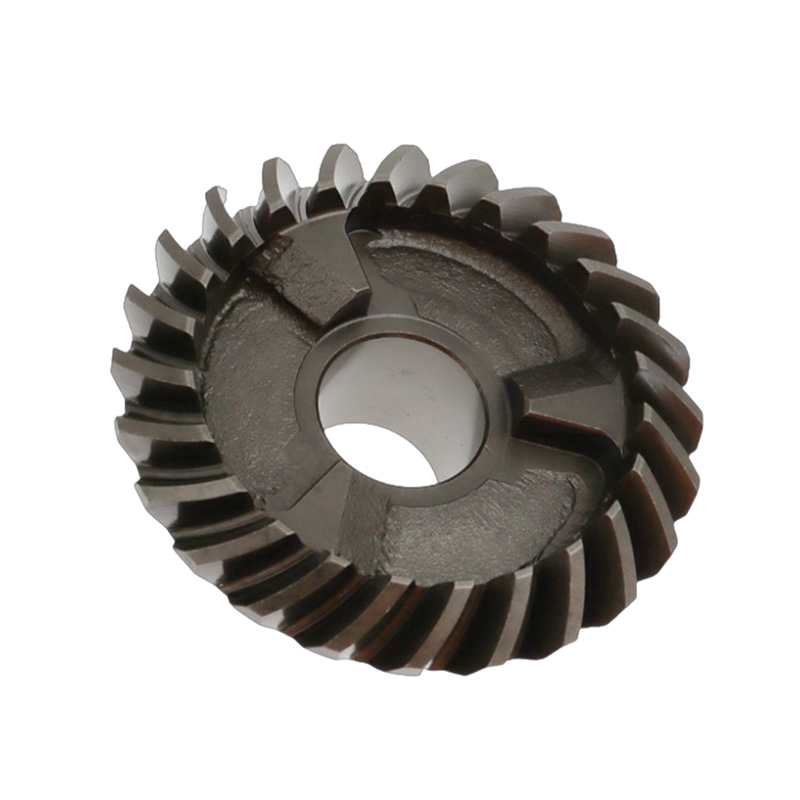
For outboard engines and marine propulsion systems, gear sets operate in compact housings under high torque, variable loads, and continuous lubrication, often in salty or contaminated environments. In this context, carburized steel gears offer several tangible advantages: [pmc.ncbi.nlm.nih]
- Higher surface hardness (typically 58–64 HRC), improving resistance to pitting, scuffing, and abrasive wear on tooth flanks. [patents.google]
- Improved contact fatigue strength, which extends service life under repeated meshing cycles at medium to high speeds. [mdpi-res]
- Tough, low‑carbon core that absorbs shock loads from gear shifting, propeller impacts, and torque spikes without brittle fracture. [eprints.nmlindia]
- Better dimensional stability (when heat treatment parameters are properly controlled), leading to quieter transmissions with accurate tooth contact. [pmc.ncbi.nlm.nih]
For manufacturers like Ningbo Gill Transmission Parts Co., LTD., optimized carburizing technology is therefore a key differentiator in producing high‑precision outboard gears, pinions, and drive shafts that stand up to demanding marine service. [sixthcitymarketing]
Carburizing involves three main stages: carburizing, quenching, and tempering. Each stage must be carefully controlled to achieve the required hardness, case depth, and dimensional accuracy. [khkchilun]
1. Carburizing (Carbon Infiltration)
- The gear blank, usually a low‑carbon alloy steel, is heated to the austenitizing temperature (often around 880–950 °C depending on steel grade) in a carbon‑rich environment such as gas, vacuum, or solid carburizing media. [khkchilun]
- Carbon atoms diffuse into the surface to form a high‑carbon layer, with case depth controlled by time and temperature. [khkchilun]
2. Quenching
- After carburizing, the gear is rapidly cooled, commonly in oil or gas, to transform the high‑carbon surface into martensite, giving high hardness. [patents.google]
- Quenching parameters must be tuned to minimize distortion, especially in precision gears with tight tolerances. [eprints.nmlindia]
3. Tempering
- The quenched gear is reheated to a lower temperature to relieve stresses and adjust toughness. [patents.google]
- Tempering balances hardness, toughness, and residual stress, preventing brittle failures in service. [eprints.nmlindia]
Not all steels respond equally well to carburizing. Low‑carbon alloy steels (typically 0.15–0.25% C) are commonly selected because they allow deep case hardening while retaining a ductile core. Popular materials for carburized gears include: [mdpi-res]
- 18CrNiMo7‑6, 20MnCr5, 16MnCr5
- Other low‑carbon Cr‑Ni‑Mo and Cr‑Mn steels used in high‑strength gear applications. [pmc.ncbi.nlm.nih]
For marine outboard gears, steels are often chosen for their toughness, hardenability, and resistance to micro‑pitting, with specifications tailored to the expected torque, speed, and environmental factors such as corrosion. In advanced designs, alloy modification and precise control of carburizing parameters can significantly improve bending fatigue and rolling contact fatigue performance. [mdpi-res]
Several carburizing processes are available, each with its own benefits and limitations. [khkchilun]
Gas carburizing is the most widely used process for gears, using carbon‑bearing gases such as methane or propane in a controlled atmosphere furnace. [khkchilun]
- Advantages: Good control of carbon potential, suitable for mass production, compatible with automatic lines. [mdpi-res]
- Typical applications: Automotive and industrial gears, including many standard marine gearsets. [khkchilun]
Vacuum carburizing (also called low‑pressure carburizing) uses a low‑pressure furnace with hydrocarbon gases injected in pulses. [patents.google]
- Advantages: Clean surfaces, reduced oxidation, and improved control of case depth; particularly useful for high‑alloy steels and complex geometries. [pmc.ncbi.nlm.nih]
- It often combines with high‑pressure gas quenching, reducing distortion compared to traditional oil quenching. [eprints.nmlindia]
Pack carburizing involves placing the gear in a solid carburizing compound and heating for extended periods. [khkchilun]
- Now less common for high‑precision gears due to slower cycle times and less precise control. [khkchilun]
- Occasionally used for smaller production runs or legacy equipment where modern furnaces are unavailable. [khkchilun]
For engineers designing carburized gears, three parameters dominate:
1. Effective Case Depth
- Defined as the depth at which hardness falls to a specified level (often 550 HV or similar), effective case depth governs load‑carrying capacity and fatigue life. [pmc.ncbi.nlm.nih]
- Too shallow a case leads to early pitting; too deep increases risk of cracking and distortion. [mdpi-res]
2. Surface Hardness and Core Hardness
- Surface hardness typically targets 58–64 HRC, while core hardness remains lower to maintain toughness. [patents.google]
- A balanced hardness profile ensures both wear resistance and shock resistance, especially important in marine transmissions. [eprints.nmlindia]
3. Distortion Control
- Heat treatment inevitably causes some dimensional changes due to phase transformations and residual stresses. [eprints.nmlindia]
- Advanced control of heating rates, quenching media, fixture design, and tempering is required to keep tooth profile and runout within tolerance. [pmc.ncbi.nlm.nih]
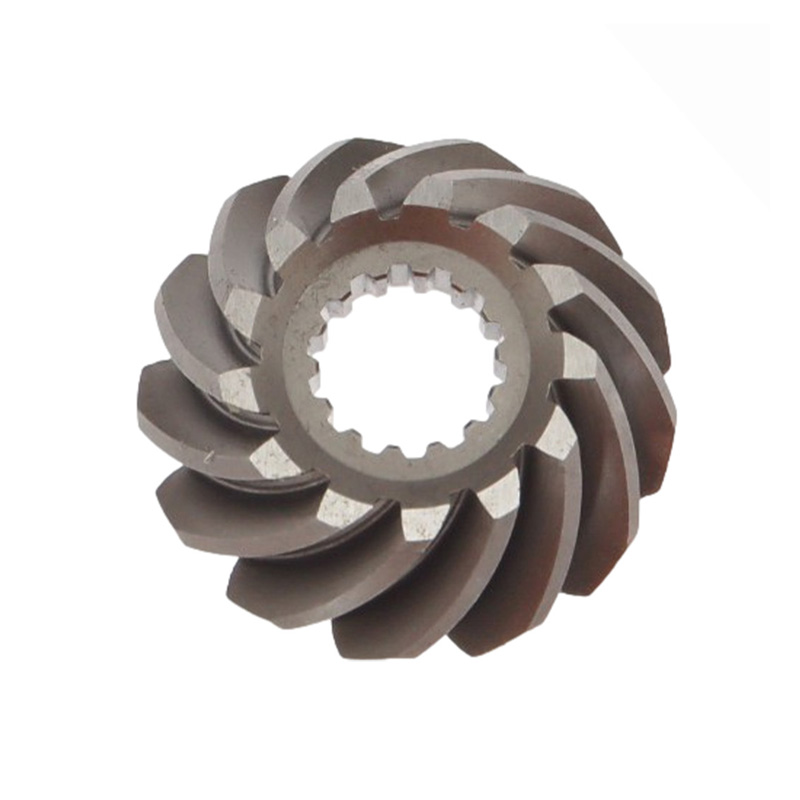
From a manufacturer's perspective, a robust carburizing process for outboard and marine gears follows a structured workflow. [patents.google]
1. Pre‑Machining and Preparation
- Machine gear blanks to near‑final dimensions, leaving allowance for grinding.
- Perform thorough cleaning and inspection to prevent surface contamination that can affect carbon diffusion. [pmc.ncbi.nlm.nih]
2. Carburizing Cycle
- Load gears into the furnace using fixtures that minimize distortion.
- Run a controlled carburizing cycle with defined temperature, time, and carbon potential to achieve the specified case depth. [mdpi-res]
3. Quenching Strategy
- Select appropriate quenching medium (e.g., oil, polymer, or gas) based on gear size and distortion requirements. [eprints.nmlindia]
- For precision marine gears, gas quenching in vacuum systems can reduce distortion compared to oil. [patents.google]
4. Tempering and Stress Relief
- Temper at the specified temperature to relieve internal stresses and fine‑tune hardness. [pmc.ncbi.nlm.nih]
- In some advanced processes, multiple temper cycles or combined temper‑quench sequences are used to optimize microstructure. [patents.google]
5. Finish Machining and Quality Checks
- Perform final gear grinding or honing to restore accurate tooth profiles. [pmc.ncbi.nlm.nih]
- Conduct hardness testing, case depth measurement, and non‑destructive testing (NDT) as required by customer specifications. [pmc.ncbi.nlm.nih]
From the vantage point of a gear and marine drivetrain specialist, several recurring issues appear in real‑world carburized gear production:
- Excessive distortion caused by uneven heating or aggressive quenching, which can lead to noisy gear operation or premature failure. [eprints.nmlindia]
- Case depth deviations, especially on complex geometries, resulting in inconsistent fatigue performance across a batch. [mdpi-res]
- Over‑carburizing, leading to brittle, high‑carbon surface layers susceptible to cracking under shock loads. [mdpi-res]
Best practices to mitigate these problems include simulation‑aided heat treatment design, close control of furnace atmosphere, and frequent calibration of hardness and case depth measurements. In marine applications, robust process control is especially important because gear box failures can lead to costly downtime and safety risks. [eprints.nmlindia]
Consider a high‑speed outboard gear set transmitting power from an internal combustion engine to a propeller through spiral bevel gears. Although specific commercial designs differ, typical carburized gear requirements might include: [mdpi-res]
- Material: Low‑carbon alloy steel such as 20MnCr5 with customized cleanliness and grain size. [mdpi-res]
- Case depth: Around 0.8–1.5 mm effective case depth, depending on torque and duty cycle. [pmc.ncbi.nlm.nih]
- Surface hardness: 60–62 HRC with controlled retained austenite. [eprints.nmlindia]
- Core hardness: 30–40 HRC to ensure adequate toughness. [eprints.nmlindia]
By optimizing carburizing parameters and quenching strategy, manufacturers can achieve quiet, durable gear sets that support global OEM and aftermarket demand for reliable outboard propulsion systems. [gushwork]
While carburizing is a dominant process for high‑performance gears, it is not the only option. The table below summarizes key differences between carburizing and alternative treatments: [khkchilun]
| Heat treatment method | Typical hardness profile | Advantages for gears | Limitations for marine gears |
|---|---|---|---|
| Carburizing (case hardening) | Hard case, tough core khkchilun | High contact fatigue strength, good impact resistance pmc.ncbi.nlm.nih | Process complexity, distortion control needed pmc.ncbi.nlm.nih |
| Nitriding | Thin, very hard surface khkchilun | Low distortion, excellent wear resistance | Limited case depth, lower bending strength for heavy loads khkchilun |
| Induction hardening | Localized hardening khkchilun | Flexible, shorter cycle times | Risk of uneven hardness, requires precise control khkchilun |
| Through hardening | Uniform hardness khkchilun | Simple process, low cost | Lower toughness, higher risk of brittle fracture khkchilun |
Recent research and industrial practice highlight several trends that further enhance carburized gear performance. [pmc.ncbi.nlm.nih]
- Alloy design for carburizing steels: Adjusting alloy elements (e.g., Cr, Ni, Mo) improves hardenability, reduces distortion, and enhances fatigue resistance. [eprints.nmlindia]
- Precision control of residual stresses: Advanced tempering and post‑treatment processes aim to engineer beneficial compressive residual stresses at the tooth surface. [eprints.nmlindia]
- Digital process monitoring: Integration of sensors and data analytics enables tighter control of furnace atmospheres, quenching conditions, and batch‑to‑batch consistency. [pmc.ncbi.nlm.nih]
Manufacturers who adopt these innovations in their marine gear production lines are better positioned to deliver consistent, high‑performance components to OEMs and global distributors. [sixthcitymarketing]
From a user and buyer perspective, several practical considerations help ensure the right carburized gear selection:
- Specify clear heat treatment requirements in drawings and purchase orders, including case depth, hardness profile, and permitted distortion limits. [mdpi-res]
- Ask about process controls such as furnace certification, atmosphere monitoring, and quenching methods when evaluating suppliers. [eprints.nmlindia]
- Check for relevant testing like hardness mapping, microstructure evaluation, and fatigue testing on representative samples. [mdpi-res]
For marine OEMs sourcing from companies like Ningbo Gill Transmission Parts Co., LTD., these discussions ensure that the carburizing process is aligned with actual operating conditions of outboard and marine propulsion systems. [gushwork]
If you are evaluating suppliers for carburized outboard gears and marine transmission components, working with a manufacturer that deeply understands carburizing of gears and marine duty cycles is critical. By combining controlled heat treatment processes with precision machining and marine‑specific design expertise, Ningbo Gill Transmission Parts Co., LTD. can support your projects from prototype through volume production, helping you achieve quieter, more durable, and more efficient marine drivetrains. [sixthcitymarketing]
For detailed technical discussions, drawings review, or custom carburizing specifications for your gear designs, contact our engineering team to schedule a consultation. [sixthcitymarketing]
1. Why is carburizing preferred over through hardening for marine gears?
Carburizing provides a hard case with a tough core, leading to higher contact fatigue strength and better impact resistance than uniformly hardened gears, which are more prone to brittle fracture under shock loads. [khkchilun]
2. How do I specify case depth for carburized gears?
Case depth is typically defined as the effective depth at which hardness falls to a preset value (e.g., 550 HV), and it should be selected based on gear size, load, and desired fatigue life. [mdpi-res]
3. Does carburizing always cause distortion?
Some distortion is inevitable due to phase transformation and residual stresses, but careful control of heating, quenching, and fixturing, as well as post‑grinding, can keep gears within tight dimensional tolerances. [eprints.nmlindia]
4. Can carburized gears be used in corrosive marine environments without additional protection?
Carburizing improves mechanical performance but does not by itself prevent corrosion; marine gears still require appropriate lubrication, sealing, and sometimes surface treatments or coatings for corrosion resistance. [pmc.ncbi.nlm.nih]
5. What is the difference between gas carburizing and vacuum carburizing for gears?
Gas carburizing uses a controlled atmosphere furnace, while vacuum carburizing uses low‑pressure environments and pulsed gas injection; the latter offers cleaner surfaces and often reduced distortion, but typically at higher equipment cost. [patents.google]
1. cmlabs – SEO for Marine Shipping Companies. Available at:
https://cmlabs.co/en-id/sector-industry/transportation-companies/marine-shipping [cmlabs]
2. DBS Website – The Best Strategies to Drive Traffic to Industrial Websites. Available at:
https://www.dbswebsite.com/blog/the-best-strategies-to-drive-traffic-to-industrial-websites/ [dbswebsite]
3. Orbit Media Studios – SEO Best Practices: On‑Page SEO Checklist. Available at:
https://www.orbitmedia.com/blog/seo-best-practices/ [orbitmedia]
4. KHKGears – Materials for Gears and Heat Treatment Available at:
https://khkchilun.com/gearknowledge/introduction-to-gears/materials-for-gears-and-heat-treatment.html [khkchilun]
5. Sixth City Marketing – Manufacturing SEO: Guide on What Really Works. Available at:
https://www.sixthcitymarketing.com/2026/02/24/manufacturing-seo-strategies/ [sixthcitymarketing]
6. MDPI – Optimizing Gear Performance by Alloy Modification of Carburizing Steels (PDF). Available at:
https://mdpi-res.com/d_attachment/metals/metals-07-00415/article_deploy/metals-07-00415-v3.pdf [mdpi-res]
7. PMC – Heat Treatment Control Technology of High‑Strength Steel Gears Based on Process Optimization. Available at:
https://pmc.ncbi.nlm.nih.gov/articles/PMC11880393/ [pmc.ncbi.nlm.nih]
8. Google Patents – 齿轮处理方法 (Gear Treatment Method). Available at:
https://patents.google.com/patent/CN103290419A/zh [patents.google]
9. Gushwork – SEO for Manufacturers: A Comprehensive Guide. Available at:
https://www.gushwork.ai/blog/boost-strategy-seo-manufacturers [gushwork]
10. NML India – On the Metallurgical Design of Carburised Gears (PDF). Available at:
https://eprints.nmlindia.org/5776/1/S-1__S-7.PDF [eprints.nmlindia]


