


close
Choose Your Site
Global
Social Media
Views: 222 Author: Gill Transmission Publish Time: 2026-05-31 Origin: Site


Content Menu
● What Is Circular Pitch in Gears?
● Circular Pitch Formula and Units
● Circular Pitch, Module, and Diametral Pitch
>> Relationship Between Circular Pitch and Module
>> Relationship Between Circular Pitch and Diametral Pitch
● Key Gear Nomenclature Around Circular Pitch
● Why Circular Pitch Matters in Marine Gear Design
>> Load Capacity and Tooth Strength
>> Noise, Vibration, and Comfort Onboard
● How Circular Pitch Affects Gear Meshing and Compatibility
● Practical Measurement of Circular Pitch on Existing Gears
● Circular Pitch in Outboard and Marine Transmissions (Expert Case Insights)
● Step‑by‑Step: Selecting Circular Pitch for a New Gear Pair
● Common Mistakes Involving Circular Pitch (and How to Avoid Them)
● Design Tips: Circular Pitch and Material, Heat Treatment, and Lubrication
● Comparison Table: Circular Pitch vs Module vs Diametral Pitch
● How Ningbo Gill Transmission Parts Co., LTD. Applies Circular Pitch Expertise
● When You Should Recalculate Circular Pitch
● Call to Action: Get Engineering Support for Your Marine Gear Projects
● Frequently Asked Questions (FAQ)
In marine propulsion systems, circular pitch is one of the most important yet frequently misunderstood parameters in gear design and troubleshooting. As a manufacturer of outboard gears and marine transmission parts at Ningbo Gill Transmission Parts Co., LTD., we work with circular pitch every day when designing, machining, and inspecting gears that must survive harsh saltwater environments and heavy loads. [toprankmarketing]
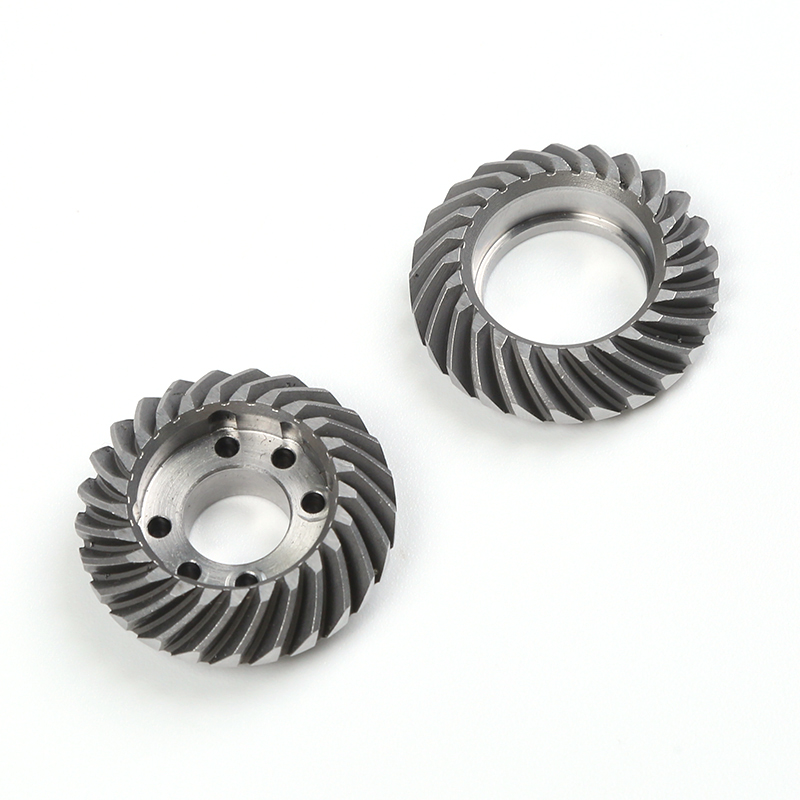
Circular pitch is the distance, measured along the pitch circle, from one tooth to the corresponding point on the next tooth. In other words, if you walk along the pitch circle of a gear, the circular pitch tells you how far you travel from one tooth flank to the same flank on the adjacent tooth. [khkgears]
From a practical engineering standpoint, circular pitch defines how "tightly packed" the teeth are around the gear, which directly affects tooth size, strength, and how the gear meshes with its mating gear. [blog.marketmuse]
- Circular pitch is measured along the pitch circle circumference.
- It is usually expressed in millimeters or inches.
- It must be identical on mating gears for correct meshing and load sharing.
For a spur gear, circular pitch p is given by a simple formula: [khkgears]
p=zπ⋅d
where:
- p = circular pitch
- d = pitch circle diameter
- z = number of teeth
This formula shows that for a given pitch diameter, increasing the number of teeth decreases the circular pitch, resulting in smaller, more closely spaced teeth. [khkgears]
In practical design work:
- Metric gears: circular pitch is typically in millimeters.
- Inch-based gears: circular pitch is in inches, often related to diametral pitch.
In real projects, engineers rarely look at circular pitch in isolation; they balance circular pitch with module (metric systems) or diametral pitch (imperial systems) to hit specific performance and manufacturability targets. [blog.marketmuse]
For standard metric gears, the circular pitch and module m are related by: [khkgears]
p=π⋅m
This makes it easy to move between the two: once you choose a module, the circular pitch is fixed and vice versa. [khkgears]
In inch-based systems using diametral pitch Pd, circular pitch is: [khkgears]
p=π/Pd
Higher diametral pitch means finer teeth and smaller circular pitch, which often appears in compact, high-speed gear sets. [khkgears]
To understand circular pitch in context, it helps to review several related gear terms that frequently appear in drawings, standards, and inspection reports. [blog.marketmuse]
- Pitch circle: The theoretical circle on which tooth spacing (circular pitch) is defined.
- Base circle: The circle from which involute tooth profiles are generated.
- Addendum: Radial distance from pitch circle to tooth tip.
- Dedendum: Radial distance from pitch circle to tooth root.
- Tooth thickness: The arc length of a tooth measured along the pitch circle.
- Backlash: Clearance between mating tooth flanks, influenced by tooth thickness and circular pitch.
Maintaining consistent terminology and units is critical when collaborating with suppliers, shipyards, or classification societies on gear-related issues. [wgcontent]
From the perspective of a marine gear manufacturer, circular pitch is not a theoretical detail; it directly affects load capacity, vibration, and noise in outboard and inboard propulsion systems. [toprankmarketing]
- Larger circular pitch (fewer teeth on a given diameter) generally means larger tooth cross-sections, improving bending strength.
- Smaller circular pitch allows more teeth in mesh but each tooth carries less cross-sectional area, which may be acceptable at lower torque levels or with high-strength materials.
For heavy-duty marine gears that must transmit high torque at low speed, we often favor a circular pitch that ensures robust tooth thickness and adequate root fillet radius. [wgcontent]
Outboard engines and stern drives are highly sensitive to gear whine and vibration, which passengers perceive as harshness or "rough running." Circular pitch plays a role here: [toprankmarketing]
- Finer circular pitch means more teeth in contact at any time, providing smoother torque transfer.
- Coarser circular pitch can amplify noise if tooth spacing errors or eccentricity are present.
Our design process therefore balances torque capacity against acceptable noise targets, especially for mid- to high‑speed recreational boats. [wgcontent]
Two gears will only mesh correctly if their circular pitch is identical. This requirement underlies every replacement gear project and retrofit we do for marine gearboxes and outboard lower units. [khkgears]
If circular pitch differs even slightly:
- Teeth will not seat properly, leading to edge contact.
- Localized stress and premature pitting or scuffing occur.
- Noise levels and vibration increase sharply.
This is why we always insist on complete gear data (module or diametral pitch, number of teeth, helix angle, pressure angle, and circular pitch) before proposing replacement outboard gears to customers. [toprankmarketing]
In the field, you may not know the original design data. Service engineers often need to reverse-engineer circular pitch from an existing gear to source replacements or verify that two gears are compatible. [khkgears]
A simple procedure is:
1. Count the number of teeth z.
2. Measure the pitch circle diameter d (using center distance and mating gear data when needed).
3. Calculate circular pitch using p=πd/z.
4. Compare the result with standard values (e.g., using module tables).
For quick checks on small outboard gears, technicians may also measure the arc distance over several teeth with a flexible tape or optical comparator, then divide by the number of pitches to estimate circular pitch more accurately. [khkgears]
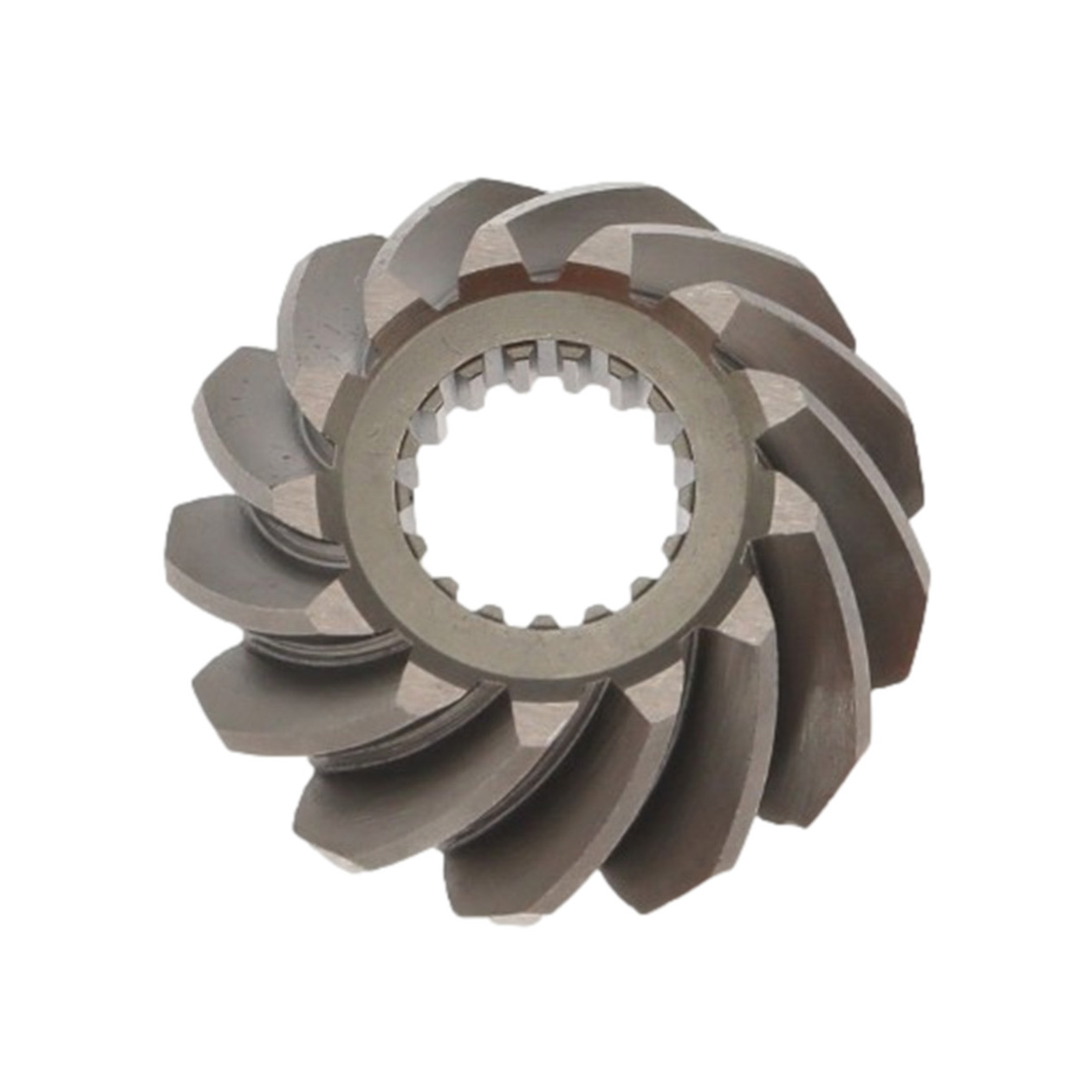
From our experience at Ningbo Gill Transmission Parts Co., LTD., circular pitch decisions in marine gear design are strongly shaped by a few recurring constraints: [wgcontent]
- Limited housing space in outboard lower units.
- High torque spikes during shifting or propeller impact.
- Corrosive seawater and debris contamination.
In a recent redesign of an outboard forward gear set, we evaluated several combinations of module and circular pitch to solve repeated tooth chipping under shock load:
- The original design used a relatively fine circular pitch optimized for compactness and low noise.
- Finite element analysis and bench testing showed stress concentration at tooth roots during propeller impact events.
- By moving to a slightly larger circular pitch (reduced tooth count at the same pitch diameter) while maintaining the same pressure angle, we increased tooth root thickness and improved impact resistance without requiring major housing changes.
This type of optimization is typical in marine transmission projects: circular pitch is one of the first dials we adjust when balancing durability, noise, and packaging constraints. [toprankmarketing]
When you design or specify a new gear pair, especially for marine applications, a structured selection process prevents early failures. [seoclarity]
1. Define torque and speed range
- Establish maximum continuous torque, peak torque, and speed range.
- Include transient loads from shifting and propeller impact.
2. Determine available space and shaft layout
- Measure maximum pitch diameter and center distance allowed by the housing.
- Decide whether spur, helical, or bevel gears are required.
3. Select module or diametral pitch range
- Use initial strength calculations to propose a module or diametral pitch that meets bending and contact stress limits.
- Convert to circular pitch using p=πm or p=π/Pd.
4. Check minimum tooth count and undercut risk
- Ensure that the number of teeth at the chosen circular pitch avoids excessive undercut and retains sufficient tooth thickness.
5. Evaluate noise and vibration targets
- Refine circular pitch if necessary to achieve the desired number of teeth in contact and mesh frequency outside critical resonance ranges.
6. Confirm standard tool and cutter availability
- Use circular pitch and module combinations that match available hobs, shaper cutters, or grinding wheels to control cost and lead time.
7. Prototype and test
- Verify load distribution, noise, and durability through bench and sea trials.
- Adjust circular pitch or related parameters if real‑world data diverges from calculations.
During customer consultations and failure analyses, we repeatedly see a few circular-pitch-related errors. [blog.marketmuse]
- Mixing modules or diametral pitches: Assuming gears with similar diameters will mesh, even though circular pitch (and thus module) differ.
- Ignoring helix angle effects: Treating helical gears as if their circular pitch can be defined purely by pitch diameter and tooth count without reference to normal vs transverse module.
- Assuming aftermarket replacement is always compatible: Installing third‑party gears with slightly different circular pitch, which may work briefly but cause rapid wear or catastrophic failure.
- Relying only on visual inspection: Judging gears as "close enough" by eye instead of measuring tooth spacing or confirming circular pitch.
In our practice, we always validate circular pitch either from original drawings, from the OEM, or by measurement before we release any replacement or customized gear set to a customer. [wgcontent]
Circular pitch does not work in isolation; it interacts closely with material choice, heat treatment, and lubrication strategy. [blog.marketmuse]
- Material
- Higher-strength alloy steels allow you to use a slightly finer circular pitch without compromising safety.
- For stainless or corrosion‑resistant alloys, you may need a larger circular pitch to compensate for lower core strength.
- Heat treatment
- Case-hardened gears with robust hardened layers handle higher contact stresses on smaller teeth.
- Induction hardened teeth may require more generous circular pitch to maintain sufficient root toughness in impact-prone marine environments.
- Lubrication
- In well-lubricated, sealed gearboxes, finer circular pitch can run reliably at high speed.
- In splash-lubricated outboard lower units, we favor tooth geometry and circular pitch that support reliable oil film formation and debris tolerance.
| Parameter | System | Definition focus | Typical unit | Relationship to circular pitch |
|---|---|---|---|---|
| Circular pitch | Metric & Inch | Tooth spacing along pitch circle | mm or inch | Base parameter itself |
| Module | Metric | Pitch diameter per tooth | mm | p=πm (khkgears) |
| Diametral pitch | Inch | Teeth per inch of pitch diameter | 1/inch | p=π/Pdp=π/Pd (khkgears) |
This table clarifies how different standards express essentially the same geometric relationship between gear size and tooth spacing. [khkgears]
As a company specializing in outboard gears and marine power transmission components, Ningbo Gill Transmission Parts Co., LTD. uses circular pitch as a core design and quality control metric across the product lifecycle. [toprankmarketing]
- Design phase
- Use circular pitch to balance torque capacity, noise, and packaging limitations in marine gear sets.
- Manufacturing phase
- Specify allowable deviations in tooth spacing and circular pitch deviation to maintain smooth meshing.
- Inspection and failure analysis
- Check circular pitch consistency to identify manufacturing errors, wear patterns, or mismatch with mating gears.
Over dozens of projects for outboard OEMs and aftermarket clients, our engineering team has seen that precise control of circular pitch directly correlates with fewer warranty claims and longer service life in the field. [wgcontent]
In practice, we recommend engineers and buyers recalculate or verify circular pitch whenever: [toprankmarketing]
- You replace only one gear of a mating pair.
- You switch from imperial to metric systems (or vice versa).
- You modify tooth count to reduce noise or change gear ratio.
- You source gears from a new supplier.
- You notice abnormal wear patterns or noise after a modification.
By confirming circular pitch during these events, you reduce the risk of subtle compatibility issues that can become expensive failures in service.
If you are designing or sourcing outboard gears, marine transmission parts, or replacement gear sets and are unsure about circular pitch, module, or compatibility with existing components, our engineering team at Ningbo Gill Transmission Parts Co., LTD. can help review your drawings, calculate the correct parameters, and propose optimized gear solutions for your application. [wgcontent]
Contact us with your gear data or samples, and we will provide a detailed technical evaluation and manufacturability review to ensure your gears mesh correctly, run quietly, and survive in demanding marine environments.
1. Why is circular pitch so important in gear design?
Circular pitch defines the spacing of teeth around the pitch circle, and mating gears must share the same circular pitch to mesh correctly, carry load efficiently, and avoid premature wear. [khkgears]
2. How is circular pitch different from module?
Module is the pitch diameter divided by the number of teeth, while circular pitch is the arc distance between corresponding points of adjacent teeth; in metric systems, they are linked by p=πm. [khkgears]
3. Can I mix gears with the same module but different circular pitch?
No. For a given module, circular pitch is fixed, so any difference in circular pitch indicates either a measurement error or non-standard geometry that should not be paired in a precision gear system. [khkgears]
4. How do I check circular pitch on an existing gear with no drawing?
Measure the pitch circle diameter (directly or via center distance), count the teeth, and compute circular pitch using p=πd/z; compare with standard tables or consult a gear specialist for verification. [khkgears]
5. What circular pitch should I choose for a high‑torque marine gearbox?
You typically want a circular pitch that provides adequate tooth thickness and root strength while respecting housing and noise constraints; this usually requires a trade‑off analysis, which a gear design expert or supplier can perform for you. [toprankmarketing]
1. KHK Gears – "Circular Pitch | Gear Nomenclature" (accessed 2026) – introductory definitions and formulas for circular pitch in spur gears. [https://khkgears.net/new/gear_knowledge/gear-nomenclature/circular-pitch.html] [khkgears]
2. MarketMuse Blog – "Enhancing Your Content Strategy with SEO Best Practices" – on-page SEO, headings and content depth guidance applied to the structure of this article. [https://blog.marketmuse.com/enhancing-your-content-strategy-with-seo-best-practices/] [blog.marketmuse]
3. TopRank Marketing – "E-E-A-T and SEO: Optimizing for Google's Guidelines" – framework for demonstrating experience, expertise, authority and trust in technical content. [https://www.toprankmarketing.com/blog/eeat-seo-google-guidelines-experience-expertise-authority-trust/] [toprankmarketing]
4. WG Content – "E-E-A-T for content quality" – practical recommendations on showing firsthand experience and documenting information, used to shape the expert and experience-driven tone. [https://wgcontent.com/blog/eeat-content-quality-seo-geo/] [wgcontent]
5. seoClarity – "How to Create a Winning SEO Content Strategy in 9 Steps" – best practices for keyword placement, headings, and topical completeness integrated into article optimization. [https://www.seoclarity.net/blog/seo-content-strategy] [seoclarity]


